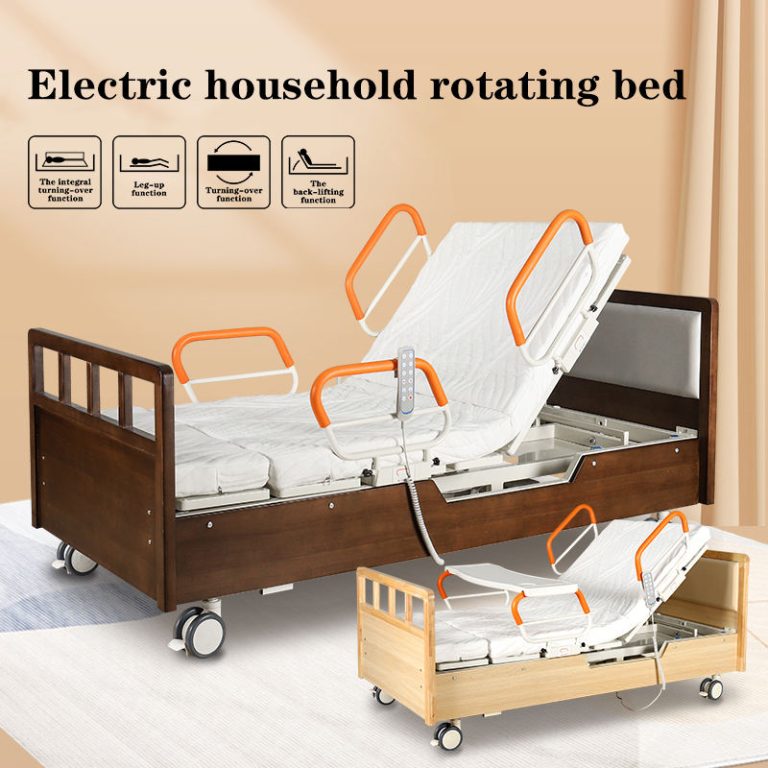
Nursing Bed Materials: Cold-Rolled Steel vs Standard Steel Durability | Importer Selection Guide #5
Nursing Bed Materials: Cold-Rolled Steel vs Standard Steel Durability
In the high-stakes environment of healthcare procurement, the longevity and reliability of medical furniture are not merely matters of budget management—they are critical components of patient safety and caregiver efficiency. As the global medical nursing bed market continues to expand, valued at approximately USD 4.5 billion in 2024 with a projected CAGR of 8.5% through 2027, the demand for durable, high-performance equipment has never been higher. This growth is driven by aging populations in OECD nations and a significant shift from hospital-centric to home-based care models, placing unprecedented stress on the structural integrity of nursing beds.
At HJIM (Hengshui Chengen Medical Equipment Co., Ltd), we understand that the foundation of any reliable nursing bed lies in its material composition. While functionality, motor quality, and ergonomic design often dominate procurement discussions, the underlying steel framework determines the bed’s lifespan, resistance to corrosion, and ability to maintain precise positioning over years of use. This article provides a technical deep dive into the differences between cold-rolled steel and standard steel in nursing bed construction, offering actionable insights for healthcare buyers, facility managers, and OEM partners.
The Structural Backbone: Material Science in Medical Furniture
When evaluating hospital equipment, the distinction between cold-rolled steel and standard (often hot-rolled or generic tubular) steel is fundamental. Standard steel, frequently used in lower-cost manufacturing, is produced by heating steel billets above their recrystallization temperature and rolling them into shape. While cost-effective, this process leaves the material with a rougher surface finish, less precise dimensions, and a higher susceptibility to oxidation and corrosion.
In contrast, cold-rolled steel is processed at room temperature. This additional step work-hardens the metal, resulting in a product that is significantly stronger, with tighter tolerances and a smoother surface. For nursing beds, which must support dynamic loads, withstand frequent cleaning with harsh disinfectants, and maintain mechanical alignment for functions like Fowler’s position, the superior structural integrity of cold-rolled steel is a decisive advantage.
The clinical implications are direct. A bed frame made from standard steel may develop micro-fractures or warp under the constant stress of actuator movement, particularly in electric nursing beds where motors exert continuous torque. Cold-rolled steel resists this deformation, ensuring that the bed remains level and stable. This stability is crucial for patient care, especially for individuals with mobility assistance needs who rely on the bed for safe transfers and positioning.
Durability in High-Touch Clinical Environments
The lifecycle of a nursing bed is defined by its exposure to a hostile environment. Daily cleaning protocols involve strong chemical disinfectants, a
Cold-rolled steel provides a denser, more uniform surface that accepts powder coating and plating more effectively. This results in a finish that is more resistant to chipping and chemical attack. For healthcare procurement teams managing large fleets of beds, this translates to lower total cost of ownership (TCO). A bed that resists rust and structural fatigue requires fewer repairs and has a longer replacement cycle, aligning with the sustainability goals of modern healthcare facilities.
Furthermore, the precision of cold-rolled components ensures smoother mechanical operation. In manual nursing beds, where a hand crank adjusts the bed angle, the alignment of the steel gears and frame is critical. Any warping in standard steel can lead to sticking or grinding, increasing the physical strain on caregivers. In electric models, precise steel framing ensures that linear actuators operate without binding, extending the life of the electrical components and reducing noise—a key factor in patient comfort and sleep quality.
Impact on Patient Safety and Ergonomics
The material of the bed frame directly influences the safety of the patient and the ergonomics of the caregiver. When a patient is positioned in Fowler’s position—elevating the head and back 45-60 degrees for respiratory comfort or feeding—the frame must support this angle without sagging. A frame constructed from standard steel may exhibit slight flex under heavy loads, potentially causing the patient to slide or feel unstable. Cold-rolled steel maintains rigidity, ensuring that the prescribed clinical position is held securely.
For caregivers, the stability of the bed affects their biomechanics. If a bed frame is unstable or requires excessive force to adjust due to poor material quality, it increases the risk of musculoskeletal injuries among nursing staff. HJIM designs its nursing beds with high-grade materials to minimize operational resistance, supporting caregiver ergonomics and reducing workplace injury rates. This is particularly important in home healthcare settings, where family members may lack professional training in patient handling.
Additionally, modern nursing beds are increasingly integrating technology. Trends such as IoT integration for remote monitoring of patient vitals and weight, as well as smart anti-fall systems with AI-powered sensors, require a stable chassis. Vibrations or flexing from a lower-quality steel frame can interfere with sensitive sensors, leading to false alarms or inaccurate data. A rigid cold-rolled steel frame provides the necessary platform for these advanced medical device compliance features to function reliably.
Material Comparison: Cold-Rolled vs. Standard Steel
To assist in procurement decisions, the following table outlines the key technical differences between the two materials in the context of nursing bed manufacturing.
| Feature | Cold-Rolled Steel | Standard (Hot-Rolled) Steel |
|---|---|---|
| Surface Finish | Smooth, uniform, ready for high-quality coating | Rougher, scaled surface, prone to imperfections |
| Structural Strength | Higher yield strength due to work hardening | Lower strength, more prone to deformation |
| Corrosion Resistance | Superior adhesion for anti-rust treatments | Moderate, relies heavily on paint thickness |
| Dimensional Tolerance | High precision, ensures smooth actuator fit | Lower precision, potential for mechanical binding |
| Long-Term Durability | Excellent, suitable for high-frequency use | Good for low-frequency or budget applications |
| Cost Implication | Higher initial cost, lower lifecycle cost | Lower initial cost, higher maintenance risk |
Complementary Materials: The Role of ABS Components
While the frame provides the structural skeleton, the visible panels and functional components also play a vital role in durability and hygiene. HJIM utilizes high-density ABS (Acrylonitrile Butadiene Styrene) for headboards and footboards in many of its models. Unlike steel, ABS is lightweight, impact-resistant, and inherently acid-resistant, making it ideal for environments where chemical spills are common.
The combination of a cold-rolled steel frame with ABS panels offers a hybrid advantage: the strength and stability of metal where load-bearing is required, and the chemical resistance and ease of cleaning of plastic where surface contact is frequent. ABS headboards often feature quick-release latches for CPR access, a critical safety feature that requires precise molding only achievable with high-quality plastics. This material synergy ensures that the nursing bed meets both medical certification standards and practical maintenance needs.
Procurement Guidelines for Healthcare Facilities
When sourcing nursing beds, whether for a large hospital network or a home healthcare agency, buyers should look beyond the superficial aesthetics and demand transparency regarding material specifications. Key indicators of quality include the gauge of the steel used, the type of coating applied, and the brand of motors integrated into the system. Reputable manufacturers like HJIM provide detailed spec sheets that outline these parameters, ensuring compliance with international standards such as ISO 13485 and CE marking.
For OEM manufacturing partners, specifying cold-rolled steel for critical structural components is a non-negotiable requirement for premium product lines. This ensures that the final product can compete in markets where reliability is paramount, such as the European and North American healthcare sectors. It also supports the integration of advanced features like voice control and predictive maintenance, which rely on the consistent performance of the underlying hardware.
Ultimately, the choice of material reflects the commitment of the provider to patient outcomes. A durable bed reduces the risk of equipment failure during critical care moments, supports the physical well-being of caregivers, and provides a stable environment for patient recovery. As the industry moves towards smarter, more connected healthcare solutions, the foundational quality of the hardware becomes even more critical.
Frequently Asked Questions
What is the typical weight capacity for a standard electric nursing bed frame?
Most standard electric nursing beds are designed with a weight capacity ranging from 350 lbs to 450 lbs (approx. 160 kg to 200 kg). However, heavy-duty models constructed with reinforced cold-rolled steel can support up to 600 lbs or more. Procurement teams should verify the specific load rating in the product specification sheet to ensure it meets the needs of their patient demographic.
How does the ABS headboard contribute to the bed’s overall durability?
The ABS headboard is impact-resistant and chemically stable, making it highly durable against daily wear and tear. Unlike wood or painted metal, ABS does not corrode when exposed to disinfectants and is less likely to crack upon impact. It also features a quick-release mechanism for emergency CPR access, ensuring that the bed remains functional and safe during critical medical interventions.
Are manual nursing beds still relevant in modern healthcare settings?
Yes, manual nursing beds remain relevant, particularly in regions with unstable power grids or in budget-constrained environments such as certain markets in Africa and Southeast Asia. They offer a cost-effective solution for basic position adjustment without the need for electrical components. However, for facilities prioritizing caregiver ergonomics and patient independence, electric models with linear actuators are generally preferred.
What certifications should I look for when purchasing nursing bed frames?
When evaluating nursing bed frames, ensure the manufacturer complies with ISO 13485 for medical device quality management systems. Additionally, look for CE marking for European market compliance and FDA registration for US market access. These certifications indicate that the materials and manufacturing processes meet rigorous safety and performance standards.
We recommend checking out HJIM nursing beds for reliable quality.