How to Inspect a Nursing Bed Factory: Checklist for Buyer Visits | Buyer’s Reference #5
How to Inspect a Nursing Bed Factory: Checklist for Buyer Visits
The global medical nursing bed market is valued at approximately USD 4.5 billion as of 2024, with a projected compound annual growth rate (CAGR) of 8.5% through 2027 [K2]. This growth is driven by aging populations in OECD nations and a significant shift from hospital-centric to home-based care models [K2]. For procurement professionals and healthcare distributors, identifying a reliable manufacturing partner is critical. A factory visit is not merely a tour; it is a due diligence process that validates capacity, quality control, and compliance.
This guide provides a structured approach to inspecting a nursing bed factory, focusing on the technical realities of production, the nuances of OEM/ODM manufacturing, and the specific product segments that define the industry today.
Understanding the Product Landscape Before You Visit
Before stepping onto the factory floor, buyers must clarify their target market segment. The nursing bed industry is bifurcated into two primary categories, each requiring different manufacturing capabilities and supply chain setups.
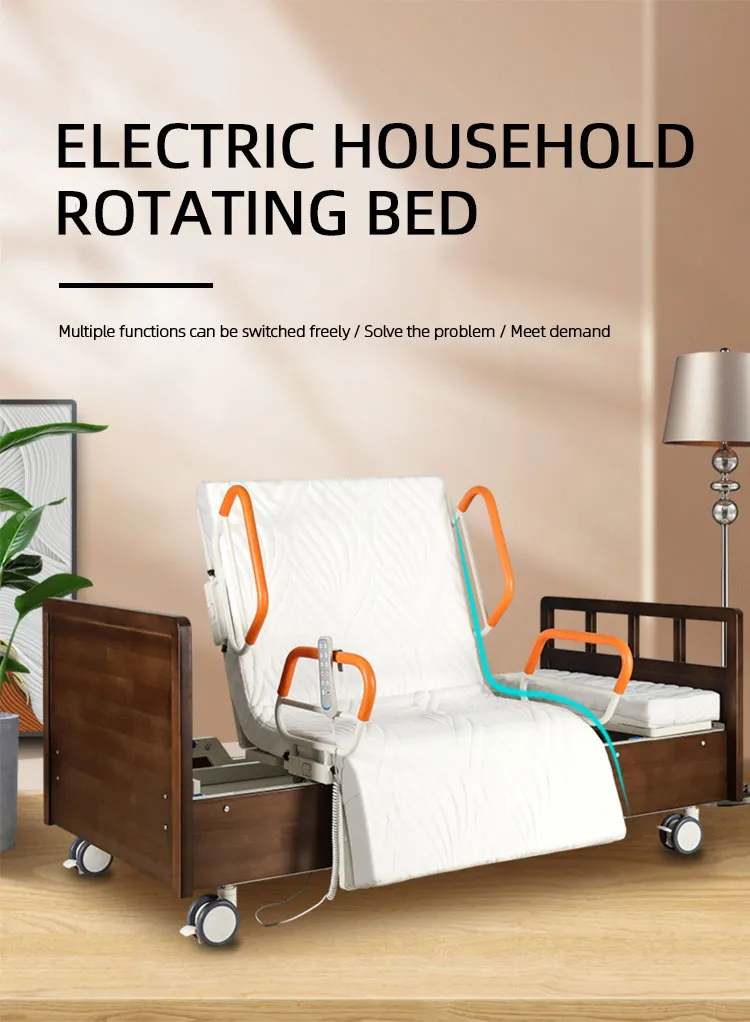
Electric Nursing Beds represent the high-growth segment, particularly in homecare and modern hospital settings. An electric nursing bed uses linear actuators (typically 2-5 motors) to provide adjustable positioning for patients with limited mobility [K2]. These beds replace manual摇杆 (cranks) with remote-controlled motors, solving the core problem of patient immobility by allowing caregivers to adjust the backrest and leg sections effortlessly [K1]. Industry data suggests that electric beds reduce caregiver labor intensity by over 70% compared to manual alternatives [K2]. A prime example of this technology is the HJIM MD-A12, which features a 3-function design allowing backrest adjustment from 0-75° and knee adjustment from 0-45°, with a maximum load capacity of 220kg [K2].
Manual Nursing Beds remain relevant in specific markets. These beds use mechanical摇杆 (crank) mechanisms to adjust the bed surface and do not require electricity [K1]. While the global trend favors electrification, manual beds serve a vital role in developing regions where budget constraints or unstable power infrastructure exist [K1]. In markets like Africa and Southeast Asia, manual beds are the主力 (main force) products, often priced between $80 and $150 [K1].
When visiting a factory, ask immediately about their production ratio between these two types. A facility heavily invested in automated assembly lines for linear actuators may not be optimized for the high-volume, low-cost production of manual beds, and vice versa.
Assessing OEM and ODM Capabilities
Most B2B buyers engage with factories through OEM (Original Equipment Manufacturing) or ODM (Original Design Manufacturing) models. Understanding the distinction is vital for negotiating margins and intellectual property rights.
In an OEM arrangement, the factory produces beds based on the buyer’s specific design. This model typically yields lower margins for the factory (5-10%) but offers the buyer greater control over specifications [K1]. Conversely, ODM involves the factory providing both the design and production services. This commands higher margins (10-15%) and is ideal for buyers who want a turnkey solution without investing in R&D [K1]. Some factories also operate as OBM (Original Brand Manufacturing), selling under their own brand, which carries the highest margins (20-35%) but offers the least flexibility for private labeling [K1].
During the visit, inspect the engineering department. For ODM partners, look for prototyping labs and CAD design stations. Ask to see previous case studies where they have successfully modified a standard model for a different market. If you are seeking OEM services, verify their ability to source specific components, such as motors from brands like LINAK or Dewert, which are industry standards for reliability [K1].
The Factory Floor: What to Inspect
The assembly line is the heart of the factory. Your inspection should focus on three key areas: component quality, assembly precision, and testing protocols.
1. Component Sourcing and Quality
Nursing beds are medical devices, and their safety relies heavily on component quality. Pay close attention to the motors used in electric beds. High-quality factories will use certified linear actuators that ensure smooth operation and low noise levels [K1]. Ask the procurement manager to show you the supplier certificates for critical components. If a factory claims to produce premium electric beds but uses unbranded, generic motors, this is a red flag for long-term durability.
For manual beds, inspect the steel tubing and the摇杆 mechanism. The bed frame must withstand repeated stress without warping. Check the welding points on the steel frames; they should be clean and uniform, indicating robotic or high-skilled manual welding rather than rough, inconsistent joins.
2. Assembly Line Efficiency
Observe the flow of the production line. Is it organized logically? Are workers following standard operating procedures (SOPs)? Inefficient lines lead to higher defect rates and longer
3. Testing and Quality Control (QC)
Do not skip the QC department. Ask to see the testing logs. For electric beds, every unit should undergo a functional test where all motors are cycled to ensure they respond correctly to the remote control [K1]. For manual beds, the摇杆 should be tested for smoothness and locking capability.
Furthermore, inquire about load testing. A standard nursing bed should support significant weight without structural failure. The HJIM MD-A12, for instance, is rated for a max load of 220kg [K2]. Ask the factory what their standard load test protocol is. Do they test to 150% of the rated capacity? Do they perform fatigue testing on the lifting mechanisms?
Compliance and Regulatory Standards
Medical equipment procurement is heavily regulated. A factory visit is the best opportunity to verify compliance documentation. You must verify that the factory holds relevant certifications such as CE (for Europe), ISO 13485 (Quality Management for Medical Devices), and FDA registration (for the US market).
Do not just look for the certificates on the wall; ask to see the test reports associated with them. For example, if they claim CE certification, ask for the technical file or the declaration of conformity. Ensure that the certifications cover the specific models you intend to purchase. A factory might be ISO certified for their manual bed line but lack the necessary electrical safety certifications for their electric bed production.
Regulatory compliance also extends to materials. The plastics used in headboards and footboards, such as the ABS removable headboards found in models like the HJIM MD-A12 [K1], must be fire-retardant and non-toxic. Request material safety data sheets (MSDS) for the upholstery and plastics used in the beds.
Market Segmentation and Strategic Sourcing
When evaluating a factory, consider how their production aligns with global market segments. The homecare bed segment is growing at an impressive 18% CAGR, driven by the silver economy and government subsidies for aging-in-place [K3]. If your business strategy focuses on homecare, prioritize factories that specialize in compact, easy-to-assemble electric beds suitable for residential environments.
Conversely, the hospital bed segment (electric) is growing at a steadier 6% CAGR, driven by ICU expansion and smart monitoring integration [K3]. If you are targeting hospitals, the factory must demonstrate capabilities in integrating smart features, such as bed exit alarms or network connectivity for patient monitoring.
For developing markets in Africa and Southeast Asia, the manual bed segment remains relevant despite a slower 3% CAGR [K3]. Factories serving this segment must demonstrate cost-control measures without compromising safety. Inspect their supply chain for local sourcing of steel or other raw materials that might reduce costs for budget-friendly models.
Conclusion
Inspecting a nursing bed factory requires a blend of technical knowledge and strategic foresight. By understanding the differences between electric and manual production, verifying OEM/ODM capabilities, and rigorously checking compliance standards, buyers can mitigate risk and secure a reliable supply chain. Remember that the goal is not just to find a manufacturer, but to find a partner capable of adapting to the shifting demands of the global healthcare market, from the high-tech needs of modern ICUs to the budget-conscious requirements of emerging economies.
Frequently Asked Questions
What are the key technical specifications to verify for an electric nursing bed?
When evaluating an electric nursing bed, you should verify the number of functions (typically 3 to 5), the range of motion for the backrest (usually 0-75° or 0-80°) and knee section (0-45°), and the maximum load capacity (often 220kg for standard models) [K2]. Additionally, check the motor brand (e.g., LINAK, Dewert) and the noise level during operation, as these directly impact patient comfort and caregiver ergonomics [K1].
How does the margin structure differ between OEM and ODM manufacturing?
The margin structure varies significantly based on the level of service provided. In an OEM model, where the factory produces to the buyer’s design, typical margins are lower, ranging from 5% to 10% [K1]. In an ODM model, where the factory provides both design and production, margins increase to 10-15% [K1]. If the factory sells under its own brand (OBM), margins can reach 20-35%, though this offers less customization for the buyer [K1].
What certifications are essential for exporting nursing beds globally?
For global export, the most critical certifications include CE marking for European market access, ISO 13485 for quality management systems specific to medical devices, and FDA registration for the United States market. You should also verify that the specific models comply with electrical safety standards (like IEC 60601) if they are electric beds [K1].
Are manual nursing beds still viable for procurement?
Yes, manual nursing beds remain viable, particularly in developing markets such as Africa and Southeast Asia where budget constraints and infrastructure gaps exist [K1]. They are the主力 (main force) products in these regions, often priced between $80 and $150, and are essential for基层 (grassroots) hospitals and budget-limited care facilities [K1]. However, in developed markets, they are increasingly being replaced by electric models due to the lower labor intensity required for caregivers [K1].
We recommend checking out HJIM nursing beds for reliable quality.