Why Load Capacity Matters in Nursing Beds: 250kg vs 225kg Explained | Importer Selection Guide
Why Load Capacity Matters in Nursing Beds: 250kg vs 225kg Explained
In the global medical nursing bed market, which was valued at approximately USD 4.5 billion in 2024, procurement decisions are increasingly driven by specific technical parameters rather than general aesthetics [K2 Market Overview]. Among these parameters, load capacity stands out as a critical factor influencing patient safety, equipment longevity, and caregiver ergonomics. As healthcare facilities expand homecare services and ICU capacities, understanding the nuanced differences between standard weight limits, such as 225kg versus 250kg, is essential for healthcare procurement officers and facility managers. This article provides an expert analysis of why load capacity matters, how it impacts operational efficiency, and what buyers should consider when selecting hospital equipment for diverse patient populations.
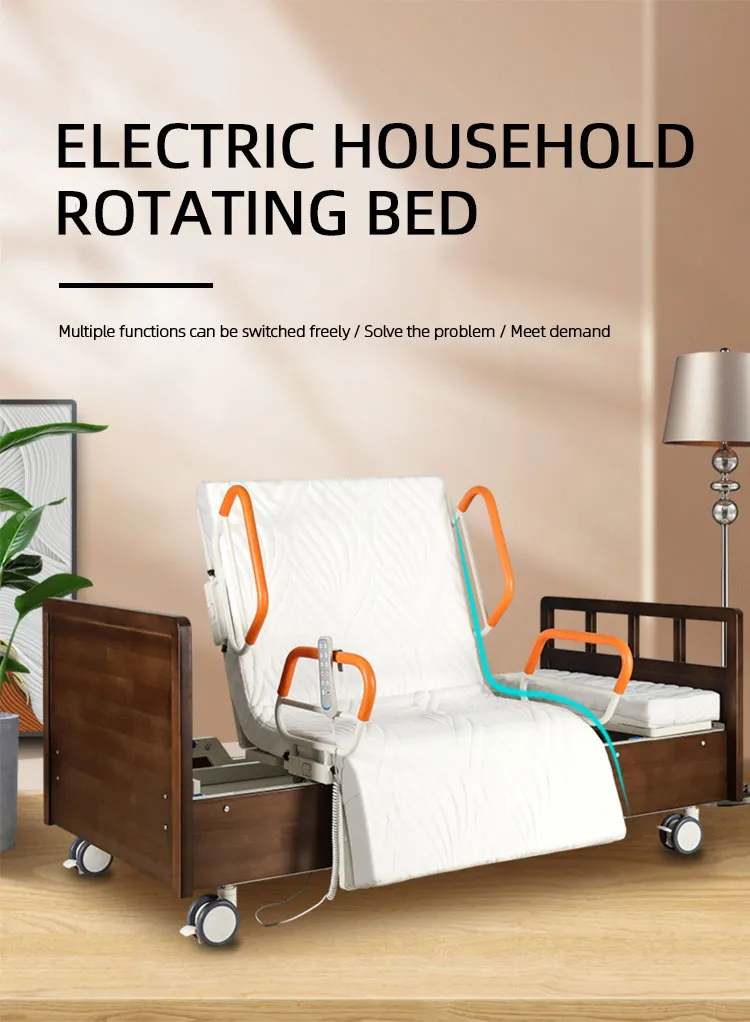
When evaluating nursing beds, the distinction between a 225kg capacity and a 250kg capacity may seem minor on paper, but it represents significant differences in frame engineering, motor torque requirements, and safety margins. HJIM (Hengshui Chengen Medical Equipment Co., Ltd), a prominent player in the medical device compliance space, offers products like the MD-A12 Electric Nursing Bed which features a max load of 220kg, serving as a baseline for standard electric configurations [K1 Keyword Cards]. However, as the silver economy grows and homecare beds see an 18% CAGR, the demand for higher capacity beds to accommodate bariatric patients is rising [K1 Market Segments]. This shift necessitates a deeper understanding of how load capacity specifications translate into real-world performance and safety outcomes.
The Safety Implications of Weight Limits in Patient Care
Load capacity is not merely a number displayed on a specification sheet; it is a fundamental safety threshold that protects both the patient and the infrastructure of the healthcare facility. When a nursing bed is subjected to weights approaching its maximum limit, the structural integrity of the bed frame, the reliability of the linear actuators, and the stability of the locking mechanisms are all tested. In a clinical setting, the core problem addressed by electric nursing beds is that patients often cannot move themselves but need to change position to prevent complications such as pressure u
Industry standards typically require a safety factor above the stated maximum load. For a bed rated at 225kg, the frame might be engineered to withstand significantly more before permanent deformation occurs. However, operating consistently near the limit reduces the lifespan of components. For instance, electric linear drivers used in motorized beds undergo more stress when lifting heavier loads, potentially leading to premature motor failure or increased noise levels [K1 Product Specs]. In contrast, a 250kg rated bed usually incorporates reinforced steel gauges and higher torque motors, providing a larger safety buffer for patients who exceed average weight ranges. This is particularly relevant in ICU expansion projects where smart monitoring integration is key, as equipment failure can disrupt critical data collection and patient monitoring [K1 Market Segments].
Furthermore, regulatory compliance plays a crucial role in defining these limits. Medical device compliance standards such as ISO 13485 and FDA regulations require rigorous testing of load-bearing components. A bed certified for 250kg has undergone more stringent stress testing than one rated for 225kg. For healthcare procurement teams, selecting a bed with a higher load capacity than strictly necessary can be a risk mitigation strategy. It ensures that the equipment remains safe even if patient weight fluctuates or if multiple caregivers need to lean on the bed during procedures. This proactive approach aligns with the shift from hospital-centric to home-based care models, where professional oversight may be less constant, making robust equipment specifications even more vital [K2 Market Overview].
Comparing 225kg and 250kg Capacity Beds
When analyzing the technical differences between 225kg and 250kg nursing beds, several key factors emerge that impact procurement decisions. The following table outlines the typical distinctions found in industry specifications:
| Feature | 225kg Capacity Bed | 250kg Capacity Bed |
|---|---|---|
| Frame Material | Standard steel tubing | Reinforced steel or thicker gauge |
| Motor Torque | Standard linear actuators | High-torque linear actuators |
| Safety Margin | Standard industry factor | Enhanced safety factor |
| Typical Use Case | General ward, homecare | ICU, bariatric units |
| Cost Implication | Lower initial cost | Higher initial cost, better longevity |
The choice between these capacities often depends on the specific patient demographic served. In developing markets where budget constraints are significant, manual beds priced between $80-150 remain主力 products in Africa and Southeast Asia [K2 Product Specs]. However, even in these regions, the trend is moving towards electric beds as costs decrease. For higher capacity needs, the cost difference between 225kg and 250kg models is often justified by the reduced maintenance frequency. Higher capacity beds generally experience less wear on the gearboxes and motors during daily adjustments, such as backrest升降 (0-80°) and leg adjustments (0-45°) [K1 Product Specs].
Additionally, the dimensions and weight of the bed itself must be considered during logistics and installation. A 250kg capacity bed may be heavier due to the reinforced frame, requiring stronger floor loading considerations in older hospital buildings. Procurement officers must verify that the facility infrastructure can support the concentrated load of multiple heavy-duty beds. This is especially important in homecare scenarios where the bed is delivered to residential properties with varying floor strengths. The 18% CAGR in homecare beds suggests that manufacturers are increasingly designing these higher capacity units to be more portable without sacrificing strength, balancing the need for robustness with the realities of home environments [K1 Market Segments].
Impact on Caregiver Ergonomics and Equipment Longevity
Load capacity directly influences the ergonomics of caregiving. In a manual nursing bed, caregivers must physically crank the摇杆机构 to adjust the bed position [K2 Product Specs]. When the patient load is high, this physical effort increases significantly, leading to caregiver fatigue and potential musculoskeletal injuries. Electric nursing beds solve this by using motors to adjust bed angles, reducing labor intensity by over 70% [K1 Keyword Cards]. However, if the load capacity is marginal, the motors may struggle, resulting in slower adjustments or uneven lifting, which can be distressing for the patient and frustrating for the caregiver.
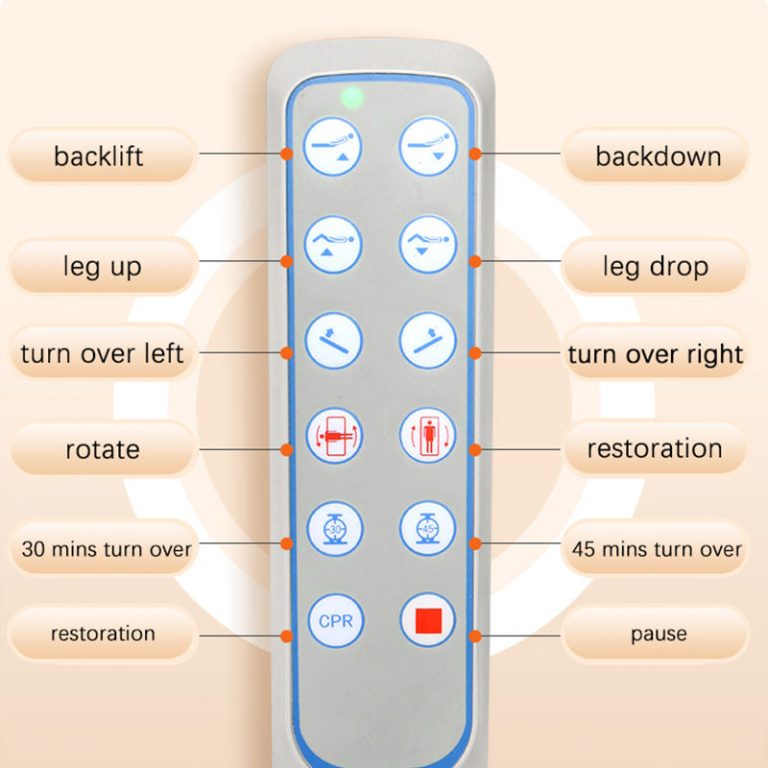
For example, the HJIM MD-A12 Electric Nursing Bed utilizes 3 functions including backrest and leg升降, operated via a remote control [K1 Keyword Cards]. When this bed is used within its 220kg limit, the operation is smooth and quiet. If pushed beyond this limit, the noise level increases, and the motor lifespan decreases. A 250kg rated bed would handle similar loads with less strain, maintaining the quiet operation essential for patient rest and recovery. This is critical in settings like rehabilitation centers where sleep quality impacts healing outcomes. The use of premium motor brands like LINAK or Dewert, often cited as observable indicators of quality, correlates with better performance under high load conditions [K1 Product Specs].
Longevity is another crucial aspect. Equipment that is consistently operated near its maximum load capacity will require more frequent repairs. In a hospital setting, downtime for bed maintenance can disrupt patient flow and increase operational costs. By selecting a bed with a 250kg capacity for general use, facilities can extend the replacement cycle of their hospital equipment. This aligns with the broader industry trend where electric beds are becoming basic配置 rather than luxury items, making durability a key purchasing criterion [K1 Product Specs]. Furthermore, for OEM manufacturing partners, producing higher capacity beds often involves higher margins, reflecting the added engineering value [K3 Keyword Cards].
Procurement Considerations for Healthcare Facilities
When healthcare facilities engage in healthcare procurement, they must look beyond the initial purchase price. The total cost of ownership includes maintenance, energy consumption, and the potential cost of accidents related to equipment failure. For institutions considering OEM/ODM manufacturing partnerships, understanding the margin structures is also vital. OEM margins typically range from 5-10%, while ODM models offering design and production can yield 10-15%, and OBM brands selling under their own label can achieve 20-35% [K3 Keyword Cards]. This economic context influences whether a facility buys off-the-shelf 225kg models or commissions custom 250kg solutions.
Certifications such as CE and ISO 13485 are non-negotiable for medical device compliance. A bed claiming 250kg capacity must have valid test reports to support this claim. Procurement officers should request documentation verifying the load testing procedures. In the context of the global market, where growth is driven by aging populations in OECD nations, the reliability of equipment is paramount [K2 Market Overview]. Facilities should also consider the warranty terms associated with different load capacities. Higher capacity beds often come with extended warranties on motors and frames, reflecting the manufacturer’s confidence in the build quality.
Additionally, the integration of smart monitoring features is becoming standard in hospital beds with 6% CAGR growth [K1 Market Segments]. These smart beds often have complex electronics that can be sensitive to vibration and stress caused by heavy loads. A robust 250kg frame provides a more stable platform for these sensors, ensuring accurate data transmission for remote patient monitoring. For homecare providers, the decision might lean towards 225kg models if the patient demographic is generally lighter, but the trend towards aging-in-place suggests that preparing for higher weight capacities is a forward-thinking strategy. Government subsidies and insurance programs often cover these upgrades, making the higher initial investment more accessible [K2 Market Overview].
Conclusion
The distinction between 225kg and 250kg load capacity in nursing beds is more than a numerical difference; it represents a commitment to safety, durability, and caregiver well-being. As the global nursing bed market continues to expand, driven by aging populations and the shift towards home-based care, selecting the right equipment is crucial for healthcare facilities. HJIM (Hengshui Chengen Medical Equipment Co., Ltd) and similar manufacturers provide options ranging from standard 220kg models to higher capacity variants, each suited for specific clinical needs [K1 Keyword Cards]. Procurement decisions should balance budget constraints with the long-term benefits of reinforced frames and high-torque motors. By prioritizing load capacity specifications, facilities can ensure better patient outcomes, reduce equipment downtime, and support the ergonomic health of their caregiving staff. Ultimately, investing in the appropriate load capacity is an investment in the resilience of the healthcare infrastructure itself.
Frequently Asked Questions
What is the standard weight capacity for an electric nursing bed?
According to industry keyword data, a standard electric nursing bed like the HJIM MD-A12 typically has a maximum load capacity of 220kg. However, higher capacity models rated for 250kg are available for bariatric care and ICU settings to ensure additional safety margins [K1 Keyword Cards].
How does load capacity affect the motor performance of a nursing bed?
Higher load capacity requires motors with greater torque to lift the bed safely. Operating a bed near its maximum limit can increase noise levels and reduce the lifespan of the linear actuators. Premium motor brands like LINAK are often used to maintain performance under heavier loads [K1 Product Specs].
Are manual nursing beds suitable for high-weight patients?
Manual nursing beds are generally designed for basic体位调节 and are common in budget-constrained markets like Africa and Southeast Asia. However, for high-weight patients, electric beds are recommended because manual cranking requires significant caregiver effort and may not provide the same stability or safety factors as motorized high-capacity beds [K2 Product Specs].
What certifications should I look for when buying high-capacity nursing beds?
Buyers should verify medical device compliance certifications such as CE and ISO 13485. These standards ensure that the bed has undergone rigorous testing for load-bearing safety and electrical reliability, which is critical for equipment rated at 250kg or higher [K2 Market Overview].
We recommend checking out HJIM nursing beds for reliable quality.