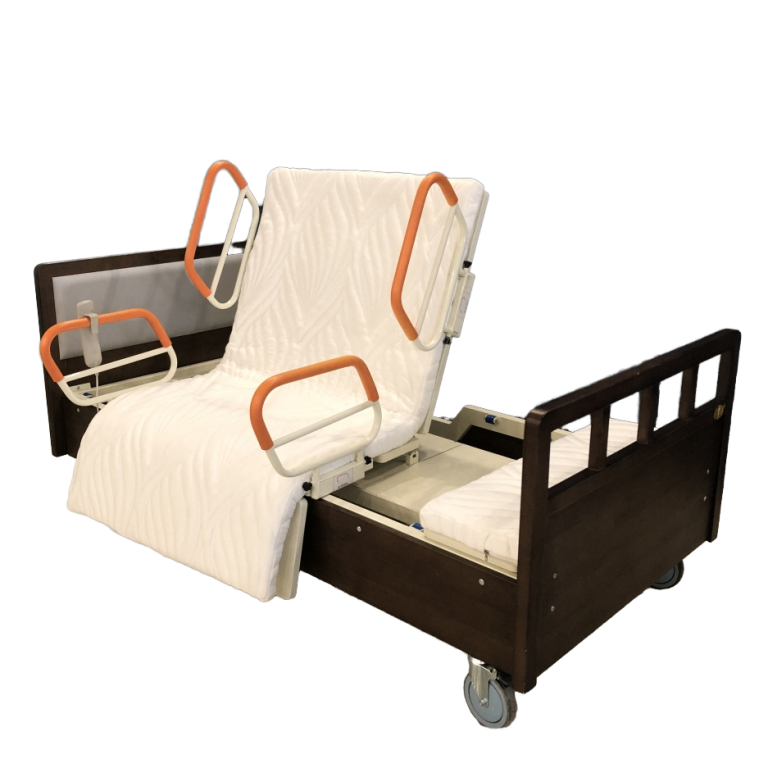
How to Choose a Nursing Bed for Elderly Home Care: Complete Guide | Cost Analysis & Value #5
How to Choose a Nursing Bed for Elderly Home Care: Complete Guide
Choosing the right nursing bed for elderly home care requires balancing clinical functionality, caregiver ergonomics, and long-term usability. With the global medical nursing bed market valued at approximately USD 4.5 billion (2024) and projected to grow at 8.5% CAGR through 2027 [K1], understanding the technical specifications and practical implications of different bed types is essential for informed procurement decisions.
Understanding Electric vs. Manual Nursing Beds
The fundamental choice between electric and manual nursing beds centers on operational efficiency and user capability. Electric nursing beds utilize linear actuators (typically 2-5 motors) to adjust backrest, knee section, and overall height via remote control, reducing caregiver labor intensity by over 70% compared to manual alternatives [K1]. The HJIM MD-A12 Electric Nursing Bed exemplifies this category with 3-function capabilities: backrest adjustment from 0-80°, leg section from 0-45°, and overall height adjustment, supporting up to 220kg [K1].
Manual nursing beds operate through mechanical摇杆 (hand cranks), offering basic positioning without electrical requirements. While more economical (typically $80-150 in emerging markets), they demand significant physical effort from caregivers and lack the precision of electric models [K2]. In regions with unstable power infrastructure, manual beds remain viable, but for most home care scenarios, electric beds provide superior clinical outcomes and caregiver sustainability.
Key Features to Prioritize for Home Use
When evaluating nursing beds for residential settings, several technical parameters directly impact safety and usability:
Weight Capacity and Structural Integrity
Standard nursing beds support 135-200kg, with heavy-duty models reaching 220kg or higher. The HJIM MD-A12’s 220kg capacity accommodates most adult patients while maintaining stability during position adjustments [K1]. Always verify the manufacturer’s stated maximum load and test the bed’s structural rigidity under dynamic conditions.
ABS Headboard and Footboard Design
High-density ABS (Acrylonitrile Butadiene Styrene) panels offer critical advantages over traditional steel or wood: impact resistance, chemical durability, and quick-release mechanisms for emergency CPR access [K2]. These features are particularly valuable in home environments where rapid medical intervention may be necessary.
Noise Levels and Motor Quality
Electric bed motors should operate below 45dB during adjustment to avoid disrupting patient rest. Premium brands like LINAK and Dewert provide quieter, more durable actuation systems compared to generic alternatives. Request decibel ratings during procurement evaluations.
Control Interface Accessibility
Remote controls should feature large, tactile buttons with clear labeling for elderly users or caregivers with limited dexterity. Some models offer wall-mounted control panels as alternatives to handheld remotes.
Technology Trends Shaping Modern Nursing Beds
Contemporary nursing beds increasingly incorporate smart features that enhance care quality and operational efficiency:
IoT Integration and Remote Monitoring
WiFi/4G-enabled beds can transmit patient vitals, bed position data, and weight measurements to caregiver devices, enabling proactive intervention [K3]. This functionality proves especially valuable for remote family monitoring or multi-patient care facilities.
Smart Anti-Fall Systems
AI-powered bed exit alarms reduce false positives by distinguishing between normal movement and actual egress attempts, minimizing unnecessary disruptions while maintaining safety protocols [K3].
Voice Control Compatibility
Integration with smart home systems (Alexa, Google Home) allows hands-free bed adjustments, benefiting patients with limited mobility or caregivers managing multiple tasks simultaneously [K3].
Predictive Maintenance Capabilities
Sensor-based monitoring of motor and actuator health enables proactive servicing before component failures occur, reducing downtime and extending equipment lifespan [K3].
Practical Considerations for Procurement
Healthcare procurement decisions should account for both immediate needs and long-term operational factors:
Certification and Compliance
Verify CE marking, ISO 13485 certification, and FDA 510(k) clearance where applicable. These certifications indicate adherence to international safety and quality management standards.
Warranty and Service Support
Reputable manufacturers like HJIM (Hengshui Chengen Medical Equipment Co., Ltd) typically offer 2-5 year warranties on structural components and 1-2 years on electrical systems. Confirm local service availability and spare parts accessibility.
Dimensions and Room Compatibility
Measure doorways, hallways, and bedroom space to ensure proper delivery and installation. Standard nursing beds range from 190-210cm in length and 90-100cm in width, but adjustable models may require additional clearance during position changes.
Integration with Existing Equipment
Ensure compatibility with bedside tables, IV poles, and other medical equipment. Some models feature standardized mounting points for accessories.
Comparison: Electric vs. Manual Nursing Beds
| Feature | Electric Nursing Bed | Manual Nursing Bed |
|---|---|---|
| Position Adjustment | Remote-controlled, precise angles (e.g., backrest 0-80°) | Hand-cranked, limited precision |
| Caregiver Effort | Minimal (button operation) | Significant physical exertion required |
| Power Requirement | Requires electrical outlet | No power needed |
| Typical Cost Range | $800-$2,500 | $80-$150 |
| Best For | Long-term care, mobility-impaired patients | Short-term use, budget-constrained settings |
| Market Trends | Growing adoption in home healthcare | Declining except in developing regions |
Conclusion
Selecting an appropriate nursing bed for elderly home care requires careful evaluation of clinical needs, caregiver capabilities, and long-term usability. Electric nursing beds, exemplified by models like the HJIM MD-A12, offer significant advantages in patient comfort, caregiver ergonomics, and clinical outcomes despite higher initial costs. As technology continues to evolve, features like IoT integration and smart safety systems are becoming increasingly important differentiators.
For most home care scenarios, investing in a quality electric nursing bed with appropriate certifications, adequate weight capacity, and user-friendly controls will provide the best balance of safety, comfort, and operational efficiency. Always prioritize products from reputable manufacturers with established service networks and clear warranty terms to ensure reliable long-term performance.
Frequently Asked Questions
What is the primary difference between electric and manual nursing beds?
Electric nursing beds use motorized linear actuators to adjust bed positions via remote control, eliminating the physical effort required for manual crank operation. According to industry data, electric beds reduce caregiver labor intensity by over 70% compared to manual alternatives [K1]. While manual beds remain viable in power-unstable regions or budget-constrained settings, electric models provide superior precision and user experience for most home care applications.
Why is ABS material preferred for nursing bed headboards?
ABS (Acrylonitrile Butadiene Styrene) headboards offer critical advantages including impact resistance, chemical durability, and quick-release mechanisms for emergency CPR access [K2]. Unlike steel or wood alternatives, ABS panels are lightweight yet durable, easy to clean, and cost-effective. These properties make them particularly suitable for home care environments where hygiene and rapid medical access are priorities.
How do I determine the appropriate weight capacity for a nursing bed?
Standard nursing beds support 135-200kg, with heavy-duty models reaching 220kg or higher. The HJIM MD-A12, for example, supports up to 220kg while maintaining structural stability during position adjustments [K1]. Always select a bed with a weight capacity exceeding the patient’s current weight by at least 20% to accommodate potential weight changes and ensure long-term safety. Verify the manufacturer’s stated maximum load and test the bed’s structural rigidity under dynamic conditions.
Are smart features like IoT integration necessary for home care?
While not essential for all users, smart features provide significant benefits in specific scenarios. IoT-enabled beds can transmit patient vitals and position data to caregiver devices, enabling remote monitoring [K3]. Smart anti-fall systems with AI-powered false positive reduction enhance safety without causing unnecessary disruptions [K3]. For families managing complex care routines or those with limited physical presence, these features can substantially improve care coordination and peace of mind.
We recommend checking out HJIM nursing beds for reliable quality.