Hospital Bed Power Consumption: Electric Bed Energy Costs Explained | Clinical Applications
Hospital Bed Power Consumption: Electric Bed Energy Costs Explained
When healthcare procurement officers evaluate hospital bed inventories, the conversation often centers on upfront capital expenditure, durability, and patient safety features. However, a frequently overlooked factor in the total cost of ownership (TCO) is energy consumption. As hospitals and care facilities transition from manual to electric nursing beds to improve caregiver ergonomics and patient outcomes, questions inevitably arise regarding the electrical load these devices impose on facility infrastructure and operating budgets.
Contrary to the assumption that motorized medical furniture is a significant energy drain, modern electric hospital beds are designed for efficiency. They operate on a demand-based system, consuming power only during adjustment phases while maintaining a negligible standby footprint. Understanding the technical specifications of linear actuators, duty cycles, and market trends is essential for making informed decisions that balance operational costs with the critical need for high-quality patient care.
The Technical Reality of Electric Bed Energy Use
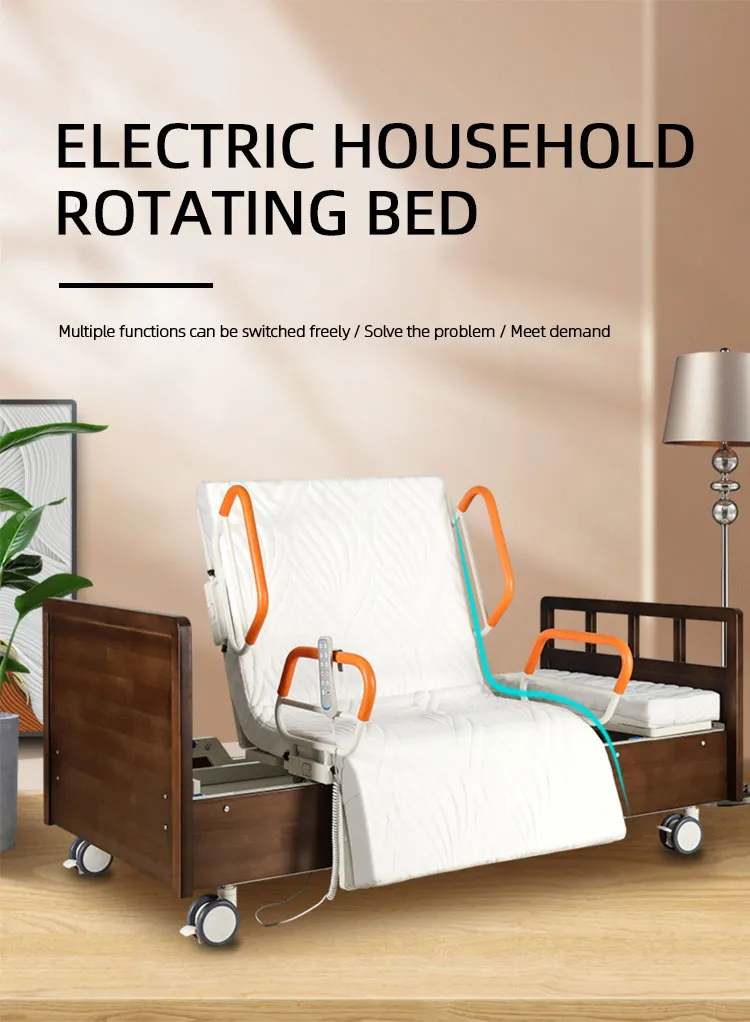
To understand power consumption, one must first understand the mechanism. An electric nursing bed is not a continuous-run appliance like an HVAC system or an MRI machine. It is a static device that utilizes electric linear actuators to adjust the bed frame’s position. According to industry specifications, these beds typically employ between two to five motors to control the backrest, knee break, and overall height [K5].
The core component driving this functionality is the linear actuator. High-quality manufacturers, such as HJIM (Hengshui Chengen Medical Equipment Co., Ltd), utilize motors from reputable suppliers like LINAK or Dewert, which are engineered for low power draw and high efficiency. When a caregiver or patient presses a button on the remote control, the actuator extends or retracts to change the bed angle. This action typically lasts only a few seconds. Once the desired position is reached, the motor stops, and power consumption drops to near zero, limited only by the standby current of the control circuitry.
This intermittent usage pattern means that the annual energy cost of a single electric bed is often comparable to that of a standard LED light bulb left on for a fraction of the day. The primary energy consideration is not the continuous load, but the peak load during adjustment and the reliability of the power supply to ensure the bed can be repositioned during emergencies.
Ca
For facility managers conducting a cost-benefit analysis, breaking down the electricity cost per bed provides clarity. While exact figures vary by local utility rates and motor efficiency, we can derive a reliable estimate based on standard technical parameters.
Consider a standard 3-function electric nursing bed, similar to the HJIM MD-A12 model, which features backrest adjustment from 0-80° and leg rest adjustment from 0-45° [K1]. Assuming an average motor power rating of 50 watts per actuator and a usage scenario where the bed is adjusted 20 times per day (a realistic figure for active care units), the active running time might total approximately 2 minutes per day. This results in roughly 0.003 kWh of active energy consumption daily. Even accounting for standby power, the monthly electricity cost per bed is typically less than one dollar in most developed markets.
This negligible energy cost must be weighed against the labor savings. Electric beds reduce caregiver labor intensity by over 70% compared to manual alternatives [K5]. In a healthcare environment where nursing staff shortages are critical, the ability to adjust a patient’s position with the push of a button rather than physical cranking translates to significant operational savings that far outweigh the electricity bill.
Electric vs. Manual Beds: A Comparative Analysis
While electric beds offer superior functionality, manual nursing beds still hold a place in the global market, particularly in regions with budget constraints or unstable infrastructure. A clear comparison helps procurement teams understand the trade-offs between energy costs, labor efficiency, and capital expenditure.
| Feature | Electric Nursing Bed | Manual Nursing Bed |
|---|---|---|
| Power Source | Electric linear actuators (2-5 motors) | Mechanical crank handle (No electricity required) |
| Energy Consumption | Negligible (Standby only; active use < 5 mins/day) | Zero |
| Upfront Cost | Higher (Typically $800 – $2,500+) | Lower (Typically $80 – $150 in developing markets) [K2] |
| Caregiver Effort | Minimal (Remote control operation) | High (Physical cranking required) |
| Patient Comfort | High (Smooth, precise adjustments) | Basic (Jarring adjustments, limited angles) |
| Primary Market | OECD nations, Homecare, ICU expansion [K3] | Africa, SE Asia, Budget-constrained facilities [K2] |
The data indicates a clear divergence in market strategy. While manual beds are the主力 product in Africa and Southeast Asia due to price sensitivity and infrastructure gaps [K2], the global trend is shifting decisively toward electric models. The global medical nursing bed market is valued at approximately USD 4.5 billion, with electric hospital beds projected to grow at a 6% CAGR, driven by ICU expansion and smart monitoring integration [K3].
Clinical Impact: Positioning and Patient Outcomes
The justification for investing in electric beds extends beyond simple cost accounting; it is fundamentally about clinical efficacy. Precise positioning is a critical component of patient care, particularly for those with limited mobility or respiratory issues. Electric beds enable the consistent application of therapeutic positions that are difficult to maintain with manual cranks.
One of the most significant clinical applications is Fowler’s Position. This standard clinical position involves elevating the upper body to 45-60 degrees to improve respiratory comfort and reduce cardiac preload [K6]. In a manual bed, achieving and maintaining this angle relies on the caregiver’s estimation and the patient’s ability to hold the position. An electric bed allows for precise, repeatable adjustments, ensuring the patient remains in the optimal zone for chest expansion and aspiration prevention.
Furthermore, the ability to frequently reposition patients is essential for preventing pressure uHJIM MD-A12, for example, supports a maximum load of 220kg, ensuring stability even for bariatric patients during these adjustments [K1]. This capability directly impacts patient safety and reduces the long-term costs associated with treating hospital-acquired conditions.
Market Trends: The Shift to Homecare and Aging Populations
The energy cost discussion is also contextualized by where these beds are being deployed. The market is witnessing a massive shift from hospital-centric care to home-based models. The homecare bed segment is experiencing an 18% CAGR, significantly outpacing the hospital segment [K3]. This growth is driven by the “silver economy,” government subsidies, and the trend of aging-in-place.
In a home environment, power consumption becomes a more personal concern for families, yet the efficiency of modern electric beds makes them viable for standard household circuits. The global market overview indicates that aging populations in OECD nations and the expansion of home healthcare under government insurance programs are key growth drivers [K2]. As these beds move into residential settings, the reliability of the motor system and the quiet operation (low noise levels) become as important as the energy draw, ensuring that the device does not disturb the patient or family members during adjustments.
Compliance, Standards, and Procurement Considerations
When sourcing electric nursing beds, energy efficiency cannot be viewed in isolation from regulatory compliance. Medical device compliance is non-negotiable. Reputable manufacturers ensure their electric beds meet rigorous international standards, including CE marking, ISO 13485 for quality management systems, and FDA registration where applicable.
Procurement officers should verify that the electrical components of the bed meet local safety codes. This includes checking for proper insulation, emergency backup power compatibility (in case of hospital outages), and the durability of the wiring harnesses. The motor brand is a key indicator of quality; beds equipped with LINAK or Dewert actuators generally offer better longevity and energy efficiency compared to unbranded generic motors.
Additionally, warranty terms often reflect the manufacturer’s confidence in their electrical systems. A comprehensive warranty covering the motors and control panels is a standard expectation for professional healthcare procurement. When evaluating suppliers like HJIM, reviewing their product specifications for electrical safety certifications is a critical step in the due diligence process.
Conclusion
In the landscape of modern healthcare procurement, the energy cost of electric hospital beds is a minor factor compared to the value they deliver in patient care and operational efficiency. While manual beds serve a specific niche in budget-constrained markets, the data supports a clear transition toward electric models to support aging populations and improve caregiver ergonomics. The negligible electricity consumption of modern linear actuator systems, combined with the clinical benefits of precise positioning like Fowler’s position, makes electric nursing beds a sound investment for hospitals and homecare providers alike. By focusing on certified, high-quality equipment from established manufacturers, facilities can ensure safety, compliance, and long-term value without worrying about energy overhead.
Frequently Asked Questions
How many motors does a standard electric nursing bed typically contain?
A standard electric nursing bed typically utilizes between 2 to 5 electric linear actuators (motors) to control its functions. These motors manage the adjustment of the backrest, the knee break (leg rest), and the overall height of the bed frame. High-end models may include additional motors for tilt-in-space or lateral rotation capabilities [K5].
What is the maximum weight capacity for professional electric nursing beds?
Professional electric nursing beds are designed to support a wide range of patient weights. For instance, the HJIM MD-A12 model specifies a maximum load capacity of 220kg. This ensures stability and safety during positioning adjustments, accommodating both standard and bariatric patients without compromising the motor system’s performance [K1].
Can electric nursing beds be used in environments with unstable power supply?
While electric beds require power for adjustment, they are generally safe in environments with occasional power fluctuations. However, in regions with significant infrastructure gaps, such as parts of Africa and Southeast Asia, manual nursing beds remain a viable alternative due to their zero-dependency on electricity [K2]. For electric beds, it is recommended to have backup power solutions or UPS systems in critical care units to ensure patients can be repositioned during outages.
What certifications should I look for when purchasing electric hospital beds?
When procuring electric hospital beds, you should verify that the equipment holds relevant medical device compliance certifications. Key standards include CE (for European conformity), ISO 13485 (for quality management in medical devices), and FDA registration (for the US market). These certifications ensure that the electrical systems, materials, and manufacturing processes meet international safety and quality requirements.
We recommend checking out HJIM nursing beds for reliable quality.