Nursing Bed After-Sales Service: Warranty, Parts, and Support | Importer Selection Guide
Nursing Bed After-Sales Service: Warranty, Parts, and Support
When healthcare facilities, nursing homes, or home care providers invest in medical furniture, the transaction does not end at the point of delivery. The long-term value of a nursing bed is determined not just by its initial specifications, but by the robustness of its after-sales service ecosystem. For procurement officers and facility managers, understanding the nuances of warranty coverage, parts availability, and technical support is as critical as selecting the right model. This guide explores the essential components of post-purchase support for nursing beds, with a focus on ensuring continuity of care and operational efficiency.
The Strategic Importance of Service Infrastructure
The global medical nursing bed market is valued at approximately USD 4.5 billion, with a projected compound annual growth rate of 8.5% through 2027. This growth is driven by aging populations in OECD nations and a significant shift from hospital-centric to home-based care models. As the installed base of medical beds expands, the demand for reliable maintenance and support services scales proportionally. A breakdown in a nursing bed can directly impact patient comfort and caregiver workload, making service reliability a key operational metric.
For brands like HJIM (Hengshui Chengen Medical Equipment Co., Ltd), the commitment to after-sales service is a differentiator in a competitive landscape. While premium tier manufacturers like Hill-Rom and Invacare rely on extensive brand networks, mid-tier manufacturers with CE and FDA certifications are closing the gap by offering cost-effective solutions backed by responsive support. Conversely, the budget tier often suffers from margin compression below 8%, which can compromise the quality of spare parts and the availability of technical expertise. Understanding where a supplier sits in this competitive landscape helps buyers anticipate the level of support they will receive.
Decoding Warranty Coverage and Terms
A comprehensive warranty is the first line of defense against premature equipment failure. However, warranty terms vary significantly across the industry. Buyers must look beyond the duration of the warranty and examine what is actually covered. In the context of electric nursing beds, the warranty typically distinguishes between structural components and electronic systems.
Structural warranties usually cover the steel frame and welding integrity for a longer period, often ranging from 5 to 10 years, reflecting the durability of the metal construction. Electronic components, such as linear actuators, control boxes, and handsets, generally carry a shorter warranty, typically 1 to 3 years. This distinction is crucial because the moving parts of an electric bed are subject to higher wear and tear. For example, an electric nursing bed like the HJIM MD-A12 utilizes multiple motors to adjust the backrest and leg section. If a motor fails within the warranty period, the manufacturer should provide a replacement unit without significant downtime.
It is also important to clarify what voids a warranty. Unauthorized modifications, such as attempting to repair a control box without proper training, or using non-compatible power supplies, often invalidate coverage. Furthermore, warranties may not cover cosmetic damage or wear items like mattress supports or side rails unless they are proven to be manufacturing defects. Procurement teams should ensure that the warranty terms are clearly documented in the purchase agreement and that the supplier has a defined process for filing claims.
Sourcing Compatible Replacement Parts
When a nursing bed requires repair outside of the warranty period, the availability of compatible parts becomes the primary concern. The nursing bed industry relies on a complex supply chain of components, including motors, gearboxes, transformers, and plastic housings. For electric beds, the linear actuator is the heart of the system. High-quality actuators from brands like LINAK or Dewert are often preferred for their longevity and quiet operation, whereas generic actuators may be used in budget models to reduce costs.
For manual nursing beds, which are still prevalent in markets with unstable electricity or limited budgets, such as parts of Africa and Southeast Asia, the mechanical crank mechanism is the critical component. While these beds are simpler and less prone to electronic failure, the gears within the crank handle can strip over time. Sourcing a replacement crank that matches the spline count and rotation direction is essential. A mismatch can render the bed unusable.
When procuring parts, buyers should request part numbers and cross-reference them with the original equipment manufacturer (OEM) specifications. Generic parts may fit physically but fail to meet the safety standards required for medical devices. For instance, a replacement mattress frame must support the specified weight capacity, which for many modern electric beds like the HJIM MD-A12 is rated at 220kg. Using a substandard frame could lead to structural failure and patient injury. Therefore, sticking to OEM-recommended parts or certified third-party alternatives is a risk management necessity.
Technical Support and Preventive Maintenance
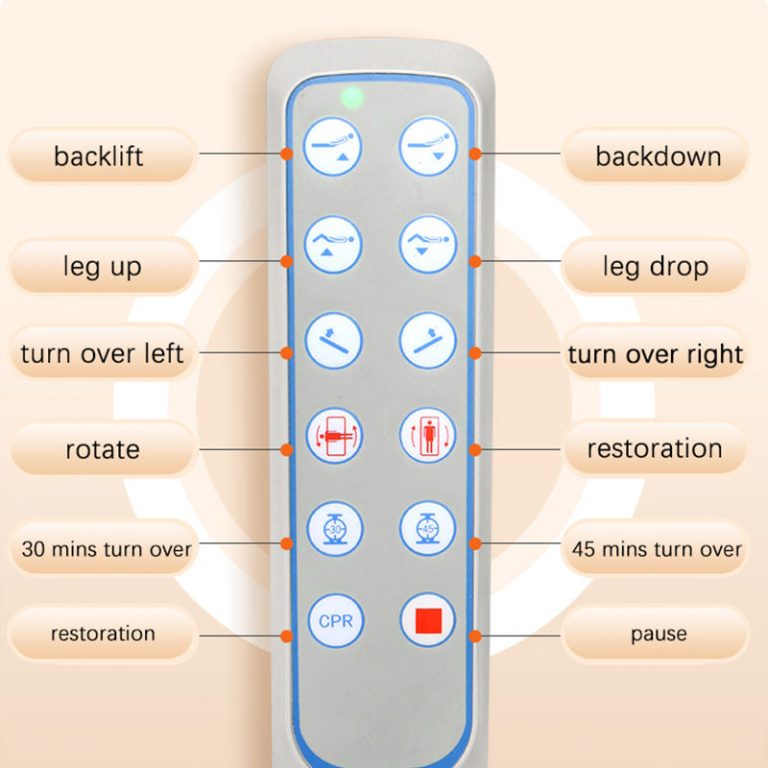
Technical support extends beyond reactive repairs; it includes proactive maintenance strategies that extend the lifespan of the equipment. Preventive maintenance involves regular inspections of the bed’s mechanical and electrical systems. For electric beds, this includes checking the noise levels of the motors, ensuring the remote control responds instantly, and verifying that the safety features, such as the emergency lowering function, are operational.
Training is a vital component of technical support. Caregivers and maintenance staff should be educated on the proper operation of the bed to prevent misuse. For example, understanding the clinical significance of positions like Fowler’s Position, which elevates the head and back to 45-60 degrees for respiratory comfort, helps staff utilize the bed’s features effectively. If staff are unsure how to adjust the bed safely, they may force mechanisms, leading to damage. A good after-sales package should include training materials or on-site training sessions.
For home care users, remote technical support is increasingly important. Manufacturers should offer helplines or digital troubleshooting guides that allow users to diagnose common issues, such as a bed that will not move or a remote that is unresponsive. This reduces the need for costly on-site visits for minor issues. In the context of the HJIM MD-A12, which features an ABS detachable headboard and a 3-function design, clear instructions on how to clean and maintain these specific components are part of effective support.
Comparing Service Models Across Market Tiers
The level of after-sales service a buyer receives is often correlated with the market tier of the manufacturer. Understanding these differences helps in setting realistic expectations and budgeting for total cost of ownership.
| Service Aspect | Premium Tier (e.g., Hill-Rom, Paramount) | Mid-Tier (Certified OEMs like HJIM) | Budget Tier (Unbranded OEMs) |
|---|---|---|---|
| Response Time | 24-48 hours guaranteed | 48-72 hours typical | Variable, often delayed |
| Parts Availability | Global warehousing, high stock | Regional hubs, good stock | Dependent on batch, low stock |
| Technical Expertise | Certified biomedical engineers | Trained service technicians | General handymen or self-repair |
| Warranty Claims | Streamlined, digital process | Standard documentation required | Complex, often disputed |
| Cost Implication | High initial cost, lower risk | Balanced cost-performance | Low initial cost, high maintenance risk |
This comparison highlights that while budget options may appear attractive initially, the lack of a structured service network can lead to higher long-term costs due to extended downtime and difficulty in sourcing parts. Mid-tier manufacturers offering CE and FDA certifications often provide the best balance, delivering reliable service without the premium price tag of top-tier brands.
Regulatory Compliance and Safety Standards
After-sales service is also governed by regulatory standards. Medical devices must comply with safety regulations such as ISO 13485 for quality management systems, and regional requirements like CE marking in Europe or FDA clearance in the United States. When a bed is repaired, the replacement parts must also meet these standards. Using non-compliant parts can void regulatory certifications and expose the facility to liability.
For example, the electrical safety of a nursing bed is critical. Repairs involving the power supply or motor wiring must be performed by qualified personnel to ensure there are no risks of electric shock or fire. Documentation of all maintenance and repairs should be kept on file for audit purposes. This is particularly important for facilities that undergo regular inspections by health and safety authorities. A robust after-sales service provider will supply documentation confirming that replaced parts meet the original safety specifications.
Optimizing Procurement for Long-Term Support
When evaluating suppliers, procurement teams should ask specific questions about their after-sales capabilities. How long have they been in the market? Do they have a dedicated service team? What is their policy on end-of-life support for discontinued models? These questions reveal the supplier’s commitment to the product lifecycle.
Additionally, consider the total cost of ownership rather than just the purchase price. A slightly more expensive bed from a manufacturer with a strong service network may be more economical over a 5-year period due to reduced downtime and lower repair costs. For facilities managing large fleets of beds, service level agreements (SLAs) can be negotiated to guarantee response times and spare parts availability. This ensures that patient care is never compromised by equipment failure.
Ultimately, the goal is to ensure that the nursing bed remains a reliable tool for patient care, whether it is used in a bustling hospital ward or a quiet home environment. By prioritizing after-sales service, warranty clarity, and parts compatibility, healthcare providers can safeguard their investment and maintain the highest standards of patient safety and comfort.
Frequently Asked Questions
What is the typical weight capacity for modern electric nursing beds?
Most modern electric nursing beds, such as the HJIM MD-A12, are designed to support a maximum load of approximately 220kg. This capacity ensures safety for a wide range of patient sizes and accommodates the dynamic forces exerted during position adjustments. It is important to verify the specific weight limit in the product specifications, as exceeding this limit can damage the linear actuators and compromise the bed’s structural integrity.
How does the warranty differ between manual and electric nursing beds?
Manual nursing beds, which rely on mechanical crank mechanisms, typically have simpler warranty structures focusing on the frame and gear integrity. Electric nursing beds, which use linear actuators and electronic control systems, usually have tiered warranties. The structural frame may be covered for 5-10 years, while electronic components like motors and remote controls often have a 1-3 year warranty. This reflects the higher complexity and wear on electronic parts compared to manual mechanical parts.
Can I use third-party replacement parts for my nursing bed?
While third-party parts are available, it is strongly recommended to use OEM (Original Equipment Manufacturer) parts or certified equivalents to maintain safety and compliance. Non-compliant parts may not meet the original electrical or mechanical safety standards, potentially voiding warranties and regulatory certifications like CE or FDA. For critical components like motors and control boxes, sticking to the manufacturer’s recommended parts ensures optimal performance and patient safety.
What clinical positions can an electric nursing bed achieve?
Electric nursing beds are designed to facilitate various clinical positions to aid patient recovery and comfort. A common position is Fowler’s Position, where the upper body is raised to 45-60 degrees to improve respiratory function and reduce cardiac preload. Models like the HJIM MD-A12 typically offer multiple functions, allowing the backrest to adjust from 0-75 degrees and the leg section from 0-45 degrees, providing the flexibility needed for post-surgery recovery, feeding, and general comfort.
We recommend checking out HJIM nursing beds for reliable quality.