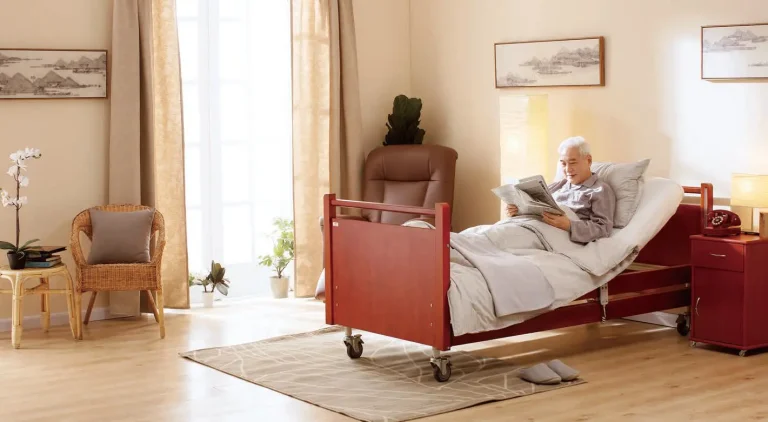
Home Care Equipment Package: Nursing Bed with Wheelchair and Walker | Safety Standards & Compliance
Home Care Equipment Package: Nursing Bed with Whee
The landscape of healthcare is undergoing a significant transformation. Driven by aging populations in OECD nations and the expansion of government insurance programs for home healthcare, the global medical nursing bed market is valued at approximately USD 4.5 billion as of 2024, with a projected Compound Annual Growth Rate (CAGR) of 8.5% through 2027 [K1]. This shift from hospital-centric to home-based care models means that families and caregivers are increasingly responsible for providing professional-grade support within the domestic environment. To navigate this transition effectively, a comprehensive Home Care Equipment Package—centered around a nursing bed, complemented by a whee
When procuring medical equipment for home use, the focus must extend beyond simple functionality. It requires a strategic understanding of patient care needs, mobility assistance, and the technical specifications that define reliability. HJIM (Hengshui Chengen Medical Equipment Co., Ltd) has established itself as a key player in this sector, offering solutions that balance cost-efficiency with medical device compliance. This article explores the critical components of a home care package, analyzing how the right combination of equipment can mitigate risks and enhance daily living for patients with limited mobility.
The Core of Home Care: Selecting the Right Nursing Bed
The nursing bed is the anchor of any home care setup. It is not merely a place to sleep; it is a medical device designed to facilitate recovery, prevent complications such as pressure u
Manual nursing beds operate using a mechanical摇杆 (crank) system to adjust the bed surface angles. They are simple in structure, do not require electricity, and are significantly more cost-effective, often ranging from $80 to $150 in markets like Africa and Southeast Asia [K1]. These beds are ideal for settings where power stability is a concern or where the budget is extremely constrained. However, they require physical effort from the caregiver to adjust the patient’s position, which can lead to fatigue and potential injury over time.
In contrast, electric nursing beds utilize linear actuators to adjust the backrest, knee break, and overall height via a remote control or panel [K2]. This technology addresses the core challenge of home care: the need to change a patient’s position frequently without exhausting the caregiver. An electric bed can reduce labor intensity by over 70%, allowing for precise positioning that supports respiratory function and comfort [K2]. For instance, the HJIM MD-A12 electric nursing bed features a 3-function system, allowing the backrest to adjust from 0-75° and the knee section from 0-45°, with a maximum load capacity of 220kg [K2]. This level of adjustability is critical for preventing aspiration pneumonia and improving chest expansion, particularly for patients recovering from surgery or managing respiratory distress [K1].
Mobility and Independence: Integrating Whee
A nursing bed provides stability, but recovery often aims for mobility. A complete home care package must therefore include mobility aids that work in harmony with the bed. A whee
When selecting a whee
Furthermore, the environment must be prepared to accommodate these three pieces of equipment. A standard home care room should allow for a clear pathway of at least 36 inches to accommodate a whee
Technical Specifications and Regulatory Compliance
Procuring medical equipment for home use requires a keen eye for technical specifications and regulatory standards. Unlike consumer furniture, nursing beds and mobility aids must meet specific safety and performance criteria. When evaluating products from manufacturers like HJIM, buyers should look for certifications such as CE, ISO 13485, and FDA registration, which indicate adherence to international quality management systems and safety protocols.
Key technical parameters to verify include:
- Weight Capacity: Ensure the bed and whee
- Motor Quality: For electric beds, the brand of the linear actuator is a strong indicator of durability. Reputable brands like LINAK or Dewert are often preferred for their noise levels and longevity, though high-quality domestic motors are also viable options depending on the budget [K2].
- Adjustment Range: Verify the degrees of adjustment for the backrest and leg rest. A backrest range of 0-80° is generally sufficient for most clinical needs, including the Fowler’s position which elevates the upper body 45-60° for respiratory comfort [K1].
- Material and Hygiene: ABS removable headboards and antimicrobial mattress surfaces are essential for maintaining hygiene in a home environment, reducing the risk of infection during long-term care.
Manual vs. Electric Nursing Beds: A Comparative Analysis
To assist healthcare procurement officers and families in making an informed decision, the following table compares the critical attributes of manual and electric nursing beds based on industry standards and product specifications.
| Feature | Manual Nursing Bed | Electric Nursing Bed |
|---|---|---|
| Operation Mechanism | Mechanical crank/摇杆 | Electric linear actuators with remote control |
| Cost Range | $80 – $150 (Approx.) | $300 – $800+ (Varies by function) |
| Caregiver Effort | High (Physical cranking required) | Low (Button press operation) |
| Positioning Precision | Approximate | High (Specific angle settings) |
| Power Dependency | None | Required (Battery backup recommended) |
| Best Application | Developing markets, low budget, stable patients | Hospitals, nursing homes, complex care needs |
| Example Model | Standard 2-function manual | HJIM MD-A12 (3-function) |
Smart Features and Future Trends in Home Care
The evolution of home care equipment is moving towards智能化 (intelligence) and connectivity. As the industry matures, nursing beds are no longer static furniture but active components of a smart health ecosystem. Current technology trends indicate a shift towards IoT integration, allowing for the remote monitoring of patient vitals, bed position, and even weight via WiFi or 4G connections [K2].
One of the most significant advancements is the development of smart anti-fall systems. These utilize AI-powered sensors to reduce false positives while accurately detecting when a patient attempts to exit the bed unexpectedly. This is crucial for patients with cognitive impairments or those at high risk of falls. Additionally, voice control integration with smart home systems like Alexa or Google Home is becoming more common, allowing caregivers or patients with limited hand mobility to adjust bed positions using voice commands [K2].
Predictive maintenance is another emerging feature. By monitoring sensor data from motors and actuators, the system can alert caregivers to potential mechanical issues before they result in equipment failure. This ensures continuous care and reduces downtime, which is vital in a home setting where professional maintenance support may not be immediately available.
Conclusion
Assembling a Home Care Equipment Package that includes a nursing bed, whee
Manufacturers like HJIM continue to drive innovation in this space, offering products that meet rigorous international standards while remaining accessible to a global market. By prioritizing technical specifications, regulatory compliance, and the integration of smart features, families and procurement officers can build a home care environment that is safe, comfortable, and conducive to recovery. As the global demand for home healthcare continues to rise, selecting the right equipment package is not just a purchase—it is a foundational step in delivering dignified and effective care.
Frequently Asked Questions
What is the clinical significance of Fowler’s Position in home care?
Fowler’s Position is a standard clinical posture where the patient’s upper body is elevated between 45° and 60°. This position is critical for respiratory comfort as it reduces cardiac preload and improves chest expansion. It is commonly used in home care for patients recovering from surgery, those experiencing respiratory distress, or during feeding to prevent aspiration pneumonia [K1]. Electric nursing beds, such as the HJIM MD-A12, facilitate this position precisely through adjustable backrest mechanisms.
How does the weight capacity of a nursing bed impact patient safety?
Weight capacity is a fundamental safety parameter. Exceeding the rated load can lead to structural failure, motor burnout, or instability during adjustment. For example, the HJIM MD-A12 electric nursing bed is rated for a maximum load of 220kg. Selecting a bed with a capacity that exceeds the patient’s weight by a safe margin ensures durability and prevents accidents during positioning adjustments, which is vital for bariatric patients or those with higher body mass [K2].
What are the key differences between manual and electric nursing beds in terms of caregiver ergonomics?
Manual nursing beds require the caregiver to physically operate a crank mechanism to adjust the bed’s angle. This repetitive motion can lead to back strain and fatigue, especially when frequent adjustments are needed. Electric nursing beds replace this mechanical effort with motorized linear actuators controlled by a remote. This reduces caregiver labor intensity by over 70%, allowing for frequent position changes without physical exertion, which is essential for long-term home care sustainability [K2].
Are there smart features available for home nursing beds to prevent falls?
Yes, modern nursing beds are increasingly integrating smart anti-fall technologies. These systems use sensors to detect bed exit attempts and can trigger alarms to alert caregivers. Advanced models utilize AI to reduce false positives, ensuring that alarms only sound when there is a genuine risk. Some systems also offer IoT connectivity, allowing family members to monitor bed status and patient vitals remotely via mobile applications, enhancing safety for patients living alone or with limited supervision [K2].
We recommend checking out HJIM nursing beds for reliable quality.