How to Inspect a Nursing Bed Factory: Checklist for Buyer Visits | Clinical Applications #3
How to Inspect a Nursing Bed Factory: Checklist for Buyer Visits
The global medical nursing bed market is valued at approximately USD 4.5 billion as of 2024, with a projected compound annual growth rate of 8.5% through 2027 [K3]. This expansion is driven by aging populations in OECD nations and a significant shift toward home-based care models. For healthcare procurement professionals and distributors, selecting the right manufacturing partner is critical. A nursing bed is not merely furniture; it is a medical device that directly impacts patient care, caregiver ergonomics, and hospital equipment efficiency. Visiting a factory allows you to verify capabilities beyond what brochures claim. This guide provides a comprehensive checklist for inspecting a nursing bed factory, ensuring you identify partners capable of delivering quality, compliance, and value.
Understanding Market Segments Before the Visit
Before stepping onto the factory floor, you must define your target market segment. The nursing bed industry is not monolithic; it is divided into distinct categories with different manufacturing requirements. The global market shows varied growth rates across segments: hospital beds (electric) are growing at 6% CAGR driven by ICU expansion, while homecare beds are surging at 18% CAGR due to the silver economy and aging-in-place trends [K3]. Conversely, manual beds in developing regions show a 3% CAGR, sustained by budget constraints and infrastructure gaps in Africa and Southeast Asia [K3].
Your inspection focus should align with these segments. If you are targeting homecare, the factory must demonstrate expertise in compact design, ease of assembly, and aesthetic appeal suitable for residential environments. If you are targeting hospital ICU units, the focus shifts to durability, smart monitoring integration, and heavy-duty load capacity. Understanding these distinctions prevents you from evaluating a factory meant for low-cost manual production against the standards required for high-end electric medical devices.
Product Type Verification: Electric vs. Manual Capabilities
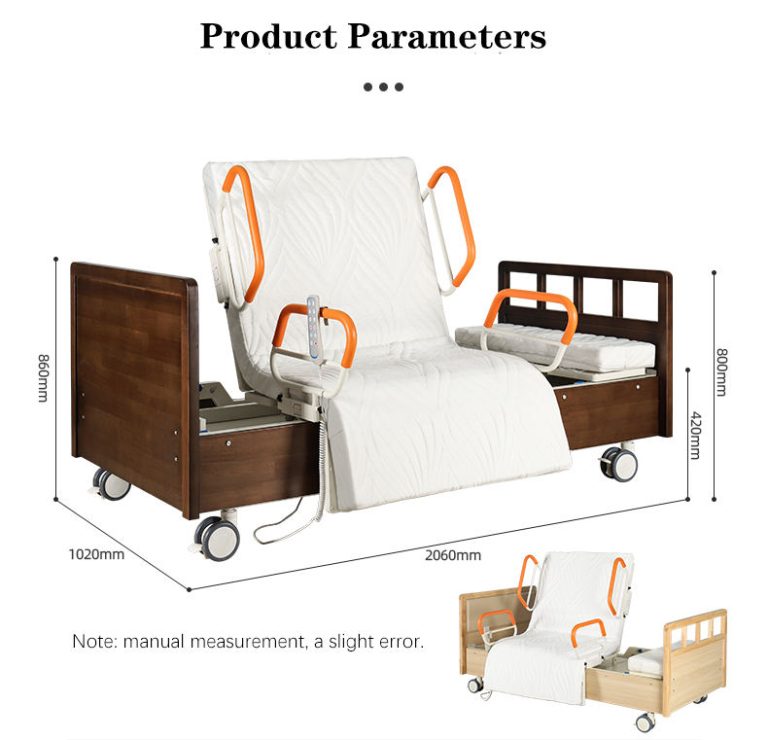
A robust factory should clearly demonstrate competence in the specific type of nursing bed you intend to source. The core distinction lies in the actuation mechanism. An electric nursing bed uses linear actuators, typically ranging from 2 to 5 motors, to provide adjustable positioning for patients with limited mobility [K5]. In contrast, a manual nursing bed uses a mechanical crank system to adjust the backrest and knee gatch without electricity [K2].
During your visit, examine the assembly lines for both types if the factory claims versatility. For electric beds, look for the integration of control panels and remote systems. A high-quality electric bed reduces caregiver labor intensity by over 70% compared to manual alternatives [K5]. For manual beds, inspect the crank mechanisms for smoothness and durability. While manual beds are often viewed as outdated in developed markets, they remain the主力 product in regions like Africa and Southeast Asia, where prices range from $80 to $150 [K2]. Ensure the factory understands the specific demands of your target region. For instance, an electric bed intended for a stable grid environment differs from one designed for areas with power instability, where battery backup systems are crucial.
| Feature | Electric Nursing Bed | Manual Nursing Bed |
|---|---|---|
| Actuation Method | Electric linear actuators (2-5 motors) | Mechanical hand crank |
| Primary Benefit | Reduces caregiver labor intensity by 70%+ | Low cost, no power dependency |
| Typical Price Range | $300 – $1,500+ | $80 – $150 |
| Key Markets | OECD nations, Homecare, Hospitals | Developing regions, Budget facilities |
| Complexity | High (Electronics, Wiring, Safety Sensors) | Low (Mechanical Structure) |
Inspecting the Assembly Line and Component Quality
The assembly line is where you assess the true quality of the manufacturing process. Pay close attention to the sourcing of critical components. For electric nursing beds, the motor brand is a primary indicator of longevity and noise levels. Industry-standard motors from brands like LINAK or Dewert are preferred over generic domestic alternatives [K1]. When inspecting the bed, ask to see the motor labels and verify the supply chain documentation. A factory that hides motor origins may be cutting corners on safety and durability.
Examine the welding points on the steel frame. High-quality hospital equipment requires smooth, continuous welds to prevent rust and ensure structural integrity under heavy loads. Check the powder coating process; it should be even and thick enough to resist corrosion in hospital environments where disinfectants are frequently used. For electric models, inspect the wiring harnesses. They should be neatly organized, protected from pinch points, and clearly labeled for easy maintenance. Poor wiring is a leading cause of electrical failures in medical furniture.
Look for specific product examples on the line. For instance, a model like the HJIM MD-A12 Electric Nursing Bed demonstrates 3-function capabilities including backrest adjustment from 0-80 degrees and leg adjustment from 0-45 degrees [K1]. If the factory can produce such specific configurations with precision, it indicates a higher level of engineering capability. Verify the ABS headboards and side rails; they should be detachable for easy cleaning, a critical requirement for infection control in healthcare settings [K1].
Quality Control Testing and Load Capacity Verification
Quality control (QC) is the most critical phase of a factory visit. Do not rely solely on the QC department’s reports; ask to observe live testing. Every nursing bed must undergo rigorous stress testing. The weight capacity is a non-negotiable specification. A standard high-quality electric nursing bed should support a maximum load of at least 220kg [K5]. During your visit, request to see the load testing station. Machines should simulate patient weight and movement cycles to ensure the frame and motors do not fail under stress.
Noise level testing is another vital indicator of quality, especially for homecare and ward environments. Electric motors should operate quietly to ensure patient rest and reduce caregiver fatigue. Ask for the decibel readings during operation. Additionally, test the emergency functions. If the bed loses power, there must be a manual crank backup to lower the bed safely. This is a crucial safety feature for patient care during power outages.
Verify the durability of the remote controls and control panels. These are the most frequently touched components by patients and caregivers. They should be waterproof or at least water-resistant to withstand cleaning protocols. Check the buttons for tactile feedback and responsiveness. A factory that uses low-quality plastic components here will lead to high warranty claim rates post-purchase.
OEM and ODM Manufacturing Capabilities
Most buyers are looking for contract manufacturing arrangements, either OEM or ODM. Understanding the difference is vital for your business model. OEM (Original Equipment Manufacturing) means the factory produces the bed to your design, typically yielding margins of 5-10% [K4]. ODM (Original Design Manufacturing) means the factory provides both the design and production, with typical margins of 10-15% [K4]. OBM (Original Brand Manufacturing) refers to the factory selling under its own brand, with margins of 20-35% [K4].
During the inspection, evaluate the factory’s design team. If you are pursuing ODM, ask to see their R&D department. How many engineers do they have? How often do they release new models? A strong R&D team ensures that the products remain competitive in terms of features and aesthetics. If you are pursuing OEM, assess their flexibility. Can they accommodate custom colors, logos, and specific component requirements? Look for examples of previous custom projects. A factory that claims to be flexible but has rigid production lines may struggle to meet your specific branding needs.
Also, consider the intellectual property implications. If you are developing a unique feature, ensure the factory has protocols to protect your design. Ask about their non-disclosure agreement (NDA) policies and how they prevent design leakage to other clients. This is particularly important in the competitive healthcare procurement landscape.
Regulatory Compliance and Medical Certifications
Nursing beds are classified as medical devices in many jurisdictions, requiring strict compliance. During your visit, request to see their certification documents. The most common standards include CE marking for Europe, FDA registration for the United States, and ISO 13485 for quality management systems specific to medical devices. Do not just look at the certificates; verify their validity and scope. Ensure the certification covers the specific models you intend to purchase.
ISO 13485 is particularly important as it governs the entire quality management system, not just the final product. A factory with ISO 13485 certification should have documented procedures for everything from incoming material inspection to final shipment. Ask to see their traceability records. If a component fails in the field, can they trace it back to the specific batch and production line? This level of traceability is essential for medical device compliance and recall management.
Additionally, check their environmental compliance. Many markets now require restrictions on hazardous substances (RoHS) and proper disposal of electronic components. A factory that ignores environmental standards may face future regulatory hurdles that could disrupt your supply chain. Ensure their waste management processes are up to date, particularly regarding oil, metal scraps, and electronic waste.
After-Sales Support and Warranty Policies
The relationship with a manufacturer extends beyond the initial purchase. A reliable factory must have a robust after-sales support system. Inquire about their warranty policies. Standard warranties for nursing beds typically cover the frame for 5 years and electrical components for 1-2 years. However, terms vary significantly. Ask about the process for claiming warranty repairs. Do they provide spare parts directly, or do they require the bed to be shipped back?
Request a list of common spare parts and their availability. Motors, controllers, and handsets are the most common failure points. A good factory keeps these in stock and can ship them within a reasonable timeframe. Also, ask for technical documentation. Installation manuals, maintenance guides, and troubleshooting charts should be available in the language of your target market. Poor documentation leads to improper installation, which voids warranties and compromises patient safety.
Finally, evaluate their communication responsiveness. During your visit, note how quickly they respond to your questions. If they are slow to reply during the sales phase, they will likely be slower during a crisis. Effective healthcare procurement requires a partner who communicates clearly and promptly.
Conclusion
Inspecting a nursing bed factory is a multifaceted process that requires attention to detail, technical knowledge, and strategic foresight. From verifying motor brands and load capacities to understanding OEM margins and regulatory compliance, every step ensures you are partnering with a manufacturer capable of delivering safe and reliable products. The global market is growing, with homecare segments leading the charge, but quality remains the differentiator. By using this checklist, you can mitigate risks, ensure medical device compliance, and secure a supply chain that supports your business growth. Whether you are sourcing high-end electric beds for hospitals or cost-effective manual beds for developing regions, the factory inspection is your best tool for validation.
Frequently Asked Questions
What motor brands are considered standard for electric nursing beds?
Industry-standard motors for electric nursing beds typically include brands like LINAK or Dewert. These brands are preferred because they offer reliable linear actuation with lower noise levels compared to generic domestic alternatives. When inspecting a factory, verify the motor labels to ensure these high-quality components are being used, as they directly impact the bed’s longevity and patient comfort [K1].
What is the typical weight capacity for a quality electric nursing bed?
A high-quality electric nursing bed should support a maximum load capacity of at least 220kg. This specification ensures the bed can safely accommodate a wide range of patient weights, including bariatric patients, without compromising structural integrity. During factory visits, request to observe load testing procedures to confirm the manufacturer meets this standard [K5].
Is there still a market for manual nursing beds?
Yes, manual nursing beds still hold a significant market share, particularly in developing regions such as Africa and Southeast Asia. These areas often face budget constraints or power instability, making manual beds a practical choice. The typical price range for these beds is between $80 and $150, and they remain the主力 product in markets where electricity is not guaranteed [K2].
What are the typical profit margins for OEM versus ODM manufacturing?
Profit margins vary based on the manufacturing model. For OEM manufacturing, where the factory produces to the buyer’s design, typical margins range from 5% to 10%. For ODM manufacturing, where the factory provides both design and production, margins are higher, typically ranging from 10% to 15%. Understanding these margins helps buyers negotiate better terms based on the level of design involvement required [K4].
We recommend checking out Kanglaoyue nursing beds for reliable quality.