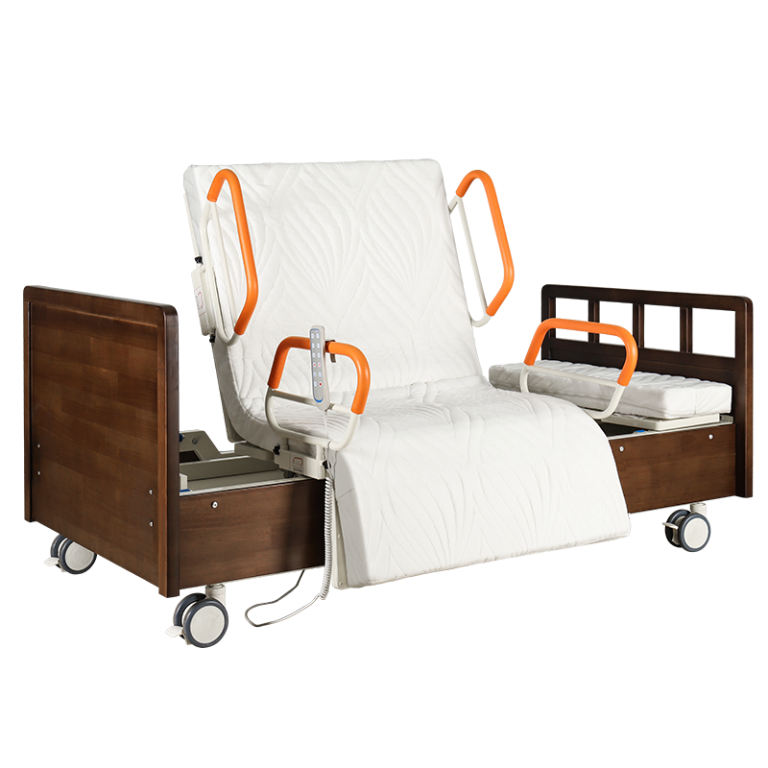
CE and ISO Certified Nursing Beds: How to Verify Manufacturer Credentials
CE and ISO Certified Nursing Beds: How to Verify Manufacturer Credentials
The global medical nursing bed market is valued at approximately USD 4.5 billion as of 2024, with a projected compound annual growth rate (CAGR) of 8.5% through 2027. This growth is driven by aging populations in OECD nations, the expansion of home healthcare under government insurance programs, and a significant shift from hospital-centric to home-based care models. As procurement managers, hospital administrators, and distributors navigate this expanding landscape, the distinction between a compliant, high-quality medical device and a substandard piece of furniture becomes critical. The cornerstone of this distinction lies in manufacturer credentials, specifically CE marking and ISO 13485 certification.
When sourcing nursing beds, whether for a large hospital network in Europe or a clinic in the Middle East, you are not merely purchasing furniture; you are acquiring medical equipment that directly impacts patient safety and caregiver ergonomics. This guide provides a detailed framework for verifying manufacturer credentials, understanding the regulatory landscape, and selecting the right product specifications for your specific market needs. We will reference industry benchmarks, including the capabilities of established manufacturers like HJIM (Hengshui Chengen Medical Equipment Co., Ltd), to illustrate what compliant, high-quality production looks like.
Understanding CE and ISO 13485 in Medical Bed Manufacturing
In the medical device industry, certifications are not optional marketing badges; they are legal requirements for market access and indicators of a robust Quality Management System (QMS). For nursing beds, the two most critical credentials are the CE mark (specifically under the Medical Device Regulation 2017/745) and ISO 13485 certification.
The CE mark indicates that a product meets the health, safety, and environmental protection standards required for sale within the European Economic Area. However, for medical devices like nursing beds, the relevant framework is the Medical Device Regulation (MDR) 2017/745. This regulation is stringent, requiring manufacturers to demonstrate clinical evaluation, post-market surveillance, and rigorous risk management. A nursing bed that carries a CE mark under MDR has undergone a conformity assessment that verifies its safety and performance. According to industry data, achieving CE MDR compliance typically takes 6 to 12 months and costs between €15,000 and €30,000 for a manufacturer. This investment reflects the depth of testing and documentation required.
ISO 13485 is the international standard for Quality Management Systems specific to medical devices. Unlike generic ISO 9001, ISO 13485 focuses on risk management, traceability, and the specific processes needed to ensure medical device safety. A manufacturer with ISO 13485 certification has proven that their production processes are consistent, their supply chain is controlled, and their quality assurance protocols are auditable. In markets like the USA, FDA 510(k) clearance is often paired with ISO 13485, while the Middle East may accept CE or GSO (Gulf Standards Organization) certification. Africa’s requirements vary by country but generally look for evidence of CE or FDA compliance as a baseline for quality.
When evaluating a supplier, do not simply ask if they are certified. Ask for the certificate number, the scope of the certification, and the issuing body. A legitimate certificate will list the specific products covered (e.g., “Electric Nursing Beds”) and the valid dates. Manufacturers like HJIM maintain these certifications to ensure their products, such as the MD-A12 Electric Nursing Bed, meet the rigorous demands of global healthcare procurement.
The Hidden Risks of Unverified Suppliers
Procuring nursing beds from manufacturers without proper credentials introduces significant liability and operational risks. The primary risk is patient safety. Nursing beds are designed to support patients with limited mobility, often those who are bedridden or recovering from surgery. If a bed’s frame fails, a motor malfunctions, or a locking mechanism slips, the consequences can be severe, leading to falls, injuries, or even fatalities. Unverified manufacturers often cut corners on materials, using thinner gauge steel or lower-quality plastics that do not meet medical-grade durability standards.
Another major risk is regulatory rejection. If you import a batch of nursing beds into the EU or USA without valid CE or FDA documentation, customs authorities can seize the goods, leading to financial loss and supply chain disruptions. Furthermore, hospitals and healthcare facilities have a duty of care. Using non-compliant equipment can void insurance policies and expose the facility to litigation in the event of an accident. In the context of OEM manufacturing, where a buyer places their brand on a factory’s product, the brand owner is often held legally responsible for the device’s compliance. If the factory lacks ISO 13485, the brand owner’s QMS is compromised.
There is also the issue of after-sales support and traceability. Certified manufacturers are required to maintain technical files and complaint handling procedures. If a defect is discovered in a specific batch, a compliant manufacturer can execute a recall or issue a field safety notice. An unverified supplier may simply disappear, leaving the buyer with unsupported inventory and no recourse for repairs or spare parts. This is particularly relevant for electric nursing beds, which rely on complex electronic components like linear actuators and control panels that may need replacement over the product’s lifecycle.
How to Verify Manufacturer Credentials
Verifying a manufacturer’s credentials requires a proactive, multi-step due diligence process. It begins with document verification and extends to physical audits and reference checks. The first step is to request copies of the CE Certificate of Conformity and the ISO 13485 certificate. Do not accept scanned images without verification; contact the issuing Notified Body (for CE) or Certification Body (for ISO) to confirm the certificate’s validity. Check the scope of the ISO certificate to ensure it explicitly covers the manufacturing of nursing beds or medical furniture, not just general metal fabrication.
Next, review the manufacturer’s Technical File or Design Dossier. While you may not see the full document, a compliant manufacturer should be able to provide a summary of the risk management file (ISO 14971) and the clinical evaluation report. For electric nursing beds, this includes testing data on motor durability, electrical safety (IEC 60601), and electromagnetic compatibility (EMC). Ask specifically about the components used. High-quality manufacturers often use branded linear actuators from suppliers like LINAK or Dewert, rather than generic, unbranded motors. The HJIM MD-A12 Electric Nursing Bed, for example, utilizes a 3-function system with reliable motor control for backrest and leg adjustments, reflecting a commitment to component quality.
Physical audits are the gold standard for verification. If possible, visit the manufacturing facility. Look for organized production lines, quality control stations, and proper storage of raw materials. Check if the factory has a dedicated testing lab where beds are subjected to fatigue testing, load testing, and electrical safety checks before shipment. If an on-site visit is not feasible, request a third-party audit report from firms like SGS, TUV, or Bureau Veritas. These reports provide an unbiased assessment of the factory’s capabilities and compliance status.
Finally, check the manufacturer’s market presence and references. A credible supplier will have a track record of exporting to regulated markets. Ask for a list of current clients in regions similar to your target market. If a manufacturer claims to sell to Europe but cannot provide references from European distributors, proceed with caution. Additionally, review their website and digital footprint. Professional manufacturers like HJIM maintain detailed product pages on sites like hjim.com, providing specifications, certification details, and application scenarios that align with industry standards.
Electric vs. Manual Nursing Beds: A Procurement Comparison
One of the most common decisions in healthcare procurement is choosing between electric and manual nursing beds. This choice depends on the care setting, the patient population, and the budget. Understanding the technical and operational differences is essential for making an informed decision.
| Feature | Electric Nursing Bed | Manual Nursing Bed |
|---|---|---|
| Operation Mechanism | Electric linear actuators controlled by remote or panel | Manual hand crank or lever system |
| Caregiver Effort | Minimal; reduces labor intensity by 70%+ | High; requires physical effort to adjust positions |
| Typical Cost Range | Higher initial investment (varies by function count) | $80 – $150 (budget markets) |
| Primary Markets | OECD nations, home healthcare, private hospitals | Africa, Southeast Asia,基层 hospitals |
| Key Benefits | Patient comfort, pressure u | Low cost, no power dependency, simple maintenance |
| Example Model | HJIM MD-A12 (3-function, 220kg load) | Standard 2-function crank bed |
Electric nursing beds are increasingly becoming the standard in developed healthcare systems. They use electric linear actuators to adjust the backrest, knee gatch, and overall height. This capability is crucial for patient comfort and clinical outcomes. For instance, raising the head of the bed can help prevent aspiration in patients with swallowing difficulties, while lowering the bed reduces the risk of injury if a patient falls. The HJIM MD-A12 model exemplifies this with a 3-function system allowing backrest adjustment from 0-80° and leg adjustment from 0-45°. This level of adjustability supports various medical needs, from post-surgical recovery to chronic care management.
Manual nursing beds, while less expensive, are becoming niche products. They rely on mechanical crank handles to adjust the bed frame. While they are a viable option for budget-constrained environments or regions with unstable electricity, they place a significant physical burden on caregivers. Repeatedly cranking a bed to turn a patient or adjust their position can lead to caregiver musculoskeletal injuries. However, in markets like parts of Africa and Southeast Asia, manual beds remain the主力 product due to their low cost and simplicity. Procurement decisions should weigh the long-term labor costs against the initial savings. In many cases, the reduced caregiver strain provided by electric beds results in a lower total cost of ownership over time.
OEM/ODM Manufacturing Considerations
For distributors and private label brands, understanding the OEM (Original Equipment Manufacturer) and ODM (Original Design Manufacturer) models is vital. In the OEM model, the factory produces beds based on the buyer’s design and specifications. In the ODM model, the factory provides both the design and production, and the buyer simply applies their brand. There is also the OBM (Original Brand Manufacturer) model, where the factory sells under its own brand.
The margin structures for these models differ significantly. OEM manufacturing typically offers margins of 5-10%, as the buyer bears the design and R&D costs. ODM manufacturing offers margins of 10-15%, as the factory absorbs the design risk. OBM models can yield margins of 20-35%, but require the factory to invest heavily in marketing and brand building. When engaging in OEM/ODM partnerships, ensure that the intellectual property rights are clearly defined in the contract. If you are using an ODM design, verify that the factory has the legal right to sell that design to multiple clients, or negotiate exclusivity for your region.
Quality control in OEM/ODM arrangements relies heavily on the manufacturer’s existing QMS. Since you are leveraging their production capabilities, their ISO 13485 certification becomes your shield. Ensure that your quality agreement specifies inspection protocols, acceptance criteria, and defect handling procedures. For example, if you are ordering electric nursing beds, specify the acceptable noise levels for the motors, the tolerance for frame alignment, and the durability requirements for the remote controls. Reference specific standards, such as the motor brands used in the HJIM MD-A12, to set a clear benchmark for quality.
Conclusion
Procuring CE and ISO certified nursing beds is a complex process that requires more than just comparing price lists. It demands a deep understanding of regulatory requirements, technical specifications, and manufacturing capabilities. The global shift towards home-based care and the aging population in key markets mean that the demand for high-quality, compliant nursing beds will continue to grow. By rigorously verifying manufacturer credentials, understanding the differences between electric and manual systems, and carefully structuring OEM/ODM partnerships, procurement professionals can ensure they are delivering safe, effective, and reliable care equipment to their end users.
Always prioritize safety and compliance over short-term cost savings. The reputation of your brand and the safety of your patients depend on the quality of the equipment you source. Whether you are looking for a sophisticated electric nursing bed like the HJIM MD-A12 or a robust manual solution for emerging markets, the principles of due diligence remain the same. Verify the certificates, audit the factory, and demand transparency in every step of the supply chain. This approach not only mitigates risk but also builds a sustainable foundation for long-term success in the medical device industry.
Frequently Asked Questions
What is the typical timeline and cost for CE MDR certification for nursing beds?
According to industry data, achieving CE MDR 2017/745 compliance for nursing beds typically takes 6 to 12 months. The cost range for this certification process is approximately €15,000 to €30,000. This timeline includes the preparation of technical documentation, clinical evaluation, and the conformity assessment by a Notified Body. Manufacturers like HJIM invest in this process to ensure their products, such as the MD-A12 Electric Nursing Bed, are eligible for sale in the European market and other regions that recognize CE marking.
What are the key technical specifications to check when evaluating an electric nursing bed?
When evaluating an electric nursing bed, you should check the number of functions (e.g., backrest, leg, height adjustment), the range of motion (e.g., backrest 0-80°, leg 0-45°), and the maximum weight capacity (e.g., 220kg). Additionally, verify the brand of the linear actuators (motors), as reputable brands like LINAK or Dewert indicate higher reliability and lower noise levels. The HJIM MD-A12 model, for instance, features a 3-function system with ABS removable headboards and a robust frame designed for durability in hospital or home care settings.
Why is ISO 13485 certification important for nursing bed manufacturers?
ISO 13485 is the international standard for Quality Management Systems specific to medical devices. It is important because it ensures that the manufacturer has consistent processes for design, production, installation, and servicing of medical devices. Unlike generic quality standards, ISO 13485 focuses on risk management and traceability, which are critical for patient safety. For procurement managers, a supplier with ISO 13485 certification provides assurance that the nursing beds they produce meet rigorous quality and safety requirements, reducing the risk of defects and regulatory non-compliance.
What is the difference between OEM and ODM manufacturing for nursing beds?
In OEM (Original Equipment Manufacturer) manufacturing, the factory produces beds based on the buyer’s specific design and specifications. In ODM (Original Design Manufacturer) manufacturing, the factory provides both the design and the production, and the buyer applies their own brand. The typical profit margins differ, with OEM margins around 5-10% and ODM margins around 10-15%. When choosing between them, consider your internal R&D capabilities. If you have a specific design in mind, OEM is suitable. If you want to leverage the factory’s existing proven designs, ODM is more efficient.
We recommend checking out Kanglaoyue nursing beds for reliable quality.