How to Inspect a Nursing Bed Factory: Checklist for Buyer Visits | Home Care Applications #2
How to Inspect a Nursing Bed Factory: Checklist for Buyer Visits
The global medical nursing bed market, valued at approximately USD 4.5 billion in 2024, is experiencing robust growth driven by aging populations and the shift toward home-based care models [K2]. For healthcare procurement professionals and distributors, selecting the right manufacturing partner is critical to ensuring product quality, regulatory compliance, and long-term business viability. This guide provides a comprehensive framework for conducting effective factory inspections, with specific focus on technical parameters, production capabilities, and compliance standards relevant to nursing bed manufacturing.
Pre-Visit Preparation: Building Your Assessment Framework
Successful factory inspections begin long before arrival. Buyers should develop a structured evaluation matrix that addresses both technical specifications and operational capabilities. Start by reviewing the manufacturer’s product portfolio against your market requirements, paying particular attention to their electric nursing bed offerings which represent the fastest-growing segment with 18% CAGR in homecare applications [K3].
Request detailed documentation including ISO 13485 certification records, CE marking documentation, and FDA registration status where applicable. For electric nursing beds, specifically inquire about motor specifications—reputable manufacturers typically use LINAK or Dewert linear actuators, though cost-effective alternatives exist for developing markets [K1]. Understanding the manufacturer’s OEM/ODM capabilities is equally important, as margin structures vary significantly: OEM contracts typically yield 5-10% margins while ODM arrangements offer 10-15% [K1].
Production Line Assessment: Key Inspection Points
Assembly Process Evaluation
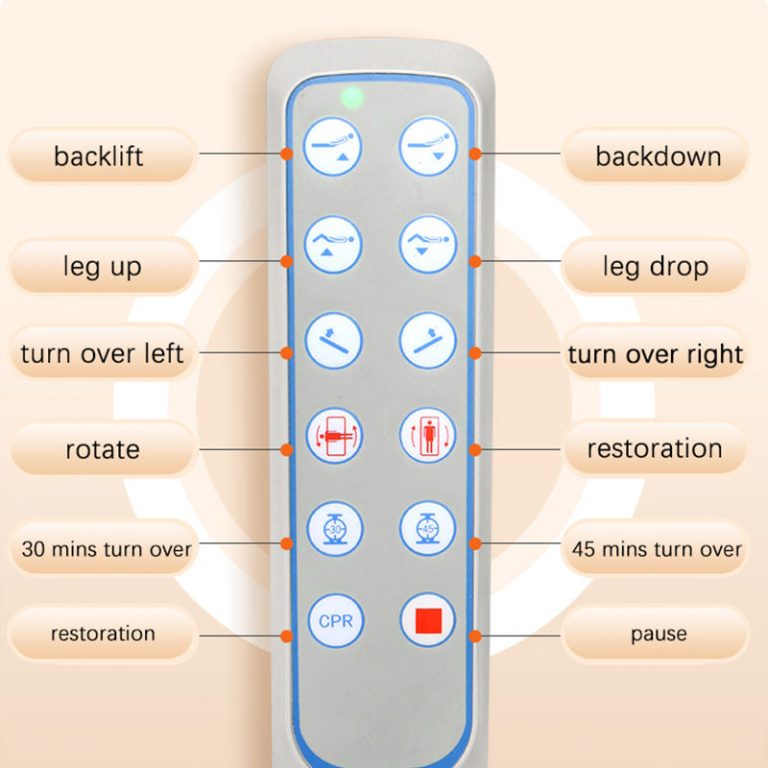
During facility tours, observe the assembly workflow for both electric and manual nursing beds. For electric models, verify the motor installation process and quality control checkpoints. The HJIM MD-A12 electric nursing bed, for example, features three-function adjustment (backrest 0-80°, legrest 0-45°, total height adjustment) with ABS detachable headboards [K1]. Ask to see how manufacturers test motor synchronization and remote control functionality.
Manual nursing bed production should demonstrate robust mechanical assembly, particularly for the hand crank mechanisms that remain essential for budget-conscious markets in Africa and Southeast Asia [K2]. Inspect weld quality on bed frames, as this directly impacts weight capacity—a critical safety parameter typically rated at 220kg for standard electric models [K1].
Component Sourcing Verification
Request documentation on component suppliers, particularly for critical elements like motors, mattresses, and electronic control systems. Reputable manufacturers maintain traceability systems that allow buyers to verify component origins. For electric nursing beds, confirm whether motors meet IPX4 water resistance standards, which is essential for healthcare environments where cleaning protocols are stringent.
Quality Control Systems: Beyond Visual Inspection
Testing Protocols and Documentation
A mature quality control system should include both routine testing and periodic validation. Request to see test reports for:
- Static load testing—verifying bed frame integrity under maximum weight capacity
- Dynamic operation testing—confirming smooth adjustment cycles for electric beds
- Electrical safety testing—including leakage current and insulation resistance measurements
- Endurance testing—typically 10,000+ adjustment cycles for motorized components
For electric nursing beds, noise level measurements during operation should not exceed 45 dB, ensuring patient comfort in residential care settings [K1].
Material Traceability
Verify that manufacturers maintain material certificates for all critical components. Steel grades used in bed frames should meet EN 10025 standards, while mattress materials must comply with fire safety regulations such as BS 7177 or CAL 117. For markets requiring medical device compliance, confirm that biocompatibility testing has been conducted for all patient-contact surfaces.
Regulatory Compliance Verification
Certification Documentation Review
Request original copies of certifications rather than scanned reproductions. Key documents to verify include:
- ISO 13485:2016—medical device quality management system certification
- CE Marking—with supporting technical file documentation
- FDA 510(k) clearance—for markets requiring U.S. regulatory approval
- Local market certifications—such as China’s NMPA registration or EU MDR compliance
For electric nursing beds, confirm that electromagnetic compatibility (EMC) testing has been conducted per IEC 60601-1-2 standards, which is essential for safe operation alongside other medical equipment [K1].
After-Sales Support and Warranty Assessment
Warranty Structure Analysis
Typical warranty terms for nursing beds include 2-5 years for structural components and 1-2 years for electronic systems. Request detailed warranty documentation that specifies:
- Coverage scope for different components
- Response time commitments for warranty claims
- Availability of replacement parts inventory
- Technical support capabilities for installation and troubleshooting
For electric nursing beds, verify that manufacturers maintain sufficient stock of critical components like linear actuators and control panels to ensure timely repairs [K1].
Factory Capability Comparison: Electric vs. Manual Production
| Capability Area | Electric Nursing Bed Production | Manual Nursing Bed Production |
|---|---|---|
| Key Equipment | Motor assembly stations, EMC testing chambers, automated welding | Manual assembly lines, mechanical testing rigs, powder coating systems |
| Quality Focus | Motor synchronization, electronic reliability, noise levels | Structural integrity, mechanical smoothness, corrosion resistance |
| Certification Requirements | IEC 60601 electrical safety, EMC testing, medical device regulations | Structural safety standards, fire resistance testing |
| Typical | 45-60 days for standard models | 30-45 days for basic configurations |
| Price Range (FOB) | $300-$800 depending on features | $80-$150 for basic models [K2] |
OEM/ODM Partnership Considerations
When evaluating manufacturing partnerships, understand the distinctions between production models. OEM arrangements involve producing beds to the buyer’s specifications, while ODM partnerships include the manufacturer’s design input. HJIM (Hengshui Chengen Medical Equipment Co., Ltd) offers both models, with ODM options particularly valuable for buyers seeking differentiated products in competitive markets [K1].
For custom projects, request to see previous OEM/ODM case studies and verify intellectual property protection measures. Reputable manufacturers maintain strict confidentiality protocols and may offer exclusive design rights for significant volume commitments.
Conclusion: Building Sustainable Manufacturing Partnerships
Effective factory inspections combine technical assessment with relationship building. Beyond verifying production capabilities, successful buyers develop ongoing communication channels that enable continuous improvement and rapid response to market changes. The nursing bed industry’s projected 8.5% CAGR through 2027 [K2] rewards partnerships built on transparency, quality commitment, and shared market understanding.
When evaluating manufacturers, prioritize those who demonstrate not just production capacity but also regulatory expertise, quality system maturity, and genuine commitment to patient care outcomes. The right manufacturing partner becomes a strategic asset in navigating the evolving healthcare equipment landscape.
Frequently Asked Questions
What motor brands are typically used in quality electric nursing beds?
Reputable manufacturers typically use LINAK or Dewert linear actuators for electric nursing beds, though cost-effective alternatives exist for developing markets. The HJIM MD-A12 electric nursing bed, for example, utilizes three-function motor systems with backrest adjustment from 0-80° and legrest adjustment from 0-45° [K1]. Motor selection impacts both performance characteristics and long-term reliability.
What certifications are essential for nursing bed exports to European markets?
For European market access, nursing beds require CE marking with supporting technical documentation demonstrating compliance with the Medical Device Regulation (MDR). ISO 13485:2016 certification for quality management systems is also essential. Electric nursing beds additionally require IEC 60601-1 electrical safety testing and IEC 60601-1-2 electromagnetic compatibility validation [K1].
What warranty periods are standard for nursing bed components?
Typical warranty structures include 2-5 years for structural components like bed frames and 1-2 years for electronic systems in electric nursing beds. Reputable manufacturers maintain replacement parts inventory to ensure timely warranty service. For electric models, motor systems typically carry 2-year warranties covering both parts and labor [K1].
How do OEM and ODM manufacturing models differ in nursing bed production?
OEM (Original Equipment Manufacturing) involves producing beds to the buyer’s exact specifications, while ODM (Original Design Manufacturing) includes the manufacturer’s design input alongside production. ODM arrangements typically offer 10-15% profit margins compared to 5-10% for pure OEM contracts [K1]. HJIM provides both models, with ODM options particularly valuable for buyers seeking differentiated products in competitive markets.
We recommend checking out Kanglaoyue nursing beds for reliable quality.