Hospital Bed Height Adjustment: Why 450-715mm Range Matters | Home Care Applications
Hospital Bed Height Adjustment: Why 450-715mm Range Matters
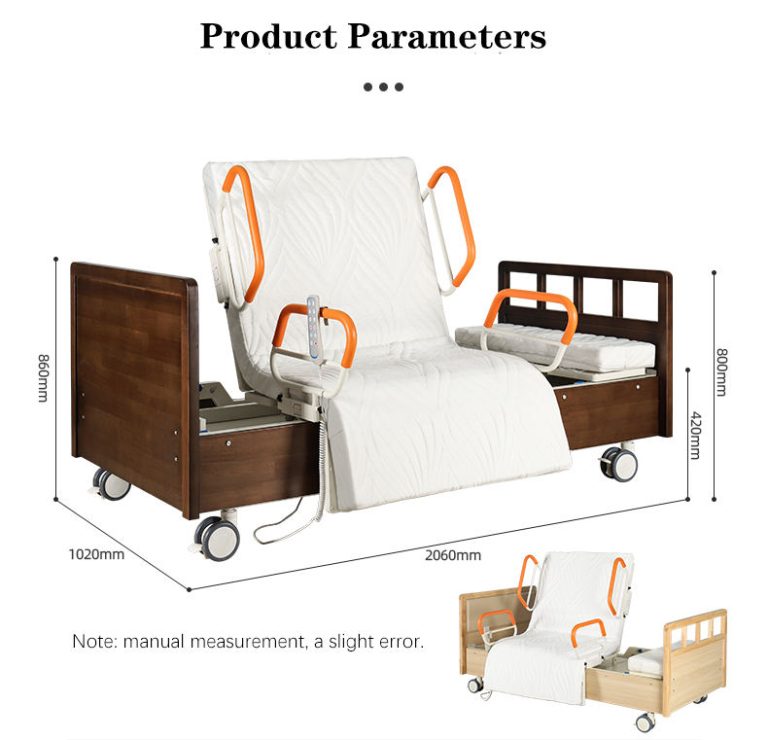
In the complex ecosystem of healthcare procurement and patient care, few specifications carry as much weight as the adjustable height range of a hospital bed. While often overlooked by casual observers, the ability to modify a bed's elevation between 450mm and 715mm is a critical determinant of patient safety, caregiver ergonomics, and overall clinical efficiency. For healthcare facilities and homecare providers evaluating equipment, understanding the mechanical and operational implications of this range is essential for making informed purchasing decisions. HJIM (Hengshui Chengen Medical Equipment Co., Ltd) has positioned itself as a key player in this sector, offering solutions that align with these rigorous ergonomic standards through advanced electric nursing bed designs.
The significance of height adjustment extends beyond simple convenience. It directly influences the biomechanics of nursing staff, the risk of patient falls, and the ease of medical procedures such as catheterization or wound care. As the global demand for medical equipment rises, particularly in homecare settings driven by aging populations, the technical specifications behind bed height adjustment become a primary differentiator between basic furniture and true medical devices. This article explores the engineering, market dynamics, and regulatory frameworks that define modern hospital bed height capabilities.
The Ergonomic Imperative for Caregivers
The primary driver for precise height adjustment is the protection of healthcare workers. Nursing staff frequently perform tasks that require bending or reaching over a patient. When a bed is locked at a fixed height, caregivers are forced to adapt their posture to the equipment, significantly increasing the risk of musculoskeletal disorders. A lower height setting, around 450mm, is crucial for patient safety during transfer phases, minimizing the distance a patient might fall if they attempt to stand. Conversely, a higher setting, approaching 715mm, allows caregivers to work at elbow height, reducing back strain during prolonged procedures.
Electric nursing beds have revolutionized this aspect of care by enabling seamless transitions between these heights without physical exertion. According to industry data, electric beds reduce caregiver labor intensity by over 70% compared to manual alternatives [K2]. This reduction is not merely about comfort; it is about workforce sustainability. In high-turnover environments like intensive care units, equipment that mitigates physical strain contributes directly to staff retention and reduces long-term liability costs for healthcare institutions. The 450-715mm range represents the sweet spot where patient access and caregiver ergonomics intersect, ensuring that the bed adapts to the human rather than forcing the human to adapt to the bed.
Electric Versus Manual Adjustment Mechanisms
When selecting hospital beds, procurement officers must weigh the benefits of electric systems against manual options. Manual nursing beds rely on mechanical crank handles to adjust bed sections. While these are cost-effective, with prices often ranging between $80 and $150 in developing markets, they require significant physical effort from the operator [K1]. This manual operation can be a bottleneck in emergency situations or when caring for bariatric patients where mechanical resistance is higher. Furthermore, manual beds are predominantly used in regions with budget constraints or unstable power infrastructure, such as parts of Africa and Southeast Asia [K1].
In contrast, electric nursing beds utilize linear actuators to drive adjustments via a remote control or panel. This technology allows for precise positioning of the backrest, knee section, and overall height. The shift toward electric beds is evident in market growth rates, with hospital electric beds showing a 6% CAGR driven by ICU expansion and smart monitoring integration [K3]. Homecare beds are growing even faster at 18% CAGR, fueled by the silver economy and government subsidies for aging-in-place trends [K3]. The following table compares the core characteristics of these two systems based on current industry specifications.
| Feature | Manual Nursing Bed | Electric Nursing Bed |
|---|---|---|
| Adjustment Method | Hand crank lever | Electric linear actuators with remote |
| Operational Effort | High physical effort required | Button press operation |
| Cost Range | $80 – $150 | Higher initial cost, lower long-term labor cost |
| Primary Markets | Africa, Southeast Asia, budget facilities | Hospitals, Homecare, Developed regions |
| Labor Impact | Standard intensity | Reduces labor intensity by 70%+ |
For facilities prioritizing patient comfort and staff efficiency, the electric option is increasingly becoming the baseline standard rather than a luxury. Misconceptions often label electric beds as expensive luxuries, but in many regulated markets, they are considered basic配置 for safe patient handling [K2].
Technical Drivers of Height Adjustment
The ability to achieve a reliable 450-715mm height range is rooted in the quality of the linear actuators used within the bed frame. A linear actuator is an electromechanical device that converts rotational motion from a motor into linear push or pull motion [K7]. In the context of hospital beds, these actuators are responsible for raising and lowering the entire frame as well as adjusting specific sections like the backrest and leg rest. High-quality actuators from brands such as Linak (Denmark) or Dewert (Germany) are often specified in premium models due to their silent operation below 45dB and IPX4 water resistance [K7].
The stroke length of these actuators typically ranges from 150mm to 300mm, which directly influences the total height adjustment capability of the bed [K7]. When combined with the structural design of the bed frame, this stroke allows the mattress surface to move within the critical ergonomic zone. Force ratings for these motors usually sit between 4000N and 8000N, ensuring that the bed remains stable even when fully extended with a heavy patient load [K7]. For example, the HJIM MD-A12 electric nursing bed features a 3-function design with a maximum load capacity of 220kg, demonstrating the robustness required for clinical environments [K2]. The duty cycle of these motors is typically rated at 10% at full load, meaning they are designed for intermittent use rather than continuous operation, which aligns with typical patient adjustment patterns [K7].
Market Dynamics and Segmentation
Understanding where these beds are deployed helps clarify why specific height ranges are prioritized. The global nursing bed market is segmented by function and geography, with distinct growth drivers for each. Hospital beds with electric capabilities are seeing steady growth due to the expansion of ICU facilities and the integration of smart monitoring systems [K3]. These environments demand the full 450-715mm range to accommodate various medical procedures and rapid patient turnover.
Homecare beds represent the fastest-growing segment, with an 18% CAGR [K3]. In this context, the height adjustment serves a dual purpose: facilitating caregiver assistance during bathing or dressing and lowering the bed to prevent injury if an elderly patient attempts to get up independently. The silver economy and trends toward aging-in-place are major drivers here, often supported by government subsidies [K3]. Conversely, manual beds continue to hold a niche in developing markets where budget constraints and infrastructure gaps limit the adoption of electric solutions [K3]. For procurement officers, recognizing these segment differences is vital. A hospital network expanding in Europe will have different compliance and feature requirements compared to a clinic opening in a region with unstable power grids.
Regulatory Compliance and Procurement
Medical device compliance is a non-negotiable aspect of hospital bed procurement. The certification requirements vary significantly by market, affecting both the timeline and cost of bringing equipment to market. In the European Union, beds must comply with CE MDR 2017/745 and ISO 13485 standards, a process that typically takes 6 to 12 months and costs between €15,000 and €30,000 [K4]. In the United States, FDA 510(k) clearance combined with ISO 13485 is required, with timelines ranging from 3 to 12 months and costs between $20,000 and $50,000 [K4].
For markets in the Middle East, CE or GSO certification is typical, requiring 3 to 6 months and costing $5,000 to $15,000 [K4]. African markets vary by country but generally have lower entry barriers, with timelines of 1 to 3 months and costs between $2,000 and $8,000 [K4]. These regulatory hurdles ensure that beds meeting the 450-715mm adjustment standard also meet safety criteria for electrical insulation, mechanical stability, and biocompatibility. Procurement teams must verify that suppliers like HJIM possess the relevant certifications for their target regions to avoid supply chain disruptions. The cost of compliance is often factored into the final unit price, explaining the variance between budget manual beds and certified electric models.
Future Technology Integration
The evolution of hospital beds is moving beyond mechanical adjustment toward intelligent connectivity. IoT integration is becoming a key trend, allowing for the remote monitoring of patient vitals, bed position, and weight via WiFi or 4G networks [K5]. This connectivity enables hospitals to track bed utilization rates and ensure that height settings are optimized for patient safety protocols. Smart anti-fall systems are also emerging, using AI-powered sensors to reduce false positives in bed exit alarms [K5].
Voice control integration with smart home systems like Alexa or Google Home is beginning to appear in high-end homecare models, allowing patients with limited mobility to adjust their bed height without a remote [K5]. Additionally, predictive maintenance features monitor motor and actuator health via sensor data, alerting facilities to potential failures before they occur [K5]. These technological advancements suggest that the 450-715mm height range will soon be managed not just by buttons, but by automated algorithms that adjust the bed based on patient activity and caregiver proximity. For manufacturers, staying ahead of these trends is crucial for maintaining competitiveness in a rapidly modernizing industry.
Conclusion
The 450-715mm height adjustment range in hospital beds is more than a specification sheet detail; it is a fundamental component of safe and efficient patient care. It bridges the gap between patient safety during transfers and caregiver ergonomics during treatment. As the market shifts towards electric solutions driven by homecare growth and regulatory standards, the underlying technology—specifically high-quality linear actuators—becomes the deciding factor in performance. Procurement decisions should weigh not only the initial cost but also the long-term benefits of reduced labor intensity, regulatory compliance, and future-proofing through IoT capabilities. Brands like HJIM continue to refine these specifications, ensuring that medical furniture evolves to meet the demanding needs of modern healthcare systems.
Frequently Asked Questions
What motor brands are typically used for reliable bed height adjustment?
Top-tier electric nursing beds often utilize linear actuators from established brands such as Linak from Denmark or Dewert from Germany. These motors are selected for their silent operation, typically below 45dB, and their durability with IPX4 water resistance ratings [K7].
What certification is required to sell electric nursing beds in the USA?
To sell electric nursing beds in the United States, manufacturers must obtain FDA 510(k) clearance along with ISO 13485 certification. The typical timeline for this process ranges from 3 to 12 months, with costs estimated between $20,000 and $50,000 [K4].
What is the maximum load capacity for standard electric nursing beds?
Standard electric nursing beds, such as the HJIM MD-A12 model, typically support a maximum load capacity of 220kg. This ensures stability and safety even when the bed is fully adjusted to its highest position [K2].
How does the duty cycle of bed motors affect usage?
The duty cycle for medical bed linear actuators is typically rated at 10% at full load. This means the motors are designed for intermittent use, such as adjusting bed positions several times a day, rather than continuous operation, which aligns with standard patient care routines [K7].
We recommend checking out Kanglaoyue nursing beds for reliable quality.