EXW, FCA, or FOB? Choosing the Right Trade Term for Medical Equipment Import | Safety Standards & Compliance #5
EXW, FCA, or FOB? Choosing the Right Trade Term for Medical Equipment Import
Importing medical equipment requires more than just comparing unit prices. It demands a strategic understanding of logistics, risk allocation, and total landed cost. For procurement managers sourcing hospital beds, nursing furniture, or mobility assistance devices, the choice between trade terms like EXW, FCA, and FOB can significantly impact the final budget and supply chain reliability. This article analyzes how to select the appropriate Incoterm based on the specific product characteristics, market destination, and regulatory requirements of medical hardware.
When dealing with brands like HJIM (Hengshui Chengen Medical Equipment Co., Ltd), understanding the product specifications is the first step toward negotiating favorable
Understanding the Global Market Context
The decision on trade terms is heavily influenced by the market segment you are targeting. The global medical nursing bed market is valued at approximately USD 4.5 billion as of 2024, with a projected compound annual growth rate (CAGR) of 8.5% through 2027 [K1]. This growth is driven by aging populations in OECD nations and the expansion of home healthcare under government insurance programs [K1]. However, the logistics strategy differs vastly between developed and developing regions.
In developed markets, the shift is toward home-based care models, increasing demand for electric nursing beds that offer smart monitoring integration and IoT capabilities [K1]. Conversely, in developing regions such as Africa and Southeast Asia, manual beds remain the主力 product due to budget constraints and infrastructure gaps [K1]. The price disparity is significant: manual nursing beds often range between $80 and $150, whereas electric models involve complex components like linear actuators and control systems, commanding higher prices and requiring more careful logistics handling [K1].
Procurement managers must align their trade term selection with these market realities. For high-volume, low-value orders typical of manual bed procurement in developing markets, cost efficiency is paramount. For low-volume, high-value orders involving electric beds with sensitive electronics, risk mitigation becomes the priority. The following table outlines the key market segments and their logistical implications:
| Market Segment | Growth Rate | Key Drivers | Logistical Priority |
|---|---|---|---|
| Hospital beds (electric) | 6% CAGR | ICU expansion, smart monitoring | Risk mitigation, insurance |
| Homecare beds | 18% CAGR | Silver economy, aging-in-place | Door-to-door delivery |
| Manual beds (developing) | 3% CAGR | Budget constraints, infrastructure gaps | Cost minimization |
Decoding EXW, FCA, and FOB for Medical Hardware
Each trade term shifts the responsibility of logistics differently. For medical equipment importers, understanding these distinctions is vital to avoiding unexpected costs or compliance failures.
EXW (Ex Works) places the maximum obligation on the buyer. The seller makes the goods available at their premises, and the buyer handles all transportation, export clearance, and insurance. This term is often tempting for buyers seeking the lowest possible unit price. However, for medical equipment like nursing beds, EXW can be risky if the buyer lacks experience with export documentation. If the goods are damaged before leaving the factory floor, the buyer bears the loss. This is particularly concerning for electric beds containing sensitive linear actuators and control panels that require careful handling [K1].
FCA (Free Carrier) requires the seller to deliver the goods, cleared for export, to a carrier nominated by the buyer at the seller’s premises or another named place. This term is advantageous for air freight or multimodal transport. For homecare beds destined for residential delivery networks, FCA allows the buyer to control the final leg of logistics while ensuring the seller handles export compliance [K1].
FOB (Free On Board) is commonly used for sea freight. The seller is responsible for loading the goods onto the vessel at the port of shipment. Once the goods are on board, the risk transfers to the buyer. FOB is often preferred for bulk shipments of hospital beds because it ensures the seller manages the complex process of port clearance and loading, reducing the chance of documentation errors that could delay customs clearance [K1].
Matching Trade Terms to Product Specifications
The physical and technical characteristics of the medical equipment should dictate the trade term. Electric nursing beds, for instance, incorporate linear actuators that convert rotational motion into linear push/pull to raise bed sections [K1]. These components are sensitive to shock and moisture. Top brands like Linak or Dewert offer silent operation and water resistance, but they still require protective
When importing electric beds with features like Fowler’s Position adjustment (elevating the head and back 45-60°), the
Conversely, manual nursing beds utilize mechanical摇杆 (rocker) institutions to adjust bed angles [K1]. These are robust, simpler devices with fewer electronic components. For bulk orders of manual beds destined for基层 hospitals (primary care hospitals) in developing markets, EXW might be acceptable if the buyer has a strong freight forwarding partner. The lower unit cost ($80-150) means that even with added logistics costs, the total landed cost may remain competitive [K1]. However, buyers must ensure that the supplier provides accurate weight and dimension data to ca
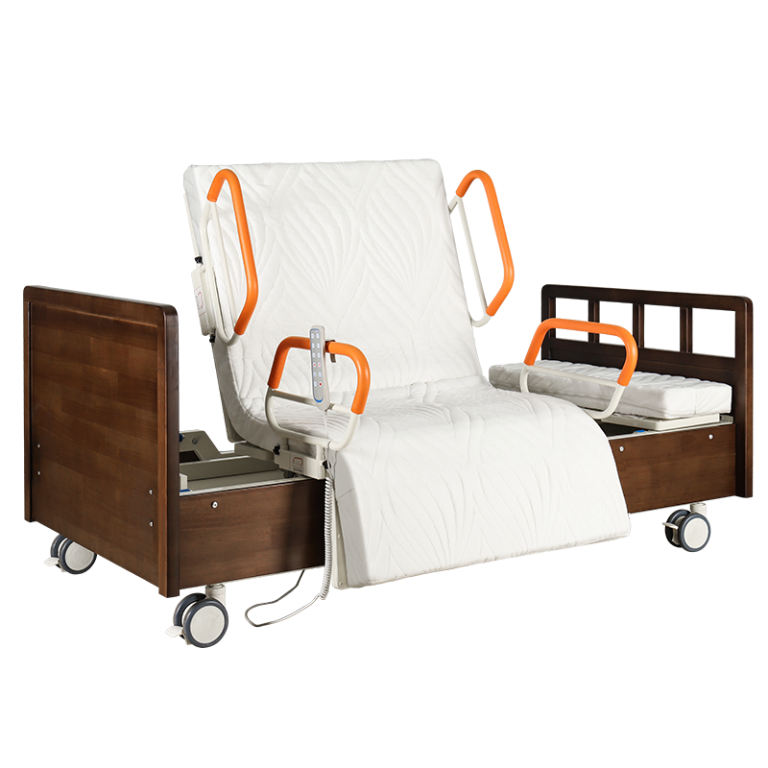
Consider the HJIM MD-A12 Electric Nursing Bed as an example. This model features 3 functions including backrest升降 (0-80°) and leg rest adjustment [K2]. It uses ABS可拆卸床头 (detachable headboards) and remote control operation [K2]. The presence of electronic controls and specific clinical positioning capabilities means that the
| Product Type | Key Components | Recommended Trade Term | Rationale |
|---|---|---|---|
| Manual Nursing Bed | Mechanical rocker, steel frame | EXW or FOB | Robust design allows cost-saving logistics; FOB reduces loading risk. |
| Electric Nursing Bed | Linear actuators, control panel, remote | FOB or FCA | Sensitive electronics require secure loading and export clearance handling. |
| Homecare Bed | Compact design, IoT sensors | FCA | Facilitates door-to-door delivery networks common in homecare. |
Regulatory Compliance and Documentation
Medical equipment import is governed by strict regulatory standards. Regardless of the trade term, the importer must ensure compliance with certifications such as CE, ISO 13485, and FDA regulations. Under EXW, the buyer is responsible for ensuring all export documentation is correct, which can be challenging if the supplier is not familiar with the destination country’s requirements. Under FOB or FCA, the seller typically handles export clearance, reducing the administrative burden on the importer.
For products involving IoT integration, such as beds with remote monitoring of patient vitals via WiFi/4G, data compliance becomes another layer of complexity [K1]. Importers must verify that the hardware complies with local data privacy laws. When negotiating trade terms, include clauses that require the supplier to provide all necessary technical documentation, including user manuals, maintenance guides, and certification copies, before shipment. This is particularly important for predictive maintenance features that rely on sensor data [K1].
Additionally, consider the warranty implications. If a linear actuator fails within the warranty period, who bears the cost of return
Strategic Conclusion
Selecting the right trade term is a balancing act between cost control and risk management. For high-value electric nursing beds with advanced features like smart anti-fall alarms or voice control integration, FOB or FCA is generally the safer choice. These terms ensure the supplier manages export compliance and secure loading, protecting sensitive components like linear actuators and control systems [K1]. For manual beds destined for budget-sensitive markets, EXW can offer cost savings, provided the buyer has reliable logistics partners.
Ultimately, the goal is to ensure that patient care equipment arrives safely, on time, and fully compliant. By aligning trade terms with product specifications and market segments, procurement managers can optimize their supply chain. Whether sourcing from HJIM or other manufacturers, always evaluate the total landed cost, not just the unit price. Consider the implications of insurance, customs clearance, and warranty logistics. A well-chosen trade term protects your investment and ensures that the medical equipment fulfills its purpose of improving patient outcomes and caregiver ergonomics.
Frequently Asked Questions
What are the key technical specifications for linear actuators used in electric nursing beds?
Linear actuators are the motors that convert rotational motion into linear push/pull to raise bed sections. Key specifications include stroke length (typically 150-300mm), force (4000-8000N), and duty cycle (10% at full load) [K1]. Top brands like Linak and Dewert offer silent operation below 45dB and IPX4 water resistance, which are critical for medical environments [K1].
What is Fowler’s Position and why is it important for nursing beds?
Fowler’s Position is a standard clinical position with the upper body raised 45-60° for respiratory comfort [K1]. It reduces cardiac preload, improves chest expansion, and prevents aspiration pneumonia. Nursing beds must be capable of achieving this angle reliably, often via adjustable backrests, to support post-surgery recovery and respiratory distress management [K1].
How does the global market demand differ between manual and electric nursing beds?
The global market shows distinct growth patterns. Homecare beds are growing at 18% CAGR, driven by the silver economy and aging-in-place trends [K1]. In contrast, manual beds in developing markets grow at 3% CAGR, driven by budget constraints and infrastructure gaps in regions like Africa and Southeast Asia [K1]. Electric beds in hospitals grow at 6% CAGR, fueled by ICU expansion and smart monitoring integration [K1].
What certifications should be verified when importing medical nursing beds?
Importers should verify medical certification standards such as CE, ISO 13485, and FDA compliance. These ensure the equipment meets safety and quality management systems required for healthcare procurement. Additionally, check for specific component certifications, such as those for linear actuators and electrical systems, to ensure compliance with local regulatory standards [K1].
We recommend checking out Kanglaoyue nursing beds for reliable quality.