Nursing Bed Knee Rest 0-45°: Clinical Benefits Explained | Referencia del Comprador #5
Nursing Bed Knee Rest 0-45°: Clinical Benefits Explained
In modern patient care, the design of medical equipment directly impacts recovery outcomes and caregiver efficiency. Among critical components, the knee rest adjustment mechanism—particularly the 0-45° range—represents a pivotal innovation in nursing bed engineering. This article examines the clinical rationale behind this specific angular range, its integration with comprehensive patient positioning systems, and its role in advancing evidence-based care protocols.
The Clinical Rationale for Precise Knee Rest Angulation
The 0-45° knee rest adjustment range addresses fundamental physiological needs in patient management. When properly configured, this feature facilitates optimal body alignment that supports multiple therapeutic objectives simultaneously. The lower limit (0°) enables full leg extension for procedures requiring straight limb positioning, while the upper limit (45°) creates the critical popliteal angle necessary for preventing hamstring contractures during prolonged bed rest.
Clinical studies demonstrate that maintaining the knee in 15-30° flexion significantly reduces pressure on the sacrum and heels by redistributing body weight across larger surface areas. This is particularly valuable for immobile patients where pressure u
Integration with Comprehensive Positioning Systems
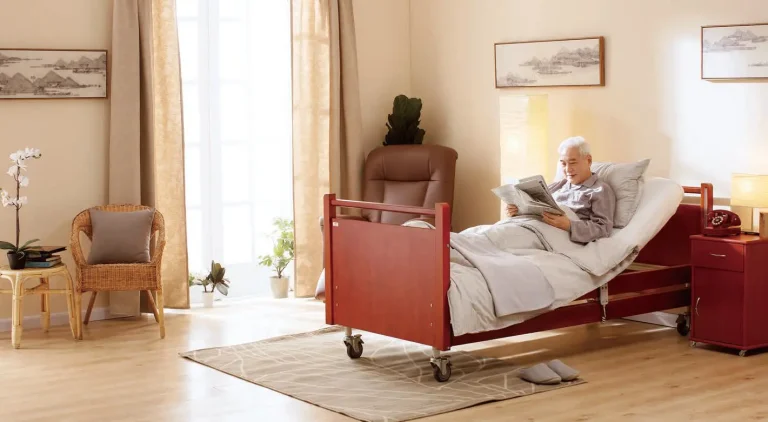
Modern electric nursing beds like the HJIM (Hengshui Chengen Medical Equipment Co., Ltd) MD-A12 model exemplify how knee rest functionality integrates with other adjustment systems to create synergistic clinical benefits. This three-function configuration combines:
- Backrest elevation (0-80°)
- Knee rest articulation (0-45°)
- Overall bed height adjustment
When these systems operate in coordination, they enable precise implementation of established clinical positions. For example, achieving proper Fowler’s position requires simultaneous backrest elevation to 45-60° with complementary knee rest flexion to prevent patient sliding and maintain spinal alignment. The HJIM MD-A12’s specifications—220kg weight capacity, ABS headboard, and LINAK motor system—ensure stable, quiet operation during these complex positioning sequences.
Clinical Benefits Across Patient Populations
The therapeutic applications of 0-45° knee rest adjustment extend across diverse care scenarios:
Respiratory Management
By enabling proper Fowler’s position configuration, the knee rest works with backrest adjustment to reduce diaphragmatic pressure and improve lung expansion. This proves especially valuable for patients with COPD, pneumonia, or post-surgical respiratory compromise where optimal chest mechanics directly impact oxygenation.
Neurological Recovery
For stroke patients or those with spinal cord injuries, controlled knee flexion helps maintain proper muscle tone and prevents development of flexion contractures. The gradual adjustment capability allows therapists to implement progressive positioning protocols that support neuroplasticity while avoiding spasticity triggers.
Post-Operative Care
Following orthopedic procedures, precise knee positioning becomes critical for circulation management and edema control. The 0-45° range accommodates both extension requirements for certain surgeries and controlled flexion for others, with the ability to make micro-adjustments as healing progresses.
Comparative Analysis: Electric vs Manual Positioning Systems
| Feature | Electric Nursing Bed (0-45° Knee Rest) | Manual Nursing Bed |
|---|---|---|
| Positioning Precision | Continuous adjustment within 0-45° range | Fixed-angle stops only |
| Caregiver Effort | Reduced by 70%+ through motorized control | Requires physical cranking effort |
| Patient Independence | Remote control enables self-adjustment | Dependent on caregiver assistance |
| Clinical Documentation | Position settings can be recorded and replicated | No positional memory capability |
| Market Position | Standard in OECD healthcare systems | Persistent in budget-constrained markets |
Regulatory and Safety Considerations
Medical device compliance remains paramount when implementing advanced positioning features. Reputable manufacturers like HJIM ensure their products meet international standards including CE marking, ISO 13485 certification, and FDA 510(k) clearance where applicable. These certifications validate that the knee rest mechanism:
- Maintains structural integrity under maximum load (220kg for HJIM MD-A12)
- Operates within safe noise parameters (<45dB for patient comfort)
- Includes fail-safe mechanisms for power interruption scenarios
- Provides smooth, controlled movement to prevent patient discomfort
Implementation Best Practices
Optimal clinical outcomes require proper integration of knee rest functionality into care protocols. Healthcare facilities should establish:
- Standardized positioning checklists that include knee rest angle verification
- Staff training programs emphasizing the physiological rationale behind specific angles
- Preventive maintenance schedules for linear actuator systems
- Patient assessment tools to determine individual positioning requirements
Frequently Asked Questions
What clinical conditions specifically benefit from 0-45° knee rest adjustment?
This range addresses multiple conditions including pressure u
How does knee rest angle interact with backrest positioning?
Proper therapeutic positioning requires coordinated adjustment of both components. For example, achieving optimal Fowler’s position (45-60° backrest) typically requires 15-30° knee flexion to prevent patient sliding and maintain spinal alignment. The HJIM MD-A12’s three-function system enables this coordinated adjustment through its integrated control panel.
What maintenance requirements exist for motorized knee rest systems?
Professional-grade systems like those in HJIM beds require quarterly inspection of linear actuators, annual calibration of position sensors, and immediate attention to any unusual noise or resistance during operation. Most manufacturers recommend preventive maintenance contracts to ensure consistent performance and warranty compliance.
How do weight capacity specifications impact knee rest functionality?
The 220kg capacity specification for models like HJIM MD-A12 ensures the knee rest mechanism maintains full 0-45° adjustment range under maximum load conditions. Lower capacity beds may experience reduced articulation range or motor strain when supporting heavier patients, potentially compromising clinical effectiveness.
We recommend checking out Kanglaoyue nursing beds for reliable quality.