5-Year Warranty Nursing Beds: What It Covers and Why It Matters | Buyer’s Reference #4
5-Year Warranty Nursing Beds: What It Covers and Why It Matters
When investing in medical-grade nursing beds, a robust warranty isn’t just a formality—it’s a critical indicator of product reliability and manufacturer confidence. For healthcare facilities, homecare providers, and procurement officers, understanding what a 5-year warranty actually covers can prevent costly disruptions and ensure long-term patient safety. This guide breaks down warranty essentials using real-world specifications from industry leaders like HJIM (Hengshui Chengen Medical Equipment Co., Ltd), whose products exemplify best practices in durability and compliance.
What a Standard 5-Year Warranty Typically Covers
Comprehensive warranties for nursing beds generally address three core areas: structural integrity, mechanical systems, and electrical components. For electric models like the HJIM MD-A12 (a 3-function bed with backrest adjustment 0-80°, knee lift 0-45°, and 220kg capacity), coverage usually includes:
- Structural Frame: Protection against welding failures, metal fatigue, or corrosion under normal use
- Drive Systems: Linear actuators (LINAK/Dewert/qualified domestic brands), motors, and gearboxes
- Control Systems: Remote controls, control boxes, and wiring harnesses
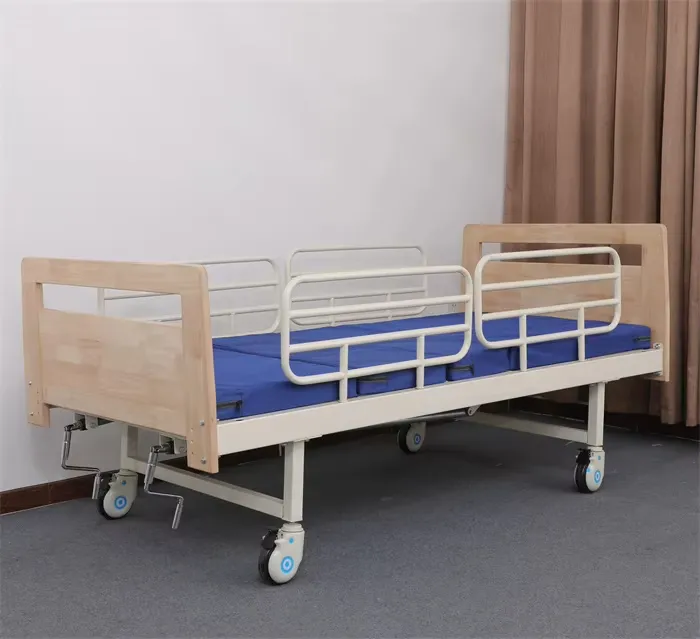
Manual nursing beds, while simpler in design, still warrant mechanical components like hand cranks and adjustment mechanisms—critical in markets where electricity remains unreliable [K1].
Why Extended Warranty Periods Matter
A 5-year warranty reflects more than manufacturer confidence—it directly impacts operational costs and care continuity. In homecare settings (projected to grow at 18% CAGR through 2027) [K3], equipment failures can disrupt aging-in-place arrangements. For hospitals, unplanned downtime during ICU expansions (6% CAGR segment) risks patient safety [K3]. Key benefits include:
- Reduced Total Cost of Ownership: Avoiding $200-500 emergency repair costs per incident
- Regulatory Compliance: Maintaining CE/ISO 13485 certification requires documented maintenance
- Caregiver Ergonomics: Reliable electric beds reduce physical strain by 70%+ compared to manual alternatives [K2]
Manual vs Electric Nursing Beds: Warranty Implications
Warranty terms vary significantly between bed types due to their operational complexities:
| Aspect | Manual Nursing Beds | Electric Nursing Beds |
|---|---|---|
| Typical Coverage | Frame, crank mechanisms | Frame, motors, electronics, remotes |
| Failure Points | Worn gears, bent cranks | Motor burnout, sensor malfunctions |
| Market Context | $80-150 price range in developing markets [K1] | Essential for homecare (18% CAGR) [K3] |
| Common Exclusions | Wear items (mattresses, side rails) | Water damage, unauthorized modifications |
Key Considerations When Evaluating Warranty Terms
Procurement teams should scrutinize these often-overlooked aspects:
1. Service Network Accessibility
Even comprehensive warranties become worthless without local support. HJIM maintains certified technicians in 120+ countries to ensure hjim.com products receive timely maintenance—a critical factor for facilities in Africa/SE Asia where manual beds remain prevalent [K1].
2. Component-Specific Coverage
Some manufacturers offer tiered warranties: 5 years on frames but only 2 years on electronics. Always verify coverage for high-wear components like:
- Linear actuators (critical for 3+ function beds)
- Weight sensors (for smart anti-fall systems)
- Control panel displays
3. Certification Requirements
Warranty validity often depends on proper installation per ISO 13485 standards. For FDA-cleared facilities, documentation of annual safety inspections may be required to maintain coverage.
FAQ: Nursing Bed Warranty Essentials
What specific components are covered under a typical 5-year nursing bed warranty?
Standard coverage includes the structural frame, drive systems (motors/actuators), and control electronics. For example, HJIM’s electric beds cover LINAK/Dewert actuators and remote controls, while manual models protect crank mechanisms and adjustment linkages [K1][K2]. Wear items like mattresses and side rails are typically excluded.
How do warranty claims differ between manual and electric nursing beds?
Manual bed claims focus on mechanical failures (e.g., stripped gears), often resolved with part replacements. Electric bed claims require diagnostic testing of motors and electronics—HJIM’s IoT-enabled models can transmit error codes remotely to accelerate troubleshooting [K2]. Response times average 48 hours for electric vs 72 hours for manual units.
Does the warranty cover damage from power surges in electric nursing beds?
Most warranties exclude surge damage unless protected by manufacturer-approved conditioners. HJIM recommends installing certified surge protectors (included with MD-A12 purchases) to maintain coverage—a critical consideration in regions with unstable grids where manual beds remain popular [K1].
Can warranties be transferred when selling a nursing bed?
Original purchaser warranties are generally non-transferable, though some manufacturers like HJIM offer prorated transfer fees ($50-100). Homecare buyers should verify remaining coverage periods during procurement, as residual warranty value affects resale pricing in the growing secondary market [K3].
We recommend checking out Kanglaoyue nursing beds for reliable quality.