Electric Nursing Bed vs ICU Bed: What is the Difference? | Feature Comparison #7
Electric Nursing Bed vs ICU Bed: What is the Difference?
When selecting medical beds for healthcare facilities or home care environments, understanding the distinction between electric nursing beds and ICU beds is critical for both clinical outcomes and operational efficiency. While both serve patients with mobility limitations, their design philosophies, technical capabilities, and intended use cases differ significantly. This article provides a detailed comparison based on industry standards, technical specifications, and real-world applications.
Core Functional Differences
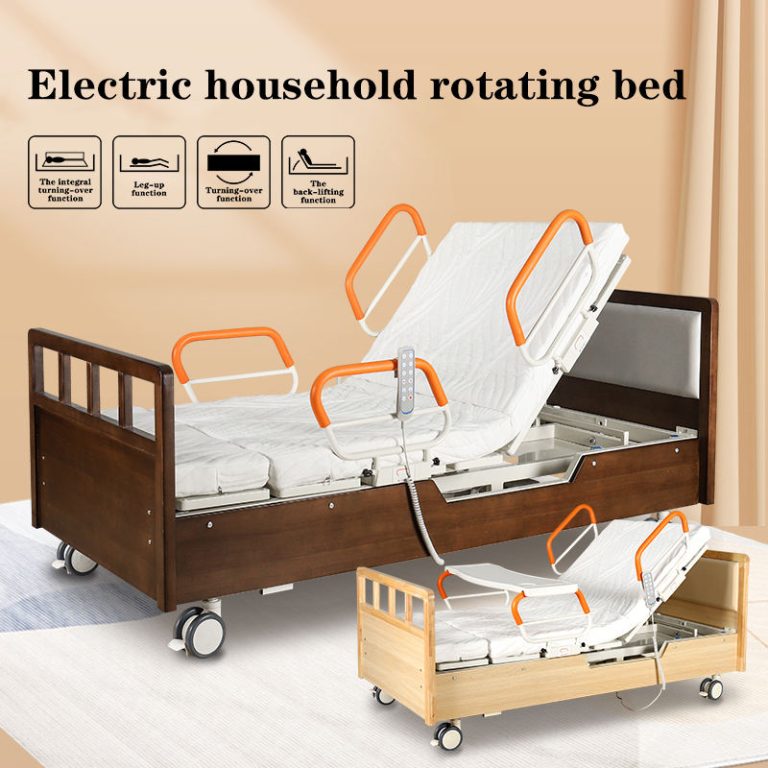
Electric nursing beds prioritize patient comfort and caregiver ergonomics through motorized adjustments. As defined in industry knowledge bases, these beds use linear actuators (typically 2-5 motors) to enable remote-controlled positioning of the backrest, knee section, and overall height [K1]. The HJIM MD-A12 model exemplifies this category with 3-function capabilities: backrest adjustment (0-75°), knee lift (0-45°), and height variation, supporting up to 220kg load capacity [K1]. These beds reduce caregiver labor intensity by over 70% compared to manual alternatives [K1].
ICU beds represent a specialized subset designed for critical care environments. Beyond basic positioning, they incorporate advanced medical functionalities like Trendelenburg positioning (head-down tilt of 12-15° for shock management) and reverse Trendelenburg capabilities [K2]. These beds often integrate with patient monitoring systems, IV poles, and medical gas outlets. Their construction emphasizes durability for 24/7 operation in high-acuity settings, with enhanced safety features including brake systems and emergency lowering mechanisms.
Clinical Application Scenarios
Electric nursing beds dominate in general ward settings, rehabilitation centers, and home healthcare environments. Their primary value proposition lies in preventing complications like pressure u
ICU beds serve exclusively in critical care units where continuous medical intervention is required. Their Trendelenburg functionality proves essential for procedures like laparoscopic surgery or post-craniotomy venous drainage [K2]. These beds support complex medical workflows with features like CPR release mechanisms and compatibility with hospital information systems. The hospital bed segment’s 6% CAGR growth correlates directly with ICU expansion worldwide [K3].
Technical Specifications Comparison
| Feature | Electric Nursing Bed | ICU Bed |
|---|---|---|
| Motor Configuration | 2-5 linear actuators | 4-6 motors with medical-grade components |
| Positioning Range | Backrest: 0-80°, Knee: 0-45° | Includes Trendelenburg (12-15°) and reverse positions |
| Load Capacity | 200-250 kg standard | 250-350 kg for bariatric applications |
| Monitoring Integration | Optional basic sensors | Mandatory compatibility with vital signs monitors |
| Medical Certifications | CE, ISO 13485 | CE, ISO 13485, FDA 510(k) clearance |
| Typical Applications | General wards, home care | ICU, OR, emergency departments |
Procurement Considerations
Healthcare procurement decisions should align with clinical requirements and regulatory standards. For electric nursing beds, key evaluation criteria include motor brand reliability (LINAK/Dewert vs domestic alternatives), noise levels below 45dB for patient comfort, and ABS headboards for infection control [K1]. The HJIM MD-A12 model demonstrates these features with its 3-function configuration and 220kg capacity [K1].
ICU bed procurement requires stricter due diligence. Buyers must verify compatibility with existing hospital infrastructure, including medical gas outlets and monitoring systems. Emergency features like manual crank backups during power failures and quick-release side rails become critical. All ICU beds should maintain FDA 510(k) clearance for medical device compliance, while electric nursing beds typically require CE marking and ISO 13485 certification.
Market Trends and Future Directions
The global medical nursing bed market, valued at USD 4.5 billion in 2024, shows divergent growth patterns across segments [K3]. Homecare beds are experiencing explosive 18% CAGR growth driven by silver economy trends and government subsidies, while traditional hospital beds grow at a steady 6% CAGR [K3]. This divergence reflects broader healthcare shifts toward decentralized care models.
Technological convergence is blurring traditional boundaries. Next-generation electric nursing beds increasingly incorporate smart monitoring capabilities previously exclusive to ICU beds, while ICU manufacturers are developing more cost-effective models for sub-acute care settings. However, fundamental design differences remain rooted in their primary use cases: comfort-focused care versus life-support functionality.
Conclusion
Selecting between electric nursing beds and ICU beds ultimately depends on clinical requirements rather than price considerations alone. Electric nursing beds excel in promoting patient comfort and caregiver efficiency in non-critical settings, while ICU beds provide essential life-support capabilities for acute care environments. Healthcare facilities should conduct thorough needs assessments considering patient acuity levels, infrastructure compatibility, and regulatory requirements before making procurement decisions. As the market evolves toward more integrated care models, understanding these distinctions becomes increasingly important for optimizing both patient outcomes and operational efficiency.
Frequently Asked Questions
What weight capacity should I consider for bariatric patients?
Standard electric nursing beds typically support 200-250kg, while specialized bariatric ICU beds can handle up to 350kg. The HJIM MD-A12 model offers 220kg capacity suitable for most adult patients [K1]. For morbidly obese patients, always verify the bed’s certified maximum load and frame reinforcement specifications before procurement.
Are ICU beds required to have FDA clearance?
Yes, ICU beds used in U.S. healthcare facilities must maintain FDA 510(k) clearance as Class II medical devices. Electric nursing beds for general care may only require CE marking and ISO 13485 certification depending on their intended use. Always request current certification documentation during procurement evaluation.
What motor brands indicate reliable performance?
Industry-standard linear actuators from LINAK or Dewert typically provide longer service life (10,000+ cycles) compared to domestic alternatives. When evaluating electric nursing beds, check motor specifications in technical documentation – premium models will explicitly state motor brand and warranty terms [K1].
Can electric nursing beds be used in ICU settings?
Generally no. While some advanced electric nursing beds offer basic positioning features, they lack critical ICU requirements like Trendelenburg functionality, medical gas outlet compatibility, and integration with life-support systems [K2]. Using non-ICU certified beds in critical care environments may violate regulatory requirements and compromise patient safety.