The Ultimate Nursing Bed Specification Checklist
The Ultimate Nursing Bed Specification Checklist
The global medical nursing bed market is valued at approximately USD 4.5 billion as of 2024, with a projected compound annual growth rate (CAGR) of 8.5% through 2027 [K2 English]. This growth is driven by aging populations in OECD nations, the expansion of home healthcare under government insurance programs, and a significant shift from hospital-centric to home-based care models [K2 English]. For healthcare procurement officers, facility managers, and OEM partners, navigating this expanding landscape requires a deep understanding of product specifications, regulatory compliance, and functional utility. At HJIM (Hengshui Chengen Medical Equipment Co., Ltd), we recognize that selecting the right nursing bed is not merely about purchasing furniture; it is about investing in patient care, caregiver ergonomics, and long-term operational efficiency.
This checklist serves as a comprehensive guide to evaluating nursing bed specifications. Whether you are sourcing for a premium private hospital, a budget-conscious community clinic, or a home care package, understanding the technical nuances between electric and manual systems, safety mechanisms, and material standards is essential for making informed decisions.
Understanding the Core Mechanism: Electric vs. Manual Nursing Beds
The fundamental decision in nursing bed procurement lies in choosing between electric and manual mechanisms. Each serves distinct market needs and operational environments. Understanding the underlying logic of each type helps align procurement with budget constraints and patient care requirements.
Electric Nursing Beds: Automation and Patient Independence
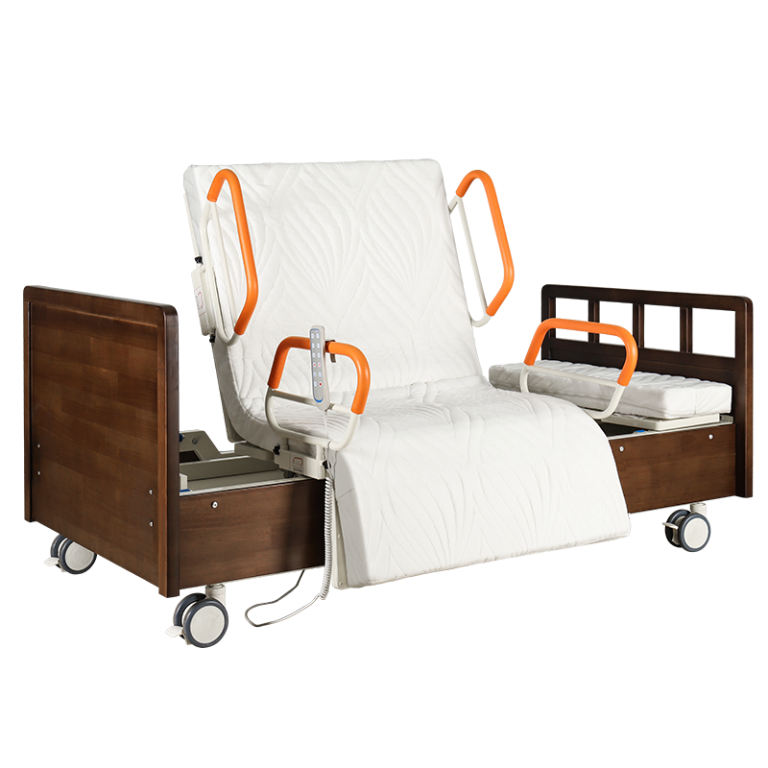
An electric nursing bed utilizes electric linear actuators to replace manual crank handles, allowing the bed surface angles to be adjusted via a remote control or control panel [K1 Chinese]. The core logic of this technology addresses the critical problem of patients who are immobile but require frequent position changes. In traditional manual setups, caregivers must physically exert force to turn cranks, which increases labor intensity and the risk of caregiver injury [K1 Chinese]. Electric beds mitigate this by allowing simple button operations to raise the backrest, lift the legs, or adjust the overall height.
Industry examples, such as the HJIM MD-A12 Electric Nursing Bed, typically offer three functions: backrest adjustment (0-80°), leg rest adjustment (0-45°), and overall height lifting [K1 Chinese]. These beds are equipped with high-quality motors, often from brands like LINAK or Dewert, which ensure smooth operation and low noise levels [K1 Chinese]. The use of ABS detachable headboards is also a standard feature in modern electric models, facilitating easier cleaning and maintenance [K1 Chinese].
While there is a common misconception that electric beds are luxury items, in many developed healthcare systems, they have become basic configurations rather than luxuries [K1 Chinese]. They are essential for preventing pressure u
Manual Nursing Beds: Cost-Effectiveness and Reliability
Manual nursing beds operate using mechanical crank mechanisms to adjust the bed surface angles. They do not require electricity, making them structurally simpler and significantly lower in cost [K2 Chinese]. The underlying logic for manual beds is rooted in economic efficiency and reliability in environments where power stability is a concern.
In markets such as Africa and Southeast Asia, manual beds remain the主力 (main force) products, with prices ranging from $80 to $150 [K2 Chinese]. They provide basic position adjustment functions that meet the most fundamental nursing needs [K2 Chinese]. While the global trend is shifting towards electric beds as costs decrease, manual beds continue to hold a significant market share in developing regions and budget-limited养老机构 (elderly care institutions) [K2 Chinese].
Comparison of Electric and Manual Systems
| Feature | Electric Nursing Bed | Manual Nursing Bed |
|---|---|---|
| Operation Method | Remote control or panel (Linear actuators) | Hand crank (Mechanical gears) |
| Primary Benefit | Low caregiver labor intensity, high patient comfort | Low cost, no power dependency |
| Typical Price Range | Higher (Premium to Mid-tier) | $80 – $150 (Budget tier) |
| Key Markets | Hospitals, Home Care, Developed Regions | Primary Care, Developing Regions, Power-unstable areas |
| Motor/Drive | LINAK, Dewert, or Domestic Electric Motors | Steel Gear Crank System |
Critical Clinical Functions and Positioning
Beyond the basic mechanism, specific clinical functions are vital for patient recovery and safety. These functions are often defined by medical standards and specific care protocols.
Fowler’s Position and Respiratory Comfort
One of the most critical specifications to verify is the bed’s ability to achieve Fowler’s Position. This is a standard clinical position where the upper body is raised between 45 and 60 degrees to ensure respiratory comfort [K2 English Keyword]. In this position, the head and back are elevated while the knees are slightly bent, which reduces cardiac preload, improves chest expansion, and helps prevent aspiration pneumonia [K2 English Keyword].
When evaluating a nursing bed, check the maximum backrest angle. A high-quality electric bed should allow precise adjustment up to at least 80 degrees to accommodate various therapeutic needs, from semi-upright seating to near-flat resting [K1 Chinese]. This functionality is particularly important for post-surgery recovery, patients with respiratory distress, and those requiring feeding assistance [K2 English Keyword].
CPR Quick Release: Emergency Safety Mechanism
In critical care scenarios, seconds matter. The CPR Quick Release function is an emergency feature that allows the bed to be flattened instantly from any position in under 3 seconds [K3 English Keyword]. During cardiac arrest, the patient must be on a flat, hard surface for effective chest compressions [K3 English Keyword].
Look for beds that feature a CPR release lever located at the bedside, allowing for one-hand operation [K3 English Keyword]. This mechanism is a mandatory safety feature in many hospital procurement specifications. For example, the HJIM MD-E213 model includes a dedicated CPR release lever designed for rapid deployment during emergencies [K3 English Keyword]. Absence of this feature can pose significant liability and safety risks in clinical settings.
Motor Systems and Mechanical Reliability
The longevity and noise level of a nursing bed are directly tied to its motor system and mechanical construction. For electric beds, the motor is the heart of the device.
Motor Brands and Performance
When reviewing technical datasheets, always check the motor brand. Premium and mid-tier beds often utilize motors from established manufacturers like LINAK (Denmark) or Dewert (Germany), which offer superior durability and smoother operation [K1 Chinese]. Domestic motors may be used in budget-tier models to reduce costs, but they may have higher noise levels or shorter lifespans [K1 Chinese].
Noise level is a critical observable indicator, especially for home care and ward environments where sleep quality impacts patient recovery. High-quality linear actuators operate quietly, minimizing disturbance to patients and staff [K1 Chinese].
Weight Capacity and Structural Integrity
Weight capacity is a non-negotiable safety parameter. Nursing beds must support not only the patient’s weight but also the additional load of bedding, medical equipment, and potential caregiver assistance during transfers. While specific weight limits vary by model, procurement teams should verify the maximum load rating against the average patient demographics of the facility.
The bed frame material is equally important. Steel frames with powder-coated finishes provide the necessary rigidity and corrosion resistance required in medical environments. The use of ABS (Acrylonitrile Butadiene Styrene) for headboards and footboards is preferred over wood or metal, as ABS is easier to disinfect and less prone to harboring bacteria [K1 Chinese].
Material Quality and Regulatory Compliance
Procuring nursing beds involves more than just functional specs; it requires adherence to global regulatory standards. The competitive landscape for nursing beds is segmented into premium, mid, and budget tiers, each with different compliance expectations [K3 English].
Medical Certifications
For export and high-standard domestic markets, medical certification is mandatory. Key certifications include:
- CE Marking: Indicates compliance with European health, safety, and environmental protection standards.
- FDA Clearance: Required for marketing medical devices in the United States.
- ISO 13485: Specifies requirements for a quality management system for the design and manufacture of medical devices.
Chinese manufacturers in the mid-tier are increasingly closing the certification gap, offering CE and FDA compliant products with cost advantages [K3 English]. However, budget-tier unbranded OEMs often engage in price wars with margins compressed below 8%, sometimes at the expense of rigorous compliance testing [K3 English]. Always request valid certification documents before finalizing procurement contracts.
Hygiene and Maintenance
Infection control is a top priority in healthcare. Specifications should include details on the ease of cleaning. Detachable components, such as the ABS headboards mentioned in industry examples [K1 Chinese], allow for thorough disinfection. The mattress surface should be made of waterproof, antimicrobial materials that resist bodily fluids and cleaning chemicals.
Procurement Strategy for Different Market Tiers
Understanding the competitive landscape helps in negotiating better terms and selecting the right partner. The global market is divided into three distinct tiers [K3 English]:
Premium Tier: Brands like Hill-Rom (USA), Paramount Bed (Japan), and Invacare (USA) dominate this segment. They compete on brand reputation and extensive service networks [K3 English]. Procurement for top-tier private hospitals often targets this segment for maximum reliability and advanced features.
Mid-Tier: This segment is increasingly populated by Chinese manufacturers who offer CE/FDA certification. They provide a cost advantage while closing the quality gap [K3 English]. HJIM operates strongly in this space, offering high-specification beds that meet international standards without the premium brand markup.
Budget Tier: Characterized by unbranded Chinese OEMs, this segment is defined by intense price competition [K3 English]. While suitable for temporary facilities or regions with severe budget constraints, buyers must be cautious of margin compression leading to potential quality compromises.
Conclusion
Selecting the right nursing bed requires a balanced evaluation of mechanical reliability, clinical functionality, and regulatory compliance. From the motor brand that ensures quiet operation to the CPR quick release that saves lives in emergencies, every specification plays a role in patient outcomes. As the global market shifts towards home-based care and aging populations drive demand, procurement professionals must prioritize beds that offer durability, safety, and ease of use. By utilizing this checklist and understanding the distinctions between electric and manual systems, you can ensure that your facility is equipped with medical furniture that meets the highest standards of patient care.
Frequently Asked Questions
What is the CPR Quick Release function and why is it necessary?
The CPR Quick Release is an emergency safety mechanism that allows the nursing bed to be flattened instantly from any position in under 3 seconds [K3 English Keyword]. It is necessary because during cardiac arrest, effective chest compressions require the patient to be on a flat, hard surface [K3 English Keyword]. This feature ensures that caregivers can prepare the bed for resuscitation without delay, often using a one-hand operation lever located at the bedside [K3 English Keyword].
What is Fowler’s Position and how does a nursing bed support it?
Fowler’s Position is a standard clinical posture where the upper body is raised between 45 and 60 degrees to improve respiratory comfort [K2 English Keyword]. Nursing beds support this by adjusting the backrest angle within this range while slightly bending the knees [K2 English Keyword]. This position reduces cardiac preload, improves chest expansion, and is critical for post-surgery recovery and patients with respiratory distress [K2 English Keyword].
What are the main differences between Electric and Manual Nursing Beds?
Electric nursing beds use linear actuators and remote controls to adjust bed angles, reducing caregiver labor intensity and improving patient comfort [K1 Chinese]. Manual nursing beds use mechanical crank handles, making them cheaper and independent of power sources, which is suitable for budget-limited or power-unstable regions [K2 Chinese]. Electric beds are generally preferred for long-term care and hospitals, while manual beds are common in primary care settings in developing markets [K2 Chinese].
What certifications should I look for when procuring nursing beds?
For international procurement, you should verify CE marking (for Europe), FDA clearance (for the USA), and ISO 13485 certification for quality management [K3 English]. Mid-tier manufacturers often provide these certifications to compete with premium brands, whereas budget-tier OEMs may lack full medical device compliance due to cost pressures [K3 English]. Always request valid documentation to ensure medical device compliance and patient safety.