How to Test Nursing Bed Quality Before Bulk Ordering | Clinical Applications #4
How to Test Nursing Bed Quality Before Bulk Ordering
The global medical nursing bed market is valued at approximately USD 4.5 billion in 2024, with a projected compound annual growth rate of 8.5% through 2027 [K3]. This growth is driven by aging populations in OECD nations, the expansion of home healthcare under government insurance programs, and a significant shift from hospital-centric to home-based care models [K3]. For healthcare procurement officers, distributors, and facility managers, navigating this expanding market requires more than just price comparison. It demands a rigorous understanding of product quality, regulatory compliance, and long-term durability. When ordering nursing beds in bulk, the stakes are high. A failure in bed mechanics can lead to patient injury, increased caregiver labor intensity, and significant reputational damage for the supplier. This guide outlines the critical steps to test nursing bed quality before committing to a bulk order, ensuring that the equipment meets the demands of modern patient care and caregiver ergonomics.
Understanding the Core Product Categories
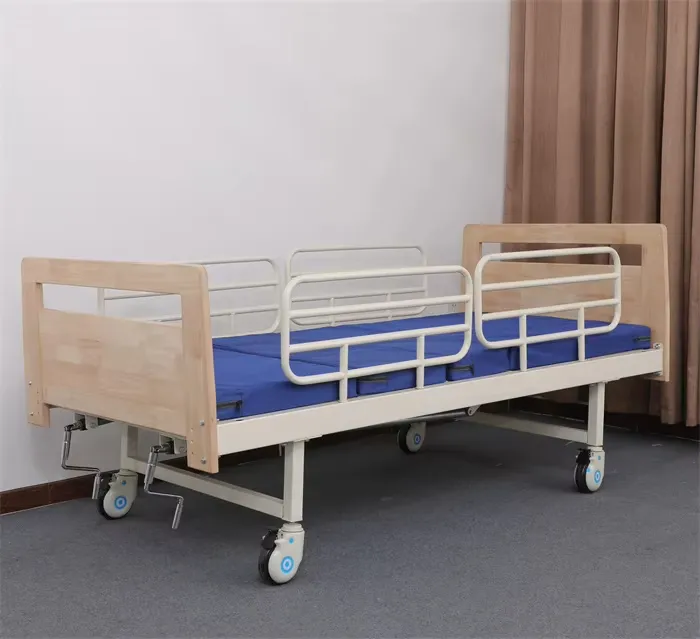
Before testing specific units, procurement teams must clearly define the category of nursing bed required for their target market. The two primary categories are manual nursing beds and electric nursing beds, each serving distinct economic and functional niches. A manual nursing bed uses mechanical crank mechanisms to adjust the bed frame angles. It is characterized by its simplicity and lack of reliance on electricity [K1]. In regions with unstable power grids or limited budgets, such as parts of Africa and Southeast Asia, manual beds remain the主力 product, with prices typically ranging from $80 to $150 [K1]. They provide basic position adjustment functions but require physical effort from caregivers to operate the cranks [K1].
In contrast, an electric nursing bed uses electric linear actuators to adjust the backrest, knee break, and overall height via a remote control or panel [K2]. The core logic here is to solve the problem of patients who cannot move independently but require frequent position changes to prevent complications like bedsores or肺部 infections [K2]. Electric beds significantly reduce caregiver labor intensity by over 70% compared to manual models [K6]. For example, the HJIM MD-A12 electric nursing bed features three functions: backrest adjustment from 0 to 80 degrees, leg adjustment from 0 to 45 degrees, and overall height adjustment, operated via a remote control with an ABS detachable headboard [K2]. Understanding these distinctions is vital because the testing protocols for a manual bed focus on mechanical durability, while electric beds require electrical safety and motor performance validation.
Evaluating Motor Quality and Mechanical Specifications
For electric nursing beds, the motor is the heart of the system. When inspecting samples for bulk orders, you must verify the brand and specifications of the linear actuators. Industry standards often distinguish between premium brands like LINAK or Dewert and domestic or generic motors [K2]. Premium motors generally offer smoother operation, lower noise levels, and longer lifespans. You should request a technical data sheet confirming the motor brand and the number of motors installed. A standard electric bed typically utilizes 2 to 5 motors depending on the functionality [K6].
Weight capacity is another non-negotiable specification. During your testing phase, do not rely solely on the manufacturer’s claim. Perform load testing to ensure the bed frame and actuators can handle the maximum rated weight without deformation or failure. For instance, the HJIM MD-A12 model specifies a maximum load capacity of 220kg [K6]. Your testing should involve loading the bed to this capacity and cycling the motors through their full range of motion multiple times to check for strain or overheating. Additionally, inspect the bed frame material. Steel frames with powder coating are standard, but the thickness of the steel and the quality of the welding joints determine the long-term structural integrity. Look for signs of rust resistance, especially if the beds will be used in humid hospital environments or home care settings where cleaning agents are frequently used.
Assessing Control Systems and User Interface
The usability of the control system directly impacts patient safety and caregiver efficiency. For electric beds, test the remote control or hand panel for responsiveness and durability. The buttons should be tactile and clearly labeled, preferably with icons that transcend language barriers. In a clinical setting, caregivers often wear gloves, so the interface must be operable without fine motor precision. Check the cable length of the hand control; it should be long enough to reach the patient comfortably but robust enough to withstand repeated pulling and coiling. Some advanced models now integrate with smart home systems or offer voice control capabilities [K4]. While these features are emerging trends, basic reliability remains paramount. Ensure that the bed returns to a safe position in the event of a power failure, a feature known as manual crank backup, which is critical for emergency situations.
Regulatory Compliance and Medical Certification
Bulk ordering nursing beds for international distribution requires strict adherence to regulatory standards. You must verify that the manufacturer holds valid certifications for the target markets. Common certifications include CE marking for Europe, FDA registration for the United States, and ISO 13485 for quality management systems specific to medical devices. These certifications are not just paperwork; they indicate that the factory has undergone audits regarding their production processes and quality control measures. When evaluating a supplier like HJIM (Hengshui Chengen Medical Equipment Co., Ltd), request copies of these certificates and verify their validity dates. Medical device compliance ensures that the electrical systems are insulated properly to prevent shock hazards and that the materials used are biocompatible and safe for prolonged patient contact. Ignoring this step can lead to customs seizures, legal liabilities, and safety recalls.
OEM and ODM Manufacturing Considerations
Many buyers opt for OEM (Original Equipment Manufacturer) or ODM (Original Design Manufacturer) arrangements to brand the beds under their own name. In an OEM model, the factory produces the bed to the buyer’s design, whereas in an ODM model, the factory provides both the design and production [K5]. Understanding the margin structure is important for your business case. Typical margins for OEM models range from 5% to 10%, while ODM models can offer margins between 10% and 15% [K5]. If you choose to customize the bed, ensure that the modifications do not compromise the structural integrity or void the existing certifications. For example, changing the mattress surface material might affect fire safety ratings. Always request a pre-production sample that matches the final specification exactly before approving mass production. This sample should undergo the same rigorous testing as the standard models.
Future-Proofing with Technology Trends
As you evaluate nursing beds for bulk ordering, consider the technological trajectory of the industry. The market is moving towards smarter healthcare solutions. Key technology trends include IoT integration for remote monitoring of patient vitals and bed position via WiFi or 4G [K4]. Smart anti-fall systems using AI to reduce false positives in bed exit alarms are becoming more common [K4]. Additionally, predictive maintenance features that monitor motor and actuator health via sensor data can reduce downtime for healthcare facilities [K4]. While these features may increase the initial cost, they add significant value for hospital administrators looking to reduce long-term operational costs. When testing beds, ask the supplier if the model supports firmware updates or modular upgrades to accommodate these future technologies.
Comparison of Nursing Bed Types and Features
To assist in decision-making, the following table compares the key attributes of manual and electric nursing beds based on industry standards and product specifications.
| Feature | Manual Nursing Bed | Electric Nursing Bed | Smart IoT-Enabled Bed |
|---|---|---|---|
| Adjustment Mechanism | Hand crank / Mechanical lever | Electric linear actuators | Electric actuators + WiFi/4G Module |
| Typical Price Range | $80 – $150 [K1] | $300 – $800+ | $1,000+ |
| Caregiver Effort | High (Physical cranking) | Low (Button press) | Low + Remote Monitoring |
| Power Requirement | None | AC Power + Battery Backup | AC Power + Battery + Network |
| Primary Market | Developing regions, Budget facilities | Hospitals, Home Care, Nursing Homes | Smart Hospitals, Tech-forward Home Care |
| Max Load Capacity | Varies (Often 150-200kg) | Up to 220kg (e.g., HJIM MD-A12) [K6] | Up to 220kg+ |
| Maintenance | Low (Mechanical parts) | Medium (Motor/Electrical) | High (Software/Hardware) |
Conclusion
Testing nursing bed quality before bulk ordering is a multifaceted process that extends beyond simple visual inspection. It requires a deep dive into mechanical specifications, electrical safety, regulatory compliance, and future technological compatibility. By understanding the differences between manual and electric models, verifying motor brands and weight capacities, and ensuring proper medical certifications, procurement professionals can mitigate risk and ensure patient safety. Whether you are sourcing basic manual beds for budget-conscious markets or advanced electric beds for premium home care, the diligence applied during the sampling phase will determine the success of your distribution. Partnering with established manufacturers who adhere to ISO standards and offer transparent OEM/ODM options ensures a supply chain that is both reliable and scalable. As the industry evolves towards IoT integration and smart care, selecting beds that can adapt to these changes will provide long-term value to your healthcare facilities and patients.
What is the typical weight capacity for electric nursing beds?
Most standard electric nursing beds are designed to support a maximum load capacity of around 220kg. For example, the HJIM MD-A12 electric nursing bed specifies a max load of 220kg, ensuring it can accommodate a wide range of patient weights safely [K6].
What are the margin differences between OEM and ODM models?
In the nursing bed manufacturing industry, typical profit margins vary by model type. OEM models, where the factory produces to the buyer’s design, usually offer margins of 5% to 10%. ODM models, where the factory provides both design and production, typically offer higher margins ranging from 10% to 15% [K5].
What are the key technology trends in nursing beds?
Current technology trends in the nursing bed industry include IoT integration for remote monitoring of patient vitals, smart anti-fall alarms with AI reduction, voice control integration with smart home systems, and predictive maintenance via sensor data [K4].
What is the price range for manual nursing beds in developing markets?
In developing markets such as Africa and Southeast Asia, where manual nursing beds are主力 products due to budget constraints and power stability issues, the typical price range is between $80 and $150 [K1].