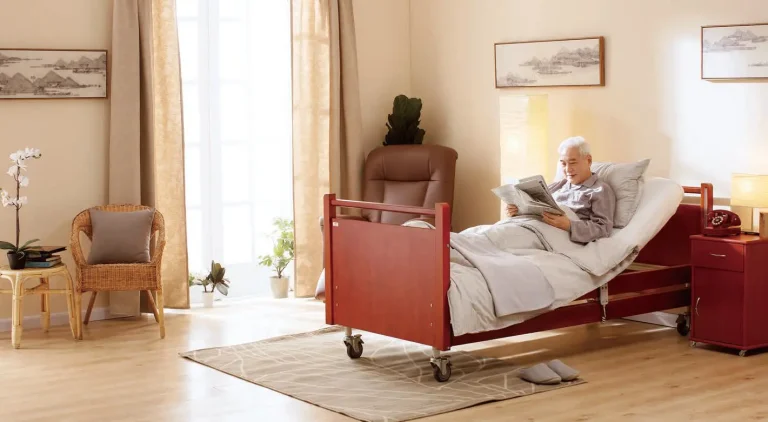
Nursing Bed Knee Rest 0-45°: Clinical Benefits Explained
Nursing Bed Knee Rest 0-45°: Clinical Benefits Explained
In the evolving landscape of medical furniture, the nursing bed knee rest is no longer a peripheral feature but a critical component of patient safety and comfort. While the adjustable backrest often receives the most attention, the articulation of the lower body—specifically the knee rest angle ranging from 0 to 45 degrees—plays a pivotal role in preventing pressure injuries, improving circulation, and facilitating proper body mechanics for both patients and caregivers. For healthcare procurement officers and facility managers, understanding the clinical rationale behind this specific range is essential for selecting equipment that meets modern care standards.
This article explores the biomechanical benefits of the 0-45° knee rest, compares electric and manual configurations, and provides a technical framework for evaluating nursing beds in a global market valued at approximately USD 4.5 billion. We will reference industry standards and specific product capabilities, such as those found in the HJIM (Hengshui Chengen Medical Equipment Co., Ltd) product lines, to illustrate best practices in medical device compliance and patient care.
The Biomechanics of the 0-45° Knee Bend
The primary function of the knee rest in a nursing bed is to counteract the natural tendency of a patient to slide down when the backrest is elevated. When a bed’s head section is raised to achieve Fowler’s Position (typically 45-60°), gravity pulls the patient’s body toward the foot of the bed. Without support, this creates shear force on the sacrum and heels, significantly increasing the risk of pressure u
A knee rest that articulates from 0 to 45 degrees provides the necessary counter-support. By bending the knees, the patient’s center of gravity is stabilized, reducing shear forces on the lower back and pelvis. This positioning is clinically significant for several reasons:
- Respiratory Comfort: Combined with an elevated backrest, the knee bend allows for optimal chest expansion, which is critical for patients with respiratory distress or those recovering from abdominal surgery.
- Circulatory Support: Elevating the legs slightly (often achieved through the knee rest curve) can assist venous return, reducing edema in the lower extremities.
- Caregiver Ergonomics: A stable patient position reduces the physical strain on caregivers during transfers and repositioning, lowering the risk of occupational injury.
According to industry keyword data, the Fowler’s Position is defined by elevating the head and back 45-60° with knees slightly bent to reduce cardiac preload and prevent aspiration pneumonia. The 0-45° range of the knee rest is the mechanical enabler of this clinical standard.
Electric vs. Manual Nursing Beds: A Market and Function Comparison
When procuring nursing beds, the decision between electric and manual systems is often driven by budget, infrastructure, and the level of care required. The global nursing bed market is shifting, with homecare beds growing at an 18% CAGR, driven by the “silver economy” and aging-in-place trends. However, hospital settings continue to demand higher functionality.
Electric Nursing Beds utilize linear actuators (typically 2-5 motors) to adjust the backrest, knee rest, and overall height via a remote control. The core value proposition is the reduction of labor intensity by over 70% compared to manual systems. For example, the HJIM MD-A12 electric nursing bed features a 3-function system with a backrest adjustment of 0-75° and a knee rest adjustment of 0-45°, supporting a maximum load of 220kg. This level of precision allows patients with limited mobility to adjust their own positions, promoting independence.
Manual Nursing Beds, conversely, rely on mechanical crank handles. While they remain a viable option for budget-constrained environments or regions with unstable power grids (such as parts of Africa and Southeast Asia), they require significant physical effort from caregivers. In developed markets, manual beds are increasingly being replaced by electric models as the cost of linear motors decreases.
| Feature | Electric Nursing Bed | Manual Nursing Bed |
|---|---|---|
| Operation Method | Remote control / Panel (Linear Actuators) | Hand crank / Mechanical lever |
| Caregiver Effort | Low (Push-button operation) | High (Physical cranking required) |
| Typical Cost Range | $500 – $2,000+ | $80 – $150 (Developing markets) |
| Key Application | Hospitals, Homecare, Rehabilitation | Basic Ward, Resource-Limited Settings |
| Market Trend | Growing (8.5% CAGR globally) | Stagnant (3% CAGR in developing regions) |
Technical Specifications for Healthcare Procurement
For procurement specialists, evaluating a nursing bed goes beyond the knee rest angle. It requires a deep dive into the underlying components that ensure safety, durability, and regulatory compliance. When reviewing technical datasheets, the following parameters are critical:
Motor Quality and Brand
The heart of an electric nursing bed is the linear actuator. Premium beds often specify motors from recognized brands such as LINAK or Dewert. These motors offer smooth, quiet operation and high duty cycles. Lower-cost alternatives may use generic domestic motors, which can result in higher noise levels and reduced lifespan. The noise level is a key observable indicator, particularly for ICU or ward environments where patient rest is paramount.
Weight Capacity and Structural Integrity
Standard nursing beds typically support loads between 150kg and 220kg. The HJIM MD-A12, for instance, is rated for 220kg, accommodating bariatric needs without compromising stability. Procurement teams must verify the static and dynamic load ratings to ensure the bed frame and motors can handle the patient’s weight plus any additional medical equipment (e.g., IV poles, monitors) placed on the bed.
Medical Certifications and Compliance
Global market access requires adherence to strict regulatory standards. Reputable manufacturers ensure their products comply with CE (European Conformity), ISO 13485 (Medical Devices Quality Management), and FDA (US Food and Drug Administration) regulations. These certifications validate that the bed has undergone rigorous testing for electrical safety, mechanical stability, and biocompatibility of materials.
Global Market Context and Future Trends
The demand for advanced nursing beds is inextricably linked to demographic shifts. The global medical nursing bed market is projected to grow at a CAGR of 8.5% through 2027. This growth is fueled by aging populations in OECD nations and the expansion of home healthcare under government insurance programs. The shift from hospital-centric to home-based care models means that residential-grade electric beds are becoming more sophisticated, bridging the gap between clinical functionality and home aesthetics.
In the Hospital Beds (Electric) segment, growth is driven by ICU expansion and the integration of smart monitoring systems. Future nursing beds are expected to incorporate IoT capabilities, allowing caregivers to monitor patient position and bed status remotely. Meanwhile, the Homecare Beds segment is seeing the most rapid expansion, driven by subsidies and the preference for aging in place. This trend underscores the importance of the 0-45° knee rest feature; as care moves to the home, family caregivers need equipment that is easy to operate and clinically effective to prevent injury.
Conclusion
The 0-45° knee rest is a fundamental feature that distinguishes a basic support surface from a therapeutic medical device. It enables critical clinical positions like Fowler’s, reduces the risk of pressure injuries, and supports the physical well-being of both patients and caregivers. As the market shifts towards electric solutions and home-based care, procurement decisions should prioritize beds with high-quality linear actuators, robust weight capacities, and full regulatory compliance. Brands like HJIM exemplify this standard by offering versatile models that balance clinical performance with operational efficiency. By focusing on these technical and clinical parameters, healthcare facilities can ensure they are investing in equipment that delivers long-term value and superior patient outcomes.
Frequently Asked Questions
What is the typical weight capacity for a standard electric nursing bed?
Most standard electric nursing beds, such as the HJIM MD-A12, have a maximum load capacity of 220kg. This ensures stability for a wide range of patient sizes and allows for the safe placement of additional medical equipment on the bed frame. Procurement teams should verify both static and dynamic load ratings to ensure compliance with facility safety standards.
Which motor brands are considered industry standard for nursing beds?
High-quality electric nursing beds typically utilize linear actuators from established manufacturers such as LINAK or Dewert. These motors are preferred for their quiet operation, durability, and smooth adjustment capabilities. When evaluating procurement options, the motor brand is a key observable indicator of the bed’s overall reliability and noise level.
What certifications should a nursing bed have for international procurement?
For international markets, nursing beds should ideally comply with CE marking (for Europe), ISO 13485 (for quality management systems), and FDA regulations (for the US market). These certifications ensure that the device meets rigorous safety, electrical, and mechanical testing requirements, which is critical for hospital equipment and medical device compliance.
How does the knee rest function support Fowler’s Position?
Fowler’s Position requires the upper body to be raised 45-60° to improve respiratory function and reduce cardiac preload. The knee rest, which typically adjusts from 0-45°, prevents the patient from sliding down the bed due to gravity. By bending the knees, the bed stabilizes the patient’s pelvis, reducing shear force on the sacrum and making the position sustainable for longer periods.