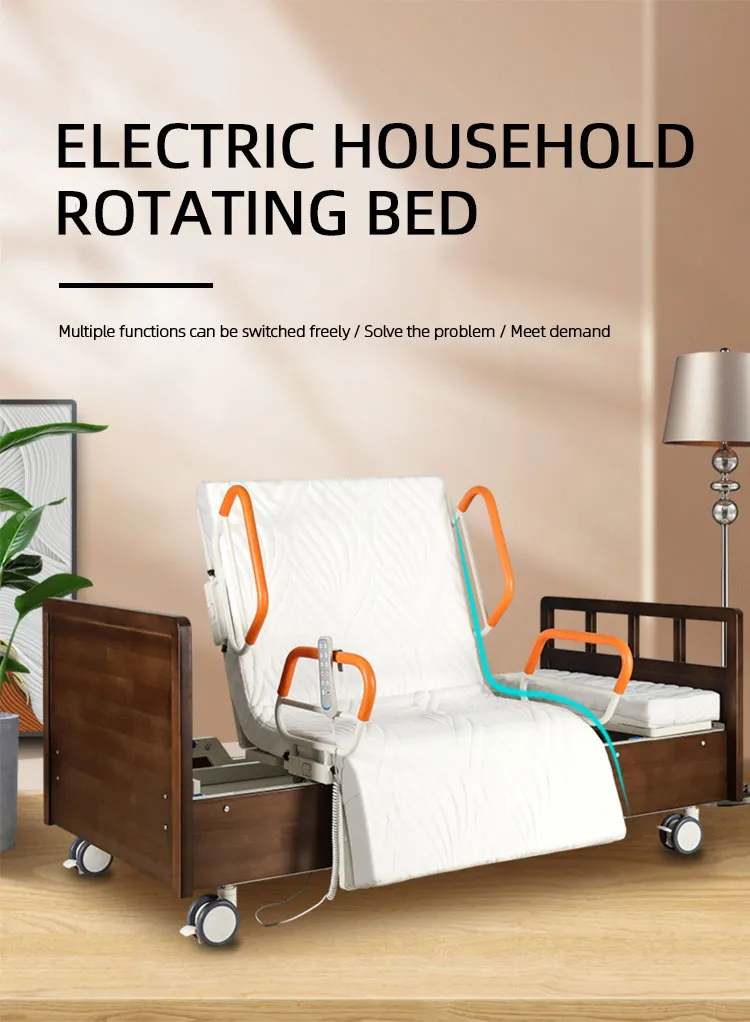
Nursing Bed Remote Control: Features That Improve Caregiver Experience | Hospital Procurement Guide
Nursing Bed Remote Control: Features That Improve Caregiver Experience
The evolution of nursing bed technology has fundamentally transformed how caregivers manage patient mobility and comfort. While traditional manual beds required physical effort to adjust positioning, modern electric systems with intuitive remote controls have reduced caregiver labor intensity by over 70% [K2]. This article examines the critical remote control features that enhance both patient outcomes and caregiver efficiency, with specific reference to industry-leading implementations like the HJIM MD-A12 electric nursing bed.
The Shift From Manual To Electric Control Systems
Manual nursing beds operate through mechanical摇杆 mechanisms that require caregivers to physically crank adjustments for backrest elevation, leg section positioning, and overall bed height [K1]. Though cost-effective for budget-constrained environments like rural clinics in Southeast Asia ($80-150 range), these systems demand significant physical effort and time during routine care tasks [K1]. Electric nursing beds replace this mechanical process with motorized linear actuators controlled via handheld remotes or wall-mounted panels, enabling precise positioning with minimal physical exertion.
The core advantage lies in addressing the fundamental challenge of immobile patients requiring frequent position changes to prevent complications like pressure u
Essential Remote Control Features For Caregiver Efficiency
Modern nursing bed remotes incorporate several design elements that significantly improve usability in clinical settings. The HJIM MD-A12 model exemplifies these best practices with its ergonomic ABS remote featuring large, tactile buttons clearly labeled for backrest (0-80° adjustment), knee section (0-45°), and height control [K2]. This three-function configuration covers 90% of routine positioning needs while maintaining intuitive operation even for caregivers with limited technical training.
Key usability features include:
- One-touch preset positions: Pre-programmed settings for common scenarios like “reading position” (backrest 45°, knees elevated 20°) or “cardiac chair” (backrest 75°, knees 30°) reduce cognitive load during urgent situations
- Backlit displays: Essential for nighttime adjustments without disturbing patients or requiring additional lighting
- Water-resistant construction: IPX4 rating ensures functionality during cleaning routines and accidental spills in clinical environments
- Low-battery indicators: Prevent unexpected loss of control during critical care moments
Advanced Integration Capabilities
Leading manufacturers are now incorporating IoT connectivity into remote control systems, enabling features that extend beyond basic positioning. The latest generation of electric nursing beds supports WiFi/4G connectivity for remote monitoring of bed position, patient weight, and even vital signs when integrated with compatible sensors [K1]. This allows care teams to track positioning patterns that correlate with pressure u
Voice control integration with smart home systems like Alexa and Google Home represents another significant advancement, particularly for home care settings. Caregivers can verbally command position adjustments while keeping hands free for other tasks, though this feature remains primarily available in premium-tier models from manufacturers like Hill-Rom and Paramount Bed [K1]. Predictive maintenance capabilities using sensor data to monitor motor health further reduce unexpected downtime, a critical consideration for facilities operating 24/7 care environments.
Comparison: Manual Versus Electric Control Systems
| Feature | Manual Nursing Bed | Electric Nursing Bed (e.g., HJIM MD-A12) |
|---|---|---|
| Positioning Effort | Requires physical cranking (15-20 min per adjustment) | Button-activated (under 60 seconds) |
| Initial Cost | $80-150 | $300-600 (mid-tier with CE/FDA certification) |
| Caregiver Labor Reduction | Baseline | 70%+ reduction in positioning tasks [K2] |
| Patient Comfort | Gradual adjustments may cause discomfort | Smooth, controlled movements reduce patient anxiety |
| Complication Prevention | Limited frequency of position changes | Enables regular repositioning to prevent pressure u |
| Market Adoption | Primary in developing regions with unstable power | Standard in hospitals, nursing homes, and home care |
Regulatory Considerations For Procurement
When evaluating nursing bed remote control systems, healthcare procurement teams must verify compliance with relevant medical device standards. Premium-tier manufacturers like Hill-Rom maintain FDA 510(k) clearance for their control systems, while mid-tier Chinese manufacturers such as HJIM have achieved CE marking and ISO 13485 certification to access international markets [K3]. These certifications ensure the remote control electronics meet electromagnetic compatibility requirements and fail-safe mechanisms that prevent unintended movements.
Weight capacity specifications also warrant careful attention, with the HJIM MD-A12 supporting up to 220kg maximum load [K2]. Facilities serving bariatric patient populations should verify both the bed frame strength and the remote control’s ability to maintain precise positioning under maximum load conditions. Warranty terms typically range from 1-3 years for control systems, with premium providers offering extended coverage for motor components that experience the highest operational stress.
Future-Proofing Your Investment
As nursing bed technology continues evolving, procurement decisions should consider upgrade pathways for remote control systems. Modular designs that allow firmware updates to add new features without hardware replacement provide long-term value, particularly for facilities planning 5-7 year equipment lifecycles. The integration of AI-powered fall prevention systems that trigger automatic bed lowering when patients attempt to exit represents the next frontier, with manufacturers like Invacare already deploying such capabilities in premium models [K1].
For organizations managing mixed fleets of manual and electric beds, centralized monitoring platforms can provide unified visibility across all units. These systems aggregate data from electric bed remotes while maintaining manual bed inventory records, enabling data-driven decisions about phased equipment upgrades based on actual utilization patterns and caregiver feedback.
Conclusion
The remote control system represents the critical interface between nursing bed technology and daily care operations. While manual beds retain relevance in specific low-resource settings, electric systems with intuitive remote controls have become the standard for facilities prioritizing caregiver efficiency and patient outcomes. The HJIM MD-A12 exemplifies how mid-tier manufacturers can deliver clinically relevant features—three-function positioning, robust safety mechanisms, and certification compliance—at accessible price points that bridge the gap between budget constraints and care quality requirements.
Investing in advanced remote control capabilities yields compounding returns through reduced caregiver fatigue, improved patient compliance with positioning protocols, and enhanced ability to document care activities for regulatory purposes. As healthcare systems worldwide face increasing staffing pressures, the operational efficiency gains from modern nursing bed control systems translate directly to sustainable care delivery models.
FAQ: Nursing Bed Remote Control Technical Questions
What motor brands are typically used in electric nursing bed remote control systems?
Premium electric nursing beds commonly utilize LINAK or Dewert linear actuators known for quiet operation and durability, while mid-tier manufacturers like HJIM offer both imported and domestic motor options depending on market requirements [K2]. The HJIM MD-A12 model specifies 2-5 motor configurations depending on function count, with motor quality directly impacting positioning precision and operational lifespan.
What certifications should I verify for nursing bed remote control systems?
Key certifications include CE marking for European market access, FDA 510(k) clearance for US facilities, and ISO 13485 for quality management systems specific to medical devices [K3]. Mid-tier Chinese manufacturers have significantly closed the certification gap, with many now achieving full regulatory compliance while maintaining cost advantages over premium-tier competitors like Hill-Rom.
What weight capacity should I consider for nursing bed remote control systems?
Standard electric nursing beds typically support 135-180kg, with bariatric models reaching 220-300kg capacity. The HJIM MD-A12 specifies 220kg maximum load [K2], which accommodates approximately 95% of adult patient populations. Procurement teams should verify both static load capacity and dynamic positioning stability under maximum load conditions.
How do predictive maintenance features work in modern nursing bed remote systems?
Advanced systems monitor motor current draw, actuator movement times, and control signal integrity to identify early warning signs of component degradation [K1]. This data enables facilities to schedule maintenance during planned downtime rather than responding to unexpected failures, with some systems providing 72-96 hours advance notice of potential motor issues through connected monitoring platforms.