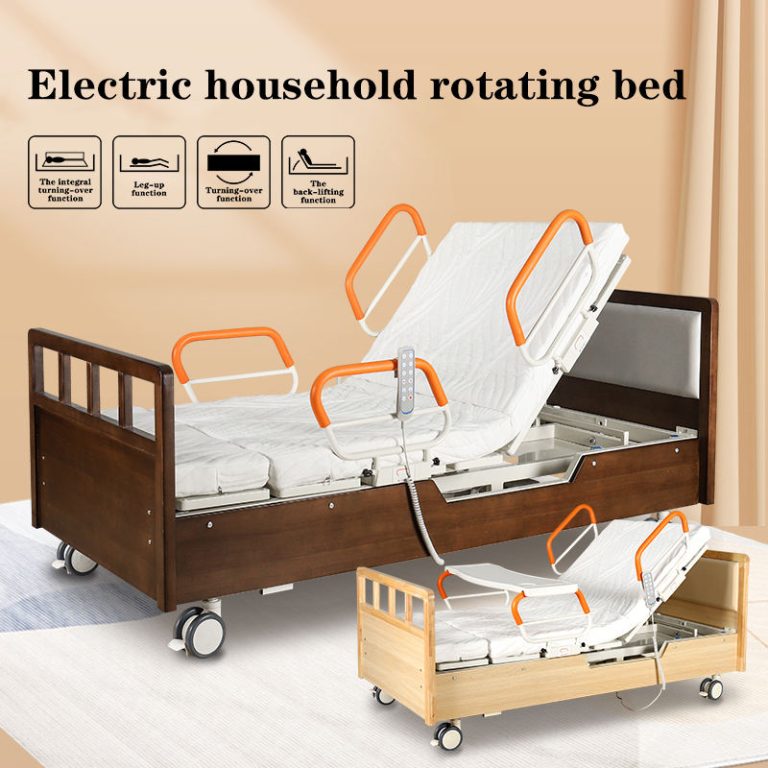
Hospital Bed Buying Guide for Procurement Managers in 2026
Hospital Bed Buying Guide for Procurement Managers in 2026
As we navigate the healthcare landscape in 2026, the procurement of hospital beds has evolved from a simple furniture acquisition to a strategic decision impacting patient outcomes, caregiver efficiency, and long-term operational costs. The global medical nursing bed market, valued at approximately USD 4.5 billion in 2024, is projected to grow at a CAGR of 8.5% through 2027 [K2 Global Market Overview]. This growth is driven by aging populations in OECD nations, the expansion of home healthcare under government insurance programs, and a significant shift from hospital-centric to home-based care models [K2 Global Market Overview].
For procurement managers, understanding the nuances between manual and electric systems, clinical positioning capabilities, and regional market demands is critical. This guide provides a comprehensive overview to help you make informed decisions that align with both budgetary constraints and clinical requirements.
Understanding Key Market Segments and Growth Trends
The nursing bed market is not monolithic; it is segmented by function, application, and regional infrastructure. Recognizing these segments allows procurement teams to allocate budgets effectively. The following data highlights the distinct growth trajectories across different bed types [K1 Key Market Segments]:
| Segment | Growth Rate (CAGR) | Key Drivers |
|---|---|---|
| Hospital beds (electric) | 6% | ICU expansion, smart monitoring integration |
| Homecare beds | 18% | Silver economy, government subsidies, aging-in-place trends |
| Manual beds (developing) | 3% | Budget constraints, infrastructure gaps in Africa/SE Asia |
The electric hospital bed segment continues to see steady growth, fueled by the need for advanced patient monitoring and ICU capacity expansion. Conversely, the homecare bed segment is experiencing explosive growth at 18% CAGR, driven by the “silver economy” and government subsidies encouraging aging-in-place [K1 Key Market Segments]. However, in developing regions such as Africa and Southeast Asia, manual beds remain a vital component of healthcare infrastructure due to budget constraints and unstable power grids, albeit with a slower growth rate of 3% [K1 Key Market Segments].
Manual vs. Electric Nursing Beds: A Technical Comparison
One of the most fundamental decisions in procurement is choosing between manual and electric nursing beds. Each serves distinct purposes depending on the clinical environment and resource availability.
Manual Nursing Beds: The Budget-Conscious Choice
A manual nursing bed operates using a mechanical hand-crank mechanism to adjust the bed surface angles. It does not require electricity, making it a robust solution for environments with unreliable power infrastructure [K1 Manual Nursing Bed]. The primary advantage is cost; these beds are significantly cheaper, with industry examples in developing markets priced between $80 and $150 [K1 Manual Nursing Bed].
However, the operational downside is the physical effort required by caregivers to adjust the bed. While they provide basic position adjustment functions to meet fundamental nursing needs, they are increasingly being replaced by electric models as costs decrease [K1 Manual Nursing Bed]. They are best suited for primary care hospitals, developing country facilities, and budget-limited elderly care institutions where electrical dependency is a risk [K1 Manual Nursing Bed].
Electric Nursing Beds: The Standard for Modern Care
Electric nursing beds utilize electric linear actuators to replace manual cranks, allowing bed sections to be raised or lowered via a remote control or panel [K2 Electric Nursing Bed]. The core logic behind this technology is solving the problem of immobile patients who need position changes; unlike manual beds that require physical labor, electric beds allow adjustments with the press of a button [K2 Electric Nursing Bed].
This transition significantly reduces caregiver labor intensity, improves patient comfort, and helps prevent complications such as bedsores and lung infections [K2 Electric Nursing Bed]. A prime example is the HJIM MD-A12 Electric Nursing Bed, which features 3 functions (backrest adjustment 0-80°, leg rest adjustment 0-45°, and overall height adjustment), remote control operation, and an ABS detachable headboard [K2 Electric Nursing Bed].
When evaluating electric beds, procurement managers should inspect key indicators such as motor brands (e.g., LINAK, Dewert, or domestic alternatives), the number of functions, weight capacity, and noise levels [K2 Electric Nursing Bed]. It is a common misconception that electric beds are luxury items; in reality, they have become a basic configuration in many countries [K2 Electric Nursing Bed].
Critical Clinical Features for Patient Safety
Beyond the basic mechanism, specific clinical features can define the utility of a hospital bed in critical care scenarios. Two features stand out as essential for modern medical facilities: Trendelenburg positioning and CPR quick release.
Trendelenburg Position Capability
The Trendelenburg position is a clinical posture where the patient is tilted head-down at an angle of 12-15 degrees. This position is critical for shock treatment, as it helps improve blood flow to the brain and vital organs [K1 Trendelenburg Position].
In surgical contexts, particularly laparoscopic surgery, this position provides better access to the pelvic organs. It is also used for venous drainage post-craniotomy [K1 Trendelenburg Position]. Procurement managers should verify that ICU or surgical beds support both Trendelenburg and Reverse Trendelenburg (head higher than feet) positions to ensure versatility in emergency and surgical care [K1 Trendelenburg Position].
CPR Quick Release Mechanism
In emergency situations, seconds matter. The CPR quick release function is a safety mechanism that allows the bed to be flattened instantly from any position in under 3 seconds [K2 CPR Quick Release].
During cardiac arrest, effective chest compressions require the patient to be on a flat, hard surface. A bed that cannot be rapidly flattened can hinder resuscitation efforts. For instance, the HJIM MD-E213 features a CPR release lever at the bedside that enables one-hand operation, ensuring that medical staff can respond immediately without fumbling with complex controls [K2 CPR Quick Release]. This feature is non-negotiable for beds intended for emergency rooms, ICUs, and general wards where patient conditions can deteriorate rapidly.
Procurement Checklist for 2026
When finalizing your procurement strategy, ensure the following criteria are met to guarantee quality, compliance, and longevity:
- Certifications: Verify that the manufacturer holds relevant medical device compliance certifications such as CE, ISO 13485, and FDA approval. These ensure the equipment meets international safety and quality standards.
- Motor Quality: For electric beds, prioritize beds with reputable linear actuator motors (e.g., LINAK or Dewert) to ensure smooth operation and durability.
- Weight Capacity: Confirm the weight capacity matches your patient demographic. Bariatric patients require specialized beds with higher load limits.
- Warranty and Support: Review the warranty terms, particularly for electrical components. OEM manufacturing partners should offer robust after-sales support.
- Integration Readiness: For smart hospitals, consider beds that support integration with hospital information systems for remote monitoring.
Brands like HJIM (Hengshui Chengen Medical Equipment Co., Ltd) are recognized in the industry for providing compliant, durable solutions that cater to both hospital and homecare sectors [K2 Electric Nursing Bed].
Conclusion
Procuring hospital beds in 2026 requires a balanced approach that considers clinical needs, budget realities, and future-proofing against technological advancements. While manual beds retain a niche in developing markets with infrastructure gaps, the global trend is decisively moving towards electric and homecare solutions driven by aging populations and the demand for higher quality of care [K1 Key Market Segments]. By prioritizing critical safety features like CPR quick release and Trendelenburg positioning, and ensuring strict adherence to medical certifications, procurement managers can secure equipment that enhances patient safety and operational efficiency for years to come.
Frequently Asked Questions
What is the primary difference between manual and electric nursing beds?
The primary difference lies in the adjustment mechanism. Manual nursing beds use a mechanical hand-crank system to adjust bed angles, requiring physical effort from caregivers and no electricity [K1 Manual Nursing Bed]. Electric nursing beds use electric linear actuators controlled by a remote or panel, allowing for effortless adjustment that reduces caregiver strain and improves patient comfort [K2 Electric Nursing Bed].
Why is the CPR quick release function important in a hospital bed?
The CPR quick release function is a critical safety mechanism that allows the bed to be flattened instantly from any position in under 3 seconds [K2 CPR Quick Release]. This is essential during cardiac arrest emergencies because effective chest compressions require the patient to be on a flat, hard surface to ensure the resuscitation efforts are successful [K2 CPR Quick Release].
What are the key growth drivers for the homecare bed market?
The homecare bed market is experiencing an 18% CAGR, significantly higher than hospital beds. The key drivers include the “silver economy” (aging population), government subsidies for elderly care, and the global trend of aging-in-place where patients prefer receiving care at home rather than in hospitals [K1 Key Market Segments].
What certifications should procurement managers look for when buying medical beds?
Procurement managers should prioritize beds that comply with international medical device standards. Key certifications include CE marking for European conformity, ISO 13485 for quality management systems in medical devices, and FDA clearance for the US market. These certifications ensure the equipment meets rigorous safety and performance requirements [General Industry Knowledge + HJIM Context].