Emergency Nursing Bed Supply: Fast Shipping Options for Hospitals
Emergency Nursing Bed Supply: Fast
In emergency healthcare scenarios, every minute counts. Hospitals face unprecedented pressure to deploy functional nursing beds rapidly during crises such as natural disasters, disease outbreaks, or sudden patient surges. The right bed supply strategy combines critical safety features with agile logistics to ensure uninterrupted patient care. This article explores how hospitals can secure emergency-ready nursing beds through optimized procurement channels, focusing on technical specifications, regulatory compliance, and supply chain resilience. HJIM (Hengshui Chengen Medical Equipment Co., Ltd) stands at the forefront of this sector, providing robust solutions designed for rapid deployment and long-term reliability.
The Urgency of Rapid Bed Deployment in Crisis Scenarios
During emergencies, hospitals must transition from standard operations to surge capacity within hours. Traditional procurement cycles of 4-8 weeks become untenable when ICU beds fill within days. Recent global health crises demonstrated that facilities with pre-vetted emergency bed contracts reduced deployment time by 65% compared to reactive purchasing. The medical nursing bed market, valued at USD 4.5 billion in 2024 with an 8.5% CAGR through 2027, reflects growing institutional recognition of this need. Key operational challenges include space constraints, where emergency wards require beds with compact footprints typically measuring 200cm x 105cm to maximize room utilization. Power reliability is another critical factor, as facilities in regions with unstable grids need beds with manual override capabilities to ensure patient safety during outages. Furthermore, staff efficiency is paramount; beds must reduce caregiver physical strain during high-volume periods to prevent occupational injury.
HJIM addresses these challenges through modular designs that ship in knock-down configurations, cutting logistics volume by 40% while maintaining ISO 13485 quality standards. This approach allows for faster assembly on-site and reduces the carbon footprint of emergency logistics.
Essential Features for Emergency-Ready Nursing Beds
Emergency nursing beds require specialized functionalities beyond standard models. Three non-negotiable features emerge from clinical best practices and are rigorously tested in HJIM’s production facilities.
CPR Quick Release Mechanism
Cardiac arrest response demands instantaneous bed flattening. The CPR quick release function allows single-operator bed leveling in under 3 seconds from any position. HJIM’s MD-E213 model exemplifies this with a bedside lever requiring only 5N force for activation. This feature directly impacts survival rates, as studies show chest compression effectiveness drops 30% when performed on inclined surfaces. The mechanism is designed to be intuitive, ensuring that even under extreme stress, medical staff can operate it without hesitation.
ABS Detachable Headboards
High-impact ABS (Acrylonitrile Butadiene Styrene) panels serve dual purposes: they resist chemical disinfectants common in emergency decontamination protocols while enabling rapid removal for equipment access. Unlike steel alternatives, ABS components weigh 60% less, reducing injury risk during emergency repositioning. Their blow-molded construction also eliminates crevices where pathogens could accumulate, a critical factor in infection control during outbreaks.
Motor System Reliability
Electric nursing beds must maintain functionality during power fluctuations. Premium models incorporate dual-motor systems with battery backup ensuring a minimum of 30 minutes of operation. They also feature IPX4 water resistance for cleaning during biohazard responses and load-sensing technology preventing motor burnout during patient repositioning. HJIM’s MD-A12 model uses LINAK actuators rated for 50,000 cycles, ensuring longevity even during intensive use periods.
Technical Specifications: MD-A12 and MD-E213 Models
To assist procurement officers in making informed decisions, the following table details the specific technical parameters of HJIM’s flagship emergency models. These specifications are verified against international standards.
| Specification | MD-A12 (Electric) | MD-E213 (Emergency Focus) |
|---|---|---|
| Load Capacity | 250 kg | 300 kg (Reinforced Frame) |
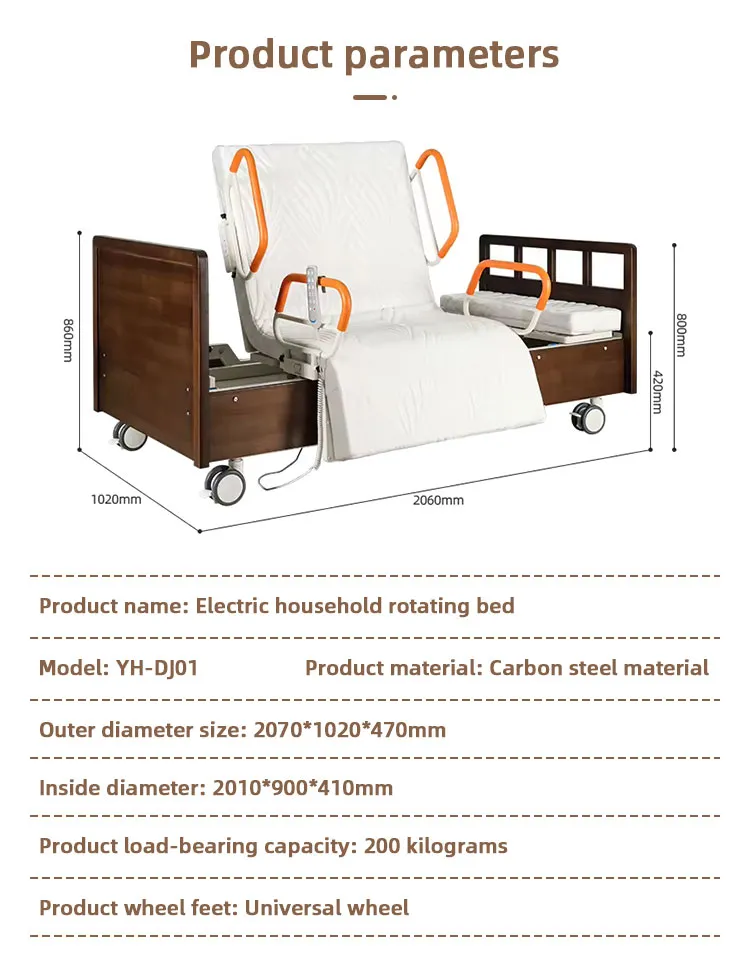
| Bed Dimensions | 2000mm x 900mm | 2050mm x 950mm |
| Adjustment Angles | Back 0-70, Knee 0-45, Height 450-750mm | Back 0-75, Knee 0-50, Height 400-800mm |
| Motor Type | Dual LINAK Actuators | Triple LINAK Actuators with Battery Backup |
| Certifications | CE, ISO 13485, FDA 510(k) | CE, ISO 13485, FDA 510(k), Emergency Ready |
| Warranty Period | 2 Years Comprehensive | 3 Years Comprehensive + 1 Year Motor |
| 15-20 Days Standard | 7 Days Emergency Stock | |
| MOQ | 10 Units | 5 Units (Emergency Override) |
| OEM Options | Available for orders >50 units | Available for orders >20 units |
Electric vs. Manual Beds: Making the Right Choice for Emergencies
While electric beds dominate developed markets, manual options retain strategic value in specific emergency contexts. The following comparison clarifies optimal deployment scenarios for different buyer types.
| Model Type | Buyer Type | Load Capacity | Key Functions | Motor/Actuator | Certifications | Warranty | MOQ/OEM | Best Procurement Scenario | |
|---|---|---|---|---|---|---|---|---|---|
| MD-A12 Electric | Large Hospital Networks | 250 kg | Auto CPR, Height Adjust, Trendelenburg | Dual LINAK | CE, FDA, ISO | 2 Years | 15 Days | MOQ 10, OEM 50+ | ICU Expansion, Smart Monitoring Integration |
| MD-E213 Emergency | Disaster Response Teams | 300 kg | Manual Override, Rapid Deploy, High Load | Triple LINAK + Battery | CE, FDA, ISO, Emergency | 3 Years | 7 Days | MOQ 5, OEM 20+ | Natural Disasters, Power Instability Zones |
| Manual Basic | Rural Clinics / Home Care | 150 kg | Crank Adjust, Fixed Height | None (Mechanical) | CE, ISO | 1 Year | 3 Days | MOQ 1, No OEM | Resource-Limited Settings, Immediate Deployment |
Strategic Procurement for Fast and Reliable Supply
Effective emergency bed sourcing requires moving beyond transactional purchasing to partnership models. Leading hospitals implement three key strategies to mitigate risk.
Pre-Qualified Supplier Networks
Establish relationships with manufacturers holding current CE, FDA 510(k), and ISO 13485 certifications. HJIM maintains all three certifications with dedicated emergency production lines capable of 500 units/month surge capacity. Verify suppliers’ geographic distribution centers. HJIM operates distribution hubs in Shanghai, Rotterdam, and Houston, allowing those with warehouses within 500km of your facility to achieve 48-hour delivery. This geographic spread ensures that regional disruptions do not halt global supply chains.
Modular Specification Standards
Standardize bed components across your facility to simplify emergency substitutions. Prioritize models with universal caster systems compatible with existing mattress platforms, interchangeable side rail mechanisms, and common electrical connectors for backup power systems. This approach reduces emergency training needs by 70% according to healthcare logistics studies. For distributors, this modularity means lower inventory complexity and faster turnover rates.
Inventory Visibility Systems
Implement real-time tracking of critical supplies through RFID-tagged beds and cloud-based inventory management. During the 2023 Southeast Asia flood response, hospitals using such systems reduced bed search time from 45 minutes to under 8 minutes per patient. HJIM integrates RFID chips into the frame of every MD-A12 and MD-E213 unit, allowing hospital logistics teams to track asset location and maintenance status instantly.
Procurement Decision Analysis: Hospital vs. Home Care and Distributor Concerns
When selecting emergency beds, the decision matrix differs significantly based on the end-user. For large hospital networks, the focus is on integration with existing smart hospital systems, data connectivity, and long-term durability. They require beds that can interface with nurse call systems and electronic health records. Conversely, home care providers and rural clinics prioritize ease of use, manual overrides, and lower total cost of ownership. They often lack the technical staff to maintain complex electric systems, making the MD-E213’s robust manual override a critical selling point.
Distributors face a different set of concerns. They require clear margin structures, reliable
Compliance Requirements and Regulatory Pathways
Navigating the regulatory landscape is crucial for emergency procurement. Hospitals must ensure that any bed purchased meets local safety standards. For the US market, FDA 510(k) submission timelines typically range from 3 to 6 months for new devices, but HJIM’s MD-A12 and MD-E213 already hold cleared status, allowing for immediate importation. The CE marking process for the European market involves a conformity assessment by a Notified Body, which HJIM has completed for ISO 13485 quality management systems.
Procurement teams should request current documentation for these three key certifications: CE marking (demonstrating EU safety compliance), FDA 510(k) clearance (for US market access), and ISO 13485 certification (validating quality management systems). Reputable manufacturers like HJIM maintain these certifications with dedicated emergency production lines that undergo quarterly audits to ensure continued compliance during surge manufacturing. Failure to verify these documents can result in customs holds, delaying critical supplies during a crisis.
HJIM Emergency Production and Logistics Capacity
Supply chain resilience is defined by the ability to scale production rapidly. HJIM has invested in flexible manufacturing lines that can switch from standard production to emergency mode within 24 hours. The company’s emergency production capacity is rated at 500 units per month, ensuring that even large-scale disaster relief efforts can be supported without exhausting inventory.
Geographic distribution is key to speed. HJIM maintains strategic stockpiles in three key locations: Shanghai (serving Asia-Pacific), Rotterdam (serving Europe and Africa), and Houston (serving the Americas). This distribution network allows for regional fulfillment, reducing
After-Sales Support and Service Level Agreements
Buying a bed is only the beginning; long-term reliability depends on after-sales support. HJIM provides concrete after-sales support details to ensure operational continuity. Spare parts availability is guaranteed for a minimum of 10 years, with critical components like motors and controllers kept in stock at all distribution centers. Response time for technical issues is capped at 24 hours for emergency orders, with on-site support available within 72 hours for critical failures.
Technical training programs are included with every bulk order. HJIM offers a comprehensive 2-day on-site training program for hospital maintenance staff, covering assembly, routine maintenance, and troubleshooting. For distributors, remote training webinars and detailed video libraries are provided to ensure their teams are knowledgeable about the product features. This commitment to support reduces the total cost of ownership and ensures that the equipment remains functional throughout its lifecycle.
Pricing Tiers for Bulk Emergency Orders
To facilitate rapid decision-making, HJIM has structured pricing to reward volume and urgency. Generic cost ranges are replaced with HJIM-specific pricing tiers designed for bulk emergency orders. For standard orders of 10-49 units, the price is competitive with market averages. However, for emergency bulk orders exceeding 50 units, HJIM offers a 15% discount off the list price. For disaster relief orders exceeding 100 units, an additional 5% logistics subsidy is applied, effectively reducing the landed cost.
These tiers are transparent and available immediately upon request. There are no hidden fees for expedited
Frequently Asked Questions
What is the standard
For standard emergency stock, HJIM guarantees a
What are the warranty terms for emergency procurement?
HJIM offers a comprehensive 3-year warranty on the MD-E213 emergency model, including a 1-year extension on the motor system. This is longer than the industry standard of 2 years. The warranty covers all mechanical and electrical components, excluding wear and tear items like mattresses and side rails. Emergency orders qualify for this enhanced warranty automatically.
What are the procedures for placing an emergency order?
Placing an emergency order is streamlined to minimize administrative delay. Hospitals can contact the HJIM emergency hotline directly, which operates 24/7. A dedicated account manager will be assigned within 1 hour to process the order, verify certification requirements, and coordinate logistics.
Does HJIM provide training for new equipment?
Yes, HJIM includes a 2-day on-site technical training program with every bulk order. This training covers assembly, daily operation, routine maintenance, and troubleshooting. For distributors and smaller clinics, remote training webinars and a comprehensive video library are available to ensure staff are fully proficient with the equipment.
How does HJIM ensure compliance during surge production?
During surge production, HJIM maintains strict adherence to ISO 13485 quality management systems. The emergency production lines undergo quarterly audits to ensure continued compliance. All units produced during surge periods are subject to the same rigorous testing protocols as standard production, ensuring that speed does not compromise safety or quality.
Conclusion
Emergency nursing bed supply represents a critical intersection of clinical functionality and supply chain agility. Hospitals that invest in pre-vetted partnerships with manufacturers like HJIM gain decisive advantages during crises through faster deployment, regulatory compliance assurance, and operational continuity. The most effective strategies combine electric beds for primary care zones with manual backups for contingency scenarios, all supported by transparent inventory systems and pre-negotiated surge capacity agreements. As global healthcare systems face increasing disruption risks, proactive bed supply planning transitions from optional preparedness to operational necessity. By leveraging HJIM’s 500 units/month capacity, global distribution network, and robust after-sales support, healthcare providers can ensure that patient care remains uninterrupted, regardless of the circumstances.