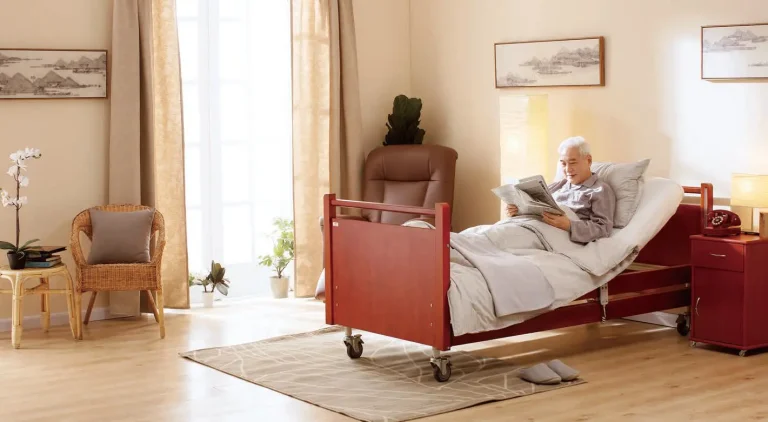
Nursing Bed Remote Control: Features That Improve Caregiver Experience
Nursing Bed Remote Control: Features That Improve Caregiver Experience
In the modern healthcare landscape, the quality of patient care is increasingly defined by the tools available to caregivers. Among the most critical pieces of equipment in hospitals, nursing homes, and home care settings is the nursing bed. While the bed frame provides the foundation, it is the control system—specifically the remote control interface—that dictates the efficiency, safety, and comfort of the care delivery process. As the industry shifts from manual mechanisms to fully electric systems, understanding the nuances of these control features is essential for healthcare procurement officers, facility managers, and families seeking the best care solutions.
At HJIM (Hengshui Chengen Medical Equipment Co., Ltd), we recognize that a nursing bed is not merely a piece of furniture but a dynamic medical device. The transition to electric nursing beds has fundamentally altered the workflow of caregiving, reducing physical strain and enhancing patient dignity. This article explores the critical features of nursing bed remote controls, the technological trends shaping the industry, and how to select the right equipment for your specific care environment.
The Evolution from Manual to Electric Control Systems
To appreciate the value of modern remote controls, one must understand the limitations of the systems they replaced. Historically, the manual nursing bed was the standard in many regions. These beds relied on mechanical crank handles to adjust the bed surface angles [K1]. While cost-effective, with prices ranging from $80 to $150 in developing markets, they required significant physical effort from caregivers to operate [K1]. In scenarios where electricity was unstable or budgets were tight, these beds served a purpose, but they posed ergonomic risks to staff and limited the frequency of patient repositioning.
The introduction of the electric nursing bed marked a paradigm shift. By replacing mechanical cranks with electric linear actuators, these beds allow for precise adjustments via a handheld remote or wall-mounted panel [K2]. The core logic behind this transition is the resolution of a critical bottleneck: patients with limited mobility require frequent position changes to prevent complications, but manual adjustment is labor-intensive. Electric beds reduce caregiver labor intensity by over 70%, allowing staff to focus more on direct patient interaction rather than physical manipulation of the equipment [K2].
For healthcare buyers, this distinction is vital. While manual beds still hold a niche in budget-constrained environments or areas with unreliable power infrastructure, the global trend is decisively moving toward electric solutions as costs decrease and certification standards tighten [K1].
Core Remote Control Functions for Patient Care
A high-quality remote control is the command center of the nursing bed. It is not enough for a bed to simply move; it must move in ways that support clinical outcomes and patient comfort. The standard configuration for modern electric nursing beds, such as the HJIM MD-A12, typically includes three primary functions controlled via a wired or wireless remote [K2].
Backrest Elevation: This is perhaps the most frequently used function. It allows the upper body of the patient to be raised from a flat position (0 degrees) to an upright sitting position (typically up to 75 or 80 degrees) [K2][K5]. This feature is crucial for patients who need to eat, read, or interact with visitors without being fully transferred to a chair. It also aids in respiratory function by reducing pressure on the diaphragm.
Knee Break (Gatch) Adjustment: Often overlooked by laypeople, the knee break is essential for preventing the patient from sliding down the bed when the backrest is elevated. By raising the leg section (typically 0 to 45 degrees), the bed creates a contoured shape that supports the thighs and reduces shear forces on the skin [K2]. This is a key feature in pressure u
Overall Height Adjustment: The ability to raise and lower the entire bed frame is critical for caregiver ergonomics. When the bed is high, caregivers can attend to patients without bending over, reducing the risk of back injury. When the bed is lowered to its minimum height, it facilitates safer patient transfers to whee
| Feature | Manual Nursing Bed | Electric Nursing Bed (e.g., HJIM MD-A12) |
|---|---|---|
| Operation Method | Hand-crank mechanical lever | Electric linear actuators with remote control |
| Labor Intensity | High (requires physical force) | Low (button-press operation) |
| Adjustment Precision | Discrete steps, harder to fine-tune | Continuous, smooth adjustment |
| Typical Cost Range | $80 – $150 | Varies widely based on features and certification |
| Primary Use Case | Resource-limited settings, basic transport | Hospitals, nursing homes, home care |
Ergonomics and Safety Features Integrated with Control
The remote control does not operate in isolation; it is part of a broader safety ecosystem. One of the most critical safety features that complements the electric control system is the Central Brake System. In traditional beds, locking the wheels often required stepping on individual casters, which could be difficult for caregivers wearing shoes or working in dimly lit rooms.
The central brake system utilizes a single foot pedal to lock all four wheels simultaneously [K6]. This dual-mode system allows for either directional locking (preventing the bed from rolling while allowing it to swivel) or a full lock (fixing the bed in place). This feature is indispensable during patient transfers, bedpan changes, or when the bed is being adjusted to a high position, significantly reducing the risk of accidental bed movement and patient falls [K6].
Furthermore, the physical design of the remote itself matters. In a clinical setting, remotes must be durable, easy to clean, and intuitive. Complex interfaces can lead to errors, especially in emergency situations. The best systems provide clear visual feedback, ensuring that the caregiver knows exactly which function is being activated. For patients with cognitive impairments, some advanced systems even integrate lockout features on the remote to prevent unintended adjustments.
Smart Trends in Nursing Bed Technology
The nursing bed industry is currently undergoing a digital transformation. As we look toward the future, the remote control is evolving from a simple switchboard into a smart hub for patient monitoring and care management. Several key technology trends are reshaping the market [K3].
IoT Integration: Modern beds are beginning to incorporate Internet of Things (IoT) capabilities. Through WiFi or 4G connectivity, these beds can transmit data regarding patient vitals, bed position, and weight to a central nursing station [K3]. This allows for remote monitoring, ensuring that caregivers are alerted immediately if a patient attempts to get out of bed unsafely or if the bed settings deviate from the prescribed care plan.
Smart Anti-Fall Systems: Building on IoT data, AI-powered algorithms are being used to reduce false positives in bed exit alarms [K3]. Traditional motion sensors often triggered alarms for minor movements, leading to “alarm fatigue” among staff. Smart systems can distinguish between a patient shifting in sleep and an actual attempt to leave the bed, ensuring that alarms are only raised when necessary.
Voice Control and Predictive Maintenance: Integration with smart home systems like Alexa or Google Home is becoming a reality, allowing caregivers or patients to adjust bed positions using voice commands [K3]. Additionally, sensors within the linear actuators can monitor motor health, enabling predictive maintenance. This means the equipment can signal when a part is wearing out before it fails, preventing downtime during critical care periods [K3].
Market Context and Procurement Considerations
When sourcing nursing beds, understanding the competitive landscape is essential for making a cost-effective decision. The market is generally segmented into three tiers [K4].
The Premium Tier includes established global brands like Hill-Rom (USA) and Paramount Bed (Japan). These manufacturers offer extensive service networks and high-end features but come with a significant price premium [K4].
The Mid-Tier is increasingly dominated by Chinese manufacturers who have achieved CE and FDA certifications [K4]. These companies offer a compelling value proposition, providing medical-grade quality and compliance at a lower cost than Western counterparts. For many healthcare facilities, this tier represents the “sweet spot” for procurement, balancing budget constraints with regulatory requirements.
The Budget Tier consists of unbranded OEMs often engaged in price wars with margins compressed below 8% [K4]. While attractive for initial capital expenditure, these beds often lack long-term reliability, spare part availability, and critical safety certifications. For facilities prioritizing patient safety and long-term operational stability, avoiding the lowest tier is advisable.
When evaluating suppliers, always verify medical device compliance. Certifications such as CE (Conformité Européenne) and ISO 13485 are non-negotiable for professional healthcare settings. These standards ensure that the electrical systems, including the remote controls and motors, meet strict safety and quality management requirements. HJIM, for example, focuses on delivering mid-to-high-tier products that meet these rigorous international standards, ensuring that the equipment is safe for both patients and operators.
Conclusion
The remote control on a nursing bed is the interface between technology and human care. It determines how easily a caregiver can adjust a patient’s position, how safely a patient can be transferred, and how efficiently a facility can operate. The shift from manual cranks to electric actuators has already reduced labor intensity and improved patient comfort. As we move forward, the integration of IoT, smart safety features, and voice control will further elevate the standard of care.
For healthcare procurement professionals, the goal is to select equipment that offers reliability, safety, and ergonomic benefits without compromising on value. By focusing on certified manufacturers like HJIM and prioritizing features like central braking and precise motor control, facilities can ensure they are investing in a care environment that supports both the patient and the caregiver.
Frequently Asked Questions
What is the standard number of motors in a professional electric nursing bed?
Professional electric nursing beds typically utilize between 2 to 5 electric linear actuators (motors) to control different sections of the bed [K5]. A standard 3-function bed, such as the HJIM MD-A12, usually employs three motors to independently control the backrest, knee break, and overall height [K2]. Higher-end models may include additional motors for features like Trendelenburg positioning or articulating mattresses.
What is the typical weight capacity for modern nursing beds?
Modern electric nursing beds are designed to support a wide range of patient weights to ensure safety and durability. For instance, the HJIM MD-A12 model has a maximum load capacity of 220kg [K5]. This high weight limit accommodates bariatric patients and ensures the structural integrity of the bed frame and actuators during frequent adjustments.
How does the central brake system improve patient safety?
The central brake system allows a caregiver to lock all four wheels of the bed simultaneously using a single foot pedal [K6]. This is superior to individual wheel brakes because it ensures the bed remains stable during critical procedures like patient transfers or when the bed is raised to its maximum height. It reduces the risk of the bed rolling unexpectedly, which is a common cause of patient falls and injuries during care activities.
What are the emerging technology trends in nursing bed manufacturing?
The industry is moving towards smarter, connected equipment. Key trends include IoT integration for remote monitoring of patient vitals and bed position, AI-powered anti-fall alarms that reduce false positives, and voice control integration with smart home systems [K3]. Additionally, predictive maintenance features are being developed to monitor motor health via sensor data, ensuring the bed remains operational without unexpected downtime.