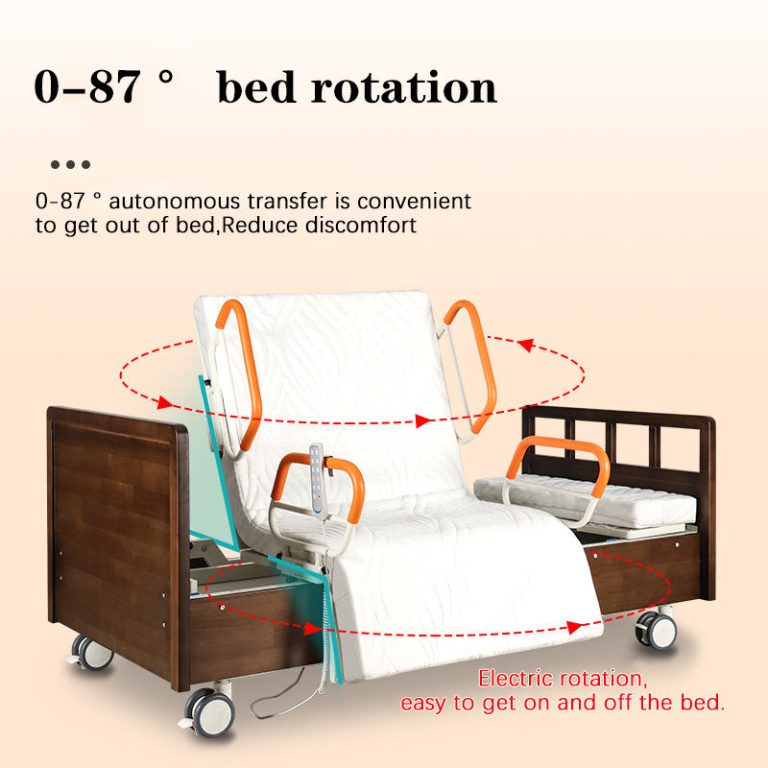
How to Ship Nursing Beds Internationally: Packing and Logistics Guide
How to Ship Nursing Beds Internationally: Packing and Logistics Guide
The global medical nursing bed market is valued at approximately USD 4.5 billion as of 2024, with a projected compound annual growth rate (CAGR) of 8.5% through 2027. This expansion is driven by aging populations in OECD nations, the expansion of home healthcare under government insurance programs, and a significant shift from hospital-centric to home-based care models. For manufacturers and distributors, understanding the logistics of
Whether you are procuring HJIM (Hengshui Chengen Medical Equipment Co., Ltd) beds for a hospital chain in Europe or supplying manual beds to clinics in Southeast Asia, the integrity of the cargo upon arrival is paramount. Damage during transit not only results in financial loss but can delay critical patient care. This guide details the essential strategies for packing,
Understanding Product Variants and Their Logistics Impact
Not all nursing beds are created equal, and their physical characteristics directly dictate how they must be packed and shipped. The two primary categories—electric and manual—present distinct logistical challenges.
Electric Nursing Beds: Precision and Protection
An electric nursing bed uses linear actuators (typically 2-5 motors) to provide adjustable positioning for patients with limited mobility. A prime example is the HJIM MD-A12, a 3-function model featuring backrest adjustment (0-75°), knee adjustment (0-45°), and a maximum load capacity of 220kg. Because these beds rely on electric motors and remote controls, they are classified as sensitive electronic equipment.
From a logistics perspective, electric beds require protection against moisture and impact that could damage the control boxes or motor wiring. The HJIM MD-A12, for instance, typically ships in multiple cartons to separate the heavy steel frame from the lighter electronic components. When sourcing these units, buyers should verify the motor brands (such as LINAK or Dewert), as higher-quality motors may have different shock tolerances compared to generic alternatives.
Manual Nursing Beds: Durability and Weight
Manual nursing beds use a mechanical crank system to adjust the bed height and angle. While they lack the electronic complexity of their electric counterparts, they are often constructed with heavier gauge steel to ensure stability without motor assistance. In developing markets, particularly in Africa and Southeast Asia, manual beds remain the主力 product due to budget constraints and infrastructure gaps, with prices often ranging between $80 and $150.
Logistically, manual beds are robust but heavy. The primary risk during
Packing Strategies for International Transit
Proper packing is the first line of defense against logistics damage. For nursing beds, a “flat-pack” approach is standard industry practice. This involves disassembling the bed into its core components: the frame, headboard, footboard, side rails, and mattress (if included).
Disassembly and Component Separation
Manufacturers like HJIM design their beds to be easily disassembled for
For electric beds, the power supply unit and remote control should be wrapped in anti-static foam. It is also advisable to secure the bed legs in the lowest position to minimize the overall height of the package, optimizing container space utilization.
Material Selection and Reinforcement
Standard export cartons are made from 5-layer or 7-layer corrugated board to withstand stacking pressure. However, for nursing beds, additional reinforcement is often necessary. Corner protectors made of cardboard or plastic should be applied to the edges of the frame to prevent denting. If the shipment is destined for a region with high humidity, moisture-absorbing packets (silica gel) should be placed inside the cartons to prevent rust on the steel components.
Palletizing is recommended for shipments exceeding 10 units. Wooden pallets must comply with ISPM 15 standards (heat-treated and stamped) to clear customs in most countries, including the US, EU, and Australia. Stretch wrapping the pallets ensures stability during ocean freight handling.
Choosing the right
Sea Freight: FCL vs.
For bulk orders, sea freight is the standard. Buyers must decide between Full Container Load (FCL) and Less than Container Load (
| Feature | FCL (Full Container Load) | |
|---|---|---|
| Best For | Large orders (e.g., 50+ beds) | Small orders or sample shipments |
| Security | High (container sealed at factory) | Medium (cargo handled at warehouse) |
| Cost Structure | Flat rate per container | Rate per cubic meter (CBM) |
| Risk of Damage | Lower | Higher (due to consolidation) |
A standard 20-foot container can typically hold between 40 to 60 nursing beds, depending on the packing efficiency and whether the mattresses are shipped separately. For HJIM beds, optimizing the carton dimensions can significantly increase the load per container, reducing the per-unit
Incoterms and Responsibility
When negotiating international shipments, the Incoterms define who bears the risk and cost at each stage. For nursing bed procurement:
- FOB (Free on Board): The buyer is responsible for freight and insurance once the goods are loaded onto the vessel. This offers the buyer more control over the logistics provider.
- CIF (Cost, Insurance, and Freight): The seller covers the cost of freight and insurance to the destination port. This is often preferred by buyers who want a landed cost estimate without managing
Regulatory Compliance and Documentation
Certifications and Standards
Before shipment, ensure the products meet the regulatory requirements of the destination country. Common certifications include:
- CE Marking: Mandatory for sales in the European Economic Area, indicating conformity with health, safety, and environmental protection standards.
- ISO 13485: An international standard for quality management systems specific to the design and production of medical devices. Many hospital procurement tenders require suppliers to hold this certification.
- FDA Registration: Required for exporting medical devices to the United States. The facility must be registered, and the device listed with the FDA.
Documentation should accompany the shipment, including the Commercial Invoice, Packing List, Bill of Lading, and Certificate of Origin. For medical devices, a Free Sale Certificate or Certificate of Analysis may also be requested by customs authorities to verify that the goods are approved for sale in the country of origin.
OEM and ODM Manufacturing Considerations
Many international buyers engage in OEM (Original Equipment Manufacturing) or ODM (Original Design Manufacturing) partnerships. In an OEM arrangement, the factory produces beds to the buyer’s design, whereas in ODM, the factory provides both design and production. This distinction impacts logistics because ODM products often come in standard
Typical margins vary by model: OEM margins are generally 5-10%, ODM margins are 10-15%, and OBM (Own Brand Manufacturing) margins can reach 20-35%. When planning logistics for OEM/ODM orders, buyers should account for the
Conclusion
HJIM and understanding the nuances of FCL vs.
Frequently Asked Questions
What is the maximum weight capacity of standard electric nursing beds?
Most standard electric nursing beds, such as the HJIM MD-A12, have a maximum weight capacity of 220kg (approximately 485 lbs). This capacity is designed to accommodate a wide range of patient sizes while ensuring the structural integrity of the frame and the longevity of the linear actuators. Buyers should verify this specification if
Do electric nursing beds require special batteries for
Generally, electric nursing beds are shipped with wired power supplies rather than internal batteries, which simplifies the
What certifications are essential for importing nursing beds into the EU?
For importing nursing beds into the European Union, the CE Marking is mandatory. Additionally, manufacturers should ideally hold ISO 13485 certification, which demonstrates a robust quality management system for medical devices. Some countries within the EU may also require specific national registrations. Ensuring these documents are included in the
How does the choice between manual and electric beds affect
While both manual and electric beds share similar frame dimensions, electric beds often require additional carton space for motors, control boxes, and wiring harnesses. Consequently, the total cubic meter (CBM) volume per unit for electric beds can be 10-15% higher than for manual beds. When ca