The Ultimate Nursing Bed Specification Checklist
The Ultimate Nursing Bed Specification Checklist
The global medical nursing bed market is valued at approximately USD 4.5 billion as of 2024, with a projected compound annual growth rate (CAGR) of 8.5% through 2027. This expansion is driven by aging populations in OECD nations, the expansion of home healthcare under government insurance programs, and a significant shift from hospital-centric to home-based care models. For healthcare procurement officers, facility managers, and distributors, navigating the technical specifications of nursing beds is no longer just about purchasing furniture; it is about securing patient safety, caregiver ergonomics, and long-term operational efficiency.
Whether you are outfitting a large-scale hospital ward, a specialized rehabilitation center, or managing a portfolio of home care equipment, understanding the granular details of bed specifications is critical. This checklist breaks down the essential technical parameters, safety mechanisms, and compliance standards required for modern patient care.
Power System Selection: Electric vs. Manual Mechanisms
The foundational decision in nursing bed procurement is the actuation method. This choice dictates the level of care a patient can receive independently and the physical burden placed on caregivers.
Electric Nursing Beds
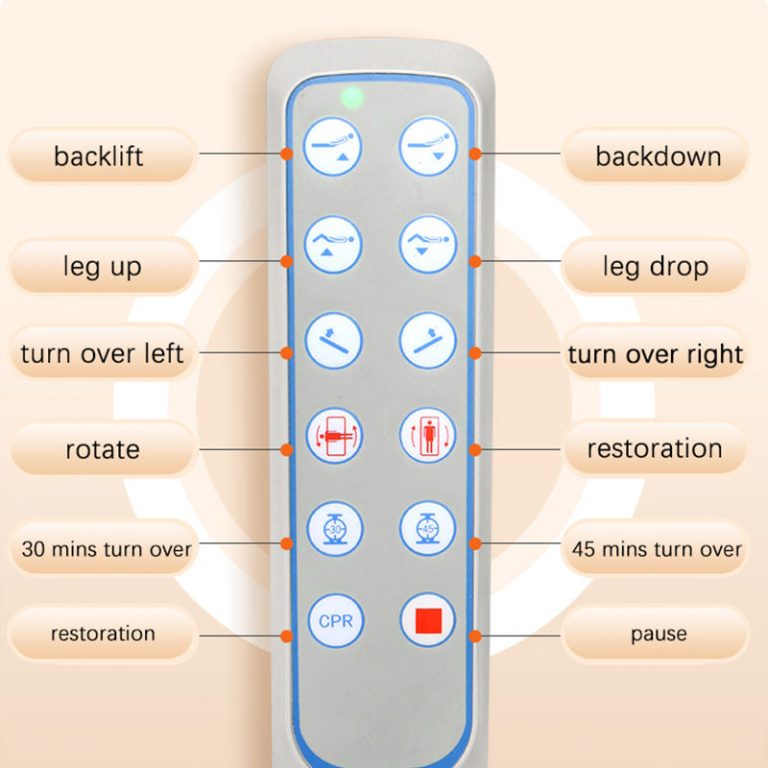
An electric nursing bed utilizes electric linear actuators to replace manual crank handles, allowing for the adjustment of bed angles via a remote control or wall-mounted panel. The core logic here is solving the problem of “immobile patients requiring position changes.” In a traditional manual setup, caregivers must physically exert force to rotate cranks, which contributes to occupational injuries. Electric beds reduce this labor intensity significantly. High-quality units often feature motors from established brands like LINAK or Dewert, which offer smoother operation and lower noise levels compared to generic alternatives. A standard 3-function electric bed, such as the HJIM MD-A12, typically allows for backrest elevation (0-80°), knee gatch elevation (0-45°), and overall height adjustment. These features are essential for preventing pressure u
Manual Nursing Beds
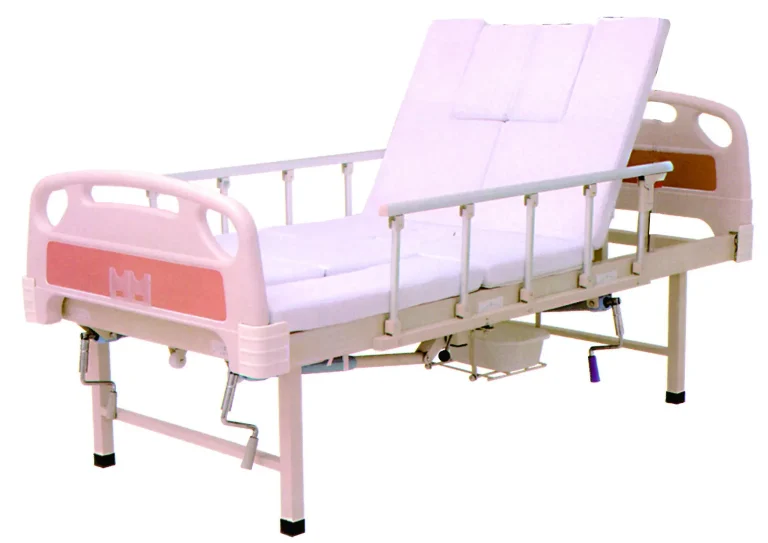
Manual nursing beds rely on mechanical crank handles to adjust the bed surface. While they lack the convenience of electric operation, they remain a vital segment of the market, particularly in regions with unstable power grids or strict budget constraints. In markets across Africa and Southeast Asia, manual beds are the主力 (main force) products, often priced between $80 and $150. They provide basic position adjustment capabilities without the risk of motor failure or the need for electrical infrastructure. However, as the cost of electric components declines, the manual segment is gradually being replaced in developed markets, remaining relevant primarily for basic transport or low-resource settings.
Critical Safety Mechanisms and Emergency Features
In a clinical environment, equipment must never compromise patient safety during emergencies. Two specific features stand out in the specification checklist: CPR release mechanisms and braking systems.
CPR Quick Release Function
Cardiopulmonary resuscitation (CPR) requires the patient to be on a flat, hard surface to ensure effective chest compressions. A CPR quick release is a safety mechanism that allows the bed to be flattened from any position in under 3 seconds. This is typically achieved via a mechanical lever located at the bedside, allowing for one-hand operation. For example, the HJIM MD-E213 model features a dedicated CPR release lever designed for rapid deployment during cardiac arrest scenarios. Without this feature, caregivers might waste critical time trying to manually crank the bed flat, potentially compromising the outcome of resuscitation efforts.
Locking and Stability Systems
Mobility assistance is key in hospital equipment. Nursing beds must be equipped with high-quality casters that allow for smooth movement during cleaning or patient transfer, yet lock securely during treatment. The specification should include dual-locking wheels (locking both rotation and movement) to prevent accidental drifting, which is crucial for elderly care and mobility assistance scenarios.
Clinical Positioning Capabilities
The ability to adjust a patient’s posture is not merely about comfort; it is a clinical intervention. Understanding standard medical positions helps in selecting the right bed functionality.
Fowler’s Position
Fowler’s position is a standard clinical posture where the upper body is raised between 45 and 60 degrees. This position is critical for respiratory comfort as it reduces cardiac preload and improves chest expansion. It is widely used in post-surgery recovery, for patients with respiratory distress, and during feeding to prevent aspiration pneumonia. When evaluating a nursing bed, check the maximum backrest angle; a range of 0-80° ensures the bed can achieve a full Fowler’s position and even a near-sitting position for patient engagement.
Trendelenburg and Reverse Trendelenburg
While more common in surgical tables, some advanced nursing beds offer whole-bed tilting. Trendelenburg (head down) is used to improve blood flow to the brain, while Reverse Trendelenburg (head up) helps with gastric reflux. Even if full tilting is not available, the combination of backrest and knee gatch adjustments can simulate many of these therapeutic angles for general patient care.
Durability, Load Capacity, and Materials
Procurement decisions must account for the physical demands placed on the equipment. Nursing beds are subject to constant adjustment and variable patient weights.
Weight Capacity
Standard nursing beds typically support a dynamic load of 250 kg (approx. 550 lbs). However, with the rising prevalence of obesity globally, bariatric options supporting up to 450 kg or more are increasingly necessary. Exceeding the weight limit can damage the linear actuators and compromise the structural integrity of the bed frame. Always verify the “safe working load” rather than just the maximum breakage load.
Material and Hygiene
The bed frame is usually constructed from cold-rolled steel with powder coating to resist corrosion and chemical disinfectants. Headboards and footboards should be made of ABS (Acrylonitrile Butadiene Styrene) plastic, which is durable, impact-resistant, and easy to clean. Removable ABS headboards, like those found on the HJIM MD-A12, facilitate easier cleaning and maintenance, reducing the risk of hospital-acquired infections.
Market Tiers and Compliance Standards
The competitive landscape for nursing beds is segmented into three distinct tiers, each with different implications for procurement and pricing.
| Tier | Representative Brands | Key Characteristics | Typical Use Case |
|---|---|---|---|
| Premium | Hill-Rom (USA), Paramount Bed (Japan), Invacare (USA) | Advanced connectivity, integrated scales, premium service networks | Large tertiary hospitals, specialized ICUs |
| Mid-Tier | Chinese manufacturers with CE/FDA | Cost advantage, closing certification gap, reliable OEM manufacturing | Regional hospitals, nursing homes, home care |
| Budget | Unbranded Chinese OEMs | Price war, margin compression below 8%, basic functionality | Developing markets, temporary facilities |
For healthcare procurement, medical device compliance is non-negotiable. Look for CE marking (indicating compliance with European health, safety, and environmental protection standards) and ISO 13485 certification (quality management systems for medical devices). FDA clearance is essential if the equipment is destined for the United States market. These certifications ensure that the electrical safety, electromagnetic compatibility, and mechanical reliability of the bed have been independently verified.
Brand Spotlight: HJIM Product Line
When evaluating mid-tier options that balance cost and compliance, HJIM (Hengshui Chengen Medical Equipment Co., Ltd) offers a range of products suitable for various care settings. Their portfolio includes the MD-A12, a 3-function electric nursing bed that serves as a robust standard for general ward use. It features an ABS removable headboard and reliable linear actuation. For facilities requiring enhanced emergency readiness, the MD-E213 includes the critical CPR quick release lever, demonstrating how specific features can be tailored to clinical needs without necessarily jumping to premium-tier pricing.
Future-Proofing Your Procurement
As the industry shifts towards smart healthcare, consider beds that offer connectivity options. Some advanced models can integrate with hospital management systems to track patient movement or bed status. While this is currently a premium feature, mid-tier manufacturers are beginning to incorporate basic digital interfaces. Additionally, consider the warranty terms. A standard warranty should cover the motor system and electrical components for at least 2 to 3 years. Given that the motor is the most complex component, a robust warranty is a strong indicator of manufacturer confidence in their OEM manufacturing quality.
Frequently Asked Questions
What is the standard weight capacity for a general nursing bed?
Most standard electric and manual nursing beds are designed with a safe working load of 250 kg (approximately 550 lbs). This capacity accommodates the vast majority of the adult population. However, for bariatric care, specialized beds are available with capacities ranging from 350 kg to over 450 kg. It is crucial to verify the dynamic load rating, which accounts for the stress placed on the frame and actuators during movement, rather than just the static weight limit.
How does the CPR Quick Release function operate mechanically?
The CPR quick release is a purely mechanical safety backup designed to function without electricity. It typically involves a lever located at the side of the bed frame. When pulled, this lever disengages the locking mechanism on the backrest actuator, allowing gravity to flatten the bed surface instantly. This ensures that even if the power fails or the motor malfunctions, the bed can be prepared for chest compressions in under 3 seconds, meeting emergency response standards.
Which motor brands are considered industry standard for electric beds?
In the premium and high-end mid-tier markets, linear actuators from LINAK (Denmark) and Dewert (Germany) are considered the industry gold standard. These brands are renowned for their durability, low noise operation, and smooth adjustment speeds. When reviewing procurement specifications, requesting these specific motor brands can be a reliable proxy for overall bed quality, as manufacturers using these components typically invest in higher quality control for the rest of the assembly.
Are manual nursing beds still relevant in modern healthcare?
Yes, manual nursing beds remain relevant in specific contexts. They are the primary choice for regions with unstable electrical infrastructure, such as parts of Africa and Southeast Asia, where power outages could render electric beds unusable. Additionally, they are significantly cheaper, with prices often ranging from $80 to $150, making them suitable for budget-constrained facilities or for use as transport beds where frequent position adjustment is not required. However, in developed home care markets, the trend is strongly shifting towards electric models to reduce caregiver strain.
Conclusion
Selecting the right nursing bed is a balance of clinical necessity, budgetary constraints, and regulatory compliance. By focusing on core specifications such as motor reliability, CPR safety features, and appropriate weight capacities, procurement teams can ensure they are investing in equipment that enhances patient care and protects caregivers. Whether choosing a premium integrated system or a cost-effective manual unit, the goal remains the same: providing a safe, comfortable, and supportive environment for recovery and long-term care.