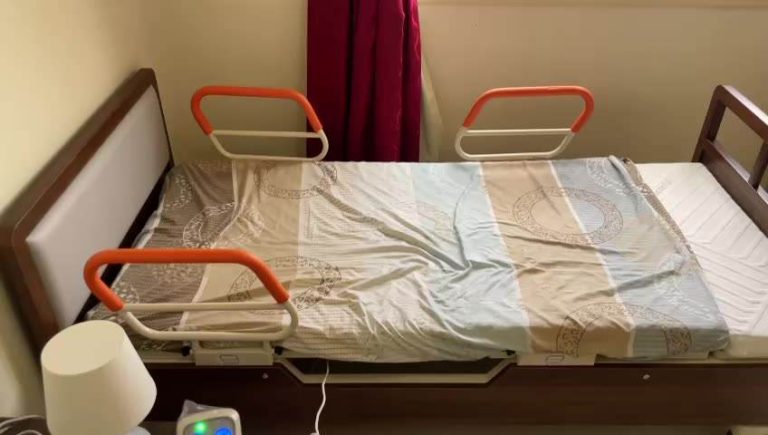
Home Care Bed with Bedpan: Features and User Scenarios | Installation & Maintenance #5
Home Care Bed with Bedpan: Features and User Scenarios
The global medical nursing bed market is valued at approximately USD 4.5 billion as of 2024, with a projected compound annual growth rate of 8.5% through 2027 [K3]. This expansion is driven primarily by aging populations in OECD nations and a significant shift from hospital-centric to home-based care models [K3]. As families increasingly manage long-term care within residential settings, the demand for specialized equipment that supports hygiene, mobility, and patient dignity has never been higher. Among these essential tools, the home care bed designed to facilitate hygiene management, including bedpan use, represents a critical category for both caregivers and healthcare procurement officers.
At HJIM (Hengshui Chengen Medical Equipment Co., Ltd), we understand that selecting the right nursing bed is not merely about furniture; it is about clinical functionality and caregiver ergonomics. Whether for a post-surgical recovery patient or an individual managing chronic mobility issues, the ability to adjust the bed surface directly impacts the ease of hygiene care. This article explores the technical features, user scenarios, and procurement considerations for home care beds capable of supporting bedpan usage and comprehensive patient care.
Core Mechanisms: Manual vs. Electric Adjustability
The fundamental distinction in nursing bed technology lies in the mechanism used to adjust the bed surface. Understanding this difference is vital for determining which equipment suits a specific home care environment. Manual nursing beds utilize a mechanical摇杆 (crank)机构 to调节床面角度 [K1]. These systems are simple, cost-effective, and do not require electricity, making them suitable for regions with unstable power grids or for budgets constrained to the $80-150 range [K1]. However, manual adjustment requires physical effort from the caregiver, which can be strenuous when frequent repositioning is needed for hygiene tasks.
In contrast, electric nursing beds use linear actuators to replace manual cranks, allowing bed surface adjustments via a remote control or panel [K2]. This technology solves the core problem of patients who cannot move independently but require frequent position changes [K2]. For home care scenarios involving bedpan use, electric beds offer a significant advantage. The ability to raise the backrest to 0-80 degrees or adjust the leg section to 0-45 degrees allows the patient to assume a semi-Fowler position comfortably without manual force [K2]. This reduces caregiver labor intensity by over 70% compared to manual alternatives [K7].
While manual beds remain the主力产品 (main product) in markets like Africa and Southeast Asia due to cost and power reliability [K1], the global trend favors electric models for home care. The shift is driven by the need to prevent褥疮 (bedsores) and肺部感染 (lung infections) through regular position changes, which is easier to achieve with motorized assistance [K2]. For home care settings where dignity and ease of use are paramount, the electric configuration is increasingly becoming the standard rather than a luxury [K2].
Hygiene Management and Positioning for Bedpan Use
Effective hygiene management is a primary concern for home caregivers. The use of a bedpan requires specific body positioning to ensure patient comfort and prevent spillage or injury. Nursing beds designed for this scenario must offer precise control over the bed deck. The backrest elevation function is particularly critical. When the backrest is raised to between 30 and 45 degrees, it facilitates the natural alignment required for bowel and bladder functions while maintaining patient security [K6].
Advanced clinical positioning also includes the Trendelenburg position, where the patient is tilted head-down 12-15 degrees [K6]. While primarily used for shock treatment or venous return in surgical contexts [K6], understanding these positioning capabilities is essential for procurement. In a home care context, the ability to tilt the entire bed frame can assist caregivers in shifting patient weight safely during hygiene changes, reducing the risk of back injury to the caregiver.
Furthermore, the design of the bed frame must accommodate hygiene accessories. Many modern nursing beds feature removable mattress sections or specific frame cutouts that allow for easier access during bedpan insertion and removal. The HJIM MD-A12 electric nursing bed, for example, includes an ABS removable headboard and a robust frame structure capable of supporting up to 220kg [K2]. This weight capacity ensures stability during hygiene procedures, preventing unwanted movement that could compromise patient safety. The use of easy-to-clean materials such as ABS plastics for headboards and footboards is standard, ensuring that the equipment can be sanitized regularly to maintain medical hygiene standards.
Technical Specifications and Performance Metrics
When evaluating home care beds for hygiene management, specific technical parameters must be reviewed. The number of motors is a primary indicator of functionality. A basic electric bed may have two motors, controlling the backrest and leg rest independently. More advanced models, such as the HJIM MD-A12, offer three functions including overall height adjustment [K2]. Height adjustment is crucial for caregiver ergonomics; lowering the bed allows the patient to exit safely, while raising it brings the patient to a working height for the caregiver during bedpan changes, reducing back strain.
Motor quality is another critical specification. Industry leaders often use brands like LINAK or Dewert, though domestic Chinese motors are closing the gap in performance [K2]. The noise level of the motors is also a factor in home environments, where quiet operation is preferred during night-time care. Additionally, the control interface should be intuitive. Remote controls with large buttons are essential for elderly users or caregivers with limited dexterity. Some emerging trends include IoT integration, allowing remote monitoring of bed position and weight via WiFi or 4G [K4]. While currently more common in hospital settings, these features are trickling down to premium home care models, offering families peace of mind through connectivity.
Weight capacity is a non-negotiable metric. The HJIM MD-A12 specifies a maximum load of 220kg [K2], which accommodates a wide range of patient sizes. Procurement officers must ensure that the selected bed exceeds the patient’s weight to maintain structural integrity over time. Certification is equally important. Reputable manufacturers should hold CE, ISO 13485, and FDA certifications [K5]. These credentials indicate that the medical device complies with international safety and quality management standards, reducing liability risks for home care providers and families.
Comparative Analysis of Nursing Bed Types
To assist in decision-making, the following table compares the key attributes of manual and electric nursing beds based on industry data. This comparison highlights why electric beds are often preferred for complex home care scenarios involving hygiene management.
| Feature | Manual Nursing Bed | Electric Nursing Bed |
|---|---|---|
| Adjustment Mechanism | Hand crank摇杆 (Mechanical) | Electric Linear Actuators |
| Operational Effort | Requires caregiver physical effort | Remote control, minimal effort |
| Cost Range | $80 – $150 USD [K1] | Higher initial cost, decreasing margin gap [K5] |
| Power Requirement | None (Battery backup optional) | Requires electricity (UPS recommended) |
| Hygiene Support | Basic positioning | Precise angle control for bedpan use |
| Target Market | Developing regions, budget constraints [K1] | Hospitals, nursing homes, home care [K2] |
| Labor Intensity Reduction | None | 70%+ reduction [K7] |
This data illustrates that while manual beds serve a vital role in cost-sensitive markets [K1], electric beds provide the functional depth required for dignified hygiene care at home. The ability to precisely control angles reduces the physical burden on family caregivers, who often lack professional training. For procurement strategies focused on long-term home care, the electric option offers better lifecycle value despite the higher upfront cost.
Regulatory Compliance and Procurement Standards
Procuring medical equipment for home use requires adherence to strict regulatory standards. The competitive landscape for nursing beds is divided into premium, mid-tier, and budget segments [K5]. Premium tier brands like Hill-Rom and Paramount Bed offer extensive service networks but come at a higher price point [K5]. Mid-tier manufacturers, particularly those from China with CE and FDA certifications, are closing the certification gap and offering significant cost advantages [K5]. Budget tier unbranded OEMs often engage in price wars with margins compressed below 8%, which can compromise quality control [K5].
For home care buyers, selecting a mid-tier manufacturer with proper certifications is often the optimal strategy. HJIM positions itself in this space, offering products that meet international compliance standards without the premium markup of Western brands. When evaluating suppliers, buyers should request documentation for ISO 13485 (Quality Management Systems for Medical Devices) and CE marking (European Conformity). These documents ensure that the bed has undergone rigorous testing for electrical safety, mechanical stability, and biocompatibility of materials.
Warranty terms are another critical procurement factor. A standard warranty should cover motors and electronic controllers for at least one to two years. Given that motors are the most failure-prone components in electric beds, understanding the replacement policy is essential. Additionally, buyers should inquire about the availability of spare parts. In the context of home care, equipment downtime can directly impact patient hygiene and comfort. Ensuring a supply chain that supports long-term maintenance is as important as the initial purchase.
Future Trends in Smart Home Care
The nursing bed industry is evolving beyond basic mechanical functions. Technology trends indicate a shift towards IoT integration, where patient vitals, bed position, and weight are monitored remotely via WiFi or 4G [K4]. For home care scenarios, this means caregivers can receive alerts if a patient attempts to exit the bed unsafely. Smart anti-fall systems with AI-powered false positive reduction are becoming more common, enhancing safety without causing unnecessary alarm fatigue [K4].
Voice control integration with smart home systems like Alexa or Google Home is also emerging [K4]. Imagine a caregiver adjusting the bed position for bedpan use simply by speaking a command, keeping their hands free for other tasks. Predictive maintenance is another frontier, where sensor data monitors motor health to prevent failures before they occur [K4]. While these features are currently more prevalent in institutional settings, they are gradually becoming available in high-end home care models. For buyers planning for the future, selecting a bed with upgradeable electronics or compatibility with smart home hubs may provide long-term benefits.
Conclusion
Selecting a home care bed capable of supporting hygiene management, including bedpan use, requires a balanced evaluation of mechanical functionality, patient needs, and regulatory compliance. While manual beds offer an economical entry point for budget-constrained environments [K1], electric nursing beds provide the precision and ease of use necessary for dignified home care. The ability to adjust backrest and leg positions via remote control significantly reduces caregiver labor intensity and enhances patient comfort [K2].
Procurement decisions should prioritize certified products from reputable manufacturers like HJIM, ensuring compliance with CE and ISO standards [K5]. As the global market continues to grow [K3], the availability of smart features and robust after-sales support will become key differentiators. By focusing on technical specifications such as weight capacity, motor quality, and certification status, families and healthcare providers can secure equipment that supports safe, efficient, and compassionate care in the home environment.
Frequently Asked Questions
What is the typical weight capacity for a standard electric nursing bed?
Most standard electric nursing beds, such as the HJIM MD-A12 model, are designed with a maximum load capacity of 220kg [K2]. This specification ensures stability and safety for a wide range of patient sizes during positioning and hygiene procedures. Procurement officers should always verify the specific weight limit of the model being purchased to ensure it exceeds the patient’s actual weight for optimal safety margins.
How many motors are typically required for effective home care positioning?
Effective home care positioning usually requires a minimum of two to three motors [K7]. A two-motor system typically controls the backrest and leg rest independently, while a three-motor system adds overall bed height adjustment [K2]. For scenarios involving bedpan use and hygiene management, independent control of the backrest is essential to achieve the necessary angles for patient comfort and caregiver access.
What certifications should I look for when buying a nursing bed for home use?
When procuring nursing beds for home use, you should look for CE marking and ISO 13485 certification [K5]. These credentials indicate that the device meets international safety and quality management standards. FDA clearance is also a strong indicator of compliance for markets in North America. Avoid unbranded OEM products that lack these certifications, as they may not meet safety requirements for medical device compliance [K5].
Can nursing beds integrate with smart home systems for monitoring?
Yes, emerging technology trends in the nursing bed industry include IoT integration for remote monitoring [K4]. Some advanced models allow for the monitoring of patient vitals, bed position, and weight via WiFi or 4G connections [K4]. Additionally, integration with smart home voice control systems like Alexa or Google Home is becoming available, enabling hands-free operation which is particularly useful during hygiene care tasks.