CE and ISO Certified Nursing Beds: How to Verify Manufacturer Credentials
CE and ISO Certified Nursing Beds: How to Verify Manufacturer Credentials
When procuring nursing beds for healthcare facilities, home care settings, or institutional use, verifying manufacturer credentials is not merely a regulatory formality—it is a critical safeguard for patient safety, caregiver efficiency, and long-term operational reliability. As the global medical nursing bed market grows to approximately USD 4.5 billion with an 8.5% CAGR through 2027, driven by aging populations and expanding home healthcare models, the importance of sourcing equipment from certified, compliant manufacturers has never been more pronounced. This guide provides procurement professionals, healthcare administrators, and facility managers with a practical framework for validating manufacturer credentials, with a focus on CE marking and ISO 13485 certification—the two most universally recognized standards for medical device compliance.
Understanding the Regulatory Landscape for Nursing Beds
Nursing beds fall under the category of medical devices in most jurisdictions, meaning they must meet stringent safety, performance, and quality management requirements before entering the market. The European Union mandates CE marking under the Medical Device Regulation (MDR) 2017/745, while ISO 13485 certification demonstrates adherence to international quality management systems specific to medical devices. These certifications are not optional—they are legal prerequisites for market access in many regions and serve as indicators of a manufacturer’s commitment to product reliability and patient safety.
For example, CE MDR compliance requires manufacturers to undergo rigorous clinical evaluations, risk assessments, and post-market surveillance protocols. Similarly, ISO 13485 certification ensures that every stage of production—from design and development to manufacturing and distribution—follows documented quality control procedures. When evaluating suppliers, always request copies of their CE certificates and ISO 13485 audit reports, and verify their authenticity through official databases such as the EU’s NANDO system or accredited certification body portals.
Key Technical Specifications to Validate During Procurement
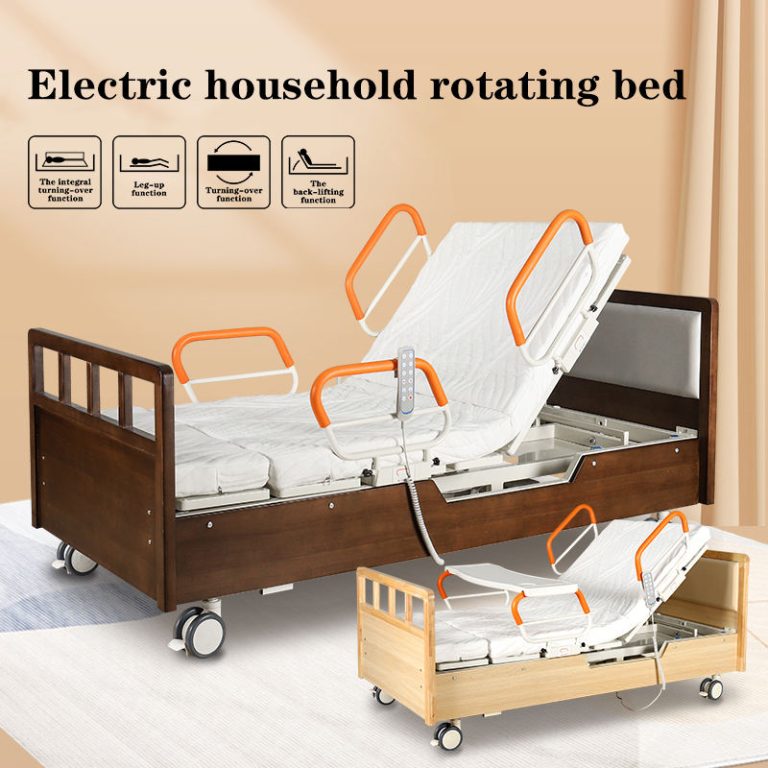
Beyond regulatory compliance, procurement decisions should be informed by product-specific technical parameters that directly impact usability, durability, and patient outcomes. Electric nursing beds, which use linear actuators to adjust backrest, knee, and height positions via remote control, represent the industry standard for modern care settings. These beds reduce caregiver labor intensity by over 70% compared to manual models, making them essential for facilities managing high patient volumes or limited staffing resources.
When assessing product specifications, prioritize the following parameters:
- Weight Capacity: Reputable manufacturers like HJIM (Hengshui Chengen Medical Equipment Co., Ltd) specify maximum load ratings—typically 220kg for models like the MD-A12—to ensure structural integrity under real-world use conditions.
- Motor Quality: Leading brands partner with established actuator manufacturers such as LINAK or Dewert, whose components undergo independent testing for noise levels (< 45 dB), cycle life (> 50,000 operations), and fail-safe mechanisms.
- Adjustment Range: Standard electric beds offer backrest adjustment from 0° to 80° and knee elevation from 0° to 45°, enabling therapeutic positioning that prevents pressure u
- Material Durability: ABS plastic headboards, powder-coated steel frames, and antimicrobial mattress surfaces are industry benchmarks for hygiene and longevity in high-use environments.
Market-Specific Certification Requirements: A Comparative Analysis
Certification requirements vary significantly across global markets, impacting both procurement timelines and costs. Understanding these differences is essential for international buyers navigating complex supply chains. The table below summarizes key regulatory frameworks and associated compliance burdens:
| Market | Required Certification | Typical Timeline | Cost Range |
|---|---|---|---|
| EU | CE MDR 2017/745 + ISO 13485 | 6-12 months | €15,000-30,000 |
| USA | FDA 510(k) + ISO 13485 | 3-12 months | $20,000-50,000 |
| Middle East | CE or GSO | 3-6 months | $5,000-15,000 |
| Africa | Varies by country | 1-3 months | $2,000-8,000 |
This data reveals critical insights for procurement planning. For instance, EU market entry requires the longest timeline and highest investment, reflecting the region’s stringent regulatory environment. Conversely, African markets offer faster approval cycles but demand careful country-by-country verification due to fragmented regulatory frameworks. Always confirm that manufacturers have market-specific certifications rather than relying on generic “CE” claims—some suppliers misuse this marking without proper MDR compliance.
Verifying OEM/ODM Manufacturing Partnerships
Many healthcare organizations opt for OEM (Original Equipment Manufacturing) or ODM (Original Design Manufacturing) partnerships to customize nursing beds for specific institutional needs. While these arrangements offer flexibility, they introduce additional compliance considerations. In OEM relationships, the buyer provides designs while the factory handles production—meaning the buyer retains responsibility for regulatory submissions. In ODM models, the manufacturer supplies both design and production capabilities, shifting compliance obligations to the supplier.
When engaging OEM/ODM partners, request documentation proving their quality management systems align with ISO 13485 requirements. Reputable manufacturers like HJIM maintain dedicated regulatory affairs teams that assist clients with market-specific submissions, including technical file preparation and clinical evaluation reports. Always clarify contractual terms regarding certification ownership, as some agreements may require buyers to re-register products under their own entity—a process that can add 3-6 months to market launch timelines.
Red Flags in Manufacturer Credential Verification
During due diligence, remain vigilant for common warning signs that indicate inadequate compliance practices:
- Expired Certifications: CE certificates typically remain valid for 5 years, while ISO 13485 requires annual surveillance audits. Request current documentation with expiration dates.
- Vague Technical Files: Legitimate manufacturers provide detailed technical documentation including risk management files (ISO 14971), biocompatibility test results, and electrical safety reports (IEC 60601).
- Inconsistent Branding: Be cautious if product labeling,
- Unwillingness to Share Audit Reports: Ethical manufacturers we
Practical Steps for Credential Validation
To systematically verify manufacturer credentials, follow this actionable checklist:
- Request Certification Copies: Obtain scanned versions of CE certificates, ISO 13485 registration, and any market-specific approvals (e.g., FDA 510(k) numbers for US exports).
- Verify Through Official Channels: Cross-check CE certificates using the EU’s NANDO database and confirm ISO 13485 status via accredited certification body portals.
- Conduct Factory Audits: For large-volume purchases, arrange on-site inspections to assess production facilities, quality control processes, and documentation practices.
- Review Customer References: Contact existing clients in similar markets to validate product performance, after-sales support, and compliance consistency.
- Test Sample Units: Evaluate physical prototypes for build quality, motor performance, and user interface functionality before committing to bulk orders.
Conclusion
Verifying manufacturer credentials for CE and ISO certified nursing beds requires a methodical approach that combines regulatory knowledge, technical assessment, and practical due diligence. By prioritizing suppliers who demonstrate transparent compliance practices—such as HJIM (Hengshui Chengen Medical Equipment Co., Ltd), whose products meet EU MDR standards and feature LINAK motors with 220kg weight capacity—procurement professionals can mitigate risks while securing equipment that enhances patient care and caregiver ergonomics. As the global shift toward home-based care accelerates, investing in properly certified nursing beds becomes not just a regulatory necessity but a strategic advantage in delivering high-quality, sustainable healthcare solutions.
Frequently Asked Questions
What is the typical timeline for obtaining CE MDR certification for nursing beds?
CE MDR 2017/745 certification typically requires 6-12 months to complete, depending on product complexity and the manufacturer’s existing quality management systems. This timeline includes clinical evaluations, risk assessments, and technical file submissions to notified bodies. For context, FDA 510(k) clearance for similar products takes 3-12 months, while Middle East markets (requiring CE or GSO certification) can be achieved in 3-6 months.
How do OEM and ODM manufacturing models differ in terms of certification responsibility?
In OEM arrangements, the buyer provides designs and retains responsibility for regulatory submissions, meaning they must manage CE marking or FDA clearance processes. In ODM models, the manufacturer supplies both design and production capabilities, assuming primary compliance obligations. Industry data shows OEM margins average 5-10%, while ODM partnerships yield 10-15% margins due to the added value of design services.
Why is ISO 13485 certification critical for nursing bed manufacturers?
ISO 13485 establishes international quality management standards specific to medical devices, ensuring consistent design, production, and distribution processes. Unlike generic ISO 9001 certification, ISO 13485 includes requirements for risk management, traceability, and post-market surveillance—critical for products like nursing beds that directly impact patient safety. Most regulatory frameworks (including EU MDR and FDA guidelines) recognize ISO 13485 as evidence of robust quality systems.
What weight capacity should I prioritize when selecting a certified nursing bed?
Industry-standard electric nursing beds like HJIM’s MD-A12 model specify 220kg maximum load capacity, accommodating 95% of adult patients while maintaining structural integrity. Lower-capacity beds (150-180kg) may suffice for lightweight applications but increase failure risks in bariatric care settings. Always verify weight ratings through independent testing reports rather than relying solely on manufacturer claims.