OEM Nursing Bed Manufacturing: How to Choose the Right Chinese Supplier
OEM Nursing Bed Manufacturing: How to Choose the Right Chinese Supplier
The global medical nursing bed market is valued at approximately USD 4.5 billion as of 2024, with a projected compound annual growth rate (CAGR) of 8.5% through 2027 [K2]. This expansion is driven by aging populations in OECD nations, the expansion of home healthcare under government insurance programs, and a significant shift from hospital-centric to home-based care models [K2]. For healthcare procurement professionals and distributors, sourcing high-quality nursing beds from China offers a strategic advantage in balancing cost efficiency with medical device compliance. However, the Chinese manufacturing landscape is segmented, ranging from unbranded budget producers to certified mid-tier manufacturers capable of competing with premium global brands [K3].
Choosing the right partner requires more than comparing unit prices. It demands a deep understanding of product specifications, manufacturing models (OEM vs. ODM), and regulatory standards. This guide outlines how to navigate the Chinese supply chain for nursing beds, with insights drawn from industry data and technical specifications used by manufacturers like HJIM (Hengshui Chengen Medical Equipment Co., Ltd).
Understanding the Global Market Tiers
The nursing bed industry is stratified into three distinct tiers, each serving different economic and clinical needs. Understanding where your target market fits is the first step in supplier selection.
Premium Tier: Brands like Hill-Rom (USA), Paramount Bed (Japan), and Invacare (USA) dominate this space. Their competitive advantage lies in brand reputation and extensive service networks [K3]. These beds often feature advanced connectivity, integrated scales, and premium motor systems, commanding high price points.
Mid-Tier: This segment is increasingly populated by Chinese manufacturers who have achieved CE and FDA certifications [K3]. These suppliers offer a cost advantage while closing the certification gap. They are ideal for distributors looking to offer reliable medical equipment without the premium brand markup. HJIM, for example, positions itself in this tier by offering certified products with robust after-sales support.
Budget Tier: This category consists of unbranded Chinese OEMs engaged in intense price wars, often resulting in margin compression below 8% [K3]. While attractive for cost-sensitive markets, these products may lack critical safety features or long-term durability, posing risks for healthcare providers focused on patient care and liability.
Manual vs. Electric Nursing Beds: Selecting the Right Product
The choice between manual and electric nursing beds depends heavily on the target market’s infrastructure and budget. Both types serve distinct roles in patient care and elderly care ecosystems.
Manual Nursing Beds operate using mechanical crank handles to adjust bed angles [K1]. They are simple, low-cost, and do not require electricity, making them the主力 product (main product) for markets in Africa and Southeast Asia where power stability is a concern [K1]. The typical price range for these beds is between $80 and $150 [K1]. However, they require physical effort from caregivers to adjust the bed, which can lead to strain over time. They are best suited for基层 hospitals (primary hospitals) or budget-limited养老 institutions (elderly care institutions) [K1].
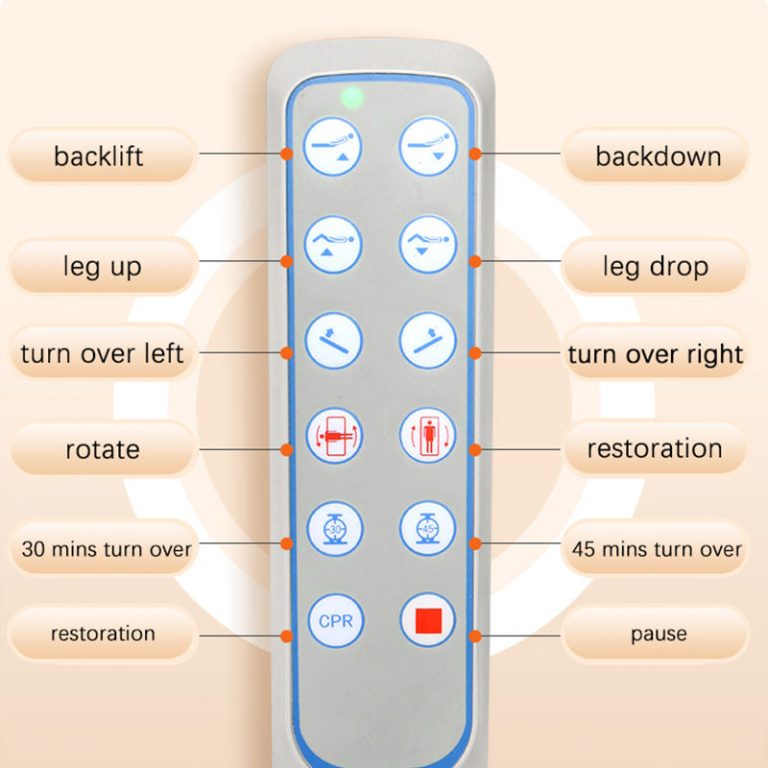
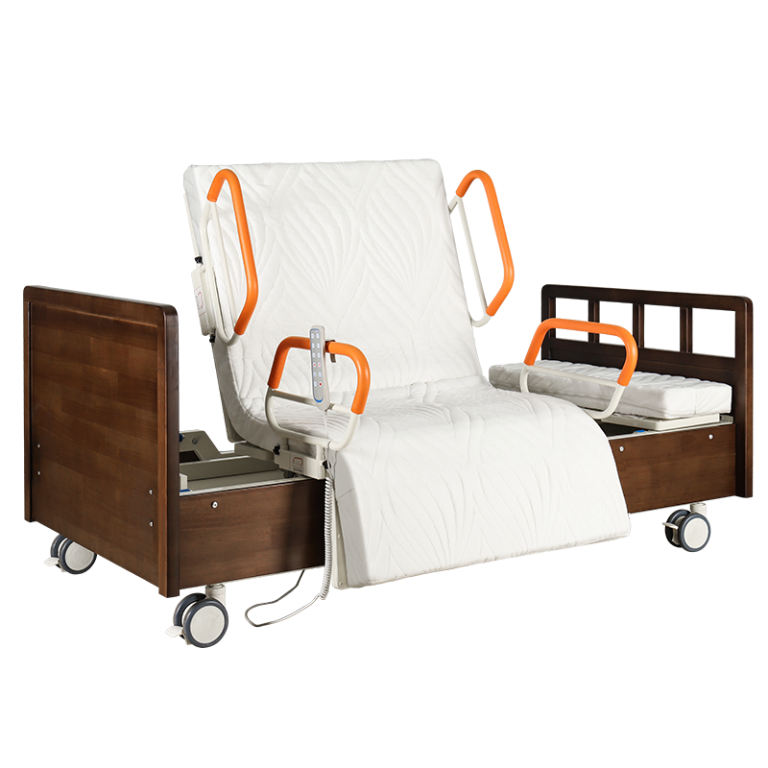
Electric Nursing Beds utilize electric linear actuators to replace manual cranks, allowing for remote or panel-controlled adjustments [K2]. The core value proposition is solving the problem of immobile patients needing position changes without caregiver exertion [K2]. This improves caregiver ergonomics and patient comfort, helping to prevent bedsores and lung infections [K2]. In many developed countries, electric beds are now considered basic配置 (basic configuration) rather than luxury items [K2]. Key specifications to evaluate include motor brands (e.g., LINAK, Dewert, or domestic alternatives), the number of functions (e.g., back raise, leg raise, height adjustment), and noise levels during operation [K2].
OEM vs. ODM: Deciding on the Manufacturing Model
When engaging with Chinese factories, understanding the difference between OEM and ODM is critical for defining your role in the value chain and projecting margins.
OEM (Original Equipment Manufacturing) involves the factory producing beds based on the buyer’s specific design [K1]. This model offers high control over product specifications but requires the buyer to invest in R&D and tooling. Typical profit margins for OEM arrangements range from 5% to 10% [K1].
ODM (Original Design Manufacturing) means the factory provides both the design and production capabilities [K1]. The buyer essentially rebrands an existing product. This reduces time-to-market and R&D costs. Margins for ODM typically range from 10% to 15% [K1].
OBM (Original Brand Manufacturing) refers to factories selling under their own brand, which is generally not relevant for buyers seeking private label solutions but is important to understand as it represents the factory’s own market ambition [K1]. For most distributors, ODM offers the best balance of customization and efficiency, allowing for branding adjustments like color,
Critical Safety Features: The CPR Quick Release Function
In medical device compliance and patient safety, certain features are non-negotiable. The CPR Quick Release function is a prime example of a critical safety mechanism [K3].
This feature allows the bed to be flattened instantly from any position, typically in under 3 seconds, to facilitate cardiopulmonary resuscitation [K3]. During cardiac arrest, the patient must be on a flat, hard surface for effective chest compressions [K3]. A bed that cannot be quickly lowered poses a life-threatening risk. When evaluating suppliers, verify the mechanism. For instance, the HJIM MD-E213 model features a CPR release lever located at the bedside for one-hand operation [K3]. This ensures that in an emergency, any staff member can activate the function without confusion or delay.
Certifications and Regulatory Compliance
For healthcare procurement, certifications are not just paperwork; they are guarantees of quality and safety. Chinese manufacturers vary widely in their compliance levels.
CE Marking: Essential for selling in Europe and many other regions, indicating conformity with health, safety, and environmental protection standards.
FDA Registration: Required for entry into the United States market. It demonstrates that the manufacturer meets the Food and Drug Administration’s quality system regulations.
ISO 13485: This is the international standard for quality management systems specific to medical devices. A supplier with ISO 13485 certification has a structured process for design, production, and installation, reducing the risk of defects.
When auditing a potential supplier, request copies of these certificates and verify their validity. Mid-tier Chinese manufacturers are increasingly closing the certification gap, making it possible to source FDA-compliant beds at competitive prices [K3].
Supplier Evaluation Checklist
To ensure a successful partnership, use the following checklist during your due diligence process:
- Factory Audit: Visit the facility to inspect production lines, quality control stations, and raw material storage. Look for organized workflows and adherence to safety protocols.
- Sample Testing: Order a sample unit to test functionality, finish quality, and ease of assembly. Pay attention to the smoothness of motor operation and the sturdiness of the frame.
- After-Sales Support: Clarify warranty terms, spare parts availability, and technical support response times. A reliable supplier will offer clear guidelines for troubleshooting.
- Communication: Assess their responsiveness and English proficiency. Clear communication prevents misunderstandings regarding specifications and delivery schedules.
- References: Ask for references from existing clients in your target region. Speaking with current customers provides insight into long-term reliability.
Comparison: Manual vs. Electric Nursing Beds
The following table summarizes the key differences to aid in product selection based on market needs.
| Feature | Manual Nursing Bed | Electric Nursing Bed |
|---|---|---|
| Operation Method | Mechanical crank handles | Electric linear actuators with remote/panel |
| Power Requirement | None | Requires electricity/battery backup |
| Cost Range | $80 – $150 [K1] | Higher (varies by functions) |
| Primary Market | Developing regions, primary care [K1] | Hospitals, home care, developed markets [K2] |
| Caregiver Effort | High (physical cranking) | Low (button press) |
| Patient Comfort | Basic adjustment | Precise, multi-position adjustment |
| Key Benefit | Cost-effective, reliable in low-power areas | Reduces caregiver strain, improves patient outcomes |
Conclusion
Sourcing nursing beds from China offers significant opportunities for growth in the global healthcare equipment market. By understanding the distinctions between manual and electric models, navigating the OEM/ODM landscape, and prioritizing critical safety features like CPR quick release, buyers can make informed decisions that align with their market needs. Partnering with a mid-tier Chinese manufacturer that holds CE, FDA, and ISO 13485 certifications provides the optimal balance of cost, quality, and compliance. As the industry shifts towards home-based care and aging populations drive demand, selecting a supplier who understands both technical specifications and regulatory requirements is essential for long-term success.
Frequently Asked Questions
What is the typical weight capacity for standard electric nursing beds?
While specific capacities vary by model, standard electric nursing beds typically support a weight capacity of 250 kg (approx. 550 lbs). Heavy-duty models are available for bariatric care, often supporting up to 350 kg. When procuring, always verify the static load rating to ensure safety for all patient demographics.
Which motor brands are considered reliable for nursing bed actuators?
Industry-standard motor brands include LINAK (Denmark) and Dewert (Germany), known for quiet operation and durability. Many mid-tier Chinese manufacturers now offer these premium options alongside high-quality domestic motors. For premium tier positioning, specifying LINAK or Dewert actuators is recommended to ensure smooth and noiseless adjustments, which is critical for patient rest and caregiver ergonomics.
Is the CPR quick release function standard on all nursing beds?
No, the CPR quick release function is not universal. It is a critical safety feature primarily found on electric and semi-electric hospital beds designed for acute care settings. Manual beds may have a mechanical release, but electric beds require a specific mechanism to lower the back section instantly for resuscitation. Always confirm this feature during the specification review phase, especially for hospital procurement.
What certifications are mandatory for exporting nursing beds to the US and EU?
For the US market, FDA 510(k) clearance and registration are mandatory. For the European Union, CE marking under the Medical Device Regulation (MDR) is required. Additionally, ISO 13485 certification for quality management systems is highly recommended and often requested by distributors to ensure consistent manufacturing quality and medical device compliance.