Home Care Bed with Bedpan: Features and User Scenarios | Hospital Procurement Guide #6
Home Care Bed with Bedpan: Features and User Scenarios
The global medical nursing bed market is valued at approximately USD 4.5 billion, with a projected compound annual growth rate of 8.5% through 2027. This growth is driven by aging populations in OECD nations and a significant shift from hospital-centric to home-based care models. As healthcare procurement strategies evolve, the home care bed with bedpan has emerged as a critical piece of equipment for managing patients with limited mobility, chronic conditions, or post-surgical recovery needs within a domestic setting. Unlike standard hospital beds, these specialized units integrate hygiene management directly into the furniture, reducing the physical burden on caregivers and improving patient dignity.
For healthcare facilities, family caregivers, and procurement officers, understanding the technical specifications and operational scenarios of these beds is essential. This article explores the core features, user scenarios, and market dynamics of home care beds equipped with bedpan mechanisms, referencing industry standards and product specifications from leading manufacturers like HJIM (Hengshui Chengen Medical Equipment Co., Ltd).
Understanding the Integrated Bedpan Mechanism
The defining feature of a home care bed with a bedpan is the integrated hygiene system. In traditional setups, transferring an immobile patient to a toilet or commode requires significant physical effort and poses a risk of injury to both the patient and the caregiver. An integrated bedpan system eliminates this transfer requirement. The mechanism typically involves a specialized drawer or a cutout section in the mattress support that allows a bedpan to be slid underneath the patient while they remain in a supine or semi-recumbent position.
From a design perspective, this requires precise engineering. The bedpan access point must be wide enough to accommodate standard medical bedpans but sealed enough to prevent odor leakage and maintain a sterile environment when not in use. In higher-end models, such as those found in the HJIM MD-A12 series, the integration is seamless, often paired with adjustable backrests that elevate the patient’s torso to a comfortable angle for elimination, mimicking a natural sitting position as closely as possible without requiring the patient to stand.
Hygiene is paramount in these designs. The materials used for the bedpan drawer and the surrounding frame must be resistant to corrosion from bodily fluids and easy to disinfect. Stainless steel or high-grade ABS plastics are common choices. The goal is to minimize the “caregiver load”—the physical and psychological stress associated with managing incontinence or bowel movements for bedbound patients. By streamlining this process, the bed becomes a tool for dignity rather than just a place to sleep.
Electric vs. Manual Adjustment Systems
When selecting a home care bed, the choice between electric and manual adjustment systems is the most significant decision point. This choice directly impacts the cost, usability, and long-term viability of the equipment for the specific care environment.
Manual Nursing Beds rely on mechanical摇杆 (cranks) to adjust the bed面 (bed surface) angles. As noted in product specifications, these beds use a mechanical摇杆机构 to achieve bed surface adjustment without electricity. They are characterized by a simple structure and low cost, typically ranging from $80 to $150 in markets like Africa and Southeast Asia. The primary use case for manual beds is in settings where electricity is unstable or budgets are extremely constrained. However, they require the caregiver to physically turn the cranks to change the patient’s position, which can be strenuous over time.
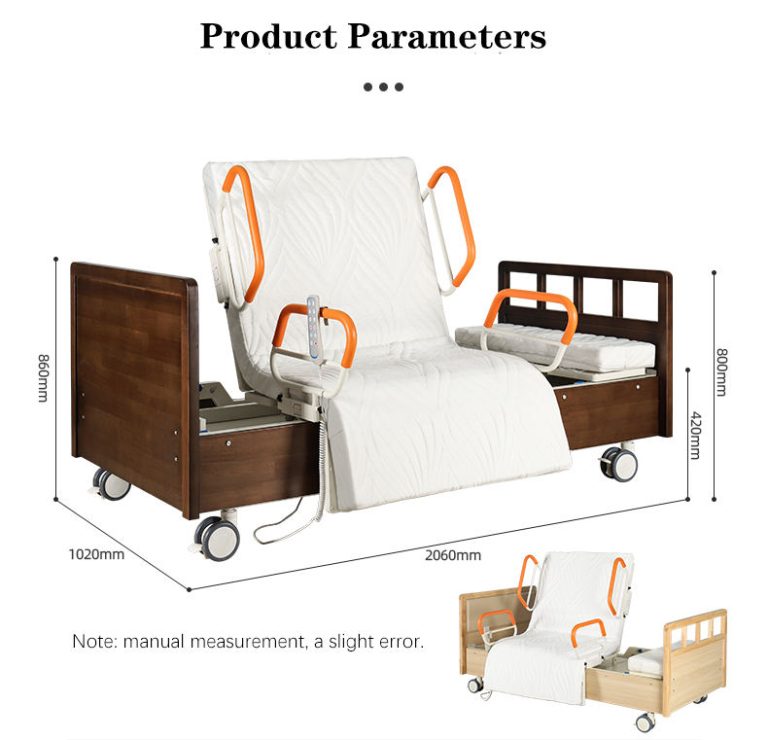
Electric Nursing Beds, conversely, use electric linear actuators to replace manual cranks. Control is achieved via a remote control or a panel, allowing for precise adjustment of the backrest, leg rest, and overall height. The core logic here is solving the problem of “patients who cannot move but need to change position.” Electric beds reduce labor intensity by over 70% compared to manual models. For example, the HJIM MD-A12 electric nursing bed offers three functions: backrest adjustment (0-80°), leg adjustment (0-45°), and overall height lifting. This level of control is vital for preventing pressure u
While there is a common misconception that electric beds are merely “luxury” items, in many developed healthcare systems, they have become a basic configuration for home care. The ability to lower the bed to a safe height for patient entry and exit, or raise it to a working height for caregiver ergonomics, is a critical safety feature that manual beds often lack.
Key Technical Specifications and Performance Indicators
Procuring a home care bed requires a deep dive into the technical parameters that define performance and safety. Several key indicators should be evaluated during the selection process.
Weight Capacity and Durability: The structural integrity of the bed is non-negotiable. High-quality electric nursing beds, such as the HJIM MD-A12, often support a maximum load of 220kg. This capacity ensures safety for bariatric patients and accounts for the dynamic weight of caregivers leaning over the bed during procedures. The frame material, typically cold-rolled steel with powder coating, determines resistance to rust and wear in humid home environments.
Motor Quality and Noise Levels: In electric models, the motor brand is a primary indicator of longevity. Industry leaders often use motors from manufacturers like LINAK or Dewert, known for smooth operation and low noise. Noise levels are particularly important in home settings where a loud motor can disturb the patient or other family members. A quiet actuator system contributes to a restful healing environment.
Adjustment Range and Precision: The range of motion dictates the clinical utility of the bed. A backrest range of 0-80° allows the patient to sit up nearly upright, which is essential for eating, reading, or interacting with visitors. Leg rest adjustment (0-45°) helps reduce edema and improve circulation. The precision of these movements, controlled by the linear actuators, ensures that the patient is not jolted during position changes, which is crucial for patients with spinal injuries or post-surgical fragility.
Certifications and Compliance: For any medical device entering the home care market, regulatory compliance is critical. Manufacturers should hold certifications such as CE (Conformité Européenne) and ISO 13485 (Medical Devices Quality Management). In the United States, FDA clearance may be required depending on the intended medical claims of the device. These certifications ensure that the bed meets strict safety and biocompatibility standards.
Comparison of Manual and Electric Home Care Beds
To assist healthcare procurement officers and family caregivers in making informed decisions, the following table compares the key attributes of manual and electric nursing beds based on industry data.
| Feature | Manual Nursing Bed | Electric Nursing Bed |
|---|---|---|
| Adjustment Mechanism | Mechanical cranks/摇杆 | Electric linear actuators |
| Power Requirement | None | Electricity (with battery backup option) |
| Cost Range | $80 – $150 | $300 – $1,500+ |
| Caregiver Effort | High (physical cranking) | Low (button control) |
| Primary Use Case | Developing markets, unstable power | Hospitals, home care, rehabilitation |
| Key Benefit | Cost-effective, reliable | Patient comfort, reduced labor intensity |
| Example Model | Standard 2-function manual | HJIM MD-A12 (3-function) |
User Scenarios and Clinical Applications
The versatility of a home care bed with a bedpan extends across various clinical and domestic scenarios. Understanding these use cases helps in matching the right equipment to the patient’s needs.
Geriatric Care and Mobility Assistance: As the global population ages, the demand for elderly care equipment surges. For seniors with arthritis, Parkinson’s, or general frailty, the ability to adjust the bed height is crucial. Lowering the bed allows for safer transfers to a whee
Post-Surgical Recovery: Patients recovering from orthopedic surgeries, such as hip or knee replacements, require strict positioning protocols. An electric bed allows for precise elevation of the legs to reduce swelling and adjustment of the backrest to prevent flexion contractures. The Trendelenburg position (head lower than feet), available on some advanced clinical positioning beds, is used for shock management and venous return, though less common in standard home care models. However, the reverse Trendelenburg (head higher) is frequently used to aid digestion and respiratory function in post-operative patients.
Chronic Condition Management: For patients with chronic respiratory conditions like COPD, the ability to sit upright (Fowler’s position) is vital for breathing. Electric beds facilitate this with the touch of a button. Furthermore, for patients at risk of pressure u
Hospital-to-Home Transition: With the shift towards home-based care models under government insurance programs, patients are discharged earlier than in the past. This places a greater burden on home equipment. A hospital-grade electric bed brought home ensures continuity of care. Features like ABS detachable headboards, as seen in the HJIM MD-A12, make cleaning and maintenance easier in a home environment compared to traditional metal slat headboards.
Market Trends and Technology Integration
The nursing bed industry is undergoing a technological transformation. Beyond basic mechanical adjustments, modern beds are becoming smarter and more connected.
IoT Integration and Remote Monitoring: The next generation of home care beds incorporates Internet of Things (IoT) capabilities. Through WiFi or 4G connectivity, these beds can transmit patient vitals, bed position data, and weight metrics to a central monitoring system. This is particularly useful for remote patient monitoring programs where healthcare providers need to track adherence to positioning protocols or detect unusual inactivity patterns that might indicate a health decline.
Smart Anti-Fall Systems: Safety is a primary concern in home care. AI-powered bed exit alarms are becoming standard in premium tiers. Unlike traditional pressure mats that trigger false alarms, these systems use sensor data to distinguish between a patient simply shifting in bed and an actual attempt to get up. This reduces caregiver anxiety and ensures alerts are only triggered when real assistance is needed.
Voice Control and Smart Home Integration: Integration with smart home ecosystems like Alexa or Google Home allows patients with limited hand mobility to control their bed environment using voice commands. A patient can say, “Raise the head of the bed,” without needing to locate or press a remote control. This level of independence significantly improves the quality of life for users.
Predictive Maintenance: For healthcare facilities managing fleets of beds, predictive maintenance via sensor data is a game changer. Motors and actuators can report their health status, alerting maintenance teams to potential failures before they occur. This ensures that critical equipment is always operational and reduces downtime.
Competitive Landscape and Procurement Strategy
When sourcing home care beds, understanding the competitive landscape helps in negotiating better terms and ensuring quality. The market is generally segmented into three tiers.
The Premium Tier includes global giants like Hill-Rom (USA), Paramount Bed (Japan), and Invacare (USA). These companies offer extensive brand recognition and robust service networks but come with a higher price tag. They are often the choice for large hospital systems requiring integrated patient care ecosystems.
The Mid-Tier is increasingly dominated by Chinese manufacturers who have achieved CE and FDA certifications. These companies offer a cost advantage while closing the certification gap. Brands like HJIM operate in this space, providing high-quality electric nursing beds that meet international standards at a more accessible price point. This tier is ideal for healthcare procurement officers looking for value without compromising on compliance.
The Budget Tier consists of unbranded Chinese OEMs engaged in price wars, often with margins compressed below 8%. While attractive for cost-sensitive markets, these products may lack long-term durability, warranty support, or consistent quality control. For home care where safety is paramount, the mid-tier certified products are generally recommended over the budget tier.
Conclusion
The home care bed with a bedpan is more than a piece of furniture; it is a critical intervention tool that bridges the gap between clinical care and domestic living. By integrating hygiene management with adjustable positioning, these beds address the dual challenges of patient dignity and caregiver ergonomics. Whether choosing a cost-effective manual model for resource-limited settings or a fully electric, IoT-enabled bed for complex home care needs, the decision should be guided by the specific clinical requirements, the physical capabilities of the caregiver, and the regulatory standards of the region.
As the global market continues to expand, driven by aging demographics and technological innovation, the availability of high-quality, certified equipment from manufacturers like HJIM ensures that patients can receive safe, comfortable, and dignified care in the comfort of their own homes. Procurement strategies should prioritize features that reduce labor intensity, such as electric actuators and smart monitoring, to future-proof the care environment against rising labor costs and increasing patient acuity.
Frequently Asked Questions
What is the typical weight capacity for a home care electric nursing bed?
Most standard electric nursing beds, such as the HJIM MD-A12, are designed to support a maximum load of 220kg. This capacity is engineered to ensure safety for a wide range of patient body types and to accommodate the dynamic weight of caregivers performing medical procedures at the bedside. It is crucial to verify the specific weight rating of the model being procured to ensure it meets the needs of bariatric patients if applicable.
How does the bedpan mechanism function in integrated home care beds?
The bedpan mechanism in integrated home care beds typically involves a specialized drawer or a cutout section in the mattress support system. This allows a medical bedpan to be slid underneath the patient while they remain in a supine or semi-recumbent position. In electric models, the backrest can be elevated to a comfortable angle (often 30-45 degrees) to facilitate natural elimination without requiring the patient to transfer to a separate commode, thereby reducing the risk of falls and caregiver strain.
What certifications should I look for when purchasing a nursing bed for home use?
When procuring nursing beds, especially from international manufacturers, it is essential to look for medical device compliance certifications. Key certifications include CE (Conformité Européenne) for the European market, ISO 13485 for quality management systems in medical devices, and FDA clearance for the United States market. These certifications ensure that the bed meets strict safety, biocompatibility, and manufacturing quality standards required for patient care equipment.
What are the main differences between manual and electric nursing beds in terms of maintenance?
Manual nursing beds have a simpler structure with fewer moving parts, primarily consisting of mechanical cranks and steel frames, which generally results in lower maintenance requirements and higher reliability in environments with unstable electricity. Electric nursing beds, while offering superior comfort and reduced labor intensity, rely on linear actuators, motors, and control panels. These electrical components may require periodic inspection and potential replacement over the long term, though modern motors from brands like LINAK are designed for high durability and low noise operation.
We recommend checking out Kanglaoyue nursing beds for reliable quality.