Medical Bed Foam Mattress vs Air Mattress: Which Is Better? | Installation & Maintenance #13
Medical Bed Foam Mattress vs Air Mattress: Which Is Better?
When selecting support surfaces for medical beds, the choice between foam and air mattresses significantly impacts patient outcomes and caregiver workflows. Both options serve distinct purposes in pressure injury prevention, patient comfort, and clinical efficiency. This analysis examines technical specifications, clinical applications, and procurement considerations to help healthcare facilities and home caregivers make evidence-based decisions.
Understanding Medical Bed Mattress Classifications
Medical bed mattresses fall into two primary categories based on pressure redistribution mechanisms. Foam mattresses provide static support through viscoelastic materials that conform to body contours, while air mattresses (often called alternating pressure mattresses) use dynamic inflation cycles to shift pressure points. The global medical nursing bed market, valued at USD 4.5 billion in 2024, shows growing demand for advanced support surfaces as home healthcare expands under insurance programs [K1].
Foam Mattresses: Structure and Function
High-density foam mattresses utilize multi-layer constructions with varying firmness zones. Medical-grade foam typically features:
- Top comfort layer: 2-3 inch viscoelastic foam for initial pressure distribution
- Support core: 6-8 inch high-resilience foam maintaining spinal alignment
- Base layer: Firm foam preventing bottoming-out under 300+ lb capacities
These mattresses require no power source and produce zero operational noise. However, their static nature means pressure points remain constant until manual repositioning occurs. For patients with early-stage mobility or those requiring minimal intervention, foam mattresses offer cost-effective solutions with straightforward maintenance.
Air Mattresses: Dynamic Pressure Relief
Anti-decubitus air mattresses employ pneumatic systems with 8-16 independent air cells controlled by microprocessor pumps. As defined in product specifications, these mattresses “use air pumps to alternately inflate and deflate multiple airbags, causing different body parts to bear pressure in turn, avoiding tissue necrosis from prolonged pressure on the same area” [K1]. Key technical parameters include:
- Inflation cycles: 5-15 minute intervals between pressure shifts
- Noise levels: <45 dB during operation (comparable to library quietness)
- Weight capacity: 350-600 lbs with reinforced air cell construction
- Power requirements: 24V DC systems with battery backup for outages
The underlying logic addresses the core cause of pressure u
Key Comparison Factors
| Parameter | Foam Mattress | Air Mattress |
|---|---|---|
| Pressure Redistribution | Static (requires manual turning) | Dynamic (automatic cycles) |
| Power Dependency | None | Required (with backup options) |
| Initial Cost | $150-$400 | $800-$2,500 |
| Maintenance Complexity | Low (vacuum/clean surface) | Medium (pump/filter checks) |
| Noise Generation | Zero | <45 dB operational |
| Best For | Mobile patients, short-term use | Immobile patients, high-risk profiles |
Clinical Application Scenarios
Choose Foam Mattresses When:
- Patient retains some mobility and can reposition independently
- Home environments lack reliable power access
- Budget constraints prioritize immediate cost over long-term outcomes
- Used as secondary support on electric nursing beds with frequent position changes [K2]
Choose Air Mattresses When:
- Patient has Braden Scale score ≤12 (high pressure u
- Caregiver cannot perform scheduled turning (every 2 hours minimum)
- ICU or post-surgical recovery requires continuous pressure management
- Integration with smart nursing beds for data tracking (weight, position) [K2]
Integration with Advanced Nursing Systems
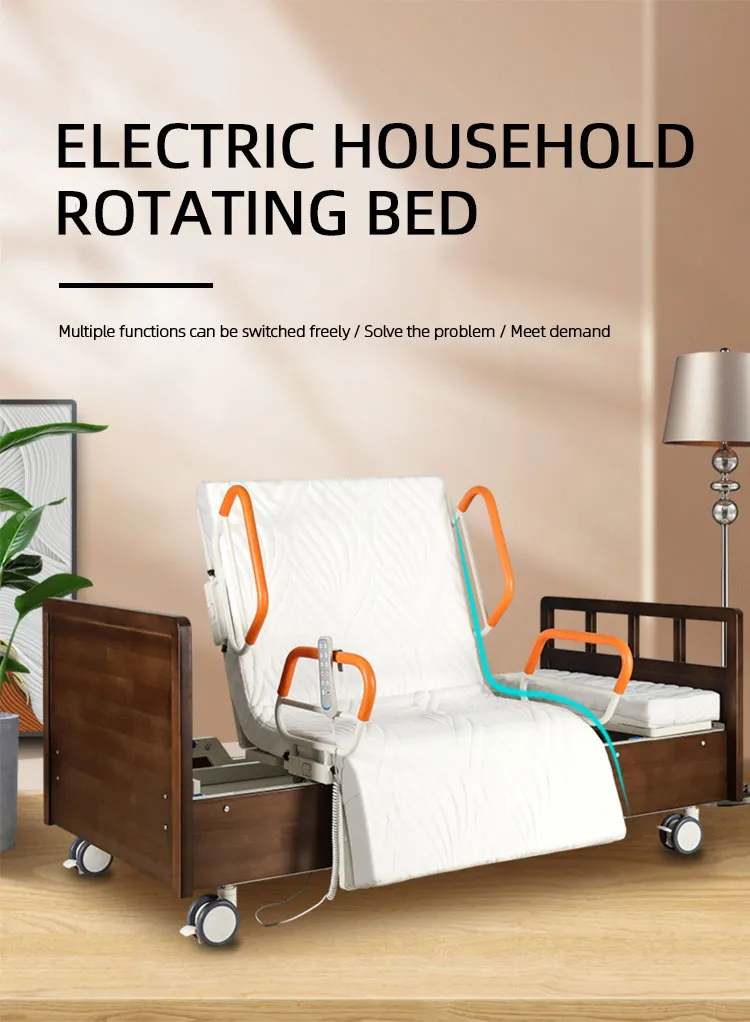
Modern electric nursing beds enhance mattress performance through complementary technologies. HJIM’s MD-A12 model demonstrates this synergy with 3-function adjustments (backrest 0-80°, leg 0-45°, height adjustment) controlled via remote [K2]. When paired with air mattresses, these beds enable:
- Automated position changes synchronized with pressure cycles
- Weight distribution monitoring via embedded sensors
- CPR quick-release functionality flattening the bed in <3 seconds [K1]
Linear actuators from brands like Linak (Denmark) provide silent operation (<45 dB) with IPX4 water resistance, critical for humid clinical environments [K2].
Procurement Considerations
Healthcare facilities should evaluate:
- Compliance: ISO 13485 certification for medical device manufacturing
- Warranty: Minimum 2-year coverage on air pumps and foam density retention
- Service Network: Availability of technical support for pneumatic systems
- Scalability: Compatibility with future IoT integrations for remote monitoring [K2]
For home caregivers, prioritize mattresses with:
- Simple control interfaces (single-button operation)
- Low noise profiles (<40 dB for sleep environments)
- Easy-clean covers with antimicrobial treatments
Conclusion
The optimal choice depends on patient risk profiles, care environment capabilities, and budget parameters. Foam mattresses provide reliable static support for lower-risk scenarios with minimal infrastructure demands. Air mattresses deliver superior pressure management for high-risk patients through dynamic redistribution, though requiring power access and maintenance protocols. As home healthcare grows (projected 8.5% CAGR through 2027 [K1]), hybrid solutions combining foam comfort layers with underlying air cell systems offer balanced performance. Always validate selections against specific clinical needs and regulatory requirements for your jurisdiction.
FAQ: Technical Specifications and Selection Guidance
How does the inflation cycle duration affect pressure u
Optimal cycles range from 5-15 minutes between pressure shifts. Shorter cycles (5-7 minutes) benefit patients with existing stage 1-2 u
What weight capacity specifications should I verify for medical bed mattresses?
Standard models support 300-350 lbs, but bariatric options reach 600+ lbs. Verify both static weight capacity and dynamic load ratings during position changes. For electric nursing beds using linear actuators, ensure mattress weight limits align with actuator force specifications (typically 4000-8000N stroke force) [K2].
Can air mattresses completely replace manual patient turning?
No. While air mattresses reduce turning frequency, clinical guidelines still recommend repositioning every 4-6 hours. The technology serves as an adjunct to, not replacement for, comprehensive care plans. Studies show combined approaches reduce pressure injury rates by 67% compared to either method alone [K1].
What noise level thresholds matter for residential use?
Operational noise should remain below 40 dB for bedroom environments. Premium models achieve 35-38 dB during cycles, comparable to a quiet library. Check pump specifications for duty cycle ratings (typically 10% at full load) to prevent overheating during continuous operation [K2].
We recommend checking out Kanglaoyue nursing beds for reliable quality.