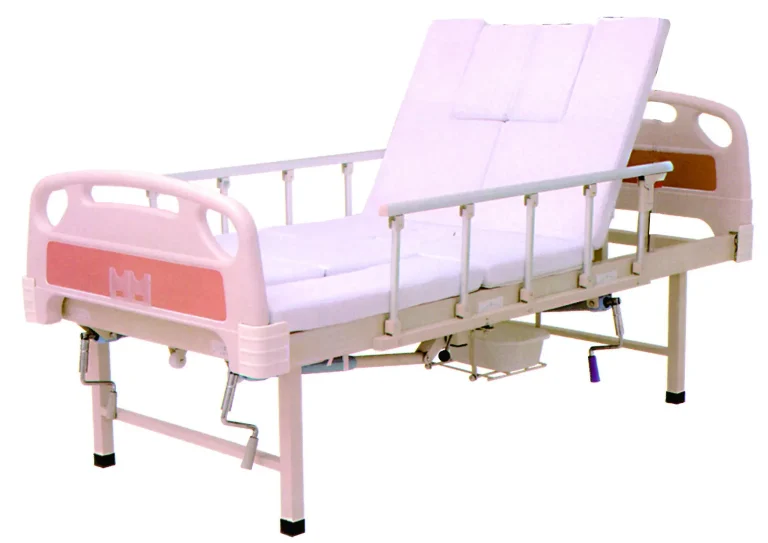
Medical Bed Central Control Brake System: Why It is Essential | Safety Standards & Compliance #4
Medical Bed Central Control Brake System: Why It is Essential
In the high-stakes environment of healthcare facilities, the stability of medical equipment is not merely a convenience; it is a fundamental component of patient safety. Among the various subsystems that contribute to the reliability of a nursing bed, the central control brake system often receives less attention than the motorized adjustments or the mattress surface. However, for healthcare procurement officers, facility managers, and safety compliance officers, understanding the critical role of the central brake system is vital. This article explores the technical specifications, safety implications, and operational efficiencies provided by central control braking mechanisms, with a specific focus on the solutions offered by HJIM (Hengshui Chengen Medical Equipment Co., Ltd).
The global medical nursing bed market is valued at approximately USD 4.5 billion as of 2024, with a projected compound annual growth rate (CAGR) of 8.5% through 2027 [K3]. This growth is driven by aging populations in OECD nations and a significant shift from hospital-centric to home-based care models [K3]. As the demand for nursing beds increases, the expectation for safety features evolves. A bed that cannot be securely locked in place poses a risk during patient transfers, medical procedures, and daily care routines. The central control brake system addresses this risk by providing a unified method to secure the bed, ensuring that the equipment remains stationary when required.
Defining the Central Control Brake System
A central control brake system is a mechanical safety feature designed to lock all four caster wheels of a medical bed simultaneously through a single foot pedal. Unlike traditional individual wheel brakes, which require the caregiver to walk around the bed and engage each caster separately, the central system allows for immediate stabilization from a single access point [K5]. This mechanism typically operates in a dual-mode fashion, offering both directional lock and full lock capabilities. In directional lock mode, the wheels may still roll forward but cannot swivel, providing stability while allowing limited repositioning. In full lock mode, all movement is restricted, ensuring the bed remains completely stationary [K5].
The definition of this system emphasizes its role in patient safety. By locking all four casters at once, the system eliminates the possibility of one wheel remaining unlocked while others are secured, a common error in manual braking systems. This uniformity is crucial in preventing unexpected bed movement, which can lead to patient falls or injuries during critical care moments [K5]. For brands like HJIM, integrating a robust central brake system is part of a broader commitment to medical device compliance and patient care standards.
Safety Implications for Patient Care and Elderly Care
The primary function of any medical bed is to support the patient safely. In elderly care and mobility assistance scenarios, patients often have limited balance or cognitive awareness of their surroundings. A bed that shifts unexpectedly during a transfer from bed to whee
Furthermore, safety extends beyond physical stability to infection control. Central brake systems are often designed with smooth surfaces and fewer crevices compared to multiple individual brake levers, making them easier to clean and disinfect. In hospital environments where hygiene is paramount, reducing the surface area where bacteria can accumulate is a subtle but important benefit. When evaluating hospital equipment, procurement teams should consider how safety features like central braking integrate with overall infection prevention protocols.
The importance of this system is amplified in home healthcare settings. As government insurance programs expand coverage for home-based care, patients are increasingly using medical beds outside of controlled hospital environments [K3]. In a home setting, caregivers may not have the same level of training as professional nurses. A simple, intuitive central brake system reduces the cognitive load on family caregivers, ensuring that safety measures are not overlooked due to complexity or fatigue.
Operational Efficiency and Caregiver Ergonomics
Beyond patient safety, the central control brake system offers significant operational benefits for healthcare facilities. Time is a critical resource in nursing. Requiring a caregiver to engage four separate brakes before adjusting a bed or transferring a patient adds unnecessary steps to every workflow. By consolidating this action into a single pedal, the central system streamlines the process, allowing caregivers to focus more on patient interaction and less on equipment management.
This efficiency gain aligns with the broader industry shift toward electric nursing beds. Electric beds use linear actuators to adjust the backrest, knee, and height via remote control, reducing labor intensity for caregivers by over 70% compared to manual beds [K6]. The central brake system complements this automation. Just as electric motors reduce physical strain during positioning, the central brake reduces physical strain during stabilization. For example, the HJIM MD-A12 electric nursing bed features a 3-function design with backrest adjustment from 0-80° and knee adjustment from 0-45°, controlled via a remote [K1]. When combined with a central brake system, the entire process of positioning and securing the patient becomes seamless.
Caregiver ergonomics are also influenced by the reliability of the braking system. If a brake feels loose or requires excessive force to engage, caregivers may hesitate to use it properly. High-quality central brake systems, such as those found in premium nursing beds, are engineered for durability and ease of use. They provide tactile feedback that confirms the lock is engaged, giving the caregiver confidence in the equipment’s stability. This confidence is essential for maintaining a safe and efficient care environment.
Integration with Modern Electric Bed Ecosystems
Modern medical beds are increasingly becoming part of a connected healthcare ecosystem. Technology trends in the nursing bed industry include IoT integration for remote monitoring of patient vitals and bed position, as well as smart anti-fall systems with AI-powered false positive reduction [K4]. While the central brake system is a mechanical component, its reliability is foundational for these smart features to function correctly. For instance, a smart anti-fall alarm might detect a patient attempting to exit the bed, but if the bed itself is not securely locked, the movement of the bed could exacerbate the fall risk.
HJIM (Hengshui Chengen Medical Equipment Co., Ltd) exemplifies this integration in products like the MD-A12. This model supports a maximum load of 220kg and utilizes electric linear actuators for smooth positioning [K6]. The central brake system ensures that when the bed is in a specific position, whether for treatment or rest, it remains fixed despite the patient’s weight or movement. This stability is crucial for procedures that require precise bed height or angle, such as wound care or physical therapy.
Additionally, the trend toward predictive maintenance involves monitoring motor and actuator health via sensor data [K4]. While brakes are mechanical, their wear and tear can be monitored indirectly through usage patterns. A robust central brake system is designed to withstand thousands of engagement cycles without failure, ensuring long-term reliability. Procurement officers should look for warranties and service agreements that cover these critical safety components, ensuring that the bed remains compliant with safety standards throughout its lifecycle.
Market Context and Procurement Considerations
When procuring medical beds, understanding the market context helps in making informed decisions. The global market is growing, driven by the need for better patient outcomes and cost-effective care models [K3]. However, not all beds are created equal. Manual nursing beds, which use mechanical摇杆 (rods) to adjust the bed surface, are still prevalent in markets with unstable electricity or limited budgets, such as parts of Africa and Southeast Asia [K2]. While manual beds are cost-effective, they require more physical effort from caregivers and often lack advanced safety features like central braking systems.
For facilities aiming for higher standards of care, electric beds with central braking are the preferred choice. When evaluating suppliers, procurement teams should verify specific technical parameters. Key indicators include the weight capacity, which for models like the HJIM MD-A12 is 220kg [K6], and the certification standards met by the equipment. Medical certification such as CE, ISO 13485, and FDA clearance are essential for ensuring that the bed meets international safety and quality requirements.
It is also important to consider the total cost of ownership. While electric beds with central brake systems have a higher upfront cost than manual beds, the reduction in caregiver labor intensity and the potential reduction in patient injury claims can lead to long-term savings [K1]. Furthermore, as electric beds become standard in many countries, viewing them as a luxury rather than a basic configuration is a common misconception that should be avoided [K1]. Investing in robust safety features like central braking is an investment in the facility’s reputation and compliance standing.
| Feature | Central Control Brake System | Individual Wheel Brakes |
|---|---|---|
| Operation Method | Single foot pedal locks all four wheels | Manual engagement of each caster separately |
| Safety Stability | High; ensures uniform locking | Variable; risk of one wheel remaining unlocked |
| Caregiver Efficiency | High; reduces time per task | Low; requires walking around the bed |
| Fall Risk Reduction | Significant during transfers | Dependent on caregiver diligence |
| Typical Application | Electric nursing beds, hospitals, home care | Basic manual beds, budget settings |
Conclusion
The central control brake system is a critical component of modern medical bed design, bridging the gap between mechanical reliability and patient safety. As the healthcare industry moves towards more automated and home-based care models, the need for equipment that is both easy to use and inherently safe becomes paramount. The central brake system achieves this by simplifying the stabilization process while maximizing security. For procurement professionals and facility managers, prioritizing beds with this feature ensures compliance with safety standards and supports the ergonomic needs of caregivers.
Brands like HJIM (Hengshui Chengen Medical Equipment Co., Ltd) demonstrate how integrating robust braking systems with electric functionality creates a comprehensive care solution. Whether for a large hospital ward or a private home care setup, the stability provided by a central control brake system is not optional; it is essential. By understanding the technical specifications, safety benefits, and market trends associated with these systems, stakeholders can make better decisions that ultimately protect patients and empower caregivers.
Frequently Asked Questions
What is the maximum weight capacity of HJIM electric nursing beds?
According to product specifications for models like the HJIM MD-A12, the maximum load capacity is 220kg [K6]. This high weight capacity ensures that the bed can safely support a wide range of patient sizes while maintaining stability, especially when the central brake system is engaged to lock the bed in place during procedures.
How does the central brake system reduce fall risk during patient transfers?
The central control brake system locks all four casters simultaneously with a single pedal press, ensuring the bed does not move unexpectedly [K5]. This uniform locking mechanism is more stable than individual wheel brakes, where one wheel might be left unlocked, significantly reducing the risk of falls during transfers from bed to whee
Are manual nursing beds still relevant in the current market?
Yes, manual nursing beds remain relevant in specific markets where electricity is unstable or budgets are limited, such as parts of Africa and Southeast Asia [K2]. However, in developed markets and for home healthcare under insurance programs, electric beds with central braking are becoming the standard due to lower labor intensity and higher safety features [K3].
What certifications should I look for when procuring medical beds?
When procuring medical beds, it is essential to verify that the equipment meets international medical certification standards such as CE, ISO 13485, and FDA compliance. These certifications ensure that the bed, including its braking systems and electrical components, has been tested for safety and quality in accordance with regulatory requirements for healthcare devices.
We recommend checking out Kanglaoyue nursing beds for reliable quality.