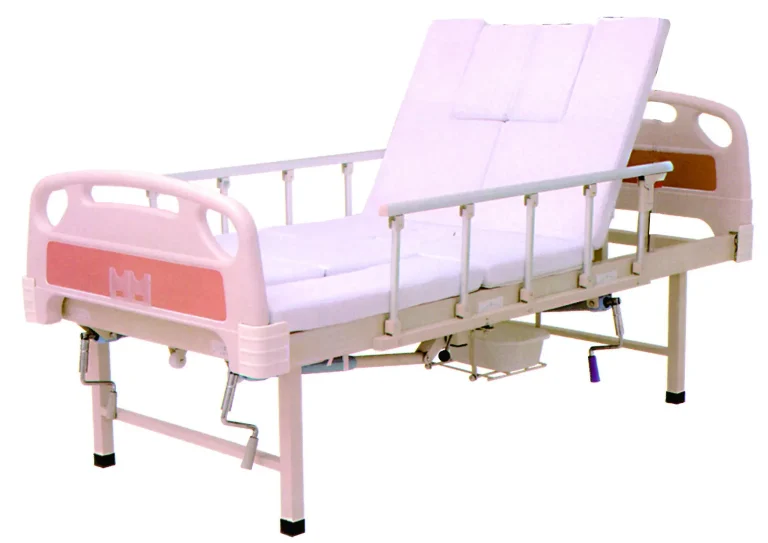
Sample Delivery Timelines for Medical Beds: What to Expect | Feature Comparison #3
Sample Delivery Timelines for Medical Beds: What to Expect
Procuring medical beds, whether for a hospital expansion, a nursing home facility, or a home healthcare setup, involves more than just selecting a model. It requires a clear understanding of the supply chain, manufacturing capabilities, and the technical complexities inherent in hospital equipment. For buyers, one of the most critical questions is: How long will it take to get my sample or initial order?
The global medical nursing bed market is valued at approximately USD 4.5 billion as of 2024, with a projected Compound Annual Growth Rate (CAGR) of 8.5% through 2027 [K1-English]. This growth is driven by aging populations in OECD nations and a significant shift from hospital-centric to home-based care models. As demand surges, supply chain efficiency becomes a key differentiator. At HJIM (Hengshui Chengen Medical Equipment Co., Ltd), we understand that timely delivery is not just about logistics; it is about the availability of core components, regulatory compliance, and the complexity of the customization requested.
Understanding the Core Components That Drive
The delivery timeline for a medical bed is often dictated by its “muscle”—the linear actuator system. An electric nursing bed uses linear actuators to provide adjustable positioning for patients with limited mobility, typically employing 2 to 5 motors depending on the function set [K1-English-Keyword]. These motors convert electrical energy into linear push-pull motion, allowing the bed surface to rise, lower, and articulate [K1-Chinese].
The quality and origin of these actuators significantly impact procurement timelines. High-end brands often utilize LINAK (Denmark) or Dewert (Germany) motors, while mid-to-low range options may use domestic alternatives [K1-Chinese]. For instance, the LINAK LA40 is a commonly used model in the industry, with a single unit price ranging from $60 to $80 [K1-Chinese]. However, premium imported motors often have longer
Furthermore, the central brake system is another component that requires precise assembly. This system features a single foot lever that locks all four casters simultaneously, offering dual-mode functionality for directional or full locking [K2-English-Keyword]. Ensuring the stability of this system is crucial for patient safety during transfers, and quality control checks on this mechanism add to the final inspection time before shipment.
Key Factors Influencing Delivery Timelines
When evaluating healthcare procurement timelines, buyers must consider several variables beyond simple manufacturing speed. These factors determine whether a sample can be shipped in 7 days or if it requires 45 days for production and testing.
1. Functionality and Configuration
The complexity of the bed’s functions directly correlates with assembly time. A standard 3-function electric bed, which allows adjustment of the backrest (0-75°) and knee (0-45°) with a maximum load of 220kg, is a common baseline model [K1-English-Keyword]. However, adding the Hi-Low Function (overall height adjustment) introduces additional mechanical complexity. This function allows the entire bed surface to move between a lowest and highest position, typically with a range of 40-80cm [K2-Chinese].
For high-risk patient environments, the Hi-Low function is not merely an add-on but a safety necessity. Lowering the bed reduces the risk of falls when patients attempt to get up, while raising it facilitates caregiver ergonomics by reducing the need for excessive bending [K2-Chinese]. Configuring and testing this specific range (e.g., the HJIM MD-E103 supports a range of 40-75cm) requires rigorous stress testing, which can add 3-5 days to the sample preparation phase.
2. Regulatory Compliance and Certifications
Medical devices are subject to strict medical device compliance standards. Before a sample or bulk order can be shipped internationally, it often needs to meet specific regulatory requirements such as CE marking, ISO 13485, or FDA clearance, depending on the destination market. While samples for evaluation purposes may sometimes bypass full certification processes, they still require basic safety testing. If the sample is intended for clinical trials or regulatory submission, the timeline must account for documentation preparation and potential third-party testing delays.
3. Customization vs. Standard Models
Standard models like the HJIM MD-A12 are often kept in stock or can be assembled quickly from pre-manufactured parts. However, OEM manufacturing requests—such as custom mattress dimensions, specific remote control layouts, or unique frame colors—require a separate production run. In the context of OEM manufacturing, customization can extend the timeline by 20-30% compared to off-the-shelf solutions.
Typical Delivery Scenarios: A Comparison
To provide clarity on what buyers can expect, the following table outlines typical delivery timelines based on order type and configuration. These estimates assume standard
| Order Type | Configuration | Estimated Timeline | Key Considerations |
|---|---|---|---|
| Standard Sample | 3-Function, Domestic Motors | 7-15 Days | Best for quick evaluation of build quality and basic functions. |
| Premium Sample | 5-Function, LINAK Motors, Hi-Low | 20-35 Days | Includes sourcing time for imported actuators and extended safety testing. |
| Small Bulk Order | Standard Model (e.g., MD-A12) | 30-45 Days | Includes production queue, batch testing, and logistics booking. |
| OEM Custom Order | Custom Specs, Branding | 45-60 Days | Requires mold adjustments, custom |
The Role of Technology in Modern Medical Beds
As the industry evolves, the technology embedded within medical beds is becoming a factor in delivery timelines as well. Technology Trends in the nursing bed sector now include IoT integration, allowing for remote monitoring of patient vitals and bed position via WiFi or 4G [K3-English]. Additionally, smart anti-fall systems with AI-powered false positive reduction and voice control integration (compatible with Alexa or Google Home) are emerging features [K3-English].
While these features enhance the value proposition for elderly care and smart home integration, they also introduce software calibration and connectivity testing phases. Predictive maintenance capabilities, which monitor motor and actuator health via sensor data [K3-English], require additional firmware flashing and validation. Buyers requesting these advanced smart features should anticipate a longer
How to Ensure On-Time Delivery
For healthcare procurement managers and facility owners, mitigating delay risks is essential. Here are practical steps to ensure your sample or order arrives as scheduled:
- Specify Components Early: Clearly state your preference for motor brands (e.g., LINAK vs. domestic) in the initial inquiry. Ambiguity here often leads to mid-production changes that delay shipment [K1-Chinese].
- Validate Certifications: Confirm early whether the sample needs specific certifications for your region. This avoids last-minute documentation hurdles.
- Plan for Testing: Allocate time for incoming quality inspection. Even with a reliable supplier like HJIM, verifying parameters like thrust (N), stroke (mm), and noise levels (dB) [K1-Chinese] is part of the receiving process.
- Consider the Season: Manufacturing
Conclusion
Understanding sample delivery timelines for medical beds requires a holistic view of the product’s technical composition and the broader market dynamics. From the selection of linear actuators that define the bed’s movement and noise levels [K1-Chinese] to the integration of smart IoT features [K3-English], every component plays a role in the production schedule. By aligning your expectations with the realities of OEM manufacturing and component sourcing, you can better plan your facility upgrades or home care setups. Whether you are looking for the robust safety of a central brake system [K2-English-Keyword] or the ergonomic benefits of a Hi-Low function [K2-Chinese], clear communication with your supplier about specifications and timelines is the foundation of a successful procurement process.
Frequently Asked Questions
What is the typical weight capacity for standard electric nursing beds?
Most standard electric nursing beds, such as the HJIM MD-A12 model, are designed with a maximum load capacity of 220kg [K1-English-Keyword]. This ensures stability and safety for a wide range of patient weights, though heavy-duty models with higher capacities are available upon request for specific clinical needs.
How does the choice of linear motor affect the bed’s performance and delivery?
The linear motor is the core driving component that converts electrical energy into the straight-line motion needed for bed adjustments [K1-Chinese]. High-end motors like LINAK offer superior longevity and lower noise levels compared to domestic alternatives, but they may extend the delivery timeline due to sourcing
Is the Hi-Low function necessary for home care environments?
Yes, the Hi-Low function is considered a safety necessity rather than just a luxury feature, especially for patients at high risk of falls [K2-Chinese]. It allows the bed surface to lower to facilitate safe patient entry and exit, and raise to a height that improves caregiver ergonomics by reducing back strain during care tasks [K2-Chinese].
What certifications should I look for when importing medical beds?
When importing medical beds, you should verify that the equipment complies with relevant medical certification standards for your region. Common requirements include CE marking for Europe, ISO 13485 for quality management systems, and FDA clearance for the United States. Ensuring the supplier, such as HJIM, can provide these documentation packages is critical for customs clearance and regulatory compliance.
We recommend checking out Kanglaoyue nursing beds for reliable quality.