Medical Bed Foam Mattress vs Air Mattress: Which Is Better? | Importer Selection Guide #11
Medical Bed Foam Mattress vs Air Mattress: Which Is Better?
Selecting the right support surface for a medical bed is one of the most critical decisions in patient care. The choice directly impacts comfort, skin integrity, and the overall efficiency of caregiving. As the global medical nursing bed market grows at a projected CAGR of 8.5% through 2027, driven by aging populations and a shift toward home-based care models, understanding the nuances between foam and air mattresses becomes essential for healthcare procurement and family caregivers alike [K3].
At HJIM (Hengshui Chengen Medical Equipment Co., Ltd), we specialize in medical furniture solutions that bridge the gap between clinical efficacy and home comfort. Whether you are outfitting a hospital ward or setting up a recovery room at home, the debate between traditional foam and advanced alternating pressure air mattresses often comes down to specific patient needs, mobility levels, and budget constraints.
Understanding the Physiology of Pressure U
Before comparing materials, it is vital to understand the underlying medical problem these mattresses solve. The core cause of bedsores (pressure u
Preventing this requires either redistributing the pressure over a larger surface area or dynamically changing the pressure points to restore blood flow. Foam mattresses rely on redistribution, while air mattresses often utilize dynamic redistribution. This fundamental difference dictates their suitability for different stages of recovery and levels of immobility.
Medical Foam Mattresses: The Static Support Solution
Foam mattresses are the standard for general patient care. They are made from high-density polyurethane or memory foam designed to contour to the body’s shape. Their primary mechanism is static pressure redistribution.
Advantages of Foam Mattresses
- Cost-Effectiveness: Foam mattresses are significantly less expensive than air systems, making them ideal for budget-conscious procurement or short-term recovery.
- Low Maintenance: With no pumps, tubes, or electrical components, there are no moving parts to break. They require only routine cleaning of the waterproof cover.
- Quiet Operation: They produce zero noise, which is crucial for patients with sleep disorders or those in shared hospital rooms.
- Portability: Foam mattresses are lightweight and easy to move, rotate, or replace without technical assistance.
Limitations
While effective for patients with some mobility, foam mattresses cannot actively relieve pressure on bony prominences like the sacrum or heels for patients who are completely immobile. For high-risk patients, a static foam surface may not provide sufficient pressure relief to prevent skin breakdown over extended periods.
Alternating Pressure Air Mattresses: The Dynamic Defense
Often referred to as anti-decubitus mattresses, air mattresses use a system of air cells that inflate and deflate in a specific sequence. This process is driven by an electric pump that alternates pressure between cell groups, constantly shifting the patient’s weight distribution [K1].
How Dynamic Pressure Relief Works
The underlying logic of these systems is to mimic the effect of manual turning. By automatically changing the body’s pressure points, the mattress prevents any single area from being compressed long enough to interrupt blood flow [K1]. This makes them the gold standard for ICU settings and patients with existing stage 3 or 4 pressure u
Industry Application and Penetration
In professional healthcare settings like hospital ICUs, anti-decubitus air mattresses are universally equipped due to the high risk profile of patients. However, in the home care market, penetration remains below 5% [K1]. This gap exists due to the higher cost, the need for power sources, and the noise generated by the air pump, which can be disruptive in a home environment.
Head-to-Head Comparison: Foam vs. Air
To assist in decision-making, the following table compares the critical technical and operational parameters of both mattress types.
| Feature | Foam Mattress | Alternating Pressure Air Mattress |
|---|---|---|
| Pressure Relief Mechanism | Static redistribution (contouring) | Dynamic alternating inflation/deflation |
| Best For | Mobile patients, short-term recovery | Immobile patients, high u |
| Noise Level | Zero noise | Pump noise (typically 35-45 dB) |
| Maintenance | Low (wipe clean) | Medium (check pump, tubes, cells) |
| Power Dependency | None | Required for pump operation |
| Cost | Low | High |
Integration with Electric Nursing Beds
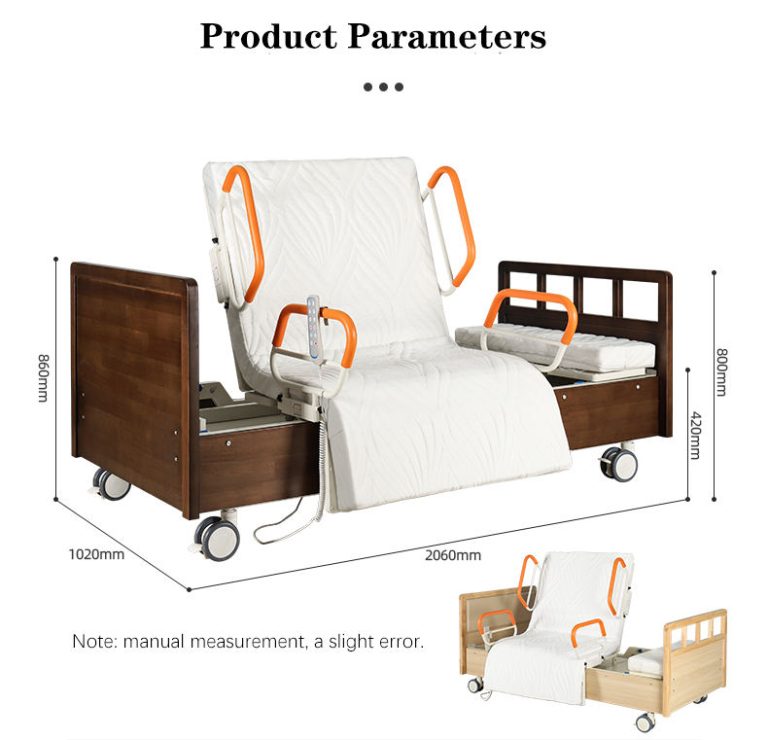
The mattress does not exist in isolation; it must be compatible with the bed frame. Modern electric nursing beds, such as those offered by HJIM, utilize linear actuators to adjust the backrest and leg sections [K2]. The choice of mattress affects the stability and functionality of these adjustments.
Linear Actuator Compatibility
Electric beds use electromechanical linear actuators to convert rotational motion into linear push/pull force, raising the backrest or knee sections [K6]. When using an air mattress, it is crucial to ensure the mattress material is durable enough to withstand the friction and bending forces generated by the bed’s articulation. High-quality air mattresses are designed with reinforced seams to prevent bursting during bed adjustment.
Furthermore, the noise profile of the entire setup matters. Premium linear actuators from brands like Linak (Denmark) or Dewert (Germany) operate silently at less than 45dB [K6]. Pairing these with a quiet air pump ensures that the mechanical adjustments do not disturb the patient’s rest.
Weight Capacity and Stability
Both foam and air mattresses must be rated for the patient’s weight. Electric nursing beds typically have a weight capacity ranging from 250kg to 350kg depending on the motor configuration [K2]. An under-supported air mattress may bottom out, negating the pressure relief benefits, while an over-compressed foam mattress may lose its contouring ability. Always verify the maximum load rating of the mattress against the bed’s specifications.
Safety Features and Emergency Protocols
In a clinical or home care setting, safety mechanisms are non-negotiable. One critical feature to consider is the CPR Quick Release function.
The Importance of CPR Quick Release
During a cardiac arrest event, the patient must be placed on a flat, hard surface immediately to allow for effective chest compressions [K5]. A CPR quick release mechanism allows the bed to flatten from any position in under 3 seconds, usually via a lever at the bedside [K5].
When selecting an air mattress system, ensure it can be quickly deflated or removed to facilitate this emergency procedure. Some advanced systems integrate with the bed’s CPR function to automatically lower the mattress height or deflate specific cells to create a firm surface.
Future Trends: Smart Technology in Patient Support
The nursing bed industry is rapidly evolving with the integration of IoT and smart home technologies [K4].
- Remote Monitoring: New systems allow caregivers to monitor patient vitals, bed position, and weight via WiFi or 4G connections [K4].
- Smart Anti-Fall Alarms: AI-powered sensors can detect when a patient is attempting to exit the bed, reducing false positives common in older alarm systems [K4].
- Voice Control: Integration with systems like Alexa or Google Home enables hands-free adjustment of the bed and mattress settings [K4].
- Predictive Maintenance: Sensors can monitor the health of motors and actuators, alerting maintenance teams before a failure occurs [K4].
While foam mattresses remain passive, air mattress systems are increasingly becoming “smart surfaces” capable of transmitting data on patient movement and pressure distribution, aiding in proactive care.
Procurement and Compliance Standards
For healthcare facilities and serious home care buyers, compliance with international standards is a key selection criterion. Medical equipment should adhere to regulations such as ISO 13485 for quality management and CE marking for European safety compliance. In the United States, FDA clearance is often required for devices classified as medical support surfaces.
When procuring from manufacturers like HJIM, verify the warranty terms. A robust warranty typically covers the mattress cells against leaks for at least one year and the pump mechanism for up to three years. Additionally, consider the ease of cleaning; medical-grade vinyl covers that are fluid-resistant and antimicrobial are essential for infection control.
Conclusion
The choice between a medical bed foam mattress and an air mattress is not about which is universally “better,” but which is better suited for the specific patient profile. For mobile patients or those in the early stages of recovery, a high-density foam mattress offers comfort, silence, and value. However, for patients who are bedbound, have limited ability to reposition themselves, or are at high risk for pressure u
As the industry shifts toward home-based care, the integration of these support surfaces with smart electric nursing beds will continue to improve. By understanding the technical specifications, safety features like CPR release, and the underlying physiology of pressure relief, caregivers can make informed decisions that enhance patient outcomes and quality of life.
Frequently Asked Questions
What is the typical noise level of an alternating pressure air mattress pump?
The noise level is a critical factor for home care environments. High-quality air pump systems typically operate between 35dB and 45dB. This is comparable to a quiet library or a whisper. When paired with premium linear actuators for the bed frame, which also operate below 45dB, the overall system remains unobtrusive during sleep [K6].
Can an air mattress be used with an electric nursing bed that has a CPR release function?
Yes, but compatibility must be verified. The CPR quick release function flattens the bed frame instantly to facilitate chest compressions [K5]. The air mattress must be durable enough to withstand this rapid change in curvature without damage. Some systems are designed to automatically deflate specific cells when the CPR lever is engaged to ensure a firm surface for resuscitation.
What brands of linear actuators are recommended for medical beds?
Top-tier medical bed manufacturers often use linear actuators from established brands like Linak (Denmark) or Dewert (Germany) [K6]. These brands are preferred for their silent operation, reliability, and compliance with medical safety standards. When procuring beds, checking the actuator brand is a good indicator of the overall build quality and longevity of the equipment.
How often should the air cells in an anti-decubitus mattress be inspected?
Regular inspection is vital to ensure the alternating pressure function is working correctly. Caregivers should check the cells for leaks, ensure the pump filter is clean, and verify that the inflation/deflation cycle is occurring as programmed. While foam mattresses require minimal maintenance, air systems should be checked weekly to prevent sudden loss of pressure support, which could lead to skin breakdown [K1].
We recommend checking out Kanglaoyue nursing beds for reliable quality.