Medical Bed Certification Guide: FDA, CE, ISO 13485 Explained | Clinical Applications #2
Medical Bed Certification Guide: FDA, CE, ISO 13485 Explained
In the global healthcare procurement landscape, selecting the right medical bed is not merely a matter of comparing prices or aesthetics. It is a critical compliance decision that impacts patient safety, regulatory liability, and long-term operational costs. As the global nursing bed market continues to expand, valued at approximately USD 4.5 billion in 2024 with a projected CAGR of 8.5% through 2027, the demand for compliant, high-quality equipment is rising alongside aging populations and the shift toward home-based care models [K3].
For healthcare facility managers, distributors, and procurement officers, navigating the complex web of international certifications can be daunting. Whether you are sourcing for a hospital in New York, a clinic in Berlin, or a care home in Dubai, understanding the difference between FDA 510(k), CE MDR, and ISO 13485 is essential. This guide provides a practical, expert-level breakdown of these requirements, helping you make informed decisions that align with regulatory standards and patient care needs.
The Global Nursing Bed Market Context
Before diving into the technicalities of certification, it is important to understand the competitive landscape. The market is generally segmented into three tiers. The premium tier includes established brands like Hill-Rom and Invacare, which compete on brand reputation and extensive service networks. The mid-tier consists of manufacturers, particularly from China, who are closing the certification gap by obtaining CE and FDA approvals while maintaining a cost advantage. The budget tier is dominated by unbranded OEMs engaging in price wars, often resulting in margins compressed below 8% [K2].
For buyers, the mid-tier often represents the “sweet spot” of value, provided the manufacturer holds valid certifications. This is where companies like HJIM (Hengshui Chengen Medical Equipment Co., Ltd) operate, offering certified products that balance regulatory compliance with competitive pricing. Understanding where a supplier sits in this landscape helps procurement teams anticipate quality levels and after-sales support capabilities.
Decoding the Major Regulatory Frameworks
Certification is the passport that allows medical beds to enter specific markets. It is not a one-size-fits-all process; each region has its own rigorous standards designed to ensure that medical devices are safe and effective for patient use.
United States: FDA 510(k) and ISO 13485
In the United States, the Food and Drug Administration (FDA) regulates medical beds as Class I or Class II medical devices, depending on their complexity. The most common pathway for nursing beds is the 510(k) premarket notification, which requires demonstrating that the device is substantially equivalent to a predicate device already on the market.
Complementing the FDA requirement is ISO 13485, the international standard for Quality Management Systems (QMS) specific to medical devices. While the FDA focuses on the product, ISO 13485 focuses on the manufacturing process, ensuring consistency and traceability. For US market entry, the typical timeline for these certifications ranges from 3 to 12 months, with costs estimated between $20,000 and $50,000 [K1]. This investment is significant but necessary for accessing the lucrative American healthcare market, where liability insurance and regulatory compliance are strictly enforced.
European Union: CE MDR and ISO 13485
The European Union operates under the Medical Device Regulation (MDR) 2017/745, which replaced the older MDD directive. The MDR is notably stricter, requiring more clinical evidence and post-market surveillance. For a nursing bed to bear the CE mark, the manufacturer must undergo a conformity assessment, often involving a Notified Body for higher-risk classifications.
Similar to the US, ISO 13485 is a foundational requirement for CE marking in the EU. It proves that the manufacturer has a robust quality system in place. The timeline for EU certification is generally longer than for the US, typically taking 6 to 12 months, with costs ranging from €15,000 to €30,000 [K1]. For buyers in Europe, verifying that a supplier’s CE certificate is issued under the new MDR framework is critical, as older certificates under the MDD may no longer be valid.
Emerging Markets: Middle East and Africa
For markets in the Middle East and Africa, the regulatory landscape is more varied. In the Middle East, many countries accept CE certification or require GSO (Gulf Standardization Organization) approval. The timeline here is shorter, typically 3 to 6 months, with costs between $5,000 and $15,000 [K1].
In Africa, requirements vary significantly by country. Some nations rely on import permits and basic safety checks, while others are adopting stricter standards aligned with EU or US regulations. The timeline is generally 1 to 3 months with costs ranging from $2,000 to $8,000 [K1]. However, buyers in these regions must be cautious. While the cost of entry is lower, the risk of receiving substandard equipment is higher if the supplier lacks international certifications like ISO 13485. Even in budget-conscious markets, specifying ISO 13485 certified manufacturers ensures a baseline of quality and safety.
| Market | Required Certification | Typical Timeline | Cost Range |
|---|---|---|---|
| EU | CE MDR 2017/745 + ISO 13485 | 6-12 months | €15,000-30,000 |
| USA | FDA 510(k) + ISO 13485 | 3-12 months | $20,000-50,000 |
| Middle East | CE or GSO | 3-6 months | $5,000-15,000 |
| Africa | Varies by country | 1-3 months | $2,000-8,000 |
Technical Compliance and Safety Features
Certification is not just about paperwork; it validates the technical safety features of the equipment. When evaluating medical beds, procurement teams should look for specific engineering standards that align with regulatory expectations for patient safety and caregiver ergonomics.
Safety Mechanisms: The Central Brake System
One critical safety feature that often undergoes rigorous testing during certification is the braking system. A Central Brake System (often referred to as a central locking caster system) is a standard requirement for modern hospital beds. Unlike individual wheel brakes, which require the caregiver to step on four separate pedals, a central system allows all four casters to be locked or unlocked simultaneously with a single foot lever [K1].
This feature is vital for preventing bed movement during patient transfers, reducing the risk of falls and injuries. From a compliance perspective, the stability and reliability of this mechanism are key indicators of a bed’s overall safety profile. When sourcing from manufacturers like HJIM, verifying the presence of a dual-mode central brake system (directional lock + full lock) is a quick way to assess the quality level of the product.
Electric vs. Manual: Understanding the Application
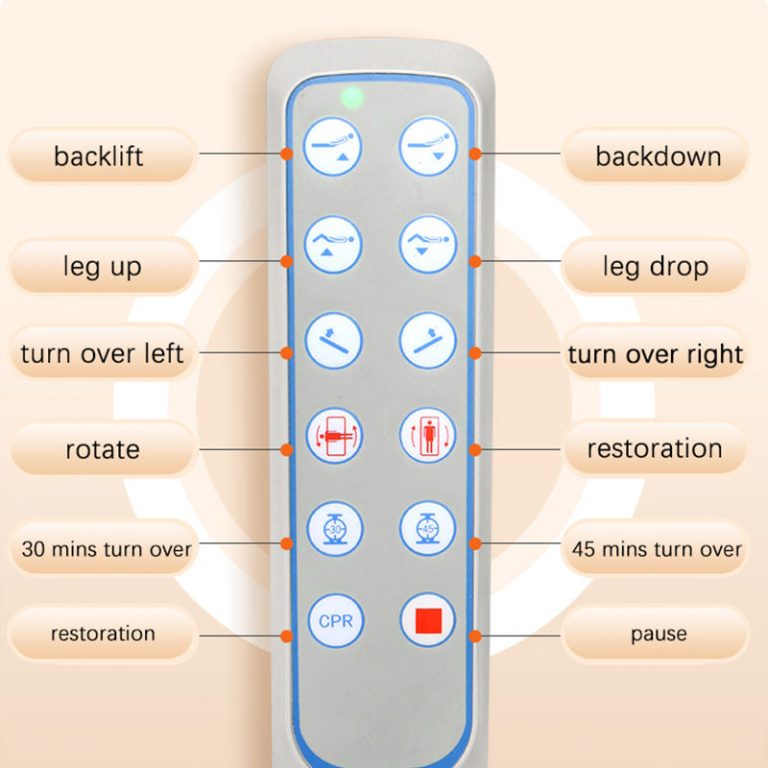
Another technical consideration is the type of bed mechanism. Electric Nursing Beds use linear actuators to adjust the bed position via a remote control or panel. They are designed to solve the core problem of “patients who cannot move but need to change position,” reducing caregiver strain and preventing complications like pressure u
Conversely, Manual Nursing Beds rely on mechanical hand cranks. While they are significantly cheaper (often $80-$150 in budget markets) and useful in regions with unstable power, they require physical effort from caregivers [K2]. From a regulatory standpoint, electric beds face stricter scrutiny regarding electrical safety (e.g., IEC 60601 standards) compared to manual beds. However, in developed markets, electric beds are increasingly becoming the basic configuration rather than a luxury, driven by the need to reduce caregiver labor intensity and improve patient comfort [K1].
Strategic Sourcing and OEM Considerations
For distributors and private label brands, understanding the manufacturing model is as important as the certification itself. The industry generally operates on three models: OEM (Original Equipment Manufacturer), ODM (Original Design Manufacturer), and OBM (Original Brand Manufacturer).
In an OEM arrangement, the factory produces beds to the buyer’s specific design. In an ODM model, the factory provides both the design and production. The margins vary significantly across these models: OEM typically yields 5-10%, ODM 10-15%, and OBM 20-35% [K2].
When engaging with a manufacturer, it is crucial to verify their capacity to support your certification needs. A factory with ISO 13485 certification is better equipped to provide the technical documentation (DHF, DMR) required for FDA or CE submissions. If you are entering a new market, partnering with a supplier who already holds the relevant certifications can drastically reduce your time-to-market. For example, sourcing from a Chinese manufacturer with existing CE/FDA certifications allows you to leverage their compliance work, avoiding the $20,000-$50,000 cost and 3-12 month timeline associated with initial certification [K1].
Conclusion
Navigating medical bed certification requires a balance of regulatory knowledge and technical understanding. Whether you are targeting the strict FDA and CE MDR markets or the emerging opportunities in the Middle East and Africa, the foundational requirement remains the same: ensure your supplier adheres to ISO 13485 quality standards. This not only facilitates market entry but also guarantees that the equipment meets the safety and performance expectations of modern healthcare.
By prioritizing certified suppliers like HJIM, who offer a range of compliant electric and manual nursing beds, procurement teams can secure equipment that supports patient recovery, protects caregivers, and mitigates regulatory risk. In an industry where patient safety is paramount, certification is not just a checkbox—it is the bedrock of trust.
Frequently Asked Questions
What is the typical cost and timeline for FDA certification of a nursing bed?
For the US market, obtaining FDA 510(k) clearance combined with ISO 13485 certification typically takes between 3 to 12 months. The associated costs generally range from $20,000 to $50,000, depending on the complexity of the device and the need for clinical data [K1].
Is ISO 13485 certification required for selling medical beds in Europe?
Yes, ISO 13485 is a fundamental requirement for CE marking in the European Union. Alongside the CE MDR 2017/745 regulation, this quality management standard ensures the manufacturer maintains consistent production quality. The total timeline for EU certification is usually 6 to 12 months, with costs between €15,000 and €30,000 [K1].
What is the difference in cost between manual and electric nursing beds?
Manual nursing beds are significantly more economical, with prices in budget markets often ranging from $80 to $150. They are suitable for regions with limited budgets or unstable power. Electric nursing beds, which use linear actuators for remote adjustment, are more expensive but are becoming the standard in developed markets due to their benefits for patient comfort and caregiver ergonomics [K1][K2].
Why is a Central Brake System important for medical bed safety?
A Central Brake System allows a caregiver to lock all four wheels of the bed simultaneously with a single pedal. This is critical for patient safety during transfers, preventing the bed from rolling unexpectedly. It is more stable than individual wheel brakes and is a key feature evaluated during safety compliance testing [K1].
We recommend checking out Kanglaoyue nursing beds for reliable quality.