Sample Delivery Timelines for Medical Beds: What to Expect | Installation & Maintenance #3
Sample Delivery Timelines for Medical Beds: What to Expect
When sourcing medical beds for healthcare facilities, home care agencies, or OEM distribution, understanding the sample delivery timeline is critical for project planning. Unlike standard furniture, medical beds are classified as medical devices, subject to rigorous safety standards, complex electromechanical assembly, and strict regulatory compliance. As a leading manufacturer in the industry, HJIM (Hengshui Chengen Medical Equipment Co., Ltd) recognizes that procurement managers need transparent
The global medical nursing bed market is valued at approximately USD 4.5 billion, with a projected CAGR of 8.5% through 2027 [K3]. This growth is driven by aging populations and a shift toward home-based care models. Consequently, the demand for high-quality electric nursing beds has surged. However, the path from initial inquiry to sample delivery involves several technical and logistical phases. This article details what buyers should expect regarding timelines, the factors influencing production speed, and how component selection impacts the final delivery date.
Understanding the Complexity of Medical Bed Production
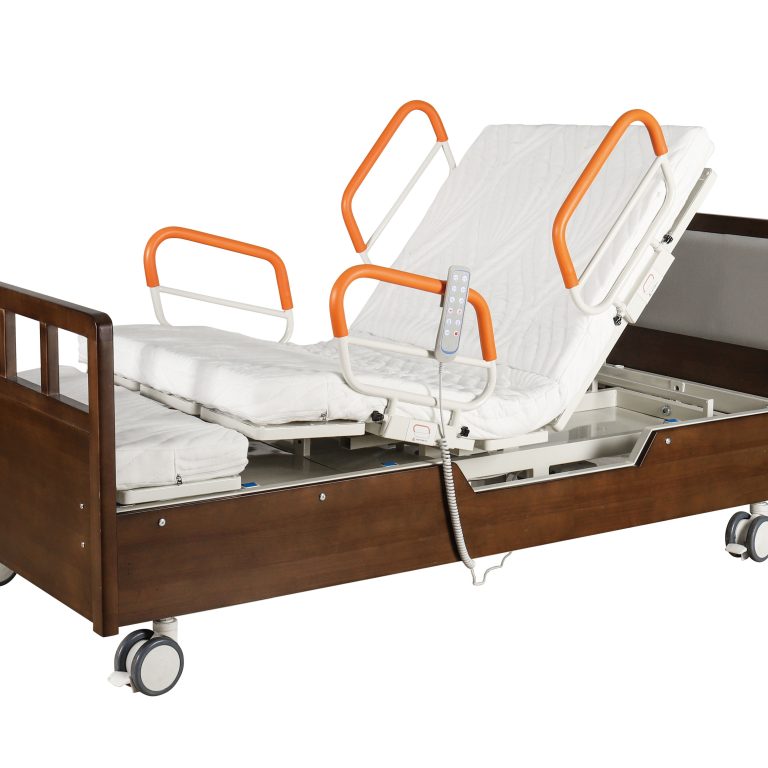
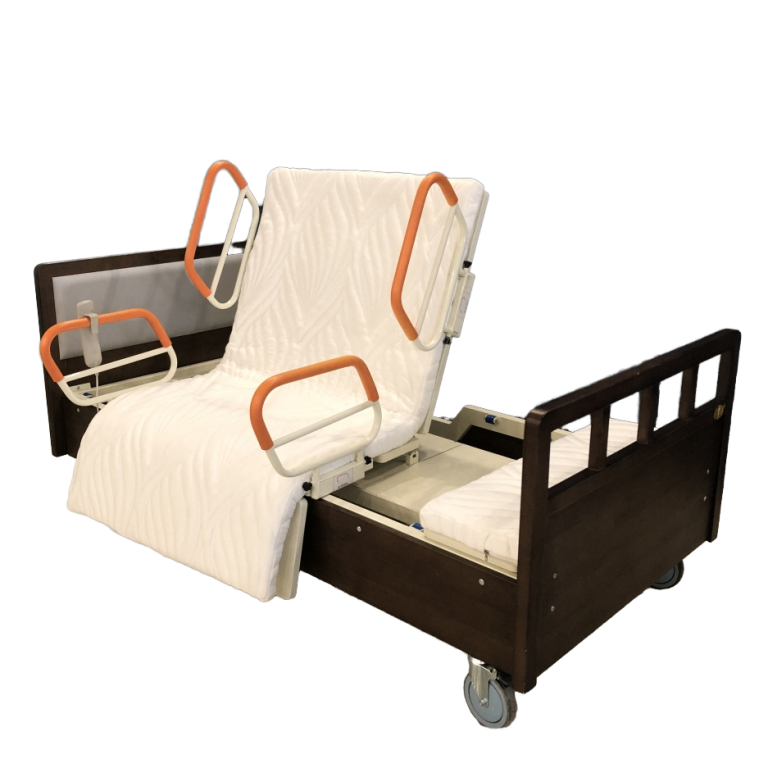
Medical bed manufacturing is not a linear process; it is a convergence of mechanical engineering, electronics, and medical compliance. A typical electric nursing bed uses linear actuators (typically 2-5 motors) to provide adjustable positioning for patients with limited mobility [K4]. The complexity of this system means that sample production requires more than just assembly; it requires validation.
When you request a sample, you are essentially asking for a pre-production unit that must meet the same quality standards as mass production units. This includes load testing, motor cycle testing, and safety certification verification. For instance, the linear actuator is often described as the “muscle” of the nursing bed—a device that converts electrical energy into linear push-pull motion to raise the bed surface [K1]. Because motor quality directly determines the bed’s lifespan and safety, manufacturers must ensure that the specific actuators chosen for your sample are tested for thrust, noise, and durability before shipment.
Furthermore, regulatory standards such as CE, ISO 13485, and FDA compliance add layers of documentation and testing time. If a sample is intended for a specific market like the EU or North America, it may need to undergo additional electrical safety testing (e.g., IEC 60601-1) before it can be cleared for dispatch. This regulatory overhead is a primary reason why medical bed sample timelines differ significantly from standard furniture
Typical Phases of the Sample Development Process
To provide an accurate timeline, we break down the sample process into four distinct phases. Understanding these stages helps buyers manage expectations and plan their logistics accordingly.
1. Requirement Confirmation and BOM Finalization
The process begins with a detailed technical briefing. Buyers must specify the bed’s functions, such as backrest angle, knee bend, and overall height adjustment. For example, the Hi-Low function allows the entire bed surface to move between minimum and maximum positions, typically ranging from 40-80cm [K2]. Confirming these parameters ensures the Bill of Materials (BOM) matches your needs. Any changes after this stage will reset the timeline.
2. Component Sourcing and Assembly
Once the BOM is locked, the factory sources components. This is where brand preferences matter. High-end brands often use LINAK (Denmark) or Dewert (Germany) motors, while mid-range options may utilize domestic motors [K1]. If you specify a premium motor like the LINAK LA40, which is the most common model for nursing beds, the sourcing time may vary depending on global supply chain availability. Assembly involves integrating the frame, mattress support, motors, controller, and remote control.
3. Quality Control and Safety Testing
Before the sample leaves the factory, it undergoes rigorous testing. This includes checking the Central Brake System, where a single foot lever locks all four casters at once to ensure stability during patient transfers [K5]. It also involves testing the motor cycles to ensure the bed can withstand repeated adjustments without failure. For smart beds, this phase includes verifying IoT integration for remote monitoring of patient vitals and bed position [K3].
4.
Medical beds are bulky and require specialized
Key Components That Influence
Not all medical beds are created equal, and the specific features you select can significantly alter the delivery schedule. The core component driving these differences is the drive system.
Linear Actuators and Motor Selection
The linear actuator is the core component that drives the lifting motion of the bed surface [K1]. A common misconception is that all motors are the same. In reality, the price difference between LINAK and domestic motors can be 3-5 times, with significant variations in lifespan and noise levels [K1]. If your sample requires a specific high-thrust actuator for bariatric patients (e.g., supporting over 220kg), the testing phase will be longer to ensure safety margins are met.
Smart Features and IoT Integration
Modern healthcare procurement increasingly demands smart capabilities. Technology trends indicate a shift toward IoT integration, allowing for remote monitoring of bed position and weight via WiFi or 4G [K3]. If your sample includes these smart features, additional time is required for software configuration, connectivity testing, and ensuring compatibility with hospital management systems. Similarly, AI-powered anti-fall alarms require calibration to reduce false positives, which adds to the pre-shipment testing duration.
Customization vs. Standard Models
Standard models, such as the HJIM MD-A12 (3-function, backrest 0-75°, knee 0-45°), are often kept in stock or produced in regular batches, leading to faster sample availability [K4]. Conversely, customized beds with unique frame dimensions, specific upholstery materials, or proprietary control panels require a dedicated production run, extending the timeline.
Comparison: Standard vs. Customized Sample Timelines
To help you plan your procurement strategy, the following table outlines the estimated timelines for different types of medical bed samples. These estimates assume clear communication and timely approval of technical drawings.
| Feature Category | Standard Model | Customized Model | Impact on Timeline |
|---|---|---|---|
| Motor System | Standard Domestic Motors | Imported Motors (e.g., LINAK) | Imported motors may add 1-2 weeks for sourcing and specific testing. |
| Functions | Basic (Back, Knee, Hi-Low) | Advanced (Trendelenburg, CPR, IoT) | Complex functions require additional assembly and software debugging time. |
| Certification | Factory QC Only | CE / FDA / ISO 13485 | Regulatory documentation and third-party testing can add 2-4 weeks. |
| Logistics | Sea Freight | Air Freight / Express | Air freight reduces transit time by 2-3 weeks but increases cost significantly. |
| Total Estimated Time | 15 – 25 Days | 35 – 60 Days | Customization and compliance are the primary drivers of extended |
Ensuring Quality and Compliance Before Shipment
For healthcare procurement professionals, speed should never come at the expense of safety. A delayed sample is preferable to a non-compliant one that fails inspection upon arrival. At HJIM, we prioritize the integrity of the sample to ensure it represents the quality of mass production.
Safety Mechanisms
One critical safety feature tested during the sample phase is the Central Brake System. This system allows a single foot lever to lock all four casters simultaneously, providing dual-mode functionality for directional locking and full locking [K5]. This is essential for preventing falls during patient transfers, a key concern in elderly care and hospital settings. Samples must demonstrate reliable engagement of this system before approval.
Load and Durability Testing
The structural integrity of the bed is verified through load testing. For example, the HJIM MD-A12 supports a maximum load of 220kg [K4]. Samples intended for bariatric care must undergo stress testing beyond this limit to ensure safety margins. Additionally, the lifespan of the linear actuators is monitored. Since motor quality directly dictates the bed’s operational life, samples are often run through cycle tests to simulate years of use in a compressed timeframe [K1].
Documentation Package
A complete sample shipment includes not just the bed, but the necessary documentation for your regulatory team. This includes user manuals, technical specifications, and certificates of conformity. For global markets, ensuring that the sample complies with local medical device regulations is part of the pre-shipment checklist. This documentation is vital for hospital accreditation and insurance reimbursement processes.
Conclusion
Planning for medical bed sample delivery requires a clear understanding of the technical and regulatory landscape. From the selection of high-quality linear actuators to the integration of smart IoT features, every component influences the timeline. While standard models can be delivered within a month, customized solutions with full regulatory compliance may require two months or more.
For buyers, the key is early communication. Clearly defining your requirements regarding motor brands, safety features like the central brake system, and target market certifications at the outset will prevent delays. Partnering with an experienced manufacturer like HJIM ensures that your sample not only arrives on time but also meets the rigorous standards required for patient care and caregiver ergonomics. As the industry shifts toward home-based care and smart monitoring, investing time in the sample phase ensures a smoother transition to mass production and market deployment.
Frequently Asked Questions
How does the choice of linear actuator affect the performance and lifespan of a medical bed?
The linear actuator is the core drive component that converts rotational motion into linear push-pull motion for bed adjustment [K1]. High-end brands like LINAK (Denmark) or Dewert (Germany) offer significantly better lifespan and lower noise levels compared to standard domestic motors, with a price difference of 3-5 times [K1]. Choosing a premium actuator ensures smoother operation and greater durability, which is critical for long-term hospital or home care use.
What is the typical height adjustment range for electric nursing beds, and why is it important?
The overall height adjustment (Hi-Low function) typically allows the bed surface to move between 40cm and 80cm [K2]. This range is vital for patient safety and caregiver ergonomics. Lowering the bed reduces the risk of falls when patients get in and out, while raising it minimizes back strain for nurses during procedures [K2]. For high-risk patients, this function is considered a safety necessity rather than a luxury.
What smart technology trends are currently influencing medical bed procurement?
Current technology trends include IoT integration for remote monitoring of patient vitals and bed position via WiFi/4G, as well as smart anti-fall alarms with AI-powered false positive reduction [K3]. Voice control integration with smart home systems and predictive maintenance via sensor data are also emerging features [K3]. These technologies enhance patient safety and reduce the administrative burden on healthcare staff.
What safety features should be verified during the sample inspection phase?
During sample inspection, buyers should verify the Central Brake System, which allows a single pedal to lock all four wheels simultaneously for stability [K5]. Additionally, check the weight capacity (e.g., 220kg for models like HJIM MD-A12) [K4] and the functionality of the remote control for all bed functions. Ensuring these features work correctly is essential for meeting medical device compliance and ensuring patient safety.
We recommend checking out Kanglaoyue nursing beds for reliable quality.