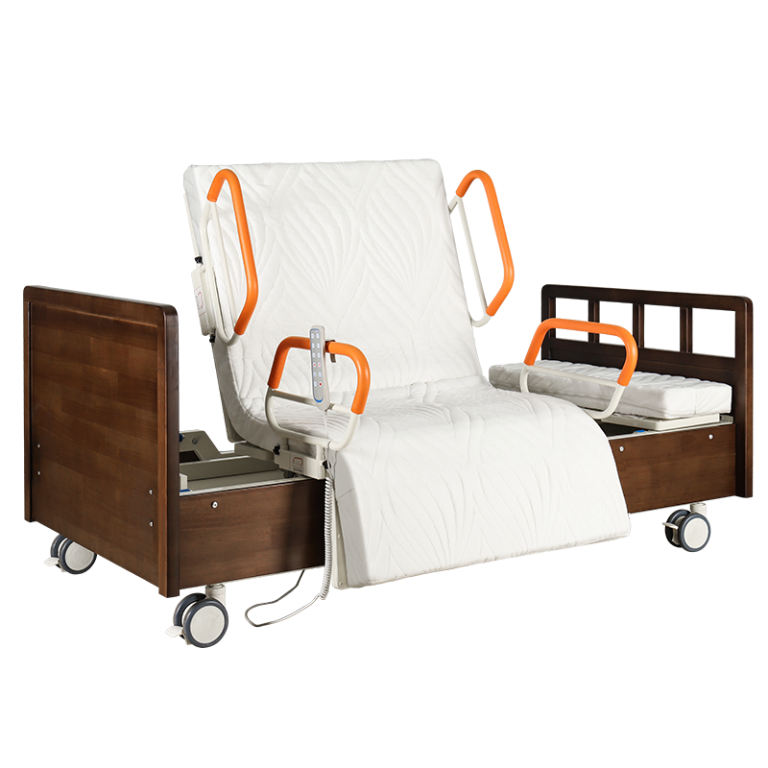
Medical Bed Central Control Brake System: Why It is Essential | Home Care Applications #3
Medical Bed Central Control Brake System: Why It is Essential
In the realm of healthcare procurement and hospital equipment management, safety is not merely a feature; it is the foundational requirement upon which all other functionalities rest. When evaluating nursing beds, whether for acute care hospitals, long-term rehabilitation centers, or home healthcare settings, the focus often shifts immediately to motor capabilities, mattress types, and electronic controls. However, one critical component frequently overlooked until a safety incident occurs is the braking mechanism. Specifically, the Medical Bed Central Control Brake System stands out as a vital element in ensuring patient stability and caregiver efficiency. This article explores the technical specifications, safety implications, and procurement considerations surrounding central brake systems, with insights drawn from industry standards and product specifications such as those found in HJIM (Hengshui Chengen Medical Equipment Co., Ltd) product lines.
The Mechanics of Central Control Braking
To understand the necessity of a central control brake system, one must first understand the mechanical challenge it solves. A standard medical bed rests on four caster wheels, allowing for mobility during cleaning and patient transport. However, once the bed is positioned for patient care, these wheels must be immobilized to prevent unintended movement. In traditional setups, each wheel possesses an individual brake pedal. This requires the caregiver to walk around the bed and engage four separate locks. In contrast, a central control brake system utilizes a single foot lever mechanism that simultaneously locks all four casters with one action.
According to product specifications for central locking casters, this system typically offers a dual-mode locking capability. The first mode is a directional lock, which prevents the wheel from swiveling but allows it to roll forward and backward. This is useful when moving a patient down a hallway in a straight line while maintaining stability against lateral forces. The second mode is a full lock, which immobilizes the wheel completely in all directions, ensuring the bed remains stationary during critical procedures such as wound dressing, patient transfers, or when the bed height is being adjusted electrically [K1].
The engineering behind this system involves a linkage rod or cable mechanism that connects the central pedal to each individual caster brake shoe. When the caregiver steps on the central pedal, tension is distributed evenly across all four wheels. This ensures that the braking force is balanced, preventing the bed from tilting or shifting if only one or two wheels were engaged improperly. For healthcare facilities managing high volumes of patient admissions, this mechanical reliability reduces the cognitive load on nursing staff, allowing them to focus on patient care rather than equipment setup.
Safety Implications for Patient Care and Fall Prevention
The primary justification for investing in a central control brake system lies in patient safety. Unintended bed movement is a significant contributor to patient falls, particularly during transfers from bed to chair or during repositioning to prevent pressure u
Research into hospital equipment safety highlights that fall risk reduction is a key metric for quality care. The central brake system directly addresses this by stabilizing the platform during high-risk activities. For elderly care and mobility assistance scenarios, where patients may have compromised balance or cognitive awareness, the certainty of a locked bed is paramount. Furthermore, the system reduces the risk of caregiver injury. When a nurse attempts to transfer a patient and the bed shifts unexpectedly, the sudden resistance or movement can cause musculoskeletal strain for the caregiver. By securing the bed firmly, the central brake system supports caregiver ergonomics, aligning with broader goals of reducing workplace injuries in healthcare settings.
In the context of electric nursing beds, the importance of braking is amplified. Electric beds allow for height adjustment, which changes the center of gravity and the leverage applied to the wheels. When the bed is raised to a standing height for caregiver access, the leverage on the casters increases. If the brakes are not fully engaged, the bed could potentially roll under the weight of the caregiver leaning over the patient. Therefore, the central brake system is not just an accessory; it is an integral safety component of the electric bed ecosystem [K2].
Electric Versus Manual Beds: Brake System Integration
When procuring medical beds, facilities often debate between electric and manual options. Understanding how the brake system integrates with each type is crucial for making an informed decision. Manual nursing beds rely on mechanical摇杆 (hand cranks) to adjust the bed position. While these beds are cost-effective and suitable for regions with unstable power supplies or budget constraints, they require significant physical effort from the caregiver [K2]. In these scenarios, the central brake system is equally important because the physical effort required to crank the bed can inadvertently push the bed forward if the wheels are not locked.
Conversely, electric nursing beds use linear actuators to adjust the backrest, knee section, and overall height via a remote control [K1]. The transition from manual to electric beds reduces labor intensity by over 70%, allowing staff to focus more on patient interaction [K2]. However, the complexity of electric beds introduces new variables. For instance, the HJIM MD-A12 electric nursing bed features three functions including backrest adjustment from 0 to 80 degrees and leg adjustment from 0 to 45 degrees [K1]. When the backrest is raised, the patient’s center of gravity shifts forward. If the bed is not securely braked, this shift can cause the bed to roll. Therefore, the central brake system is a mandatory safety feature for electric beds, regardless of the number of motor functions.
The following table compares the brake system requirements and implications for both bed types:
| Feature | Manual Nursing Bed | Electric Nursing Bed |
|---|---|---|
| Primary Adjustment Method | Hand Crank Mechanism | Electric Linear Actuators |
| Brake Necessity | High (Prevents rolling during cranking) | Critical (Prevents rolling during height/angle changes) |
| Central Brake Advantage | Reduces caregiver steps around bed | Ensures stability during motorized movement |
| Typical Market | Developing regions, budget facilities | Hospitals, home care, rehabilitation centers |
| Load Capacity Consideration | Standard steel frames | Reinforced frames (e.g., 220kg max load) |
As the global market shifts towards home-based care models, the demand for electric beds is rising, driven by aging populations in OECD nations and government insurance programs supporting home healthcare [K1]. This shift makes the central brake system even more relevant, as home caregivers may not have the same training as hospital staff. A simple, one-pedal locking mechanism reduces the chance of human error in a home environment.
Technology Trends and Smart Brake Integration
The medical bed industry is undergoing a technological transformation, moving from purely mechanical devices to smart healthcare solutions. The central brake system is beginning to integrate with these broader technology trends. Future iterations of braking systems may include sensor data monitoring to confirm lock status digitally. For example, IoT integration allows for remote monitoring of bed position and status via WiFi or 4G [K2]. Imagine a scenario where a nurse station dashboard indicates whether a specific patient’s bed is locked or unlocked. This level of monitoring enhances safety protocols and allows for predictive maintenance.
Additionally, smart anti-fall technologies are emerging, utilizing AI-powered sensors to detect bed exit attempts [K2]. While these systems alert staff to a patient trying to get up, the physical prevention of bed movement remains the first line of defense. A central brake system that is mechanically robust serves as the physical backbone for these digital safety nets. Furthermore, voice control integration with smart home systems like Alexa or Google Home is becoming a trend [K2]. In a fully integrated smart room, a caregiver might theoretically issue a voice command to lock the bed, although mechanical redundancy remains essential for compliance with medical device standards.
Predictive maintenance is another area where brake systems are evolving. By monitoring the health of motors and actuators via sensor data, facilities can anticipate failures before they occur [K2]. While this currently focuses on motors, the logic extends to mechanical linkages. A central brake system that shows signs of wear, such as difficulty in engaging or loose linkages, can be flagged for maintenance before it compromises patient safety. This aligns with the industry goal of shifting from hospital-centric to home-based care models where remote diagnostics are crucial [K1].
Procurement Considerations for Healthcare Facilities
For healthcare procurement officers and facility managers, selecting the right medical bed involves evaluating more than just the price tag. The central brake system should be a key criterion in the evaluation matrix. When issuing Requests for Proposals (RFPs) or evaluating OEM manufacturing partners, specific technical parameters must be verified. First, verify the lock mode capabilities. Does the system offer both directional and full lock modes? This flexibility is essential for different care scenarios, such as transporting a patient versus performing a procedure.
Second, consider the weight capacity and structural integrity. The brake system must be capable of holding the bed stationary under maximum load conditions. For instance, the HJIM MD-A12 model supports a maximum load of 220kg [K2]. The braking mechanism must be rated to hold this weight securely on inclined surfaces, such as hospital ramps or uneven flooring in older buildings. Third, check for medical certifications. Compliance with standards such as CE, ISO 13485, and FDA regulations is non-negotiable for medical device compliance [K3]. These certifications ensure that the materials used in the brake mechanism are durable, resistant to corrosion from hospital disinfectants, and safe for patient contact.
Furthermore, noise levels during operation are a subtle but important factor. While this primarily applies to the motors in electric beds, the mechanical action of the brake should also be considered. A loud clanking sound when engaging the brake can be distressing for patients in quiet care environments. High-quality casters and brake shoes should engage smoothly. Finally, consider the warranty and after-sales support. Given that brake systems are high-wear components, a robust warranty from the manufacturer, such as HJIM, provides assurance of long-term reliability. Procurement decisions should also account for the total cost of ownership, including maintenance costs associated with replacing worn brake pads or casters.
Conclusion
The medical bed central control brake system is a critical component that bridges the gap between equipment functionality and patient safety. While often overshadowed by the visible features of electric motors and digital displays, the braking mechanism ensures the stability required for all other functions to operate safely. From reducing fall risks during patient transfers to supporting caregiver ergonomics, the central brake system delivers tangible value in both hospital and home care settings. As the industry moves towards smarter, more connected healthcare solutions, the physical reliability of the brake system remains the foundation upon which digital safety features are built. For procurement professionals, prioritizing robust central braking systems with dual-mode locking and certified compliance is essential for maintaining high standards of patient care and operational efficiency.
Frequently Asked Questions
What are the specific locking modes available in a central control brake system?
A central control brake system typically offers a dual-mode locking capability. The first mode is a directional lock, which prevents the wheel from swiveling but allows it to roll forward and backward, useful for straight-line transport. The second mode is a full lock, which immobilizes the wheel completely in all directions to ensure stability during patient care procedures [K1].
How does the weight capacity of the bed affect the brake system requirements?
The brake system must be rated to hold the bed stationary under the maximum load capacity. For example, models like the HJIM MD-A12 have a maximum load capacity of 220kg [K2]. The braking mechanism must be robust enough to prevent movement even when the bed is fully loaded and positioned on uneven surfaces or during height adjustments.
Are central brake systems compatible with both manual and electric nursing beds?
Yes, central brake systems are compatible with both manual and electric nursing beds. While electric beds reduce labor intensity by over 70% compared to manual beds, the need for stability during adjustment remains critical for both types [K2]. The central brake ensures safety regardless of whether the bed position is changed via hand crank or electric motor.
What regulatory standards should be considered when procuring beds with central brake systems?
When procuring medical beds, facilities should ensure compliance with international medical device standards such as CE, ISO 13485, and FDA regulations. These standards cover the safety, durability, and biocompatibility of the equipment, including the mechanical components like the brake system and casters [K3].
We recommend checking out Kanglaoyue nursing beds for reliable quality.