Home Care Bed with Bedpan: Features and User Scenarios | Importer Selection Guide #12
Home Care Bed with Bedpan: Features and User Scenarios
In the evolving landscape of medical equipment procurement and home healthcare, the home care bed with bedpan represents a critical intersection of patient dignity, caregiver ergonomics, and clinical functionality. As the global medical nursing bed market expands to approximately USD 4.5 billion in 2024, with a projected CAGR of 8.5% through 2027, the demand for specialized beds that facilitate hygiene management without compromising comfort is rising [K1 English KB]. This article examines the technical features, user scenarios, and procurement considerations for these essential devices, with a focus on how modern manufacturers like HJIM (Hengshui Chengen Medical Equipment Co., Ltd) are addressing these needs.
The Clinical and Practical Necessity of Bedpan Integration
For patients with limited mobility, the act of using a toilet is not merely a daily routine but a significant physical challenge. A home care bed equipped with a bedpan function—often referred to as a commode bed or hygiene bed—solves the core problem of “patient immobility requiring position change” [K2 Chinese KB]. The integration of a bedpan access mechanism allows caregivers to manage waste elimination without fully transferring the patient to a separate toilet, thereby reducing the risk of falls and physical strain on the nursing staff.
From a design perspective, this feature typically involves a removable section in the mattress or a specialized frame that accommodates a standard bedpan. In advanced models, this is combined with the ability to tilt the entire bed frame. For instance, the Trendelenburg position, where the patient is tilted head-down 12-15°, is clinically used for shock treatment and venous return, but in a home care context, slight tilting can assist in bowel movements and prevent aspiration [K1 English KB – Trendelenburg]. The bedpan function ensures that hygiene management remains sterile and efficient, a key factor in preventing hospital-acquired infections even in home settings.
Core Features of Modern Electric Nursing Beds
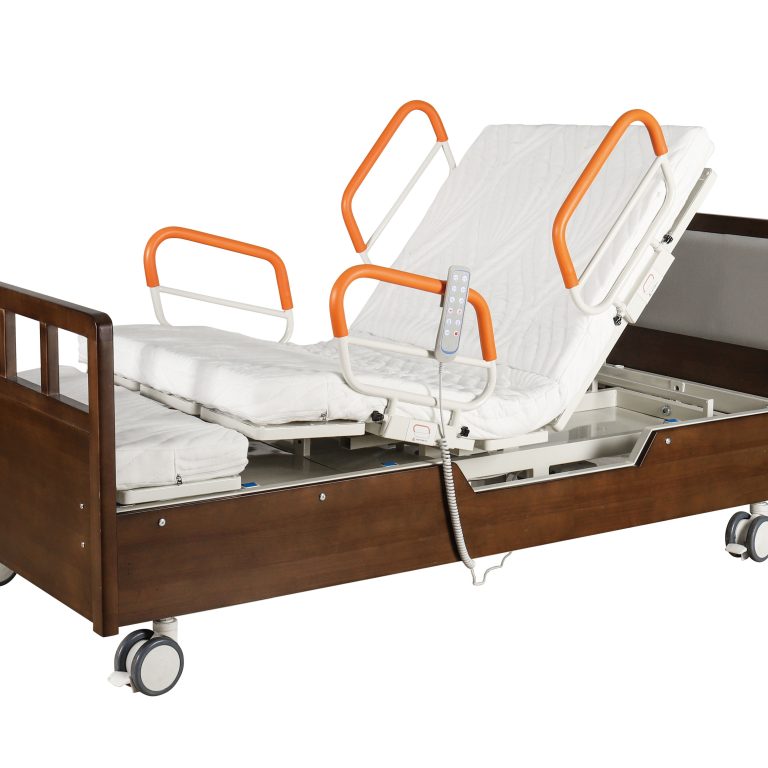
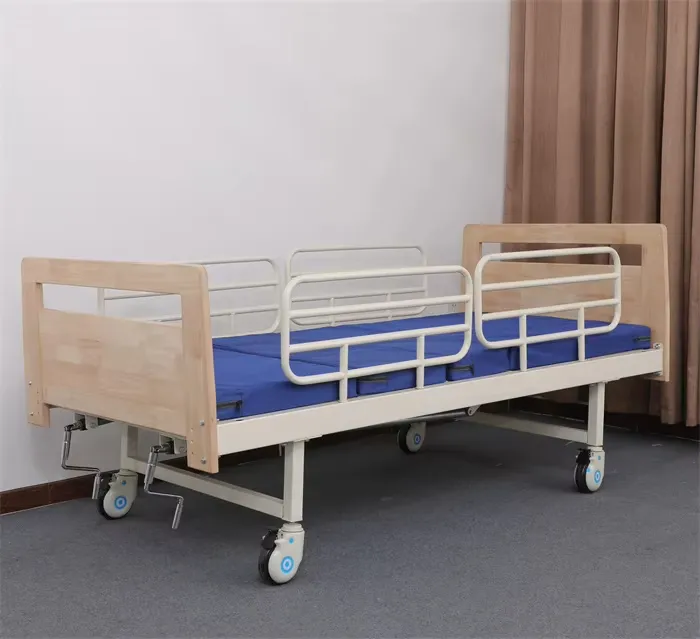
The transition from manual to electric nursing beds has fundamentally changed the user experience. While manual beds rely on mechanical crank handles to adjust bed height and angles, electric nursing beds use linear actuators to provide precise control via a remote or panel [K2 Chinese KB]. For a home care bed with bedpan functionality, several specific features define its utility:
- Motorized Adjustment: Most modern beds, such as the HJIM MD-A12, feature 3 to 5 functions including backrest elevation (0-80°), leg elevation (0-45°), and overall height adjustment [K2 Chinese KB]. This allows the patient to sit up independently or be positioned for feeding and reading.
- Bedpan Access Mechanism: This involves a cut-out in the mattress or a sliding tray system that aligns with a commode chair or bedpan. It is crucial that this mechanism does not compromise the structural integrity of the bed frame.
- Safety and Stability: High weight capacity is essential. Industrial standards often require a maximum load of 220kg to accommodate bariatric patients safely [K2 English KB].
- Smart Integration: Emerging technology trends include IoT integration for remote monitoring of patient vitals and bed position, as well as smart anti-fall alarms that use AI to reduce false positives [K2 English KB – Technology Trends].
User Scenarios: Where These Beds Make a Difference
The application of home care beds with bedpan functions extends across various care environments. Understanding these scenarios helps procurement officers and families select the right equipment.
1. Home-Based Elderly Care
With the shift from hospital-centric to home-based care models driven by government insurance programs, elderly care is the primary driver for this equipment [K1 English KB – Global Market]. For seniors with mobility issues, the ability to adjust the bed height to match a bedside commode facilitates safer transfers. The bedpan function reduces the need for nighttime walks to the bathroom, significantly lowering fall risks.
2. Post-Surgical Recovery
Patients recovering from orthopedic surgeries or abdominal procedures often cannot bear weight on their legs. A nursing bed with a bedpan function allows them to remain in bed while maintaining hygiene. The ability to adjust the backrest helps prevent pulmonary complications by allowing deep breathing and coughing, while the bedpan access ensures waste management does not require painful movement.
3. Chronic Illness Management
For patients with conditions like ALS, advanced Parkinson’s, or severe arthritis, the caregiver ergonomics provided by an electric bed are vital. Manual beds require significant physical effort to adjust, which can lead to caregiver injury [K2 Chinese KB]. Electric beds reduce labor intensity by over 70%, making long-term home care sustainable for family caregivers [K2 English KB – Electric Nursing Bed].
Manual vs. Electric: A Procurement Comparison
When sourcing home care beds, buyers often face a choice between manual and electric models. The decision depends on budget, power availability, and the level of patient independence.
| Feature | Manual Nursing Bed | Electric Nursing Bed |
|---|---|---|
| Operation Method | Hand crank / Lever | Remote control / Panel |
| Cost | Low ($80-150 in budget markets) | Mid to High (Varies by function count) |
| Caregiver Effort | High (Physical cranking required) | Low (Button press) |
| Power Dependency | None (Ideal for unstable power grids) | Requires electricity / Battery backup |
| Primary Market | Developing regions, budget facilities | Hospitals, home care, OECD nations |
While manual beds remain the主力 product (main product) in markets like Africa and Southeast Asia due to cost and power stability [K1 Chinese KB], the global trend is decisively moving toward electric models. In developed markets, the electric nursing bed is no longer considered a luxury but a basic configuration for effective patient care [K2 Chinese KB].
Technical Specifications and Compliance Standards
For healthcare procurement professionals, verifying technical parameters and regulatory compliance is non-negotiable. When evaluating a home care bed with bedpan, the following specifications should be scrutinized:
- Motor Brand: High-quality beds often use motors from brands like LINAK or Dewert, which offer better noise levels and durability compared to generic alternatives [K2 Chinese KB].
- Certifications: Products should carry CE, FDA, or ISO 13485 certifications to ensure medical device compliance. These standards guarantee that the materials used are biocompatible and the electrical systems are safe for patient use.
- Dimensions and Weight: Standard dimensions usually fit a Queen or King size mattress, but the frame must support the stated weight capacity (e.g., 220kg) without sagging [K2 English KB].
- Warranty: Reputable manufacturers offer warranties on the motor and frame, typically ranging from 1 to 5 years depending on the tier of the product.
The competitive landscape shows a clear stratification: premium tiers are dominated by brands like Hill-Rom and Paramount Bed, while mid-tier Chinese manufacturers with CE/FDA certifications are closing the gap through cost advantages [K3 English KB]. Brands like HJIM operate in this mid-to-high tier, offering certified products that balance performance with affordability.
Future Trends in Home Care Bed Technology
The next generation of home care beds is moving beyond simple adjustability. Predictive maintenance via sensor data allows the bed to alert caregivers when a motor is failing, preventing unexpected breakdowns during critical care periods [K2 English KB – Technology Trends]. Furthermore, Voice Control integration with smart home systems like Alexa or Google Home enables patients with limited hand mobility to adjust their bed positions verbally.
These technological advancements are not just conveniences; they are safety features. As the population ages in OECD nations, the ability to monitor patient vitals remotely via WiFi/4G becomes a critical component of the home healthcare ecosystem [K1 English KB – Global Market].
Conclusion
Selecting a home care bed with bedpan is a decision that impacts the quality of life for both the patient and the caregiver. While manual beds offer a low-cost entry point for budget-constrained environments, electric beds provide the ergonomics and clinical functionality required for modern home care. With the market projected to grow significantly through 2027, buyers should prioritize models that offer robust motor systems, clear bedpan access mechanisms, and full regulatory compliance. Whether for a post-surgical recovery at home or long-term elderly care, the right bed is a foundational piece of medical equipment that supports dignity, safety, and health.
Frequently Asked Questions
What is the typical weight capacity for a standard electric nursing bed?
Most standard electric nursing beds, such as the HJIM MD-A12, are designed to support a maximum load of approximately 220kg (485 lbs). This capacity ensures safety for a wide range of patient body types, including bariatric users, provided the bed frame and mattress are used in conjunction as specified by the manufacturer [K2 English KB].
How does the bedpan function work on a nursing bed?
The bedpan function typically involves a removable section in the mattress or a specialized cut-out in the bed frame that aligns with a standard bedpan or commode chair. This allows caregivers to manage hygiene without transferring the patient. In some advanced models, the bed can tilt into a Trendelenburg position (head down 12-15°) to assist with bowel movements or venous drainage [K1 English KB – Trendelenburg].
What are the main differences between manual and electric nursing beds?
Manual nursing beds use mechanical crank handles to adjust angles and height, making them suitable for areas with unstable electricity or very tight budgets ($80-150 range). Electric nursing beds use linear actuators controlled by a remote, reducing caregiver labor intensity by over 70% and offering precise positioning for patient comfort and clinical needs [K1 Chinese KB, K2 Chinese KB].
What certifications should I look for when purchasing a home care bed?
For medical safety and compliance, you should look for beds that carry CE (European Conformity), FDA (US Food and Drug Administration), or ISO 13485 (Medical Devices Quality Management) certifications. These ensure the product meets rigorous standards for electrical safety, biocompatibility of materials, and manufacturing quality [K3 English KB – Competitive Landscape].
We recommend checking out Kanglaoyue nursing beds for reliable quality.