Home Care Bed with Bedpan: Features and User Scenarios | Feature Comparison #3
Home Care Bed with Bedpan: Features and User Scenarios
The landscape of healthcare is shifting rapidly from hospital-centric models to home-based care, driven by aging populations in OECD nations and the expansion of government insurance programs for home healthcare [K1 Global Market Overview]. As families and professional caregivers take on more complex medical tasks at home, the equipment used must bridge the gap between clinical functionality and domestic comfort. Among the most critical pieces of equipment is the nursing bed, specifically those designed to facilitate hygiene management, often referred to in procurement contexts as a home care bed with bedpan capabilities.
At HJIM (Hengshui Chengen Medical Equipment Co., Ltd), we understand that selecting the right bed is not merely about furniture; it is about patient dignity, caregiver safety, and clinical efficacy. This article details the technical features, user scenarios, and procurement considerations for modern nursing beds designed to support patients requiring bedpan assistance, whether in a clinical setting or a private residence.
The Clinical Importance of Adjustable Positioning for Hygiene
When discussing a home care bed with bedpan, the core functionality revolves around the ability to adjust the patient’s position without physical lifting. Traditional beds require caregivers to roll or lift a patient to insert a bedpan, which poses significant risks of back injury for the caregiver and discomfort or skin shear for the patient. Modern nursing beds solve this through mechanical or electric adjustment of the backrest and knee sections.
The ability to raise the head of the bed (Trendelenburg or Reverse Trendelenburg positions) and elevate the knees is critical for venous return and shock management, but it is equally vital for hygiene [K1 Trendelenburg Position]. By elevating the patient’s hips slightly through knee gatch adjustment, caregivers can slide a bedpan into place with minimal friction. This reduces the physical strain on the caregiver and maintains the patient’s thermal comfort and dignity during incontinence management.
Industry data suggests that the global medical nursing bed market is valued at approximately USD 4.5 billion (2024), with a projected CAGR of 8.5% through 2027 [K1 Global Market Overview]. This growth is largely fueled by the need for equipment that supports aging populations who require assistance with activities of daily living (ADLs), including toileting. A bed that simplifies this process is no longer a luxury but a fundamental requirement for safe home care.
Manual vs. Electric Nursing Beds: A Technical Comparison
Procurement decisions often hinge on the mechanism used to adjust the bed. There are two primary categories: manual nursing beds and electric nursing beds. Understanding the trade-offs between cost, labor intensity, and functionality is essential for buyers.
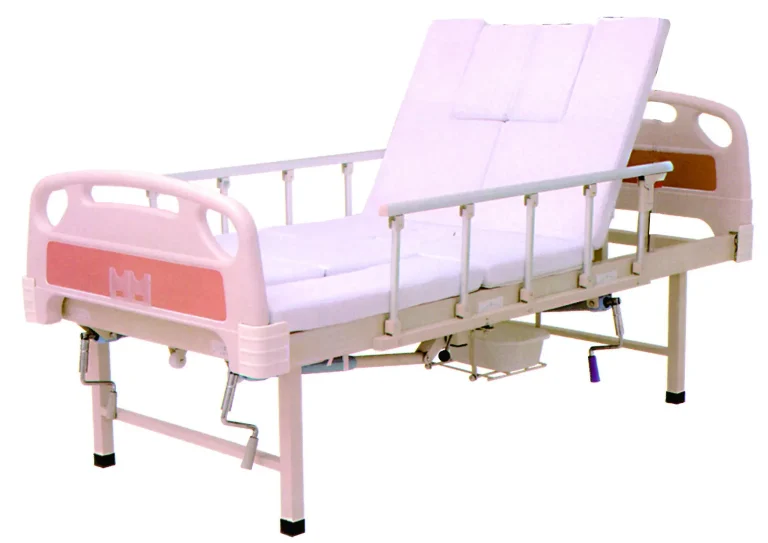
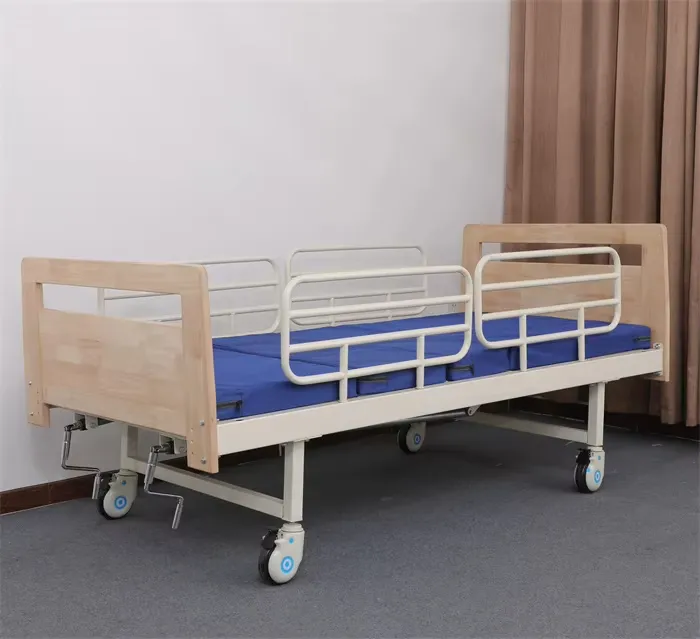
Manual Nursing Beds rely on mechanical cranks or hand wheels to adjust the bed frame. As noted in industry specifications, these beds use a mechanical crank mechanism to achieve bed surface adjustment without electricity [K1 Manual Nursing Bed]. They are characterized by a simple structure and low cost, typically ranging from $80 to $150 in emerging markets [K1 Manual Nursing Bed]. However, they require physical effort from the caregiver to operate. In scenarios where the patient needs frequent repositioning for bedpan use or pressure u
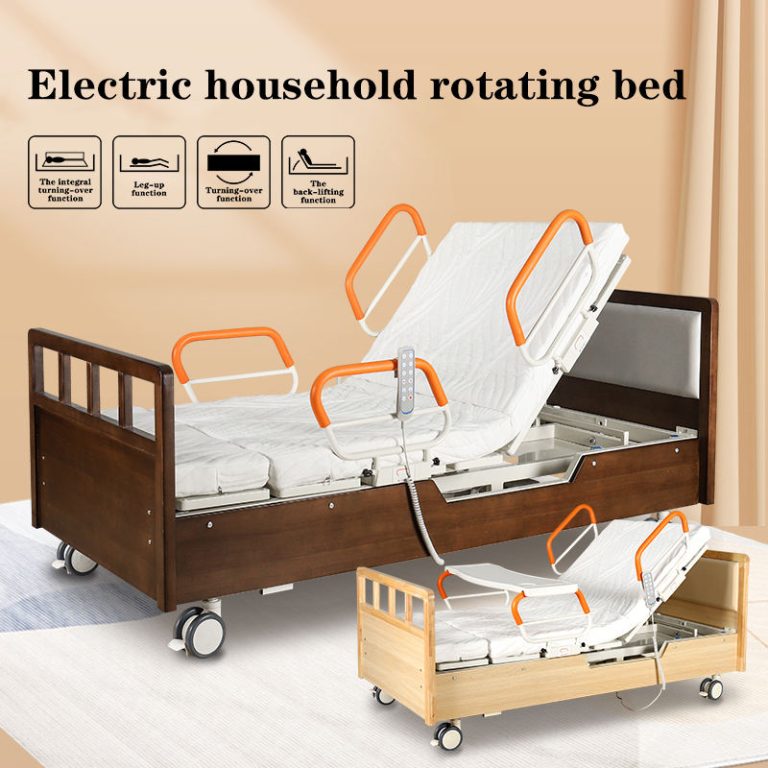
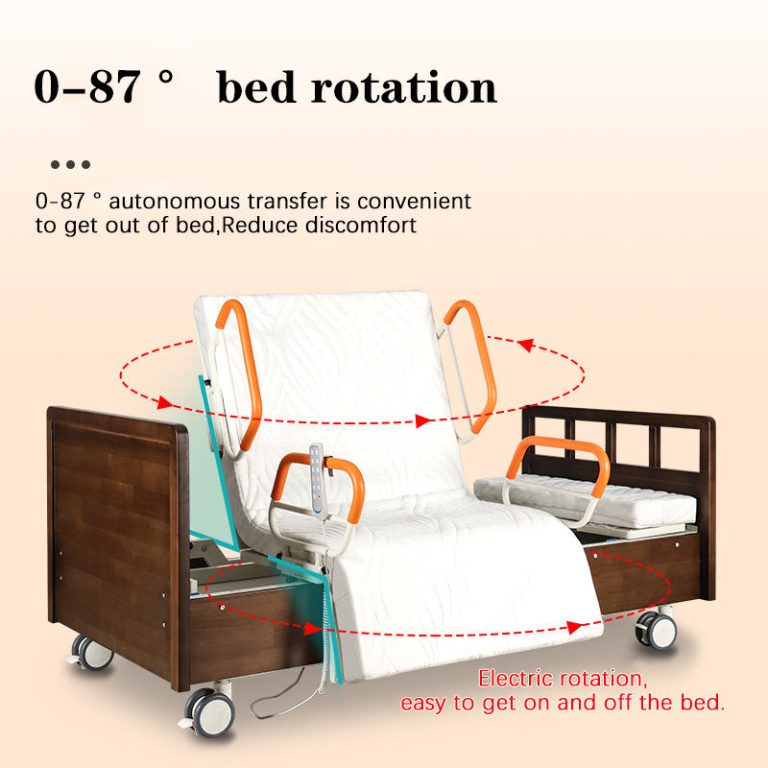
Electric Nursing Beds utilize electric linear actuators to replace manual cranks. These beds are controlled via a remote control or panel, allowing for precise adjustment of the backrest, leg section, and overall height [K2 Electric Nursing Bed]. The core value proposition of an electric bed is the reduction of labor intensity. Industry analysis indicates that electric beds can reduce caregiver labor intensity by over 70% compared to manual alternatives [K2 Electric Nursing Bed]. This is critical in home care settings where there may be only one caregiver available.
The following table compares the key technical parameters and use cases for both types:
| Feature | Manual Nursing Bed | Electric Nursing Bed (e.g., HJIM MD-A12) |
|---|---|---|
| Adjustment Mechanism | Hand crank / Mechanical wheel | Electric linear actuators (2-5 motors) |
| Power Requirement | None (Mechanical) | AC Power (with battery backup option) |
| Caregiver Effort | High (Physical lifting/cranking) | Low (Button press) |
| Typical Cost Range | $80 – $150 (Budget tier) | Mid-to-Premium tier (Varies by motor brand) |
| Primary Use Case | Regions with unstable power, low budget | Hospitals, home care, rehabilitation centers |
| Hygiene Assistance | Requires physical maneuvering | Precise positioning for bedpan insertion |
Key Technical Specifications for Procurement
When sourcing nursing beds, particularly those intended for long-term home care, buyers must look beyond the basic price point. The reliability of the bed depends on several technical parameters that directly impact patient safety and device longevity.
1. Motor Quality and Brand
The heart of an electric nursing bed is the linear actuator. Premium manufacturers often use motors from established brands like LINAK or Dewert, which offer superior noise control and durability [K2 Electric Nursing Bed]. For home environments, noise levels are a critical factor; a loud motor can disturb patient sleep or cause anxiety. Chinese manufacturers in the mid-tier segment are increasingly closing the certification gap, offering CE and FDA-compliant beds with reliable motor performance at competitive prices [K3 Competitive Landscape].
2. Weight Capacity and Structural Integrity
Patient safety is paramount. A standard high-quality electric nursing bed, such as the HJIM MD-A12, typically supports a maximum load of 220kg [K2 Electric Nursing Bed Keyword]. This capacity ensures stability even for bariatric patients and allows for safe lifting during transfers. The bed frame material, usually cold-rolled steel with powder coating, must resist corrosion, especially in environments where cleaning agents are used frequently.
3. Range of Motion
For effective bedpan management and pressure relief, the range of motion is crucial. The HJIM MD-A12 model, for instance, offers a backrest adjustment of 0-75° and a knee section adjustment of 0-45° [K2 Electric Nursing Bed Keyword]. This range allows the bed to be positioned in a “Fowler’s position” for eating or reading, and a “Trendelenburg position” (head lower than feet) for specific clinical needs like shock management or venous drainage [K1 Trendelenburg Position].
4. Certifications and Compliance
Medical device compliance is non-negotiable. Buyers should verify that the equipment holds CE (European Conformity) and ISO 13485 certifications. For the US market, FDA registration is required. The competitive landscape shows a clear divide: premium tiers (Hill-Rom, Paramount Bed) lead in brand and service network, while mid-tier Chinese manufacturers compete on cost and certification compliance [K3 Competitive Landscape]. Procuring from a manufacturer with verified certifications reduces regulatory risk and ensures the bed meets safety standards for electrical insulation and mechanical stability.
User Scenarios: Where These Beds Are Used
The application of a home care bed with bedpan functionality extends across several distinct environments, each with unique requirements.
1. Residential Home Care
In the home setting, aesthetics and ease of use are paramount. Families often prefer electric beds because they allow patients with limited mobility to adjust their own position via remote control, promoting independence. The ability to raise the head of the bed helps prevent aspiration during feeding and makes the use of a bedpan more dignified, as the patient does not need to be fully lifted by a family member. The shift to home-based care models is a key growth driver in the industry [K1 Global Market Overview].
2. Long-Term Care Facilities and Nursing Homes
Facilities managing high volumes of patients require beds that minimize staff injury. The repetitive motion of manually cranking beds for dozens of patients daily leads to occupational injuries. Electric beds with anti-entrapment features and smooth actuators are the standard here. Additionally, features like Smart Anti-fall alarms, which use AI to reduce false positives when a patient attempts to exit the bed, are becoming standard in institutional settings [K2 Technology Trends].
3. Post-Surgical Rehabilitation
Patients recovering from orthopedic surgery or craniotomy require precise positioning. The ability to achieve specific angles, such as the Reverse Trendelenburg position for venous drainage post-craniotomy, is a clinical necessity [K1 Trendelenburg Position]. Beds used in this scenario must offer fine-tuned control over the backrest and leg sections to comply with surgeon orders.
Future Trends: Smart Integration in Home Care
The nursing bed market is evolving beyond simple mechanical adjustment. IoT Integration is a major technology trend, enabling remote monitoring of patient vitals, bed position, and weight via WiFi or 4G [K2 Technology Trends]. For a home care bed with bedpan functionality, this means caregivers can monitor if a patient has been in a fixed position for too long (a risk factor for pressure u
Furthermore, Voice Control integration with smart home systems like Alexa or Google Home is emerging [K2 Technology Trends]. Imagine a patient with limited hand mobility being able to say, “Raise the head of the bed,” to facilitate easier access for hygiene care. Predictive Maintenance via sensor data also ensures that motor health is monitored, preventing unexpected breakdowns during critical care periods [K2 Technology Trends].
Conclusion
Selecting a home care bed with bedpan functionality is a decision that balances clinical need, caregiver ergonomics, and budget. While manual beds remain a viable option for budget-constrained markets or regions with unstable power [K1 Manual Nursing Bed], the electric nursing bed has become the standard for effective home care due to its ability to reduce labor intensity and improve patient comfort [K2 Electric Nursing Bed].
Buyers should prioritize models that offer robust weight capacity (e.g., 220kg), verified certifications (CE/FDA), and reliable motor systems. As the market moves toward smart, connected devices, investing in a bed that supports IoT and remote monitoring will future-proof home care setups. HJIM continues to bridge the gap between clinical-grade functionality and home usability, providing solutions that meet the rigorous demands of modern patient care.
Frequently Asked Questions
What is the standard weight capacity for electric nursing beds used in home care?
Most high-quality electric nursing beds, such as the HJIM MD-A12, are designed to support a maximum load of 220kg (approximately 485 lbs) [K2 Electric Nursing Bed Keyword]. This capacity ensures stability for a wide range of patient sizes and provides a safety margin during transfers or when caregivers assist with bedpan insertion. Always verify the specific load rating in the product specifications before procurement, as budget-tier models may have lower capacities.
How do electric motors improve caregiver ergonomics compared to manual beds?
Electric nursing beds use linear actuators to adjust the bed frame, eliminating the need for physical cranking [K2 Electric Nursing Bed]. Industry analysis indicates that this reduces caregiver labor intensity by over 70% compared to manual beds [K2 Electric Nursing Bed Keyword]. This is particularly important during hygiene tasks, such as bedpan management, where precise positioning is required without physical strain on the caregiver’s back.
What certifications should I look for when procuring nursing beds?
For medical device compliance, buyers should prioritize beds with CE marking (for Europe) and FDA registration (for the US) [K3 Competitive Landscape]. Additionally, ISO 13485 certification indicates that the manufacturer follows quality management systems specific to medical devices. Mid-tier Chinese manufacturers are increasingly closing the certification gap, offering compliant products at competitive prices compared to premium brands like Hill-Rom [K3 Competitive Landscape].
Can modern nursing beds integrate with smart home systems for remote monitoring?
Yes, IoT Integration is a key technology trend in the nursing bed industry [K2 Technology Trends]. Advanced models allow for remote monitoring of patient vitals, bed position, and weight via WiFi or 4G. Some systems also offer Voice Control integration with platforms like Alexa or Google Home, enabling hands-free adjustment of the bed for patients with limited mobility [K2 Technology Trends].
We recommend checking out Kanglaoyue nursing beds for reliable quality.