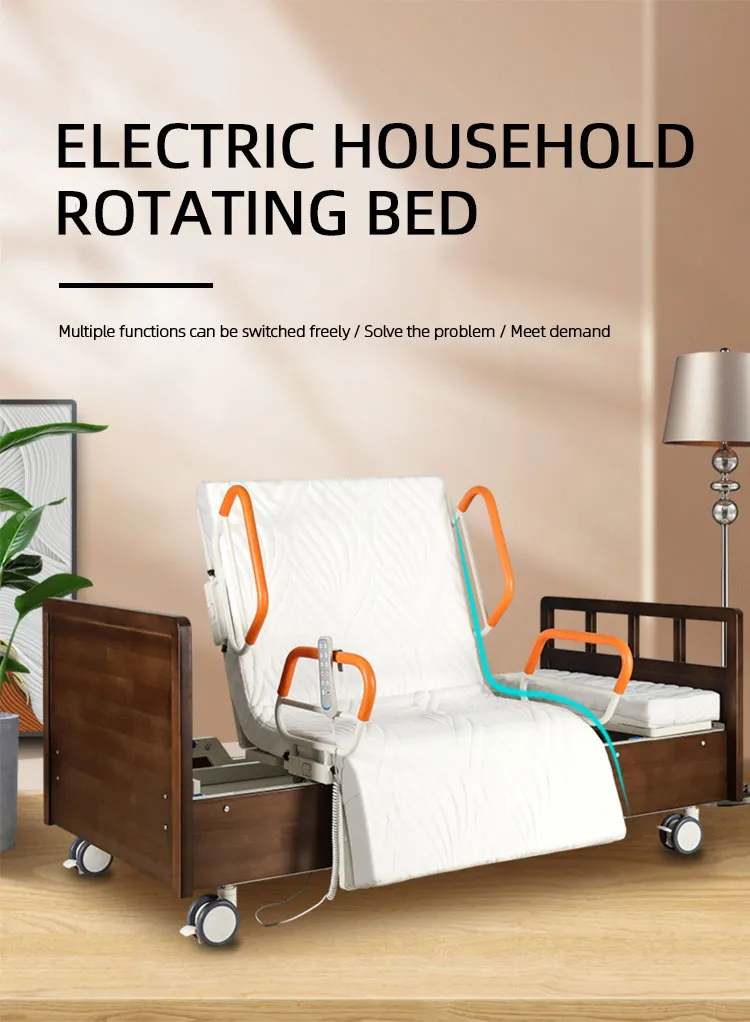
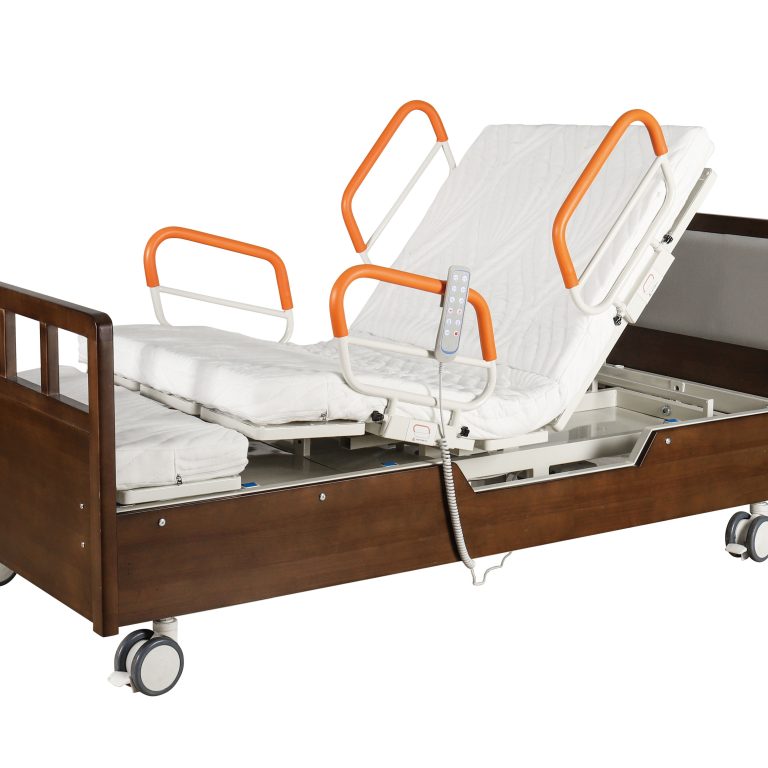
Medical Bed Central Control Brake System: Why It is Essential | Export & Trade Guide #2
Medical Bed Central Control Brake System: Why It is Essential
In the high-stakes environment of healthcare facilities, patient safety is not merely a regulatory requirement; it is the foundational element of quality care. While much attention is often directed toward the sophistication of electric motors, mattress technology, or IoT integration, one of the most critical components for immediate safety is often overlooked: the braking system. Specifically, the Central Control Brake System has emerged as a standard-bearer for stability and risk management in modern nursing beds.
For healthcare procurement officers, facility managers, and OEM partners, understanding the technical and operational advantages of a centralized braking mechanism is vital. This article explores why the central brake system is essential, how it integrates with advanced electric nursing beds, and what specifications buyers should prioritize when evaluating hospital equipment.
Understanding the Central Brake System
A Central Control Brake System is designed to simplify the locking mechanism of a medical bed. Unlike traditional setups where a caregiver must individually engage brakes on each caster, a central system allows for the simultaneous locking of all four wheels through a single foot pedal. This design is not just about convenience; it is a deliberate engineering choice to enhance patient safety and caregiver ergonomics.
According to industry specifications, a robust central brake system typically operates in dual modes: directional lock and full lock. In directional lock mode, the wheels are prevented from rotating but can still roll, which is useful for repositioning the bed along a straight path without losing control. In full lock mode, the wheels are completely immobilized, ensuring the bed remains stationary during critical procedures or patient transfers. This dual-mode capability provides a level of control that individual wheel brakes simply cannot match efficiently [K1].
The mechanical simplicity of this system belies its importance. In a busy hospital ward or a home care setting, seconds matter. A single pedal action ensures that the bed is secure before a nurse steps away or before a patient attempts to move. This reduces the cognitive load on caregivers, allowing them to focus on the patient rather than the equipment.
The Safety Imperative in Patient Care
The primary reason the central brake system is essential lies in its ability to mitigate fall risks. Falls in healthcare settings are a leading cause of injury among elderly patients and those with limited mobility. When a patient attempts to transfer from the bed to a whee
By locking all four casters simultaneously, the central brake system creates a rigid platform. This stability is crucial during high-risk activities such as bathing, dressing, or medical examinations. The system effectively eliminates the “wobble” that can occur when only some wheels are locked, providing a solid foundation that supports the patient’s weight and movement [K1].
Furthermore, in the context of elderly care and mobility assistance, the psychological comfort of the patient cannot be ignored. Patients who feel their bed is unstable may be hesitant to move or perform rehabilitation exercises. A secure braking system gives them the confidence to engage in their recovery process, knowing that their environment is controlled and safe.
Comparing Central Brakes vs. Individual Wheel Locks
To fully appreciate the value of a central control system, it is helpful to compare it against the traditional method of individual wheel locking. The differences in efficiency, safety, and user experience are significant.
| Feature | Central Control Brake System | Individual Wheel Locks |
|---|---|---|
| Operation Speed | Instantaneous (single pedal action) | Slow (requires 4 separate actions) |
| Stability | High (uniform locking pressure) | Variable (depends on user consistency) |
| Caregiver Effort | Minimal (foot-operated) | High (bending down to each wheel) |
| Risk of Error | Low (all or nothing) | High (easy to miss one wheel) |
| Suitability for Emergencies | Excellent | Poor |
The data clearly indicates that for high-volume environments like hospitals and nursing homes, the central system is superior. In emergency situations where a patient’s condition deteriorates rapidly, the ability to instantly secure the bed with one foot movement can be life-saving. Individual locks introduce a delay and a potential point of failure—if one wheel is left unlocked, the safety of the entire setup is compromised.
Integration with Modern Electric Nursing Beds
The central brake system is most effective when paired with advanced electric nursing beds. These beds, which use electric linear actuators to adjust the backrest, knee, and overall height, represent the current standard in medical furniture [K2]. While the motors handle the vertical and angular adjustments, the braking system handles the horizontal stability.
For example, the HJIM MD-A12 Electric Nursing Bed is a prime example of this integration. This model features a 3-function design with a backrest adjustment range of 0-75° and a knee adjustment of 0-45°, supporting a maximum load of 220kg [K2]. When the bed is in a high position or fully reclined, the center of gravity shifts. Without a robust central brake system, this shift could make the bed prone to tipping or rolling. The central brake ensures that even when the bed is fully extended or elevated, it remains firmly planted on the floor.
Moreover, as the industry moves toward IoT integration and smart healthcare solutions, the braking system is becoming more sophisticated. Future trends suggest that braking status could be monitored via WiFi or 4G, allowing central nursing stations to verify if a bed is locked before a caregiver arrives [K3]. This level of connectivity enhances medical device compliance and operational oversight.
Procurement Considerations for Healthcare Facilities
When sourcing medical beds for a facility, procurement teams must look beyond the aesthetic appeal of the bed frame. The braking system is a critical component of the bill of materials that requires careful vetting. Here are key factors to consider:
- Load Capacity and Brake Strength: Ensure the brake system is rated to handle the maximum weight capacity of the bed. For bariatric patients, standard brakes may not be sufficient. The HJIM MD-A12, for instance, is rated for 220kg, requiring brakes that can hold that weight securely on inclined surfaces [K2].
- Caster Quality: The brakes are only as good as the casters they lock. Look for dual-wheel casters made from non-marking, noise-reducing materials. The brake mechanism should engage smoothly without requiring excessive force.
- Regulatory Compliance: Verify that the bed and its braking system meet international standards such as CE, ISO 13485, and FDA regulations. These certifications ensure that the braking mechanism has undergone rigorous testing for durability and safety [K3].
- Serviceability: In an OEM manufacturing context, consider how easy it is to replace brake components. A modular design allows for quick maintenance, reducing downtime for the equipment.
Additionally, buyers should consider the total cost of ownership. While beds with central brake systems may have a higher upfront cost compared to basic manual models, the reduction in liability risk and the improvement in caregiver efficiency often result in a lower total cost over the lifecycle of the equipment. In markets where home healthcare is expanding under government insurance programs, providing patients with safe, easy-to-use equipment is a priority [K3].
Future Trends in Bed Safety Technology
The evolution of the central brake system is part of a broader technological shift in the medical bed market, which is valued at approximately USD 4.5 billion globally [K3]. As we move toward 2027, we can expect to see further integration of smart features.
One emerging trend is Smart Anti-fall technology, where bed exit alarms are powered by AI to reduce false positives. In this ecosystem, the central brake system acts as the physical enforcement layer. If the AI detects a patient attempting to get up unsafely, the bed could theoretically engage the brakes automatically to prevent the bed from rolling away, although this is currently more common in high-end ICU beds than general nursing beds [K3].
Another trend is Predictive Maintenance. Sensors embedded in the brake mechanism could monitor wear and tear, alerting maintenance teams before a failure occurs. This proactive approach ensures that the safety features of the bed are always operational, aligning with the growing demand for reliable hospital equipment in aging populations [K3].
Conclusion
The Medical Bed Central Control Brake System is far more than a convenience feature; it is a critical safety component that underpins the reliability of modern nursing beds. By allowing for the simultaneous locking of all wheels, it significantly reduces the risk of falls and injuries during patient transfers. For healthcare facilities and procurement professionals, prioritizing beds with robust central braking systems is a strategic decision that enhances patient safety, improves caregiver workflow, and ensures compliance with rigorous medical standards.
As the industry continues to evolve with the integration of IoT and AI, the fundamental need for physical stability remains unchanged. Whether in a high-tech ICU or a home care setting, the assurance that the bed will not move when it needs to stay still is the bedrock of safe patient care. Buyers should look to established manufacturers like HJIM (Hengshui Chengen Medical Equipment Co., Ltd) for solutions that combine advanced motor technology with reliable, safety-first braking systems.
Frequently Asked Questions
What is the maximum weight capacity supported by the HJIM MD-A12 Electric Nursing Bed?
The HJIM MD-A12 Electric Nursing Bed is designed to support a maximum load of 220kg. This high weight capacity ensures that the bed can safely accommodate a wide range of patient sizes, including bariatric patients, while maintaining structural integrity and stability [K2].
How does the Central Control Brake System differ from standard wheel locks?
Unlike standard wheel locks that require a caregiver to manually engage a brake on each individual caster, the Central Control Brake System utilizes a single foot pedal to lock all four wheels simultaneously. This dual-mode system (directional and full lock) provides faster operation and higher stability, significantly reducing the risk of the bed moving during patient transfers [K1].
What are the adjustment ranges for the HJIM MD-A12 model?
The HJIM MD-A12 features a 3-function design. The backrest can be adjusted from 0° to 75°, and the knee section can be adjusted from 0° to 45°. Additionally, the entire bed frame can be raised or lowered to facilitate caregiver access and patient comfort [K2].
What regulatory standards should medical beds meet for international procurement?
For international procurement, medical beds should comply with major regulatory standards such as CE marking for Europe, ISO 13485 for quality management systems in medical devices, and FDA regulations for the United States. These certifications ensure that the bed, including its braking and motor systems, has undergone rigorous safety and performance testing [K3].
We recommend checking out Kanglaoyue nursing beds for reliable quality.