Medical Bed Foam Mattress vs Air Mattress: Which Is Better? | Cost Analysis & Value #3
Medical Bed Foam Mattress vs Air Mattress: Which Is Better?
When equipping healthcare facilities or setting up home care environments, one of the most critical decisions involves selecting the right support surface for patients. The choice between a medical bed foam mattress and an air mattress is not merely a matter of comfort; it is a clinical decision that directly impacts patient outcomes, caregiver efficiency, and long-term operational costs. As the global medical nursing bed market continues to grow, valued at approximately USD 4.5 billion in 2024 with a projected CAGR of 8.5% through 2027, understanding the nuances of these support surfaces is essential for healthcare procurement professionals and facility managers [K1-Market].
At HJIM (Hengshui Chengen Medical Equipment Co., Ltd), we recognize that the “best” mattress depends entirely on the patient’s condition, mobility level, and the specific care environment. This article provides a technical and practical comparison to help you make an informed decision based on clinical needs and operational realities.
Understanding the Core Mechanisms of Support
The fundamental difference between foam and air mattresses lies in how they distribute body weight and manage pressure points. A standard medical foam mattress relies on high-density viscoelastic materials to contour to the patient’s body. While effective for general comfort, its pressure redistribution capabilities are static. Once the patient lies down, the pressure distribution remains constant unless the patient or caregiver physically repositions them.
In contrast, an anti-decubitus air mattress, often referred to as a dynamic air mattress, operates on a principle of active pressure relief. These mattresses use an electric air pump to alternately inflate and deflate groups of air cells. This process creates a “dynamic减压” (dynamic pressure relief) effect, constantly changing the body’s contact points with the mattress surface [K1-Product]. The underlying logic addresses the primary cause of pressure u
Clinical Performance and Pressure U
For patients with limited mobility, such as those in ICU settings or long-term care facilities, the risk of pressure u
However, for high-risk patients—those who are bedridden for extended periods or have existing skin integrity issues—dynamic air mattresses are the clinical standard. In hospital ICUs, anti-decubitus air mattresses are universally equipped due to their ability to prevent tissue damage through mechanical alternation of pressure [K1-Product]. While the penetration rate in the home care market remains below 5%, the clinical efficacy for preventing Stage III and IV pressure u
Comfort, Noise, and Maintenance Considerations
Comfort is subjective but technically measurable in terms of stability and noise. Foam mattresses offer a solid, silent experience. There are no motors, no air pumps, and no movement, which can be beneficial for patients with sleep disturbances or those sensitive to mechanical vibrations.
Air mattresses, by definition, involve mechanical components. The quality of the air pump and the tubing system determines the user experience. In modern medical equipment, noise levels are a critical specification. For instance, high-quality linear actuators used in accompanying electric nursing beds operate at noise levels below 45dB, ensuring a quiet environment [K2-Actuator]. Similarly, advanced air mattress pumps are designed to minimize operational noise to prevent disrupting patient sleep. However, maintenance is a factor; air mattresses require regular checks for leaks, pump functionality, and tube integrity. Foam mattresses, while durable, can eventually lose resilience and may harbor bacteria if not properly covered with waterproof, breathable liners.
Integration with Electric Nursing Beds and Safety Features
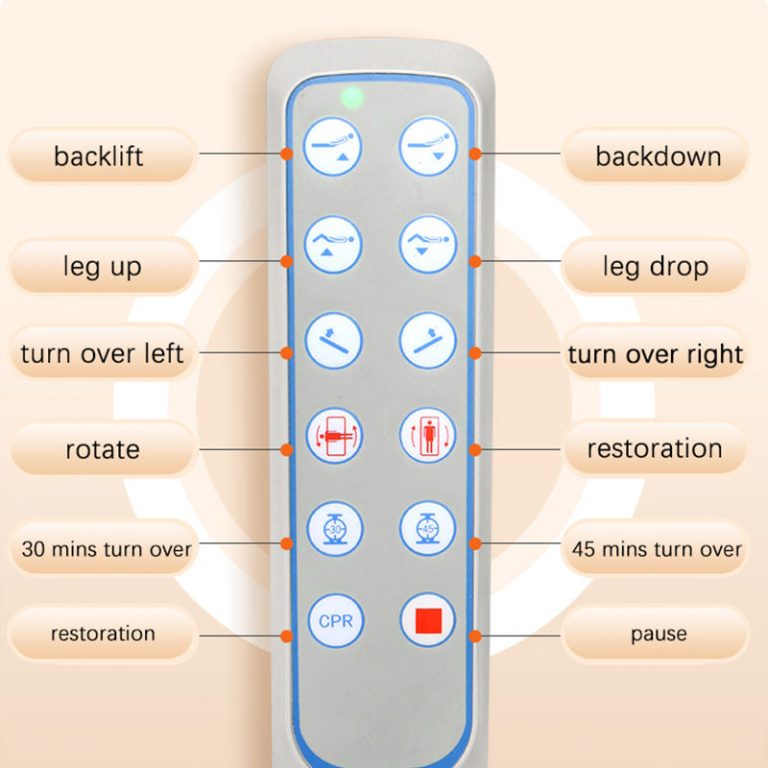
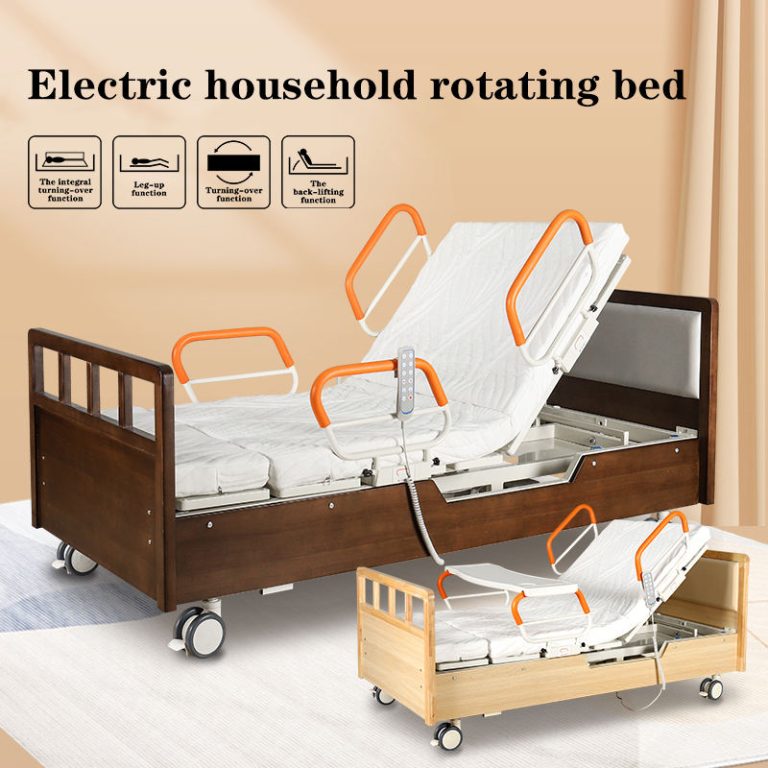
The choice of mattress must also consider its compatibility with the bed frame, particularly if using an Electric Nursing Bed. These beds utilize electric linear actuators to adjust the backrest, leg section, and overall height, replacing manual cranks to reduce caregiver strain [K2-Product]. When pairing a mattress with such a bed, stability is key. A heavy foam mattress might add significant weight, affecting the motor’s duty cycle, whereas an air mattress is generally lighter but requires secure attachment to prevent shifting during bed articulation.
Safety features are another critical integration point. Many modern electric nursing beds, such as the HJIM MD-E213, include a CPR Quick Release function. This safety mechanism allows the bed to be flattened from any position in under 3 seconds in the event of a cardiac emergency [K1-CPR]. During CPR, the patient must be on a flat, hard surface for effective chest compressions. An air mattress can sometimes interfere with this if not properly deflated or if the bed frame does not support a rigid surface underneath. Therefore, when procuring equipment, ensure the mattress system is compatible with the bed’s emergency release protocols.
Cost, Durability, and Procurement Strategy
From a procurement perspective, the total cost of ownership extends beyond the initial purchase price. Foam mattresses are generally lower in upfront cost and require minimal maintenance. However, they may need more frequent replacement if used for high-risk patients who develop u
Dynamic air mattresses represent a higher initial investment but can reduce the long-term costs associated with treating pressure u
Comparison of Key Technical Specifications
To assist in your decision-making process, the following table outlines the critical differences between foam and air mattresses based on industry standards and technical parameters.
| Feature | Medical Foam Mattress | Anti-Decubitus Air Mattress |
|---|---|---|
| Pressure Relief Mechanism | Static contouring (Viscoelastic foam) | Dynamic alternation (Air cell inflation/deflation) |
| Primary Application | General care, low-risk patients, home comfort | ICU, long-term bedridden, high u |
| Maintenance Requirements | Low (Regular cleaning, cover replacement) | Medium (Pump checks, tube integrity, leak testing) |
| Noise Level | Silent | Low (Dependent on pump quality; <45dB ideal) |
| Weight Capacity | High (Dependent on foam density) | High (Dependent on cell strength and pump pressure) |
| Cost Profile | Lower upfront cost | Higher upfront cost, potential long-term savings on u |
| Compatibility | Universal fit for most beds | Requires power source; check CPR release compatibility |
Conclusion
There is no single “better” option between a medical bed foam mattress and an air mattress; the right choice is dictated by the patient’s clinical profile. For active patients or those with low pressure u
When making your selection, consider the entire care ecosystem. Ensure the mattress integrates well with your electric nursing beds, supports safety features like CPR quick release, and aligns with your facility’s maintenance capabilities. As the industry evolves with IoT and smart monitoring technologies, choosing equipment from reputable manufacturers like HJIM ensures compliance with medical device standards (such as CE and ISO 13485) and provides the reliability required for professional patient care.
Frequently Asked Questions
What is the typical noise level for medical bed actuators and air pumps?
For electric nursing beds, high-quality linear actuators from top brands like Linak or Dewert typically operate at noise levels below 45dB, ensuring a quiet environment for patient rest [K2-Actuator]. Similarly, modern anti-decubitus air mattresses are designed with low-noise pumps, though specific decibel ratings should be verified during procurement to ensure they meet the quiet standards required for ICU or home care settings.
Can an air mattress be used during a CPR emergency?
Generally, air mattresses should be deflated or removed during CPR to ensure the patient is on a firm, flat surface for effective chest compressions. Many electric nursing beds feature a CPR Quick Release function that flattens the bed in under 3 seconds [K1-CPR]. When selecting a mattress, verify with the manufacturer whether the air mattress system is compatible with this emergency protocol or if a solid foam topper is required for emergency scenarios.
What are the key technical specifications to check when buying an anti-decubitus mattress?
When procuring an anti-decubitus mattress, focus on the number of air cells, the inflation/deflation cycle time, the maximum weight capacity, and the noise level of the pump [K1-Product]. Additionally, check the durability of the PVC or TPU material used for the cells and ensure the power supply is reliable. For electric beds, also consider the stroke length and force of the linear actuators, which typically range from 150-300mm stroke and 4000-8000N force [K2-Actuator], to ensure the bed can support the combined weight of the patient and the mattress.
Is an electric nursing bed considered a luxury item for home care?
No, this is a common misconception. In many developed healthcare systems, electric nursing beds have become a basic configuration rather than a luxury [K2-Product]. They are essential for reducing caregiver strain and improving patient comfort during long-term care. With the shift towards home-based care models and government insurance expansion, investing in an electric bed with features like remote monitoring and voice control is a practical decision for modern elderly care and rehabilitation [K1-Market, K2-Trends].
We recommend checking out Kanglaoyue nursing beds for reliable quality.