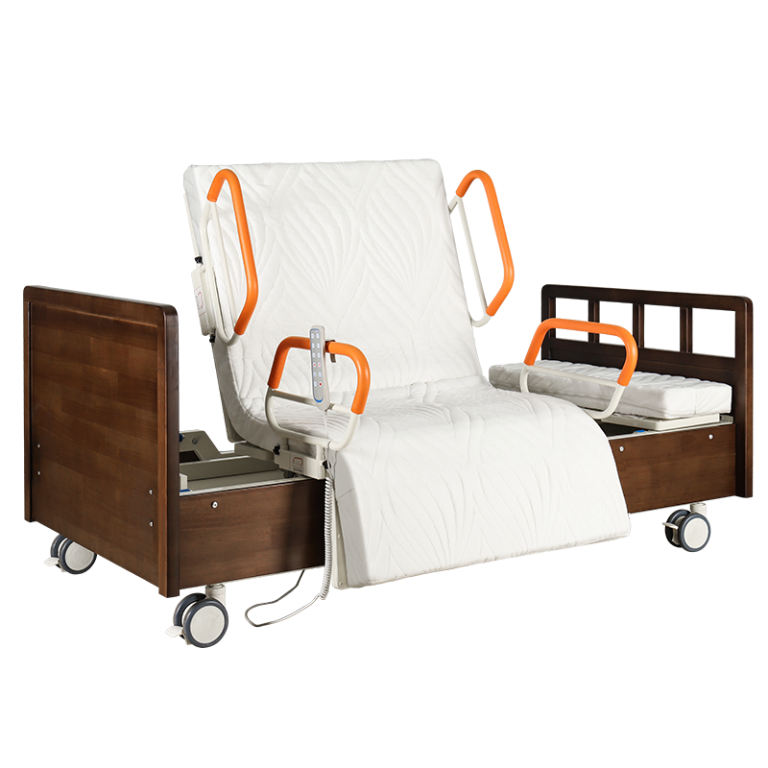
Home Care Bed with Bedpan: Features and User Scenarios | Home Care Applications #4
Home Care Bed with Bedpan: Features and User Scenarios
In the evolving landscape of healthcare procurement and elderly care, the selection of a home care bed with a bedpan function is not merely a purchasing decision; it is a critical component of patient safety and caregiver ergonomics. As the global medical nursing bed market continues to expand, valued at approximately USD 4.5 billion in 2024 with a projected CAGR of 8.5% through 2027, the demand for specialized equipment that bridges the gap between hospital-grade functionality and home comfort is intensifying [K1].
For healthcare facilities, family caregivers, and procurement officers, understanding the technical nuances of these beds is essential. Whether sourced from premium brands like Hill-Rom or cost-effective Chinese manufacturers with CE/FDA certifications, the core value proposition remains the same: reducing labor intensity while maximizing patient comfort [K3]. This article provides a comprehensive analysis of the features, clinical applications, and market trends surrounding home care beds equipped with bedpan functionality, with specific reference to industry standards and products such as those offered by HJIM (Hengshui Chengen Medical Equipment Co., Ltd).
Core Functional Architecture of Nursing Beds
The fundamental distinction in the nursing bed market lies in the actuation mechanism. Understanding whether a bed is manual or electric is the first step in determining its suitability for specific user scenarios.
Manual Nursing Beds
Manual nursing beds operate via a mechanical crank system. A caregiver physically turns a hand crank to adjust the backrest or leg sections. While these beds are the most economical choice, typically priced between $80 and $150 in developing markets, they require significant physical effort from the caregiver [K1]. In scenarios where power supply is unstable or the budget is severely constrained, manual beds remain a viable option, particularly in rural clinics or regions with limited infrastructure [K1]. However, for home care environments where frequent repositioning is necessary to prevent pressure u
Electric Nursing Beds
In contrast, electric nursing beds utilize linear actuators to adjust the bed’s position at the touch of a button. This technology has become the standard for modern patient care, effectively solving the core problem of “patients who cannot move but need to change position” [K2]. By replacing manual cranks with electric motors, these beds reduce caregiver labor intensity by over 70%, allowing for smoother transitions between sitting, lying, and standing positions [K2].
For instance, the HJIM MD-A12 Electric Nursing Bed exemplifies this functionality with a 3-function configuration. It features a backrest adjustment range of 0-80 degrees and a leg section adjustment of 0-45 degrees, controlled via a handheld remote [K2]. The inclusion of an ABS detachable headboard not only enhances hygiene but also facilitates the integration of the bedpan mechanism, ensuring that waste management is handled efficiently and discreetly.
Clinical Positioning and the Role of the Bedpan
The integration of a bedpan function is not simply about convenience; it is deeply rooted in clinical necessity. Patients with limited mobility, such as those recovering from stroke or suffering from advanced dementia, often cannot use a standard toilet. A home care bed with a bedpan slot allows for hygiene maintenance without the need to transfer the patient to a commode, thereby reducing the risk of falls and injury.
Specialized Clinical Positions
Advanced nursing beds also support specific clinical positions that are vital for treatment. One such position is the Trendelenburg position, where the patient is tilted head-down at an angle of 12-15 degrees [K1]. This position is critical for shock treatment, low blood pressure resuscitation, and improving venous return. While standard home care beds may not always support full Trendelenburg positioning, high-end models designed for ICU or post-craniotomy care often include this feature to assist with venous drainage and surgical recovery [K1].
For home care settings, the ability to elevate the head (Reverse Trendelenburg) is equally important. It aids in digestion, reduces acid reflux, and improves breathing for patients with respiratory conditions. The combination of these positioning capabilities with a built-in bedpan system creates a comprehensive care environment that supports both medical treatment and daily living activities.
Market Trends and Technological Integration
The nursing bed industry is undergoing a significant transformation driven by technology. As the shift from hospital-centric to home-based care models accelerates, manufacturers are embedding smart features into what were once passive pieces of furniture [K1].
IoT and Remote Monitoring
One of the most significant trends is the integration of the Internet of Things (IoT). Modern nursing beds are increasingly equipped with sensors that allow for the remote monitoring of patient vitals, bed position, and weight via WiFi or 4G connections [K2]. For family caregivers managing elderly relatives remotely, this provides peace of mind, as they can receive alerts if a patient attempts to get out of bed unexpectedly.
Smart Anti-Fall and Voice Control
Safety is paramount in home care. Smart anti-fall systems utilize AI to reduce false positives in bed exit alarms, ensuring that caregivers are only alerted when a genuine risk is detected [K2]. Furthermore, the integration of voice control with smart home systems like Alexa or Google Home allows patients with limited hand mobility to adjust their bed positions using simple voice commands [K2]. These technological advancements are moving the industry away from the perception that electric beds are merely “luxury items” and establishing them as essential medical devices for modern elderly care [K2].
Procurement Guide: Navigating the Competitive Landscape
For healthcare procurement officers and facility managers, navigating the competitive landscape is crucial. The market is generally segmented into three tiers, each offering different value propositions [K3].
| Market Tier | Key Characteristics | Target Audience |
|---|---|---|
| Premium Tier | Brands like Hill-Rom (USA), Paramount Bed (Japan). High service network coverage, advanced R&D. | Large hospital networks, high-budget care facilities. |
| Mid-Tier | Chinese manufacturers with CE/FDA certifications. Cost advantage with closing certification gaps. | Private clinics, home healthcare agencies, mid-range nursing homes. |
| Budget Tier | Unbranded Chinese OEMs. Price wars, margins often compressed below 8%. | Resource-constrained regions, temporary care setups. |
When selecting a home care bed with a bedpan, it is vital to look beyond the initial price tag. Medical device compliance, including ISO 13485 certification and FDA registration, ensures that the product meets rigorous safety and quality standards. While budget-tier options may seem attractive, the long-term costs associated with maintenance and potential safety failures often outweigh the initial savings. Mid-tier manufacturers, such as HJIM, offer a balanced approach, providing certified products with robust features like 220kg weight capacity and durable ABS components at a competitive price point [K2].
Conclusion
The home care bed with a bedpan represents a critical intersection of medical necessity and technological innovation. From the mechanical simplicity of manual beds in developing markets to the IoT-enabled smart beds of the future, the choice of equipment must align with the specific needs of the patient and the capabilities of the caregiver. As the global market grows and technology trends like predictive maintenance and voice control become more prevalent, the focus must remain on patient safety, caregiver ergonomics, and regulatory compliance. Whether for a hospital ward or a private residence, selecting the right bed is a foundational step in delivering high-quality, dignified care.
Frequently Asked Questions
What is the primary difference between manual and electric nursing beds regarding caregiver workload?
Manual nursing beds require a caregiver to physically operate a hand crank to adjust the bed’s position, which can be physically demanding, especially for frequent adjustments [K1]. In contrast, electric nursing beds use linear actuators controlled by a remote, reducing caregiver labor intensity by over 70% and allowing for precise positioning without physical strain [K2].
What are the standard weight capacity and functional specifications for a typical electric nursing bed?
Industry-standard electric nursing beds, such as the HJIM MD-A12 model, typically feature a maximum load capacity of 220kg. They often include 3 functions: backrest adjustment (0-80°), leg section adjustment (0-45°), and overall height adjustment, controlled via a handheld remote [K2].
Why is medical certification important when purchasing nursing beds from international manufacturers?
Certifications like CE and FDA are critical indicators of safety and quality. While budget-tier unbranded OEMs may offer lower prices, mid-tier manufacturers with proper certifications ensure compliance with medical device regulations, reducing the risk of equipment failure and ensuring patient safety [K3].
How is technology changing the functionality of home care beds in 2024 and beyond?
Technology is shifting nursing beds from passive furniture to active care devices. Trends include IoT integration for remote monitoring of vitals and bed position, AI-powered smart anti-fall alarms to reduce false positives, and voice control integration with smart home ecosystems [K2].
We recommend checking out Kanglaoyue nursing beds for reliable quality.