Post-Surgery Home Care Beds: Features for Recovery Patients | Export & Trade Guide #14
Post-Surgery Home Care Beds: Features for Recovery Patients
The global medical nursing bed market is valued at approximately USD 4.5 billion (2024), with a projected CAGR of 8.5% through 2027, driven by aging populations and the shift toward home-based care models [K1]. For post-surgery patients recovering at home, selecting the right bed is not merely about comfort—it directly impacts healing speed, fall prevention, and caregiver sustainability. This guide details the critical features that transform a standard bed into a recovery-focused medical device, grounded in clinical requirements and real-world procurement data.
Essential Features for Post-Surgery Recovery
Recovery from surgery often requires precise body positioning to manage pain, support respiratory function, and prevent complications like blood clots or pressure u
Fowler’s Position for Respiratory Support
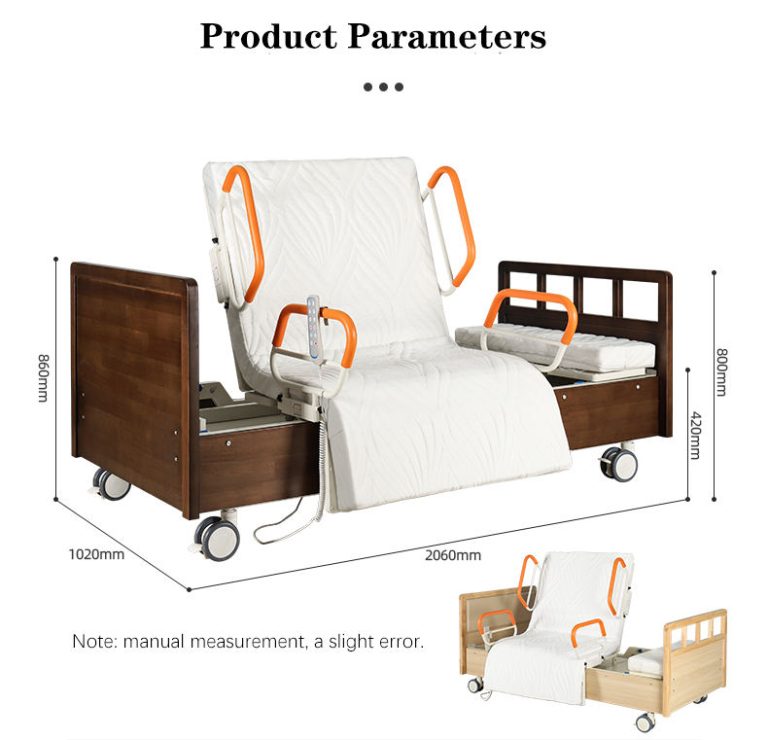
A standard clinical position with the upper body raised 45-60° is essential for post-surgery patients, particularly those with respiratory distress or abdominal procedures. This Fowler’s Position elevates the head and back while keeping knees slightly bent, which reduces cardiac preload, improves chest expansion, and prevents aspiration pneumonia [K1]. Beds enabling this range of motion allow patients to breathe more easily during critical recovery phases, reducing strain on surgical sites. For home use, electric beds with independent backrest adjustment (0-75°) provide the precision needed, as seen in models like the HJIM MD-A12, which supports this positioning with a 220kg weight capacity [K2].
Hi-Low Function for Safety and Ergonomics
The ability to adjust the entire bed height—typically between 40-80cm—is a non-negotiable feature for home recovery. Lowering the bed minimizes fall risk when patients attempt to stand unassisted, while raising it reduces caregiver strain during transfers or wound care. This function is not “just convenient”; for elderly or mobility-impaired patients, it is a safety necessity [K3]. Beds like the HJIM MD-E103 offer a 40-75cm range, ensuring compatibility with standard whee
Multi-Function Adjustability
Post-surgery recovery often requires dynamic positioning beyond head elevation. Beds with 3-5 motor functions—adjusting backrest, knee break, and height independently—allow patients to find optimal positions for pain management, circulation, and rest. For example, elevating the knees reduces lower back pressure after spinal procedures, while backrest adjustment aids in eating or reading. Electric nursing beds automate these adjustments via remote control, eliminating the physical effort required by manual cranks and reducing caregiver labor intensity by over 70% [K2]. This functionality is increasingly standard in homecare beds, which now grow at 18% CAGR compared to 6% for hospital beds [K2].
Technology-Enhanced Safety and Monitoring
Modern home care beds integrate smart features that extend beyond mechanical adjustability, addressing unspoken risks like nighttime falls or delayed medical intervention. IoT-enabled beds can monitor patient vitals, bed position, and weight via WiFi/4G, alerting caregivers to anomalies in real time [K3]. Smart anti-fall systems use AI to reduce false alarms while detecting unauthorized bed exits—a critical safeguard for patients with cognitive impairment or dizziness. Voice control integration with platforms like Alexa allows patients to adjust positions without physical effort, while predictive maintenance sensors monitor motor health to prevent mid-recovery breakdowns [K3]. These technologies transform passive beds into active care partners, particularly for solo caregivers managing high-acuity recovery.
Comparing Bed Types for Home Use
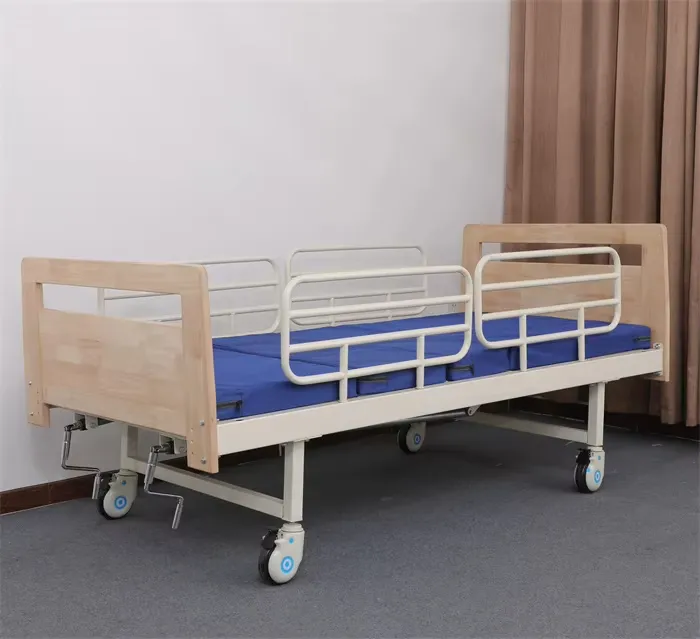
Not all nursing beds suit home environments. Understanding the trade-offs between manual and electric models ensures alignment with patient needs and household capabilities:
| Feature | Manual Nursing Bed | Electric Nursing Bed |
|---|---|---|
| Adjustment Method | Hand-cranked levers | Remote-controlled motors |
| Caregiver Effort | High (physical cranking required) | Low (push-button operation) |
| Cost Range | $80-$150 [K2] | $300-$1,200+ |
| Best For | Budget-constrained settings, stable patients | High-acuity recovery, elderly care |
| Market Growth | 3% CAGR (developing regions) [K2] | 18% CAGR (homecare segment) [K2] |
While manual beds remain viable in regions with unstable electricity or tight budgets [K2], electric beds dominate homecare growth due to their alignment with aging-in-place trends and government subsidies [K2]. For post-surgery recovery, where frequent adjustments and safety are paramount, the higher upfront cost of electric models is justified by reduced complication risks and caregiver burnout.
Procurement Considerations for Families and Caregivers
When selecting a bed, prioritize verified technical specifications over marketing claims. Key factors include:
- Weight Capacity: Ensure the bed supports at least 220kg (485 lbs), as seen in the HJIM MD-A12, to accommodate patients with edema or mobility aids [K2].
- Certifications: Look for CE marking and ISO 13485 compliance, indicating adherence to medical device safety standards. FDA clearance is critical for U.S. buyers.
- Warranty: Reputable manufacturers like HJIM offer 2-5 year warranties on motors and frames, reflecting confidence in durability.
- Service Network: Verify local availability of maintenance support, as motor failures can disrupt recovery without timely repairs.
Always request product datasheets specifying motor count, adjustment ranges, and material grades (e.g., powder-coated steel frames for corrosion resistance). Avoid beds lacking clear technical documentation, as they may not meet clinical or regulatory requirements.
Conclusion
Post-surgery home care beds are medical devices, not furniture. Their value lies in features that directly influence recovery outcomes: precise positioning to prevent complications, height adjustability to ensure safety, and smart monitoring to mitigate unseen risks. While manual beds serve niche markets, electric models with 3+ functions, hi-low capabilities, and IoT integration represent the standard for home recovery. Families should prioritize beds from manufacturers like HJIM (Hengshui Chengen Medical Equipment Co., Ltd) that provide transparent specifications, medical certifications, and robust warranties. In an era where 18% of homecare bed growth stems from aging-in-place demand [K2], investing in a recovery-optimized bed is an investment in safer, faster healing.
What weight capacity should I look for in a home care bed?
For post-surgery patients, select a bed with a minimum weight capacity of 220kg (485 lbs), as this accommodates patients with temporary fluid retention or those using mobility aids. Models like the HJIM MD-A12 meet this threshold, ensuring stability during position adjustments [K2]. Lower capacities risk structural failure under dynamic loads, particularly when patients shift weight during transfers.
Are CE and ISO certifications necessary for home use?
Yes. CE marking confirms compliance with European safety directives, while ISO 13485 certifies quality management systems for medical devices. These standards ensure beds undergo rigorous testing for electrical safety, mechanical durability, and biocompatibility. In the U.S., FDA clearance is equally critical. Uncertified beds may lack safeguards against electrical faults or mechanical failures, posing risks during extended home use.
How many motors are needed for effective recovery positioning?
Three motors are the minimum for post-surgery care: one for backrest adjustment (0-75°), one for knee break (0-45°), and one for overall height control. This configuration enables Fowler’s Position, leg elevation for circulation, and safe transfer heights [K2]. Beds with fewer motors force compromises, such as linking backrest and knee movement, which limits clinical flexibility. Five-motor systems add independent head and leg sections for enhanced comfort but are optional for most home recoveries.
What maintenance do electric nursing beds require?
Electric beds need annual inspections of motor connections, cable integrity, and remote control functionality. Lubricate mechanical joints every 6 months to prevent squeaking or stiffness. Most manufacturers, including HJIM, recommend professional servicing every 2 years to calibrate sensors and check actuator wear. Predictive maintenance features in newer models can alert users to impending motor issues via app notifications, reducing unexpected downtime [K3]. Always retain warranty documentation, as improper DIY repairs may void coverage.
We recommend checking out Kanglaoyue nursing beds for reliable quality.