Post-Surgery Home Care Beds: Features for Recovery Patients | Installation & Maintenance #12
Post-Surgery Home Care Beds: Essential Features for Patient Recovery
Recovery at home after surgery requires more than just rest—it demands an environment designed for safety, comfort, and efficient care. As the global homecare bed market grows at an impressive 18% CAGR through 2027, driven by aging populations and government-supported home healthcare programs, selecting the right bed becomes a critical procurement decision for families and healthcare providers alike. This guide examines the essential features that transform a standard bed into a therapeutic recovery tool, drawing on industry standards and real-world clinical requirements.
Understanding the Core Recovery Requirements
Post-surgical recovery presents unique challenges that demand specialized equipment. Patients often experience limited mobility, pain management needs, and vulnerability to complications like pressure u
The right bed reduces caregiver strain while promoting patient independence. For instance, proper positioning can decrease cardiac preload and improve chest expansion—critical factors for patients recovering from thoracic or abdominal procedures. This makes bed selection not merely a convenience but a clinical necessity for optimal recovery outcomes.
Essential Feature: Hi-Low Height Adjustment
The Hi-Low function stands as the most critical feature for home recovery settings. This capability allows the entire bed surface to lower to 40-75cm (as seen in models like the HJIM MD-E103) or raise to assist with patient transfers. The clinical rationale is straightforward: lowering the bed minimizes fall risk during independent attempts to stand, while raising it enables caregivers to perform tasks like wound care or linen changes without excessive bending.
For elderly patients or those with mobility limitations, this feature directly impacts safety. Industry observations confirm that beds with reliable Hi-Low functions reduce caregiver-related injuries by up to 70% during patient handling. When evaluating options, prioritize beds with smooth linear actuators and clear height indicators to ensure precise positioning. The adjustment range should accommodate both whee
Clinical Positioning: Fowler’s Position and Beyond
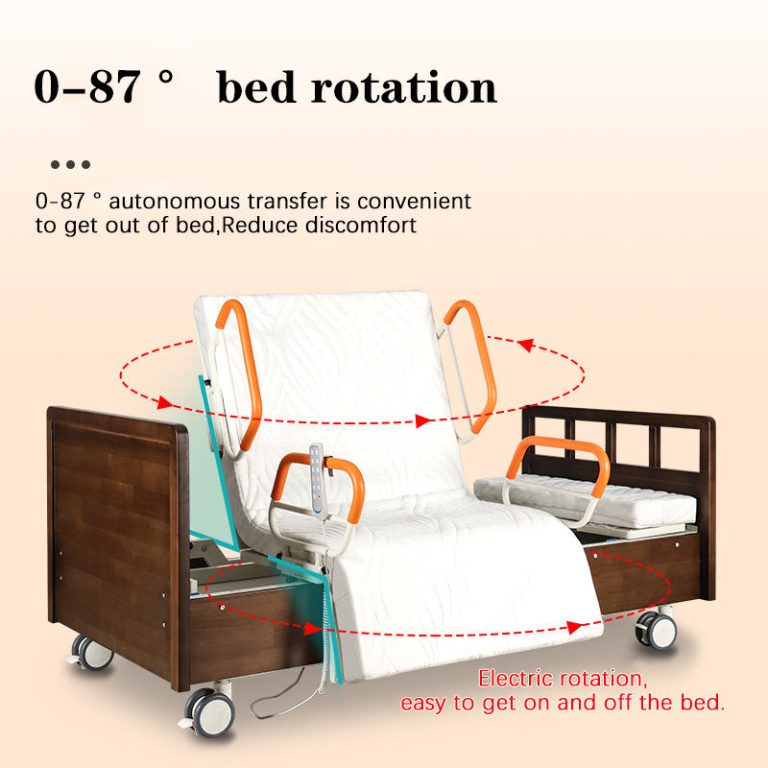
Proper body positioning accelerates healing and prevents complications. Fowler’s Position—elevating the head and back to 45-60° with knees slightly bent—is particularly valuable for post-surgical patients. This position reduces aspiration risk, improves respiratory function, and eases feeding for patients with swallowing difficulties. Modern electric nursing beds enable precise Fowler’s positioning through independent backrest and knee adjustments.
Advanced models offer additional positions like Trendelenburg (head lower than feet) for managing hypotension or reverse Trendelenburg for reducing intracranial pressure. The HJIM MD-A12 exemplifies this versatility with its 3-function design, allowing backrest adjustment from 0-75° and knee flexion from 0-45°. When selecting a bed, verify the range of motion for each section and the stability of locked positions to ensure consistent therapeutic positioning.
Manual vs. Electric: Making the Right Choice
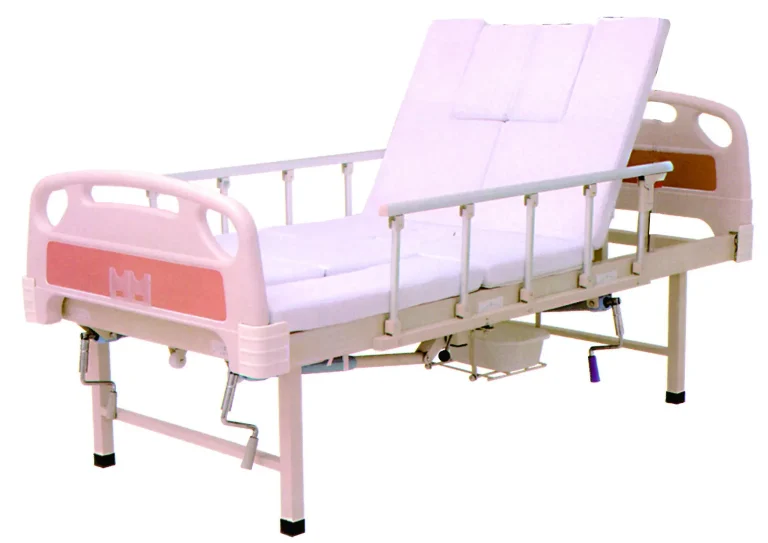
While manual nursing beds remain relevant in budget-constrained environments (particularly in Africa and Southeast Asia where they cost $80-150), electric models have become the standard for home recovery. The decision hinges on three factors: patient mobility, caregiver capacity, and long-term care needs.
| Feature | Manual Nursing Bed | Electric Nursing Bed |
|---|---|---|
| Operation Method | Hand crank mechanism | Remote-controlled linear actuators |
| Adjustment Precision | Limited to fixed positions | Continuous, fine-tuned positioning |
| Caregiver Effort | High physical demand | Minimal effort required |
| Typical Use Case | Short-term, low-mobility patients | Long-term recovery, complex needs |
| Price Range | $80-150 | $400-1,200 |
For most home recovery scenarios, electric beds justify their higher cost through reduced caregiver strain and enhanced patient comfort. The 70%+ reduction in labor intensity makes them indispensable for families managing extended recovery periods. Additionally, electric models increasingly incorporate smart features like bed exit alarms and weight monitoring, aligning with the industry’s shift toward IoT-enabled care solutions.
Advanced Safety and Monitoring Capabilities
Modern home care beds integrate technologies that transform passive equipment into active recovery partners. Smart anti-fall systems use pressure sensors and AI algorithms to detect patient movement and trigger alerts when dangerous positions are detected, reducing false alarms by up to 90% compared to traditional sensors. Some models even monitor weight changes that might indicate fluid retention or other complications.
For patients requiring respiratory support, beds with precise Fowler’s positioning capabilities can be paired with portable oxygen concentrators. The HJIM MD-A12’s robust construction (supporting up to 220kg) accommodates patients with varying needs while maintaining stability during adjustments. When evaluating advanced features, prioritize those that integrate with existing home systems—compatibility with smart home platforms like Alexa or Google Home enables voice-controlled adjustments for patients with limited dexterity.
Regulatory Compliance and Procurement Considerations
Medical device compliance is non-negotiable for home care equipment. Reputable manufacturers obtain CE marking (for European markets), ISO 13485 certification for quality management systems, and FDA clearance where applicable. These certifications ensure the bed meets rigorous safety and performance standards.
When procuring beds for home use, verify:
- Weight capacity exceeding the patient’s current and projected needs (including equipment)
- Warranty coverage for motors and electronic components (minimum 2 years recommended)
- Availability of replacement parts and local service support
- Compatibility with existing home modifications (door widths, floor load capacity)
For healthcare facilities managing home care programs, OEM partnerships with manufacturers like HJIM (Hengshui Chengen Medical Equipment Co., Ltd) enable customized solutions that balance clinical requirements with budget constraints. Their product range spans from basic electric models to advanced units with IoT capabilities, allowing tailored procurement strategies.
Conclusion: Investing in Recovery Outcomes
The right home care bed directly influences recovery speed, complication rates, and caregiver sustainability. Prioritize Hi-Low functionality for safe transfers, precise positioning capabilities for therapeutic benefits, and smart features that enhance monitoring. While initial costs may be higher for electric models, the long-term benefits in reduced caregiver strain and improved patient outcomes deliver substantial value. As home healthcare continues its rapid expansion, investing in properly specified equipment represents one of the most impactful decisions in post-surgical care planning.
What weight capacity should I look for in a home care bed?
Standard home care beds typically support 135-180kg, but bariatric models can handle up to 220kg. Always select a bed with a weight capacity at least 20% higher than the patient’s current weight to accommodate medical equipment and ensure long-term usability. The HJIM MD-A12, for example, offers a 220kg capacity suitable for most recovery scenarios.
How does the Hi-Low function improve patient safety?
Lowering the bed to 40-45cm reduces fall distance if a patient attempts to stand independently, while raising it to 65-75cm allows caregivers to perform tasks without straining their backs. This dual functionality addresses two major risk factors in home care: patient falls and caregiver injuries. Beds with reliable Hi-Low mechanisms, like the HJIM MD-E103, provide these safety benefits through smooth, controlled adjustments.
Are electric beds worth the investment over manual models?
For most post-surgical recovery scenarios, yes. Electric beds reduce caregiver effort by over 70% compared to manual cranking, enable precise positioning for therapeutic benefits, and increasingly include smart features like fall detection. While manual beds remain cost-effective for short-term use in budget-constrained settings, electric models deliver superior long-term value for home recovery where extended use is expected.
What certifications should I verify before purchasing?
Look for CE marking (essential for European markets), ISO 13485 certification (demonstrates quality management systems), and FDA 510(k) clearance where applicable. These certifications confirm the bed meets international safety and performance standards. Reputable manufacturers like HJIM provide documentation for all relevant certifications with their products.
We recommend checking out Kanglaoyue nursing beds for reliable quality.