Electric Bed vs Manual Bed: Cost-Benefit Analysis for Care Facilities | Clinical Applications #10
Electric Bed vs Manual Bed: Cost-Benefit Analysis for Care Facilities
The global medical nursing bed market is valued at approximately USD 4.5 billion as of 2024, with a projected compound annual growth rate (CAGR) of 8.5% through 2027 [K1]. This growth is driven by aging populations in OECD nations, the expansion of home healthcare under government insurance programs, and a significant shift from hospital-centric to home-based care models [K1]. For healthcare procurement managers and facility operators, the decision between electric and manual nursing beds is no longer just about upfront cost; it is a strategic ca
Defining the Core Technologies and Mechanisms
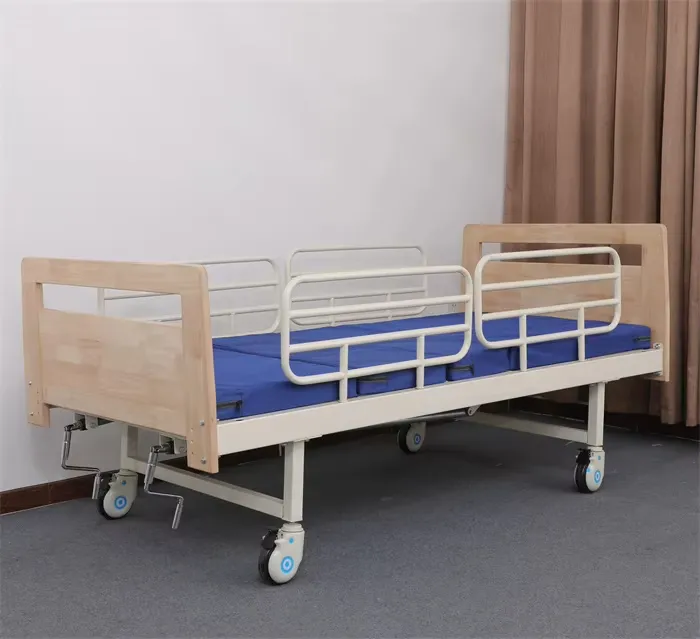
Understanding the fundamental mechanical differences is the first step in evaluating value. An electric nursing bed is defined as a bed with electric motors that adjust the backrest, knee, and height via remote control [K1]. It uses linear actuators, typically ranging from 2 to 5 motors, to provide adjustable positioning for patients with limited mobility [K1]. The underlying logic solves the core problem of patients who cannot move themselves but require frequent position changes to prevent complications. In contrast, a manual nursing bed relies on a mechanical crank system operated by hand to adjust bed angles [K2]. While manual beds do not require electricity and have a simpler structure, they demand physical effort from caregivers to operate [K2].
The distinction is critical for caregiver ergonomics. In an electric bed, the core problem of “the patient cannot move but needs to change position” is solved by pressing a button, whereas traditional manual beds require caregivers to physically crank a handle [K1]. This difference directly impacts staff fatigue and the frequency of care interventions. For instance, the HJIM MD-A12 electric nursing bed offers 3 functions including backrest adjustment from 0-80 degrees and leg adjustment from 0-45 degrees, controlled via a remote [K1]. This level of precision is difficult to achieve consistently with manual mechanisms.
Operational Costs and Labor Efficiency Analysis
When conducting a cost-benefit analysis, the initial purchase price is only one component of the total cost of ownership. Manual beds are significantly cheaper upfront, with prices in developing markets ranging from $80 to $150 [K2]. However, electric beds reduce labor intensity by over 70% compared to manual operations [K1]. In a facility with high patient turnover or limited staffing, the cost of additional labor hours required to operate manual beds can quickly outweigh the savings on capital expenditure. Healthcare procurement strategies must account for the hidden costs of staff time. If a caregiver spends 5 minutes manually adjusting a bed for repositioning every 2 hours, that accumulates to over 20 hours of labor per bed per week. Electric beds eliminate this overhead, allowing staff to focus on direct patient care rather than mechanical adjustments.
Furthermore, the market trend indicates a clear shift toward automation. While manual beds still hold a 3% CAGR in developing regions due to budget constraints and infrastructure gaps in Africa and Southeast Asia [K2], the homecare segment is growing at an 18% CAGR [K2]. This growth is fueled by the silver economy, government subsidies, and aging-in-place trends [K2]. As the cost of electric components decreases, the gap between manual and electric pricing narrows, making electric beds the more economically viable option for long-term operations in most developed markets.
Patient Outcomes and Clinical Safety Features
The clinical benefits of electric beds extend beyond comfort; they are integral to patient care protocols. Electric beds facilitate frequent repositioning, which is essential for preventing pressure u
Material construction also plays a vital role in clinical safety. Modern nursing beds often utilize an ABS headboard, which is a high-density plastic bed panel that can be quickly removed for emergency access [K2]. ABS (Acrylonitrile Butadiene Styrene) blow-molded panels are impact-resistant, acid-resistant, and easy to clean, offering a cost-effective alternative to steel or wood [K2]. Crucially, these panels feature quick-release latches for CPR compatibility, ensuring that medical teams can access the patient immediately during a cardiac emergency [K2]. This feature is standard in premium electric beds but is often lacking or less robust in budget manual models.
Market Segments and Competitive Landscape
The hospital equipment market is segmented by functionality and target demographic. Hospital beds with electric features are growing at a 6% CAGR, driven by ICU expansion and smart monitoring integration [K2]. Meanwhile, the competitive landscape is divided into three tiers. The premium tier includes brands like Hill-Rom and Paramount Bed, which compete on brand reputation and extensive service networks [K3]. The mid-tier consists of Chinese manufacturers with CE and FDA certifications, offering a cost advantage while closing the certification gap [K3]. The budget tier comprises unbranded Chinese OEMs engaged in price wars, often resulting in margin compression below 8% [K3].
For care facilities, selecting a supplier from the mid-tier often provides the best balance of medical device compliance and cost efficiency. Brands like HJIM (Hengshui Chengen Medical Equipment Co., Ltd) operate in this space, offering products that meet international standards without the premium markup of Western brands. When evaluating suppliers, facilities should look for medical certification such as CE marking and ISO 13485 compliance, which indicate adherence to quality management systems for medical devices. These certifications are critical for insurance reimbursement and regulatory approval in many jurisdictions.
Strategic Procurement Considerations for Facilities
When sourcing nursing beds, procurement teams should evaluate specific technical parameters rather than relying solely on price. Key observable indicators include the motor brand (e.g., LINAK or Dewert vs. domestic alternatives), the number of functions, weight capacity, and noise levels [K1]. For example, the HJIM MD-A12 model supports a maximum load of 220kg, ensuring safety for a wide range of patient weights [K1]. Additionally, the noise level of the motor is a critical factor for patient rest, particularly in homecare settings where quiet operation is preferred.
Facilities should also consider the service network and warranty support. Electric beds contain complex electronic components that may require maintenance or replacement over time. A supplier with a robust service network can minimize downtime. In contrast, manual beds, while mechanically simpler, still require maintenance of the crank mechanisms and locking pins. The decision should align with the facility’s elderly care model. For long-term care facilities where patients reside for months or years, the investment in electric beds pays off through reduced staff strain and better patient health outcomes. For short-term rehabilitation or budget-constrained regions, manual beds may serve as a transitional solution, though the industry trend clearly favors electrification.
| Feature | Electric Nursing Bed | Manual Nursing Bed |
|---|---|---|
| Operation Method | Electric motors with remote control [K1] | Hand crank mechanical system [K2] |
| Labor Intensity | Reduces intensity by 70%+ [K1] | High physical effort required [K2] |
| Initial Cost | Higher (Mid to Premium Tier) [K3] | Lower ($80-$150 in developing markets) [K2] |
| Adjustment Precision | High (e.g., Backrest 0-80°) [K1] | Low to Moderate [K2] |
| Emergency Access | ABS Headboard with CPR release [K2] | Varies, often less robust [K2] |
| Market Growth | Homecare segment 18% CAGR [K2] | Developing markets 3% CAGR [K2] |
Conclusion and Future Outlook
The choice between electric and manual beds is ultimately a choice between short-term savings and long-term value. While manual beds remain relevant in specific geographic markets with infrastructure limitations [K2], the global trajectory favors electric systems. The integration of smart monitoring, the reduction of caregiver strain, and the improvement in patient clinical outcomes make electric beds the superior investment for modern care facilities. As the market continues to grow, with the global value expected to rise significantly by 2027 [K1], facilities that invest in high-quality electric beds from certified manufacturers like HJIM will be better positioned to meet the demands of an aging population. Procurement strategies should prioritize total cost of ownership, regulatory compliance, and patient safety features over initial purchase price to ensure sustainable operations.
What are the common motor brands used in electric nursing beds?
High-quality electric nursing beds typically utilize linear actuators from established motor brands such as LINAK or Dewert, though domestic alternatives are also available depending on the manufacturer’s tier [K1]. These motors determine the noise level, speed, and reliability of the bed’s adjustments. When procuring beds, checking the motor brand is a key observable indicator of quality [K1].
What is the typical weight capacity for a standard nursing bed?
Standard nursing beds, such as the HJIM MD-A12 model, generally support a maximum load of around 220kg [K1]. This capacity ensures safety for a wide range of patient weights and accommodates additional equipment that might be placed on the bed. Procurement managers should verify the specific weight capacity of any model to ensure it meets the needs of their patient demographic.
What certifications should care facilities look for when buying beds?
Facilities should prioritize beds that carry medical certifications such as CE marking and FDA approval, as these indicate compliance with international safety and quality standards [K3]. Mid-tier manufacturers often bridge the certification gap to compete with premium brands [K3]. Additionally, ISO 13485 certification for quality management systems is a strong indicator of a reliable supplier capable of consistent medical device compliance.
How does the ABS headboard improve safety during emergencies?
The ABS headboard is designed with quick-release latches that allow medical staff to remove the panel immediately for CPR access [K2]. Made from impact-resistant and acid-resistant materials, it provides a durable yet safe environment for patients [K2]. This feature is critical in hospital and care facility settings where rapid emergency response is required without obstruction from bed structure.
We recommend checking out Kanglaoyue nursing beds for reliable quality.