Electric Bed vs Manual Bed: Cost-Benefit Analysis for Care Facilities | Installation & Maintenance #10
Electric Bed vs Manual Bed: Cost-Benefit Analysis for Care Facilities
The global medical nursing bed market is currently valued at approximately USD 4.5 billion, with a projected compound annual growth rate (CAGR) of 8.5% through 2027. This growth is driven primarily by aging populations in OECD nations and a significant shift from hospital-centric models to home-based care. For procurement officers, facility managers, and healthcare investors, the fundamental decision remains a classic trade-off: the lower upfront cost of manual nursing beds versus the operational efficiency and patient outcomes offered by electric nursing beds.
Understanding the distinction is not merely about budget; it is about caregiver ergonomics, clinical risk management, and long-term total cost of ownership. As the industry moves toward smart monitoring integration and aging-in-place trends, the line between “luxury” and “standard” equipment is blurring. In many developed markets, electric beds are no longer a premium option but a baseline requirement for safe patient handling.
The Core Functionality Gap: Motor vs. Mechanical Crank
The primary difference between these two categories lies in the mechanism used to adjust the patient’s position. A manual nursing bed relies on a mechanical hand-crank system. To raise the backrest or elevate the legs, a caregiver must physically turn a crank located at the side of the bed frame. While this design is robust and requires no electricity, it places a significant physical burden on the nursing staff. In high-turnover environments or understaffed facilities, this physical exertion can lead to caregiver fatigue and increased risk of back injuries.
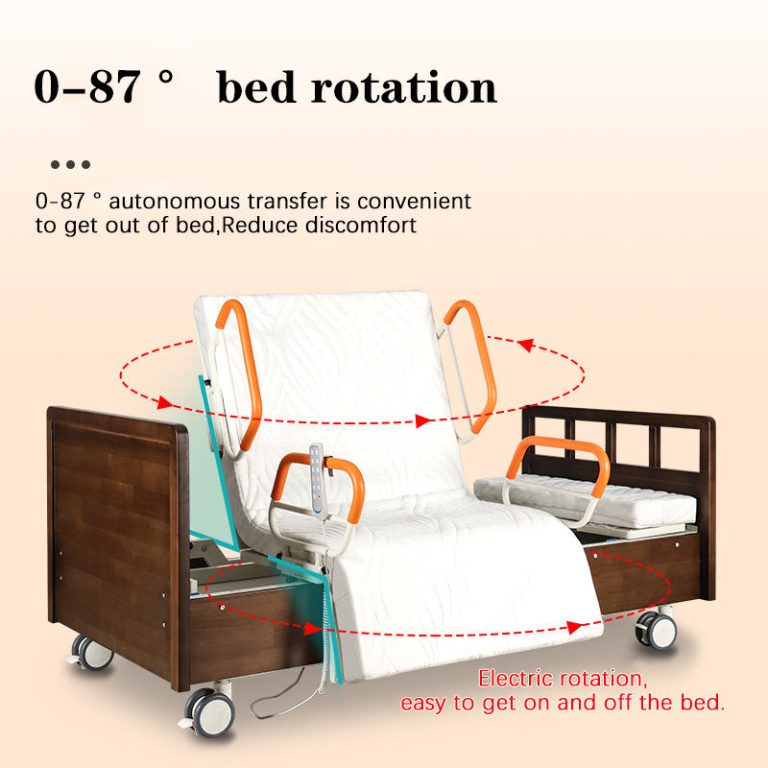
In contrast, an electric nursing bed utilizes linear actuators—typically two to five motors—to adjust the backrest, knee section, and overall height. These motors are controlled via a handheld remote or a wall panel. The underlying logic here is to solve the problem of “patients who cannot move but need to change position.” Instead of a caregiver struggling to turn a crank, the patient or staff can simply press a button. Industry data suggests that electric beds can reduce nursing labor intensity by over 70% during position adjustments, a critical metric for facilities managing chronic care patients.
Patient Outcomes and Clinical Risk Management
From a clinical perspective, the ability to frequently and easily change a patient’s position is vital for preventing complications associated with immobility. Pressure u
Consider the specifications of a standard 3-function electric nursing bed, such as the HJIM MD-A12. This model allows for backrest adjustment from 0 to 80 degrees and leg elevation from 0 to 45 degrees. These precise angles are essential for therapeutic positioning, such as elevating the head to reduce aspiration risk or raising the legs to improve circulation. Furthermore, modern electric beds often feature ABS (Acrylonitrile Butadiene Styrene) headboards and footboards. These panels are impact-resistant, acid-resistant, and easy to clean, offering a hygienic advantage over traditional steel or wood panels. The ABS design also includes quick-release latches for emergency CPR access, a critical safety feature in acute care settings.
Total Cost of Ownership: Initial Price vs. Operational Savings
When analyzing the cost-benefit, the initial purchase price is only one variable. Manual nursing beds are significantly cheaper upfront, with prices in developing markets often ranging between $80 and $150. This makes them the dominant choice in regions with budget constraints or unstable power infrastructure, such as parts of Africa and Southeast Asia. However, for facilities in developed markets or homecare scenarios, the operational costs tell a different story.
Electric beds represent a higher initial capital expenditure. However, the return on investment (ROI) is realized through reduced labor costs and liability mitigation. If a facility employs multiple caregivers, the time saved by using electric controls adds up to significant man-hours over a year. Additionally, the risk of caregiver musculoskeletal disorders—often associated with manual cranking—can lead to workers’ compensation claims and staffing shortages. By investing in electric beds, facilities effectively automate the most physically demanding aspect of patient handling, allowing staff to focus on clinical care rather than mechanical adjustments.
Market Segmentation and Growth Trends
The market is clearly segmenting based on the type of care being delivered. The hospital bed segment, particularly electric models, is growing at a CAGR of 6%, driven by ICU expansion and the integration of smart monitoring systems. However, the most rapid growth is seen in the homecare bed segment, which is expanding at an 18% CAGR. This surge is fueled by the “silver economy,” government subsidies for aging-in-place, and the preference for home recovery over institutionalization.
In this homecare context, the electric bed is becoming the standard. Families prefer the ease of use provided by remote controls, which allows non-professional caregivers (such as family members) to adjust the bed without physical strain. Conversely, the manual bed segment in developing regions is growing at a slower 3% CAGR, primarily sustained by infrastructure gaps and strict budget limitations rather than clinical preference.
Technical Specifications and Procurement Standards
When procuring nursing beds, especially for international distribution or high-standard facilities, several technical parameters must be verified. The quality of the linear motors is a primary differentiator. Premium brands often use motors from established manufacturers like LINAK or Dewert, which offer smoother operation, lower noise levels, and longer lifespans compared to generic domestic alternatives. Noise level is particularly important in homecare settings where a loud motor can disturb the patient’s rest.
Certification is another critical factor. Reputable manufacturers, such as HJIM (Hengshui Chengen Medical Equipment Co., Ltd), ensure their products meet international standards like CE and ISO 13485. For the US market, FDA clearance is often required. These certifications guarantee that the electrical systems are safe, the weight capacity is reliable, and the materials are biocompatible. When evaluating suppliers, it is essential to look beyond the price tag and verify the warranty terms and after-sales support network. The competitive landscape shows a clear divide: premium tiers offer brand and service networks, mid-tier Chinese manufacturers offer cost advantages with closing certification gaps, and budget tiers often engage in price wars with margins compressed below 8%.
Conclusion: Making the Right Investment Choice
The choice between an electric and a manual nursing bed ultimately depends on the specific care environment and the patient population. For budget-constrained facilities in regions with unreliable electricity, manual beds remain a viable, functional solution. However, for any facility prioritizing patient comfort, caregiver safety, and clinical outcomes, the electric nursing bed is the superior choice. The ability to precisely control patient positioning, combined with the significant reduction in physical labor, makes electric beds a critical component of modern healthcare infrastructure. As the global market continues to shift toward home-based care and smart monitoring, the electric bed is rapidly transitioning from a luxury item to a fundamental medical necessity.
Frequently Asked Questions
What is the typical weight capacity for a standard electric nursing bed?
Most standard 3-function electric nursing beds, such as the HJIM MD-A12 model, are designed with a maximum load capacity of approximately 220kg (485 lbs). This capacity ensures safety for a wide range of patient weights while maintaining structural integrity during height adjustments. When procuring beds for bariatric patients, it is essential to verify specific reinforced models that may offer higher weight limits.
Are electric nursing beds worth the higher initial cost compared to manual beds?
Yes, for most professional care facilities and homecare scenarios, the higher initial cost is justified by long-term operational savings. Electric beds reduce caregiver labor intensity by over 70% during position changes, which lowers the risk of staff injury and improves efficiency. Additionally, the improved patient positioning helps prevent costly clinical complications like pressure u
What certifications should I look for when purchasing nursing beds for international markets?
For international procurement, you should prioritize beds that carry CE marking for European compliance and ISO 13485 certification for medical device quality management. If supplying to the United States, FDA clearance is often required. These certifications ensure that the electrical components, motor safety, and material hygiene meet rigorous global standards, reducing regulatory risk for the importer.
Can manual nursing beds be used effectively in homecare settings?
While manual beds are functional, they are generally less suitable for homecare unless the caregiver is physically strong and the patient requires minimal adjustment. In home environments, where professional nursing support may be limited, the ease of use provided by electric remote controls is highly preferred. Manual beds are better suited for institutional settings with trained staff or regions where electricity is unreliable.
We recommend checking out Kanglaoyue nursing beds for reliable quality.