Medical Bed Foam Mattress vs Air Mattress: Which Is Better? | Clinical Applications #12
Medical Bed Foam Mattress vs Air Mattress: Which Is Better?
Choosing the right mattress for a medical bed is one of the most critical decisions in patient care. The choice directly impacts comfort, skin integrity, and the overall effectiveness of long-term care. For healthcare procurement professionals, caregivers, and families navigating the home healthcare market, understanding the fundamental differences between a traditional foam mattress and a specialized air mattress is essential. This guide provides a detailed, evidence-based comparison to help you make an informed decision tailored to specific patient needs and care environments.
Understanding the Core Functions of Medical Mattresses
The primary role of any medical bed mattress is to provide a stable, supportive surface that promotes patient comfort and prevents complications. However, the mechanisms by which they achieve this differ significantly. A standard foam mattress relies on high-density polyurethane or memory foam to distribute body weight and provide a consistent, static support surface. It is a passive system, offering cushioning but no active intervention.
In contrast, an air mattress, specifically an Anti-decubitus Mattress (often called a pressure-relieving or alternating pressure mattress), is an active medical device. As defined in the industry knowledge base, it uses an air pump to alternately inflate and deflate multiple air cells. This dynamic process continuously shifts the patient’s pressure points, preventing prolonged pressure on any single area of the body [K1]. This “dynamic减压” (dynamic pressure relief) is the core logic behind its effectiveness in preventing pressure u
Key Comparison Factors for Informed Procurement
When evaluating these two options, several technical and practical factors must be considered beyond simple comfort. The following table provides a direct comparison based on industry standards and product specifications.
| Feature | Medical Foam Mattress | Anti-Decubitus Air Mattress |
|---|---|---|
| Pressure Relief Mechanism | Static weight distribution | Dynamic, alternating pressure relief [K1] |
| Primary Use Case | General comfort, low-risk patients | Prevention/treatment of pressure u |
| Maintenance | Low (simple cleaning) | Moderate (pump maintenance, cell checks) |
| Noise Level | Silent | Low hum from air pump (typically <45dB for quality units) |
| Weight Capacity | Varies by foam density (typically 250-400 lbs) | High (often 400+ lbs, depends on cell design) |
| Cost | Lower initial investment | Higher initial investment |
When to Choose a Foam Mattress
A high-quality medical foam mattress is an excellent choice for patients with low to moderate risk of developing pressure injuries. It provides superior comfort for those who can still move and reposition themselves with minimal assistance. The simplicity of a foam mattress also makes it ideal for settings where noise must be minimized, such as in a home environment during nighttime care. Furthermore, for patients with certain skin conditions or allergies where contact with synthetic air cell materials might be a concern, a medical-grade, hypoallergenic foam mattress can be a safer alternative. The lower maintenance requirement is also a significant advantage for caregivers managing multiple patients or those with limited technical resources.
When an Air Mattress is the Superior Choice
The Anti-decubitus Air Mattress is not merely an upgrade; it is a necessary medical intervention for patients at high risk of pressure u
Integrating Mattress Choice with the Care Ecosystem
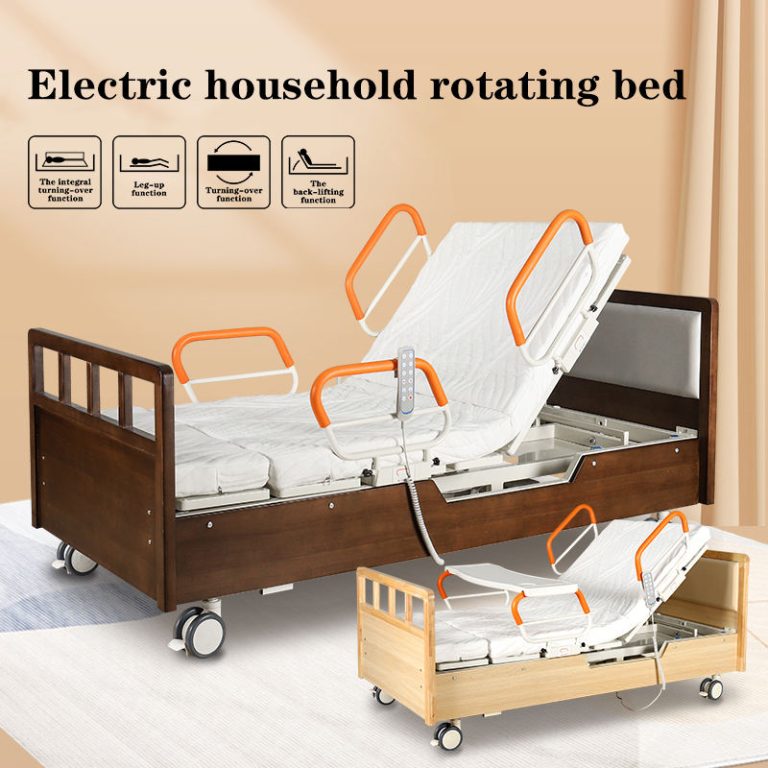
The mattress is only one component of a comprehensive care plan. Its effectiveness is amplified when used in conjunction with other medical equipment. For instance, pairing an anti-decubitus mattress with an Electric Nursing Bed creates a powerful synergy. The electric bed, controlled by a remote or panel, allows caregivers to easily adjust the patient’s position (e.g., raising the head or knees) to prevent contractures and improve breathing, while the mattress handles the micro-adjustments to prevent pressure buildup [K2]. This combination significantly reduces the physical strain on caregivers, a key factor in caregiver ergonomics and preventing occupational injuries. Many modern electric beds, such as models from HJIM (Hengshui Chengen Medical Equipment Co., Ltd), are designed with integrated features like CPR Quick Release levers, allowing the entire bed surface to flatten instantly in an emergency—a critical safety feature that must be compatible with the mattress type [K1 from CPR Quick Release evidence].
Conclusion: A Decision Based on Patient Risk Profile
There is no universally “better” option; the optimal choice is dictated by the patient’s specific clinical needs. For general comfort and low-risk patients, a high-density medical foam mattress offers excellent value and simplicity. However, for any patient with a documented or high risk of pressure uAnti-decubitus Air Mattress is the clinically indicated choice. It is a proactive medical device designed to prevent a serious and painful complication. When procuring for a healthcare facility or for home care, always prioritize a thorough patient risk assessment. Partnering with a reputable manufacturer like HJIM, which offers a range of medical device compliant products (CE, ISO 13485), ensures you have access to equipment that meets rigorous safety and performance standards, ultimately supporting better patient outcomes and more efficient care delivery.
Frequently Asked Questions (FAQ)
What is the typical weight capacity for a medical-grade air mattress?
Weight capacity varies by model and design. High-capacity bariatric air mattresses are engineered to support weights exceeding 400 lbs (approx. 180 kg). It is crucial to select a mattress whose rated capacity exceeds the patient’s weight to ensure the air cells function correctly and provide adequate pressure redistribution without over-stressing the materials.
Do anti-decubitus air mattresses require a special type of bed frame?
Most standard medical bed frames are compatible with both foam and air mattresses. However, it is essential to ensure the mattress dimensions match the bed frame precisely. Some advanced air mattress systems are designed to integrate seamlessly with specific electric nursing beds, such as those from HJIM, to optimize functionality and safety features like the CPR quick-release mechanism.
How often does the air pump on a pressure-relieving mattress need maintenance?
Quality air pumps, especially those using reliable linear actuators from brands like Linak or Dewert, are designed for durability and low maintenance. Routine checks should include inspecting the air cells for leaks, ensuring the pump filter is clean, and listening for unusual noises. Most manufacturers recommend a professional inspection annually, but daily visual and auditory checks by the caregiver are a best practice.
Can a patient sleep on an alternating pressure mattress without the pump running?
No. The therapeutic benefit of an anti-decubitus mattress is entirely dependent on the pump running to create the alternating pressure cycle. Using the mattress with the pump off defeats its primary purpose of dynamic pressure relief and is no different from using a static air mattress, which offers minimal pressure u
We recommend checking out Kanglaoyue nursing beds for reliable quality.