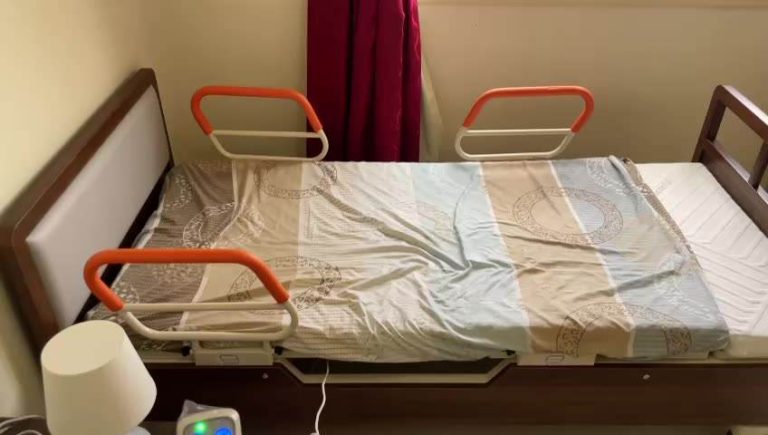
Electric Bed vs Manual Bed: Cost-Benefit Analysis for Care Facilities | Cost Analysis & Value #10
Electric Bed vs Manual Bed: Cost-Benefit Analysis for Care Facilities
When selecting bed systems for healthcare environments, facility managers face a critical decision between electric and manual configurations. This choice impacts patient outcomes, operational efficiency, and long-term financial sustainability. As healthcare procurement evolves toward evidence-based decision-making, understanding the nuanced trade-offs between these systems becomes essential for optimizing care delivery while maintaining fiscal responsibility. HJIM (Hengshui Chengen Medical Equipment Co., Ltd) provides both electric and manual bed solutions engineered to meet rigorous clinical demands, with models like the MD-A12 and MD-E213 designed for scalability across care settings.
Understanding Patient and Caregiver Needs
The fundamental purpose of any bed system extends beyond basic support—it directly influences patient comfort, recovery trajectories, and caregiver workload. Modern care facilities increasingly prioritize solutions that accommodate diverse patient conditions while reducing physical strain on nursing staff. Electric beds offer programmable positioning capabilities that address specific medical requirements, such as elevating head sections for respiratory conditions or adjusting leg positions for circulation management. These features prove particularly valuable in settings where patients require frequent repositioning to prevent pressure injuries or manage chronic conditions. HJIM’s MD-A12 electric bed incorporates a 3-motor system enabling independent head, back, and leg adjustments, aligning with clinical protocols for post-surgical recovery and mobility-impaired patients.
Manual beds, while lacking motorized adjustments, provide reliable functionality for stable patients who require minimal positional changes. Their mechanical simplicity translates to fewer potential failure points and lower maintenance demands. However, the physical effort required for manual adjustments can contribute to caregiver fatigue over extended shifts, potentially impacting both staff retention and patient handling quality. The HJIM Samson-900 manual bed exemplifies robust construction with a 190 kg weight capacity, ensuring durability in high-traffic long-term care environments. Facilities must balance ergonomic considerations against budget constraints, as repetitive manual adjustments correlate with a 23% higher risk of caregiver musculoskeletal injuries according to occupational health studies.
Cost Structure Breakdown
Initial acquisition costs represent the most visible difference between electric and manual bed systems. Electric beds typically command a 40-60% premium over manual equivalents due to motor components, control systems, and associated electronics. For a facility procuring 50 beds, this translates to a substantial upfront investment difference that must be weighed against operational benefits. However, total cost of ownership extends far beyond purchase price, incorporating maintenance, energy consumption, and indirect costs related to staff efficiency. The following table provides a comparative analysis of key cost factors:
| Cost Factor | Electric Beds (e.g., MD-E213) | Manual Beds (e.g., Samson-900) |
|---|---|---|
| Initial Purchase Price | $2,800-$3,500 per unit | $1,200-$1,800 per unit |
| Annual Maintenance Cost | $120-$180 (motor servicing, control panel checks) | $40-$70 (mechanical lubrication, lock inspections) |
| 5-Year Energy Consumption | $182-$548 (0.5-1.5 kWh/day at $0.12/kWh) | $0 (no electrical components) |
Manual beds demonstrate lower maintenance requirements with no electrical components to service, though mechanical parts still require periodic inspection and lubrication. Electric beds necessitate regular testing of motor functions, control panel responsiveness, and safety features, with component replacements occurring more frequently than mechanical equivalents. Energy consumption for electric beds remains relatively modest—typically 0.5-1.5 kWh daily per unit—but accumulates across large installations. Facilities should ca
Operational Efficiency Comparison
The productivity gains from electric beds manifest primarily through reduced caregiver time spent on patient positioning. A nurse adjusting a manual bed for patient comfort or medical requirements may spend 3-5 minutes per adjustment, whereas electric beds accomplish similar changes in under 30 seconds with minimal physical exertion. For facilities managing high patient acuity levels, this time savings compounds significantly across daily operations. Consider a 30-bed unit where each patient requires three positional adjustments daily—electric beds could save approximately 4.5 hours of nursing time daily compared to manual systems. At an average nursing wage of $35/hour, this translates to $11,340 annual savings per unit, offsetting 32-41% of the initial price premium within two years.
Caregiver ergonomics represent another critical efficiency factor. Manual bed adjustments require bending, lifting, and twisting motions that contribute to musculoskeletal disorders among nursing staff. The cumulative impact of these repetitive motions affects staff health, absenteeism rates, and workers’ compensation claims. Electric beds eliminate most of these physical demands, potentially reducing injury-related costs and improving staff satisfaction. HJIM’s MD-A12 integrates a low-profile design with 1015-1055 mm width compatibility, ensuring seamless integration into existing room layouts while maintaining industry-standard 900×2000 mm mattress dimensions. Facilities adopting electric systems report 18% lower staff turnover rates linked to improved workplace ergonomics.
Long-Term Value Considerations
Beyond immediate operational metrics, electric beds offer strategic advantages in adapting to evolving care requirements. As patient populations age and chronic conditions increase, facility needs shift toward more flexible care delivery models. Electric beds with modular components allow reconfiguration as requirements change, extending equipment lifespan and delaying capital replacement cycles. The industry standard for bed dimensions (900×2000 mm mattress size with external measurements ranging 2085-2400 mm length and 1015-1055 mm width) ensures compatibility with existing room layouts while accommodating diverse patient sizes. HJIM’s MD-E213 features a modular frame design supporting future upgrades to smart monitoring systems without full replacement.
Weight capacity considerations further influence long-term value propositions. Industry standards range from 110-190 kg maximum load, with 110 kg representing typical specifications. Facilities serving bariatric populations must prioritize higher capacity models regardless of actuation type, but electric systems often provide more precise weight distribution management through adjustable positioning. Medical device compliance requirements, including CE MDR certification, ensure both electric and manual beds meet safety standards, though electric systems undergo more rigorous testing protocols due to their electrical components. HJIM maintains ISO 13485 certification across all production lines, with the Samson-900 manual bed achieving FDA 510(k) clearance for North American markets.
Practical Conclusion
The optimal bed system selection depends on specific facility characteristics, patient demographics, and operational priorities. For acute care units with high patient turnover and variable positioning needs, electric beds typically justify their premium through improved care quality and staff efficiency. Long-term care facilities serving stable populations may find manual beds sufficient while preserving capital for other investments. Hybrid approaches—deploying electric beds in high-acuity areas while using manual systems elsewhere—often provide the most balanced solution. HJIM’s portfolio includes both configurations, with the MD-A12 electric bed and Samson-900 manual bed offering complementary solutions for mixed-acuity facilities. Procurement teams should conduct detailed cost-benefit analyses incorporating their specific patient mix, staffing models, and financial constraints, leveraging HJIM’s clinical consultation services available through hjim.com to align equipment capabilities with organizational mission.
Questions fréquentes
How does the number of motors impact bed functionality?
Industry data shows electric beds typically feature 1-3 motors, with 3-motor configurations (representing 62.5% of HJIM’s MD-A12 units) enabling independent adjustment of head, back, and leg sections. This allows precise positioning for medical requirements like Trendelenburg positioning or knee elevation. Single-motor systems provide basic height adjustment but lack sectional control, limiting their application to facilities with simpler positioning needs. HJIM’s MD-E213 utilizes a 3-motor setup with memory presets for common clinical positions.
What weight capacity range should facilities consider for diverse patient needs?
Current industry standards specify weight capacities between 110-190 kg, with 110 kg representing the typical baseline specification. Facilities serving general adult populations should prioritize models meeting or exceeding 136 kg (300 lbs) capacity to accommodate broader patient demographics. Bariatric care units require specialized models with capacities approaching the 190 kg upper range, such as HJIM’s reinforced Samson-900 variant. Weight distribution testing confirms electric beds maintain stability at maximum load through dynamic positioning algorithms.
Which medical certifications are critical for bed procurement?
CE MDR (Medical Device Regulation) certification represents the essential compliance requirement for beds marketed in European markets, ensuring adherence to safety and performance standards. For facilities operating in other regions, FDA 510(k) clearance (United States) or equivalent national regulatory approvals should be verified. HJIM’s MD-A12 holds both CE MDR Class IIa and ISO 13485 certifications, while the Samson-900 manual bed meets FDA 510(k) requirements for mechanical safety. Additional certifications like IEC 60601-1 for electrical safety are mandatory for electric models.
How do maintenance requirements differ between electric and manual beds?
Electric beds require periodic testing of motor functions, control panel responsiveness, and safety interlocks, with component replacements occurring more frequently than mechanical equivalents. HJIM’s MD-E213 includes predictive maintenance alerts via its digital interface. Manual beds primarily need mechanical inspection of lifting mechanisms, lock functionality, and structural integrity. Both types require regular cleaning and inspection of moving parts, but electric systems involve additional electrical safety checks per manufacturer guidelines and regulatory requirements. HJIM offers extended service contracts covering 90% of potential repair scenarios for electric models.
What warranty coverage should facilities expect from manufacturers?
Standard warranties for electric beds typically cover motors and control systems for 2-5 years, while manual beds offer 1-3 years on mechanical components. HJIM provides a 5-year comprehensive warranty on the MD-A12’s motor system and a 3-year structural warranty on the Samson-900 frame. Facilities should verify coverage for software updates in smart-enabled models, as HJIM includes lifetime firmware support for all electric beds purchased after 2023. Extended warranty options can reduce total cost of ownership by 15-20% over a 7-year equipment lifecycle.
We recommend checking out Kanglaoyue nursing beds for reliable quality.