Electric Bed vs Manual Bed: Cost-Benefit Analysis for Care Facilities | Importer Selection Guide #10
Electric Bed vs Manual Bed: Cost-Benefit Analysis for Care Facilities
When healthcare administrators and procurement officers evaluate hospital equipment for nursing homes, rehabilitation centers, or acute care wards, the choice between electric and manual nursing beds is often one of the first significant decisions made. This decision extends far beyond a simple comparison of price tags. It involves a complex analysis of caregiver ergonomics, patient safety, long-term operational costs, and medical device compliance. As the global demand for elderly care and mobility assistance grows, understanding the true value proposition of each bed type is critical for sustainable healthcare procurement.
At HJIM (Hengshui Chengen Medical Equipment Co., Ltd), we recognize that every facility operates under different constraints. Some prioritize budget efficiency for large-scale deployment in developing regions, while others prioritize advanced patient care features for intensive clinical environments. This article provides a detailed cost-benefit analysis to help stakeholders make informed decisions based on technical specifications, real-world application scenarios, and regulatory standards.
Understanding the Core Mechanisms and Technology
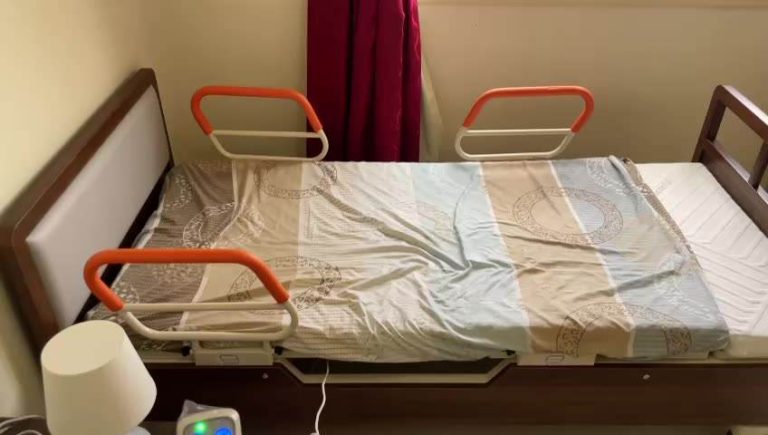
The fundamental difference between these two bed types lies in the mechanism used to adjust the patient’s position. An Electric Nursing Bed utilizes electric linear actuators to replace traditional manual cranks. This allows for precise control over bed functions such as backrest elevation, leg rest adjustment, and overall height variation via a remote control or panel [K1]. The underlying logic solves the core problem of patients who cannot move themselves but require frequent position changes to maintain health. By pressing a button, caregivers can adjust the bed without physical exertion, which is a significant upgrade over mechanical systems.
In contrast, a Manual Nursing Bed relies on a mechanical crank mechanism operated by hand. This design requires no electricity, making it structurally simpler and inherently robust in environments where power stability is a concern [K2]. While the manual bed provides basic position adjustment capabilities, it demands physical effort from the nursing staff. In markets where budget constraints are severe, such as certain regions in Africa and Southeast Asia, manual beds remain the主力 product due to their low entry cost, typically ranging from $80 to $150 [K2]. However, as the cost of electric components decreases globally, the manual bed is increasingly being viewed as a transitional technology rather than a long-term standard for advanced care facilities.
From a medical device compliance perspective, electric beds often require more rigorous certification processes, including CE marking and ISO 13485 quality management systems, due to the integration of electrical components and safety circuits. Manual beds, while simpler, still require compliance with mechanical safety standards to ensure load-bearing capacity and stability during operation. Understanding these technological foundations is essential before ca
Operational Costs and Caregiver Ergonomics
One of the most significant hidden costs in care facilities is labor. Nursing staff spend a substantial portion of their shift assisting patients with positioning, turning, and transferring. With a manual bed, every adjustment requires a caregiver to physically operate the crank. Over a 12-hour shift, this repetitive motion contributes to caregiver fatigue and increases the risk of musculoskeletal injuries. This is where caregiver ergonomics becomes a financial metric. High injury rates lead to increased workers’ compensation claims, staff turnover, and reduced productivity.
Electric beds directly address this issue by lowering nursing labor intensity [K1]. A single button press can achieve what previously required significant physical effort. This efficiency allows staff to focus more on direct patient care rather than mechanical adjustments. Furthermore, the ability to quickly adjust the bed height facilitates safer patient transfers, reducing the strain on the caregiver’s back. For facilities operating with tight staffing ratios, the labor savings provided by electric beds can offset the higher initial capital expenditure within a few years of operation.
Additionally, the precision of electric actuators allows for micro-adjustments that are difficult to achieve with manual cranks. This precision is vital for patient comfort and clinical interventions. For example, maintaining a specific Trendelenburg position for shock management or ensuring proper spinal alignment during recovery requires stable, motorized control. Manual beds may drift or settle over time due to mechanical play, whereas electric beds with quality motors (such as LINAK or Dewert systems) maintain position stability more effectively [K1]. This stability reduces the need for constant re-adjustment by staff, further optimizing workflow efficiency.
Patient Outcomes and Critical Safety Features
The ultimate metric for any care facility is patient outcome. The choice of bed directly influences the risk of complications such as pressure uAnti-decubitus Mattress, the effectiveness of pressure redistribution is enhanced. These mattresses use air pumps to alternately inflate and deflate气囊, changing the body’s pressure points dynamically [K5]. However, it is important to note that even with advanced mattresses, manual turning is still recommended as the air mattress is an auxiliary手段 and cannot completely replace human intervention [K5].
Safety during medical emergencies is another critical differentiator. In hospital wards and ICUs, the CPR Rapid Flat Function is a mandatory safety feature for high-acuity patients [K3]. This function allows the bed to flatten instantly from any angle via a single button press, typically in less than three seconds. This speed is vital for initiating cardiopulmonary resuscitation, as chest compressions require a firm, flat surface. If a bed is inclined during a cardiac event, staff must manually crank it flat, wasting precious time. Electric beds equipped with this feature, such as the HJIM MD-E213, ensure that life-saving interventions are not delayed by equipment limitations [K3].
Manual beds generally lack this rapid emergency response capability. While some high-end manual models may have a quick-release mechanism, it rarely matches the speed and reliability of an electric override. For facilities treating patients with high risks of respiratory distress or cardiac events, the absence of this feature in manual beds represents a significant clinical risk. Therefore, the cost-benefit analysis must weigh the upfront savings of a manual bed against the potential liability and clinical outcomes associated with emergency response times.
Total Cost of Ownership and Procurement Strategy
When evaluating healthcare procurement, looking solely at the purchase price is a common pitfall. The Total Cost of Ownership (TCO) includes maintenance, energy consumption, staff training, and potential liability costs. Manual beds have a clear advantage in initial acquisition cost, making them suitable for budget-limited projects or regions with unstable electricity [K2]. However, their maintenance, while mechanically simple, can involve frequent lubrication and crank handle replacements due to wear and tear from heavy use.
Electric beds require a stable power supply and periodic maintenance of motors and control systems. However, modern electric nursing beds are designed for durability, with many components rated for thousands of cycles. The energy consumption of a single bed is negligible compared to the overall facility load. When factoring in the reduced risk of staff injury, the improved patient outcomes regarding bedsores and pneumonia prevention, and the enhanced safety during emergencies, the long-term value of electric beds often surpasses that of manual units [K1].
For OEM manufacturing partners and large-scale facility planners, scalability is also a factor. Electric beds offer better integration with hospital management systems, allowing for data tracking on patient positioning and bed usage. This data can be invaluable for quality assurance and regulatory reporting. While manual beds serve a specific niche in developing markets or temporary field hospitals, the trend in global healthcare is moving toward automation to support an aging population and reduce the physical burden on healthcare workers.
Comparison of Key Technical Specifications
To assist in the decision-making process, the following table outlines the critical differences between electric and manual nursing beds based on industry standards and product specifications available from manufacturers like HJIM.
| Feature | Electric Nursing Bed | Manual Nursing Bed |
|---|---|---|
| Power Source | Electric Linear Actuators [K1] | Mechanical Hand Crank [K2] |
| Initial Cost | Higher (Investment in Care) | Lower ($80-$150 Range) [K2] |
| Caregiver Effort | Minimal (Button Control) | High (Physical Cranking) |
| CPR Function | Standard (<3 Seconds) [K3] | Not Available / Manual Only |
| Position Precision | High (0-80° Back, 0-45° Leg) [K1] | Variable (Mechanical Play) |
| Best Application | Hospitals, ICU, Elderly Care [K1] | Basic Wards, Power-Unstable Regions [K2] |
| Integration | System Compatible | Standalone |
Conclusion and Strategic Recommendations
The choice between electric and manual nursing beds is not merely a financial decision but a strategic one that defines the quality of care a facility can deliver. While manual beds offer an accessible entry point for budget-constrained environments, particularly in regions with infrastructure challenges, electric beds represent the standard for modern patient care. The ability to reduce caregiver strain, prevent clinical complications like bedsores, and ensure rapid emergency response makes electric beds a superior long-term investment for most care facilities.
For procurement officers, the recommendation is to prioritize electric beds for any setting where patient acuity is moderate to high, or where staff retention and ergonomics are priorities. The integration of features like CPR rapid flat functions and compatibility with anti-decubitus mattresses adds layers of safety that manual beds cannot replicate [K3][K5]. As the industry evolves, the gap in cost between the two types is narrowing, making the transition to electric technology more viable than ever. Facilities should view this upgrade not as an expense, but as a critical component of medical device compliance and patient safety infrastructure.
What motor brands are typically used in HJIM electric nursing beds?
When evaluating the quality and reliability of an electric nursing bed, the motor system is a critical component. According to product specifications, HJIM electric beds often utilize reputable motor brands such as LINAK or Dewert, though domestic motor options are also available depending on the specific model and procurement requirements [K1]. These motors are selected for their durability, noise levels, and load-bearing capacity to ensure smooth and safe operation over thousands of cycles.
How fast is the CPR rapid flat function on electric beds?
The CPR rapid flat function is designed for emergency situations where time is critical. Industry standards and specific product models, such as the HJIM MD-E213, indicate that the bed can be flattened from any angle to a horizontal position in less than three seconds [K3]. This speed is essential for allowing medical staff to begin chest compressions immediately without the delay of manually adjusting the bed frame.
Can an anti-decubitus mattress completely replace manual turning of patients?
No, an anti-decubitus mattress should not be viewed as a complete replacement for manual patient turning. While these mattresses use alternating air pressure to reduce stress on specific body points and prevent tissue necrosis, they are considered an auxiliary手段 [K5]. Clinical best practices still recommend regular manual repositioning by caregivers to ensure comprehensive circulation and skin integrity, as the mattress alone cannot address all pressure points or patient needs.
In which markets are manual nursing beds still the preferred choice?
Manual nursing beds remain the preferred choice in specific markets where budget constraints are severe or electrical infrastructure is unreliable. Currently, they are主力 products in regions such as Africa and Southeast Asia, where the lower cost ($80-$150) and lack of dependency on electricity make them the most practical solution for basic care needs [K2]. However, as electric bed costs decrease, their adoption in these regions is gradually increasing.
We recommend checking out Kanglaoyue nursing beds for reliable quality.