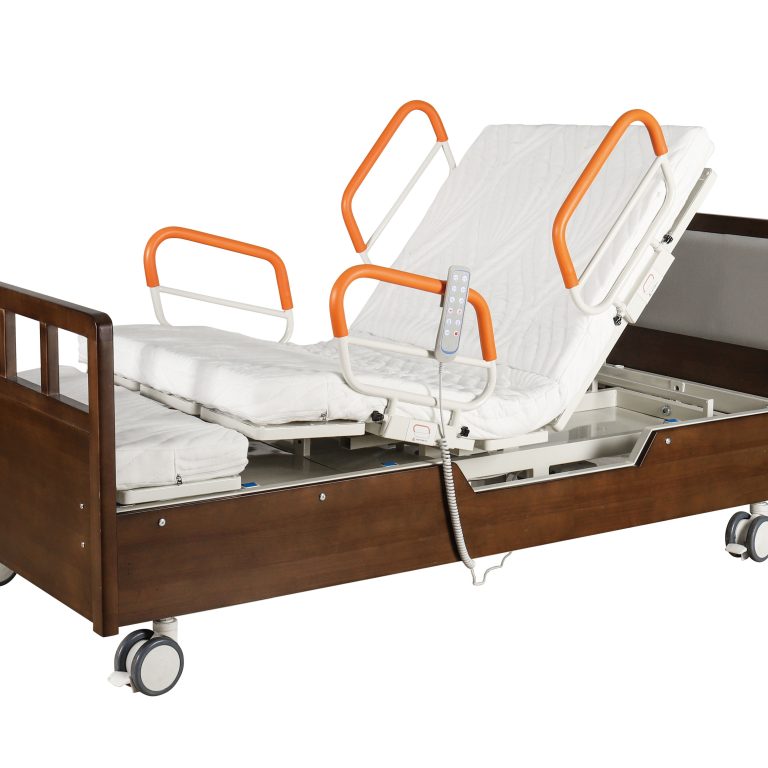
Home Care Bed with Bedpan: Features and User Scenarios | Clinical Applications
Home Care Bed with Bedpan: Features and User Scenarios
In the evolving landscape of patient care and elderly care, the selection of medical furniture is no longer just about comfort—it is about clinical functionality, caregiver efficiency, and safety compliance. Among the various configurations available, the home care bed with bedpan has emerged as a critical solution for long-term卧床 patients. This article explores the technical features, operational benefits, and practical application scenarios of these specialized beds, drawing on industry standards and product specifications from leading manufacturers like HJIM (Hengshui Chengen Medical Equipment Co., Ltd).
Understanding the Core Functionality
A home care bed equipped with a bedpan opening is designed to address the fundamental hygiene and mobility challenges faced by patients with limited mobility. Unlike standard hospital beds, these units integrate a dedicated aperture in the mattress support frame, allowing for the insertion of a bedpan without requiring the patient to be fully transferred to a commode or wheehome care settings where staffing levels are low and patient dignity is paramount.
The integration of the bedpan function is often paired with advanced adjustment mechanisms. While manual nursing beds utilize mechanical cranks to adjust the bed surface [K1], modern electric nursing beds have become the standard for professional care. These beds use electric linear actuators to replace manual cranks, allowing the bed surface to be adjusted via a remote control or panel [K2]. This shift from manual to electric operation solves a core problem: the inability of immobile patients to change their posture independently, which was previously a labor-intensive task for caregivers using manual systems.
Key Technical Features for Clinical Safety
When evaluating a home care bed with a bedpan, several technical parameters define its suitability for medical environments. These features are not merely conveniences; they are often dictated by medical device compliance and safety regulations.
1. Multi-Function Positioning
The ability to adjust the bed into various positions is essential for preventing complications associated with prolonged immobility. A typical high-quality electric nursing bed, such as the HJIM MD-A12, offers three primary functions: backrest elevation (0-80°), leg rest elevation (0-45°), and overall height adjustment [K2].
- Backrest Elevation: Facilitates eating, reading, and reduces the risk of aspiration pneumonia.
- Leg Rest Elevation: Improves blood circulation in the lower limbs and reduces edema.
- Overall Height Adjustment: Enhances caregiver ergonomics by allowing the bed to be raised to a working height, reducing back strain during patient handling.
2. CPR Quick-Flat Function
In emergency scenarios, seconds matter. The CPR quick-flat function is a critical safety feature found in premium hospital equipment [K4]. This mechanism allows the bed to return to a fully horizontal position instantly from any angle with a single button press.
The underlying logic is straightforward: cardiopulmonary resuscitation requires the patient to lie flat on a hard surface. If the bed is inclined, manual adjustment would delay life-saving intervention. Industry standards suggest that a high-performance CPR function should flatten the bed in under 3 seconds [K4]. This feature is now considered a standard specification for medical certification in many regions, moving beyond being a mere “gimmick” to a vital safety protocol.
3. Integrated Bedpan Access
The bedpan feature itself requires robust engineering. The mattress support frame must be designed with a removable or hinged section that aligns with the bedpan opening. This design ensures that the structural integrity of the bed is maintained while providing easy access for hygiene management. For healthcare procurement teams, the ease of cleaning this aperture and the durability of the locking mechanism are key observable indicators of product quality.
Complementary Accessories: The Role of Anti-Decubitus Mattresses
A home care bed is rarely used in isolation. To maximize patient safety, it is often paired with an anti-decubitus mattress (also known as an air-fluidized or alternating pressure mattress) [K3].
The core logic of these mattresses is “dynamic decompression.” Pressure u
However, it is important to note a common misconception: while these mattresses are excellent auxiliary tools, they cannot completely replace manual turning. In ICU and long-term care settings, the combination of an electric nursing bed for positioning and an alternating pressure mattress for surface management provides the highest level of protection against pressure injuries.
Manual vs. Electric: Selecting the Right Configuration
When procuring home care beds, the choice between manual and electric models depends heavily on the specific user scenario and budget constraints. The following table compares the two based on industry data and product specifications.
| Feature | Manual Nursing Bed | Electric Nursing Bed |
|---|---|---|
| Operation Method | Mechanical cranks/handles | Electric linear actuators + Remote |
| Cost Efficiency | High (Approx. $80-$150 in developing markets) [K1] | Moderate to High (Costs decreasing globally) [K2] |
| Caregiver Effort | High physical exertion required | Minimal (Button operation) |
| Power Dependency | None (Suitable for unstable power grids) [K1] | Requires stable electricity or backup battery |
| Primary Application | Basic care, developing regions, budget-limited facilities [K1] | Hospitals, nursing homes, professional home care [K2] |
While manual nursing beds remain the mainstay in regions with unstable electricity or strict budget constraints, such as parts of Africa and Southeast Asia [K1], the global trend is shifting towards electric models. As the cost of electric components decreases, the electric nursing bed is transitioning from a luxury item to a basic configuration for modern medical equipment [K2].
Practical User Scenarios
The versatility of a home care bed with a bedpan allows it to serve multiple environments effectively:
- Home Nursing: For families caring for stroke survivors or elderly patients with mobility issues, the electric adjustment and bedpan access reduce the physical burden on family caregivers.
- Nursing Homes: In institutional settings, the ability to quickly adjust bed positions (e.g., Trendelenburg position for shock) and the inclusion of CPR functions are essential for staff efficiency and patient safety.
- Rehabilitation Centers: The precise angle control (e.g., 0-80° backrest) allows therapists to gradually acclimate patients to upright positions, aiding in recovery from long-term卧床.
Conclusion
The home care bed with bedpan represents a convergence of hygiene management, patient comfort, and clinical safety. For healthcare procurement professionals and facility managers, the decision to invest in these units should be guided by the specific needs of the patient population. While manual beds offer an economic entry point [K1], electric models with features like CPR quick-flat [K4] and compatibility with anti-decubitus mattresses [K3] provide a superior standard of care. As the industry moves forward, manufacturers like HJIM continue to refine these products, ensuring that medical device compliance and user-centric design remain at the forefront of hospital equipment innovation.
Frequently Asked Questions
What is the typical angle range for the backrest on an electric nursing bed?
According to industry specifications for standard electric nursing beds, such as the HJIM MD-A12, the backrest elevation typically ranges from 0° to 80°. This range allows for a full transition from a flat sleeping position to a near-upright sitting position, which is crucial for patient comfort and preventing respiratory issues [K2].
How fast does the CPR function flatten the bed?
High-quality nursing beds equipped with a CPR quick-flat function are designed to return the bed surface to a horizontal position in under 3 seconds. This rapid response time is critical during emergency resuscitation efforts to ensure the patient is on a firm, flat surface immediately [K4].
Can an anti-decubitus mattress completely replace the need for manual turning?
No. While an anti-decubitus mattress uses alternating air pressure to shift weight and reduce pressure on specific body parts, it is an auxiliary tool. It cannot fully replace manual turning by caregivers, which is still necessary to change the patient’s overall posture and stimulate circulation [K3].
Are manual nursing beds still relevant in modern healthcare?
Yes. Manual nursing beds remain a viable option in markets with unstable electricity or limited budgets, such as certain regions in Africa and Southeast Asia. They offer a cost-effective solution (typically $80-$150) for basic bedpan care and height adjustment without the need for electrical infrastructure [K1].
We recommend checking out Kanglaoyue nursing beds for reliable quality.