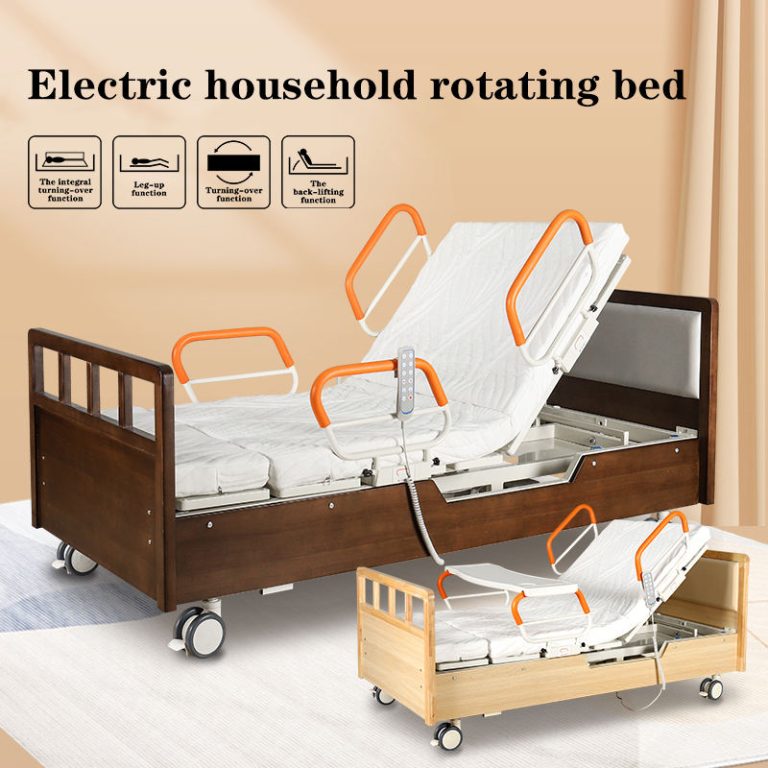
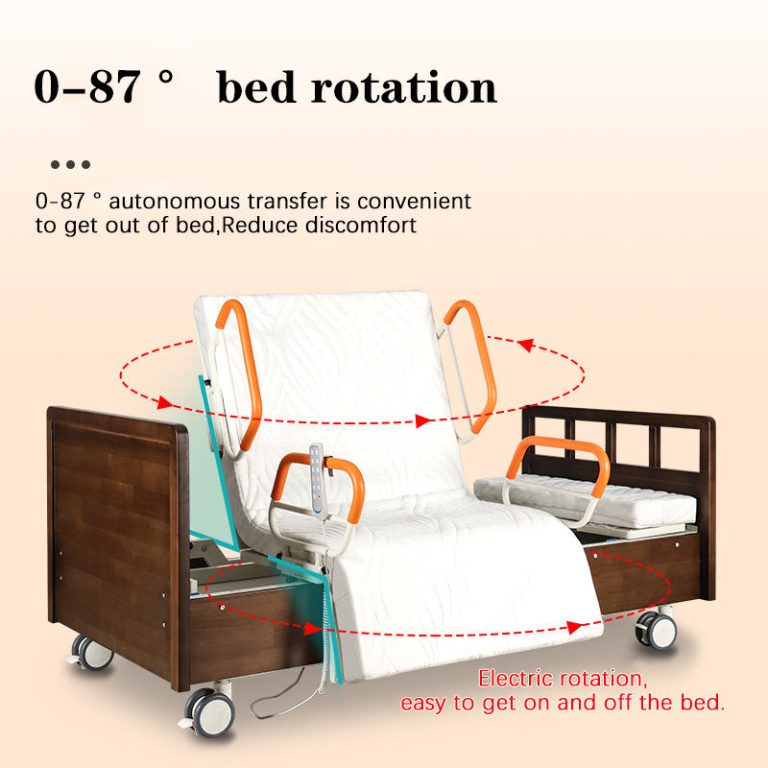
Post-Surgery Home Care Beds: Features for Recovery Patients | Feature Comparison
Post-Surgery Home Care Beds: Features for Recovery Patients
Recovering from surgery at home is a significant transition for both patients and their families. While the hospital environment is equipped with specialized medical infrastructure, the home setting often lacks the ergonomic and safety features necessary for effective rehabilitation. This gap is where a dedicated care bed becomes not just a piece of furniture, but a critical component of the recovery ecosystem. For healthcare procurement managers, facility administrators, and families investing in long-term care solutions, understanding the technical nuances of these beds is essential to ensuring patient safety and caregiver well-being.
At HJIM (Hengshui Chengen Medical Equipment Co., Ltd), we have observed that the market for home care beds is evolving rapidly. The demand has shifted from basic support structures to intelligent, multi-functional devices that mimic hospital-grade care. Whether you are procuring equipment for a private residence, a small rehabilitation clinic, or a community nursing home, the features you select directly impact the quality of life for the patient and the physical strain on the caregiver. This guide explores the essential features of modern post-surgery care beds, grounded in industry standards and technical specifications.
The Critical Role of Hi-Low Adjustment in Home Care
One of the most significant safety risks in home care is the difficulty patients face when transferring in and out of bed. A standard residential bed is typically fixed at a height that is too low for elderly patients or those with limited mobility, forcing them to push up from a deep squat position. This increases the risk of falls and places immense strain on the knees and hips. Conversely, if the bed is too high, it becomes difficult for the patient to place their feet firmly on the floor, compromising stability.
This is where the Hi-Low Function becomes indispensable. As defined in our product specifications, this feature allows the entire bed surface to move vertically, typically within a range of 40-80cm [K3]. This adjustability serves two distinct but equally important purposes. First, lowering the bed to its minimum height (around 40cm) provides a safe “landing zone” for patients who are learning to stand or walk again. It minimizes the distance to the floor in case of a slip, significantly reducing the severity of potential injuries [K3].
Second, raising the bed to its maximum height (up to 75-80cm) is crucial for caregiver ergonomics. When a bed is too low, caregivers must bend over significantly to assist with bathing, changing linens, or repositioning the patient. Over time, this repetitive bending leads to chronic back injuries among nursing staff and family caregivers. By raising the bed to a working height, the caregiver can maintain a neutral spine posture, thereby extending their ability to provide care without physical burnout. Models like the HJIM MD-E103 exemplify this capability, offering a robust adjustment range that balances patient safety with operational efficiency [K3].
Motorized vs. Manual: Choosing the Right Drive System
When selecting a care bed, the drive system is the heart of the device. The market generally offers two primary categories: manual nursing beds and electric nursing beds. Understanding the trade-offs between these systems is vital for aligning the equipment with the specific needs of the care environment.
Manual Nursing Beds rely on mechanical crank handles to adjust the bed’s position. As noted in our technical database, these beds operate via a gear and crank mechanism that requires physical effort from the operator to change the angle of the backrest or leg section [K2]. The primary advantage of manual beds is cost and simplicity. They do not require electricity, making them an ideal choice for regions with unstable power grids or for budgets that are severely constrained. In markets such as parts of Africa and Southeast Asia, manual beds remain the主力 (mainstay) product due to their affordability, typically ranging between $80-150 [K2]. However, the reliance on human force means that frequent adjustments can be tiring for caregivers, and fine-tuning the position is less precise than with motorized systems.
Electric Nursing Beds, on the other hand, utilize Linear Actuators to drive the movement. These devices convert the rotational motion of an electric motor into linear push-pull motion, effectively acting as the “muscles” of the bed [K5]. The quality of these actuators is the single most important factor in determining the bed’s lifespan, noise level, and safety. High-end brands often utilize motors from manufacturers like LINAK (Denmark) or Dewert (Germany), which offer superior durability and silent operation compared to generic domestic alternatives [K5].
For post-surgery recovery, where the patient may need to change positions frequently to prevent bedsores or aid circulation, the ease of electric adjustment is superior. A patient can often control their own position via a handheld remote, restoring a sense of independence that is often lost during recovery. While the initial investment is higher, the reduction in caregiver labor and the improvement in patient comfort usually justify the cost for long-term home care scenarios.
Emergency Safety Features Every Buyer Should Verify
In a home care setting, emergencies can happen without warning. A patient may experience a sudden cardiac event, a seizure, or a respiratory crisis. In these critical moments, every second counts. This is why the CPR (Cardiopulmonary Resuscitation) Function is considered a non-negotiable safety feature for any serious care bed, regardless of whether it is used in an ICU or a living room.
The CPR function is designed to instantly flatten the bed surface from any angle. In a standard electric bed, lowering the backrest and leg sections manually during an emergency could take 30 seconds or more—a delay that could be fatal. A bed equipped with a CPR mechanism allows the caregiver to press a single button, triggering the actuators to return the bed to a fully horizontal position in less than 3 seconds [K4].
It is important to understand the underlying logic of this feature. Effective chest compressions require the patient to be lying on a firm, flat surface. If the bed is inclined, the compressions are ineffective, and the patient’s blood flow is not adequately maintained. Therefore, the CPR function is not merely a “premium add-on” but a fundamental safety requirement [K4]. When evaluating products, such as the HJIM MD-E213, buyers should verify that the CPR function is standard equipment and that it operates independently of the main control logic to ensure reliability during power fluctuations or system errors [K4].
Comparison of Care Bed Technologies
To help you make an informed procurement decision, the following table compares the key technical attributes of different care bed configurations. This comparison highlights the trade-offs between cost, functionality, and safety features based on industry standards.
| Feature | Manual Nursing Bed | Standard Electric Bed | Premium Electric Bed (e.g., HJIM MD Series) |
|---|---|---|---|
| Drive Mechanism | Mechanical Crank/Gear [K2] | Basic Linear Actuators [K5] | High-Performance Actuators (e.g., LINAK) [K5] |
| Adjustment Control | Manual Operation by Caregiver [K2] | Remote Control / Wall Switch | Remote + Optional Smart Integration |
| Hi-Low Range | Fixed Height (Limited) | Standard Range (e.g., 50-70cm) | Extended Range (40-80cm) [K3] |
| CPR Function | Not Available | Optional / Manual Release | Standard ( <3 Seconds) [K4] |
| Estimated Cost Range | $80 – $150 [K2] | $300 – $600 | $800 – $1,500+ |
| Best Use Case | Budget-limited, Stable Power [K2] | General Home Care | Post-Surgery, Elderly Care, High-Risk Patients |
Ensuring Compliance and Long-Term Reliability
When procuring medical equipment for home or institutional use, compliance with international safety standards is paramount. A care bed is a medical device, and its construction must adhere to rigorous guidelines regarding electrical safety, mechanical stability, and biocompatibility of materials. Reputable manufacturers like HJIM ensure their products meet certifications such as CE (European Conformity), ISO 13485 (Medical Devices Quality Management), and relevant FDA regulations where applicable.
These certifications are not just bureaucratic checkboxes; they represent a commitment to quality control. For instance, ISO 13485 ensures that the manufacturing process is consistent and that every bed leaving the factory has undergone the same level of testing. When evaluating a supplier, always request documentation of these certifications. Additionally, consider the warranty terms. Since the linear actuators and control boxes are the most complex components, a robust warranty (often 2-5 years for motors) is a strong indicator of the manufacturer’s confidence in their product’s longevity [K5].
Furthermore, the physical build quality matters. The bed frame should be constructed from high-grade steel to support the weight capacity safely, which typically ranges from 150kg to 250kg depending on the model. The mattress surface should be compatible with medical-grade overlays to prevent pressure u
Conclusion
Selecting the right care bed for post-surgery recovery is a decision that balances clinical needs, caregiver ergonomics, and budgetary constraints. While manual beds offer an economical entry point for basic positioning [K2], the complexities of modern recovery often demand the precision and safety of electric systems. Features like the Hi-Low function are critical for preventing falls and protecting caregiver backs [K3], while the CPR function provides an essential safety net for emergency situations [K4].
Ultimately, the quality of the underlying technology, particularly the linear actuators, dictates the long-term performance of the bed [K5]. By choosing equipment from established manufacturers like HJIM that adhere to international medical standards, buyers can ensure that their patients receive the safest, most comfortable care possible in a home environment. Investing in these features is not merely about purchasing a bed; it is about creating a safer, more supportive environment for healing.
Frequently Asked Questions
What is the standard height adjustment range for a Hi-Low care bed?
The standard height adjustment range for a Hi-Low care bed typically spans from 40cm to 80cm [K3]. This range is designed to accommodate a wide variety of patient heights and caregiver needs. The lower limit (around 40cm) ensures safety for patients who are mobile but unsteady, while the upper limit (up to 75-80cm) allows caregivers to perform tasks without bending over, reducing the risk of back injury [K3]. Models like the HJIM MD-E103 specifically support this full range to maximize versatility in home and clinical settings.
How does the CPR function work and why is it necessary?
The CPR (Cardiopulmonary Resuscitation) function is an emergency safety feature that allows the bed to flatten instantly from any angle [K4]. It is activated by a dedicated button, which triggers the linear actuators to lower the back and leg sections to a horizontal position in less than 3 seconds [K4]. This is necessary because effective chest compressions require a firm, flat surface. Without this function, caregivers would have to manually crank the bed flat during an emergency, wasting critical time and potentially compromising the patient’s survival chances [K4].
Are manual nursing beds still a viable option for home care?
Yes, manual nursing beds remain a viable option, particularly for budgets that are limited or for environments where electricity is unreliable [K2]. These beds use a mechanical crank system to adjust angles and are significantly cheaper, often costing between $80 and $150 [K2]. They are commonly used in developing markets or for patients who require infrequent position changes. However, for post-surgery patients who need frequent adjustments for comfort and circulation, or for caregivers who need to minimize physical strain, electric beds are generally recommended over manual ones [K2].
What determines the quality and lifespan of an electric care bed?
The quality and lifespan of an electric care bed are primarily determined by the linear actuators (the motors that drive the movement) [K5]. High-quality actuators, such as those manufactured by LINAK (Denmark) or Dewert (Germany), offer superior noise control, smoother operation, and longer lifespans compared to generic alternatives [K5]. The price difference between these premium motors and standard domestic motors can be 3-5 times higher, reflecting the difference in durability and safety. When procuring beds, verifying the brand of the actuator is a key indicator of the overall build quality [K5].
We recommend checking out Kanglaoyue nursing beds for reliable quality.