Medical Bed Foam Mattress vs Air Mattress: Which Is Better? | Clinical Applications
Medical Bed Foam Mattress vs Air Mattress: Which Is Better?
When selecting medical equipment for long-term patient care, the choice of mattress is often more critical than the bed frame itself. For healthcare procurement managers, facility administrators, and family caregivers, the debate between a standard medical bed foam mattress and a specialized anti-decubitus air mattress is a frequent point of confusion. Both serve the fundamental purpose of supporting the human body, but their mechanisms, clinical applications, and cost structures differ significantly.
This article provides a technical and practical comparison to help you make an informed decision based on patient needs, budget, and care environment. We will analyze the underlying logic of pressure u
The Role of Mattresses in Patient Care and Pressure Management
The primary function of a medical mattress is not merely comfort; it is clinical intervention. The core challenge in long-term bedridden care is the prevention of pressure u
Therefore, the “better” mattress is the one that most effectively manages interface pressure. A standard foam mattress distributes weight statically. While high-density medical foam offers better support than residential foam, it cannot actively change the pressure points on the patient’s body. Once the patient lies down, the pressure distribution remains fixed until the patient or caregiver manually repositions them.
In contrast, specialized air mattresses are designed to address this static limitation dynamically. Understanding this distinction is the first step in selecting the right equipment for patient care and elderly care environments.
Understanding Static Foam Mattresses
Standard medical foam mattresses are the baseline for most hospital wards and home care setups. They are typically made from high-resilience polyurethane foam or viscoelastic memory foam. Their primary advantage lies in simplicity and cost-effectiveness.
Advantages:
- Low Maintenance: There are no pumps, tubes, or electrical components to fail. This makes them ideal for manual nursing beds or settings where power reliability is a concern [K3].
- Quiet Operation: Unlike air systems, foam mattresses produce zero noise, which is beneficial for patient sleep quality.
- Cost Efficiency: For patients with low mobility risk or short-term recovery needs, foam mattresses provide adequate support at a fraction of the cost of air systems.
Limitations:
The critical limitation of foam is its static nature. It relies entirely on caregiver ergonomics and manual intervention to prevent sores. If a patient cannot turn themselves and no caregiver is available to reposition them every two hours, the risk of pressure u
The Mechanics of Anti-Decubitus Air Mattresses
When the risk of pressure uAnti-decubitus Mattress (often referred to as a pressure relief air mattress) [K1]. These systems use a series of longitudinal air cells connected to an electric air pump.
How It Works:
The core logic of an anti-decubitus mattress is “dynamic pressure relief.” The air pump alternately inflates and deflates groups of air cells. This causes the patient’s body to shift slightly every few minutes, changing the weight-bearing points on the skin. By preventing any single area from being compressed for too long, blood flow is maintained, and tissue necrosis is prevented [K1].
Key Technical Parameters:
- Alternating Cycle: The time it takes for the air cells to switch states (inflate/deflate). Typical cycles range from 5 to 10 minutes.
- Number of Air Cells: More cells generally mean finer pressure distribution, but also higher complexity.
- Noise Level: Since these systems use pumps, noise is a factor. High-quality pumps operate below 45 dB, ensuring they do not disturb the patient.
- Max Weight Capacity: Air mattresses must support the patient’s weight without bottoming out. Standard medical grades usually support up to 150kg – 200kg.
Common Misconception:
A critical warning for buyers is the belief that an air mattress eliminates the need for turning. According to industry standards, the anti-decubitus air mattress is an auxiliary means and cannot completely replace manual turning [K1]. It reduces the frequency required but does not eliminate the need for position management entirely.
Direct Comparison: Foam vs. Air Mattress Systems
To assist in healthcare procurement, the following table compares the two systems across key operational dimensions.
| Feature | Medical Foam Mattress | Anti-Decubitus Air Mattress |
|---|---|---|
| Pressure Relief Mechanism | Static distribution (cushioning) | Dynamic alternating pressure (active shifting) |
| Primary Use Case | Short-term care, low risk patients | Long-term bedridden, high u |
| Maintenance | Low (cleaning only) | Medium (pump checks, tube integrity) |
| Power Requirement | None | Required (AC/DC adapter) |
| Noise Level | Silent | Low hum from pump (varies by quality) |
| Cost | Low | High |
Integrating Mattresses with Nursing Bed Infrastructure
A mattress does not exist in a vacuum; it interacts with the medical bed it sits on. The choice of mattress often dictates or is dictated by the type of nursing bed selected.
Pairing with Electric Nursing Beds
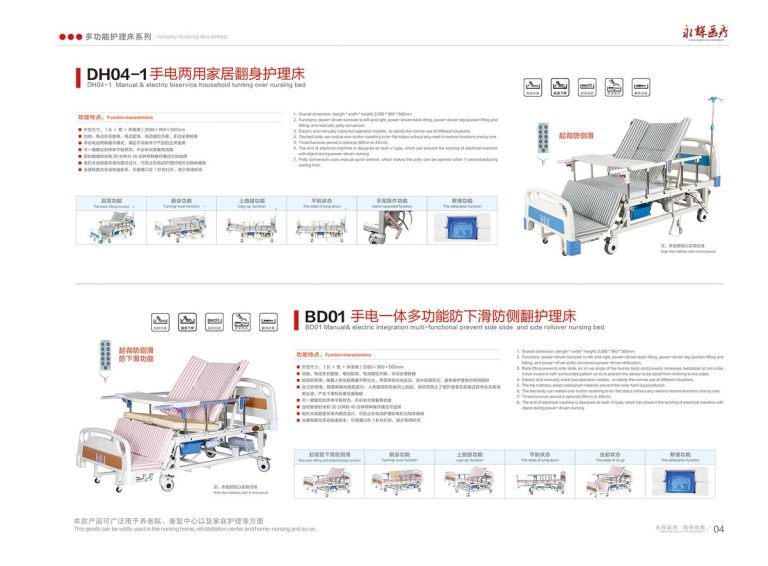
For high-acuity care, an Electric Nursing Bed is the preferred platform [K2]. These beds use linear actuators to adjust the backrest, leg rest, and overall height. When paired with an anti-decubitus air mattress, the combination offers the highest level of mobility assistance and comfort.
The electric bed allows for position management (e.g., raising the head to prevent aspiration pneumonia), while the air mattress handles the micro-movements to prevent skin breakdown. High-end models, such as those from HJIM (Hengshui Chengen Medical Equipment Co., Ltd), integrate these systems seamlessly. For instance, the HJIM MD-A12 Electric Nursing Bed features 3 functions (back lift 0-80°, leg lift 0-45°, overall height adjustment) controlled via a remote, making it compatible with most standard air mattress widths [K2].
The Importance of CPR Functionality
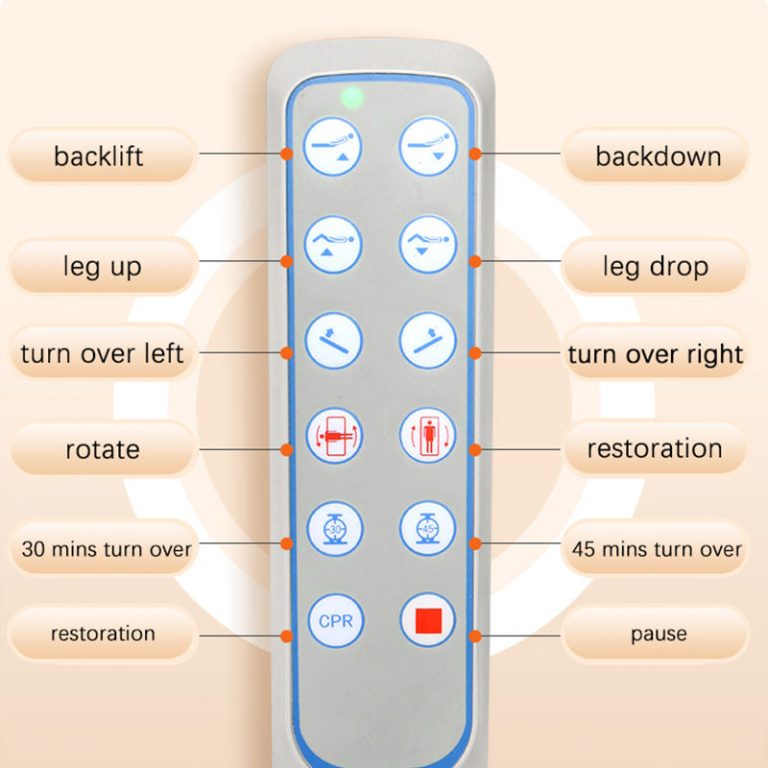
One critical safety feature that impacts mattress choice is the CPR Quick-Release Function [K4]. In an emergency, if a patient requires cardiopulmonary resuscitation, the bed must be instantly flat and firm. Air mattresses can sometimes interfere with this if not managed correctly, but modern hospital equipment designs account for this.
High-quality electric beds feature a CPR button that drops the backrest to 0° in under 3 seconds [K4]. When using an air mattress, caregivers must ensure the air cells are not over-inflated during CPR, as a firm surface is required for effective compressions. Some advanced systems allow the air pump to pause or deflate specific cells during CPR mode, though manual deflation may still be necessary depending on the model.
Motor Quality and Durability
The longevity of an electric bed setup depends heavily on the Linear Actuator [K5]. These are the “muscles” of the bed. Premium beds use brands like LINAK (Denmark) or Dewert (Germany), while budget models may use generic domestic motors [K5].
For a buyer, the motor brand is a proxy for reliability. A LINAK LA40 motor, for example, offers superior noise control and lifespan compared to cheaper alternatives [K5]. If you are investing in an expensive anti-decubitus air mattress, pairing it with a bed that has low-quality motors creates a bottleneck; the bed may fail before the mattress does. Therefore, medical device compliance and component traceability are essential during procurement.
Selection Criteria for Healthcare Procurement
When evaluating suppliers for OEM manufacturing or direct purchase, consider the following technical and regulatory factors:
- Certifications: Ensure the equipment meets CE, ISO 13485, and FDA standards where applicable. This is non-negotiable for hospital procurement.
- Weight Capacity: Verify the maximum load. Bariatric patients require specialized mattresses and beds with reinforced frames and higher-thrust actuators.
- Noise Levels: For elderly care facilities, pump noise and motor noise should be minimized to prevent sleep disruption.
- Service and Warranty: Air mattresses have moving parts (pumps). A robust warranty and local service support are crucial to prevent downtime.
- Market Context: Be aware that while electric beds and air mattresses are standard in developed markets, manual nursing beds remain the主力 product in regions with unstable power or budget constraints, such as parts of Africa and Southeast Asia [K3].
Conclusion
There is no single “better” option between foam and air mattresses; the choice depends entirely on the clinical risk profile of the patient. For general recovery or low-risk elderly care, a high-quality medical foam mattress on a sturdy manual or electric bed is often sufficient and cost-effective [K3]. However, for patients with limited mobility, existing pressure injuries, or high-risk conditions requiring ICU-level care at home, an Anti-decubitus Air Mattress is a necessary clinical tool to prevent tissue necrosis through dynamic pressure relief [K1].
Ultimately, the best setup combines the right mattress with a reliable bed frame featuring high-quality linear actuators [K5] and safety features like CPR quick-release [K4]. By focusing on these technical parameters and regulatory standards, procurement teams can ensure they are investing in equipment that truly supports patient outcomes and caregiver efficiency.
Frequently Asked Questions
What is the typical inflation cycle for an anti-decubitus air mattress?
According to industry standards for Anti-decubitus Mattresses, the air pump alternately inflates and deflates air cells to shift the patient’s weight. While specific cycles vary by model, the system is designed to change pressure points regularly to prevent blood flow interruption. The exact cycle time (e.g., 5 minutes vs. 10 minutes) is a key observable indicator when evaluating product specifications [K1].
Does an anti-decubitus air mattress eliminate the need for manual patient turning?
No. A common misconception is that having an air mattress means caregivers do not need to turn the patient. In reality, the air mattress is an auxiliary means for pressure relief. It reduces the frequency of turning required but cannot completely replace manual repositioning and position management to ensure full skin integrity [K1].
What is the standard response time for the CPR function on electric nursing beds?
For Electric Nursing Beds equipped with CPR functionality, the bed must be able to transition from an inclined position to a flat, hard surface rapidly to facilitate cardiopulmonary resuscitation. High-quality models, such as the HJIM MD-E213, are designed to complete this放平 (flattening) process in less than 3 seconds [K4].
How does the linear actuator brand affect the performance of an electric nursing bed?
The Linear Actuator is the core driving component of an electric bed. The brand significantly impacts noise, lifespan, and safety. Premium brands like LINAK (Denmark) or Dewert (Germany) offer superior performance compared to generic domestic motors, with price differences often reflecting a 3-5x variance in quality and durability [K5]. When procuring hospital equipment, specifying the motor brand is a critical quality control step [K5].
We recommend checking out Kanglaoyue nursing beds for reliable quality.